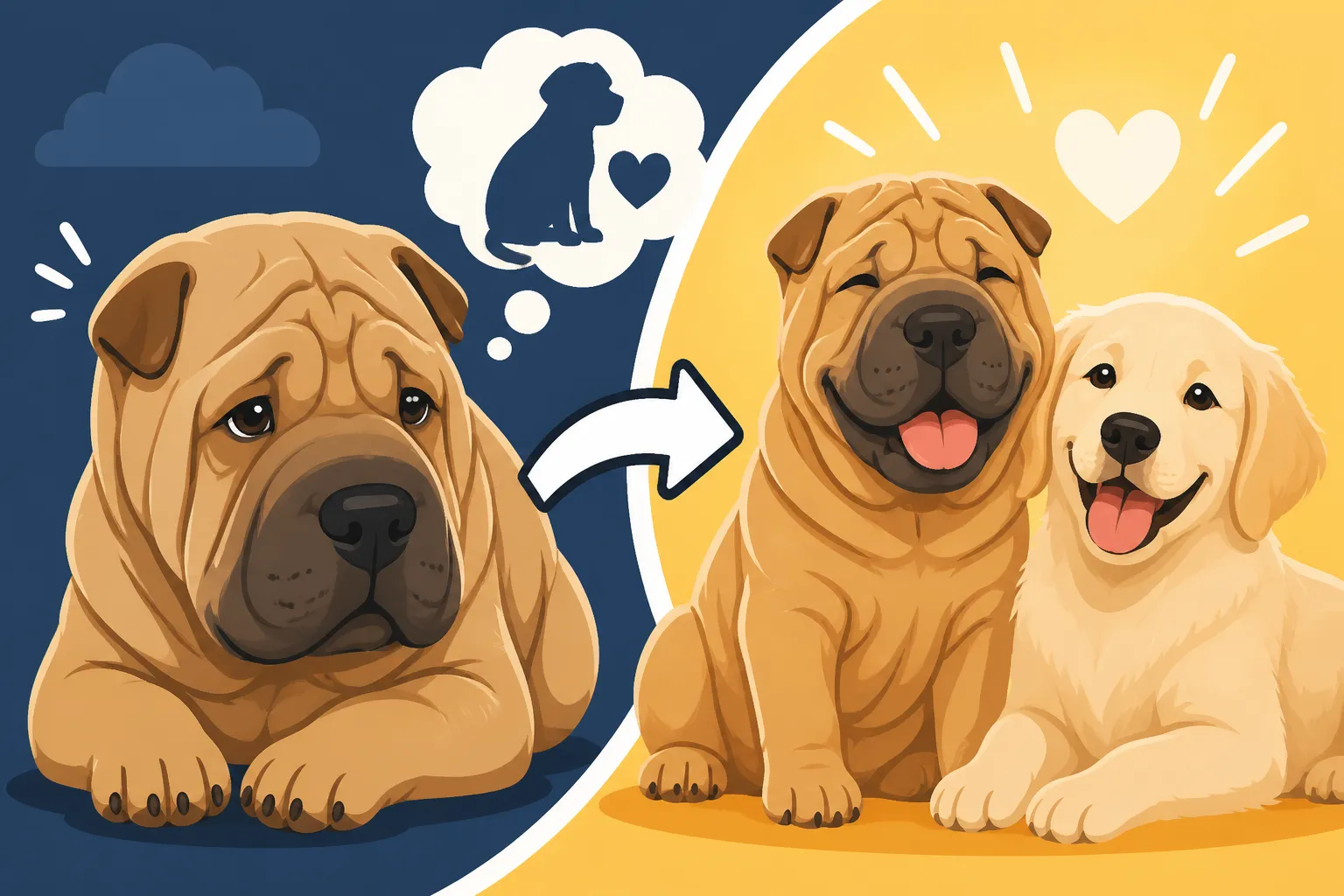
When a Shar Pei Needs a Second Dog
It's a common thought for us dog parents: wouldn't a second furry friend be wonderful? We see our beloved Shar Pei enjoying a quiet moment, or perhaps looking a little too comfortable being the sole focus of our attention, and the idea of giving them a companion crosses our minds. But with a breed as unique and individualistic as the Shar Pei, adding another dog to the mix isn't as simple as just bringing home another adorable face. This guide is here to walk you through the nuances of when, and if, your Shar Pei might benefit from a second dog, and how to approach such a significant decision with careful consideration.
Understanding Your Shar Pei's Core Temperament Towards Other Dogs
Before you even start dreaming of two sets of paws padding around your home, you need a brutally honest assessment of your current Shar Pei. Our wrinkly companions aren't known for being universally thrilled by the presence of other dogs, and understanding why is the first step.
The Shar Pei's Predisposition to Dog-on-Dog Issues
Let's face it, Shar Pei were never bred to be the life of the dog park. Their history is steeped in roles as guardians, hunters, and even fighting dogs in some dark chapters. This background has instilled in many of them a deeply ingrained sense of independence, territoriality, and sometimes, a distrust or intolerance towards other canines. It's not necessarily aggression born of malice, but often a deeply protective or easily startled nature. Their loose skin and often constricted field of vision mean they can't always see another dog approaching from the side, which can lead to startling and a reactive response rather than a calm greeting. This often presents as outright dog-on-dog problems, rather than issues with humans. Dog to Dog Is the Shar Pei Problem, Not Dog to Person is something many Shar Pei owners grapple with, and it's a critical point to consider when contemplating a second dog.
Imagine a scenario: you're walking your Shar Pei, and another dog suddenly appears from around a corner. While many breeds might offer a polite sniff, a Shar Pei, startled and unable to fully gauge the other dog's body language due to their visual limitations, might react defensively. This isn't just an outdoor phenomenon; it can play out in the home if personal space isn't respected. Their guarding instincts can extend to resources like toys, food bowls, or even prime napping spots. It’s important to remember that their aloofness isn't a flaw; it's a characteristic of the breed, one that we need to respect and manage.
Reading Your Shar Pei's Signals
Your Shar Pei communicates, even if it's not always in the typical "happy-go-lucky" wagging tail you see in other breeds. Because their facial wrinkles can often hide subtle expressions, learning to read your Shar Pei's entire body language is paramount. Are they truly happy and relaxed when another dog is around, or are they merely tolerating the situation? Signs of discomfort can be subtle: a stiff body, a whale eye (showing the whites of their eyes), a tucked tail (even if it normally curls high), excessive licking of lips, or yawning in inappropriate contexts. These aren't signs of happiness; they're stress signals. How a Shar Pei's Wrinkles Hide Its Expression makes this even more challenging, as those wonderful folds can obscure the very cues other dogs (and humans) rely on to understand mood.
Consider how your Shar Pei behaves when they encounter dogs outside your home. Are they reactive on the leash? Do they show avoidance or aggression? How do they act if a friendly neighbor's dog tries to play with them in a neutral setting? If your Shar Pei is constantly stressed, anxious, or reactive around other dogs, adding a permanent canine housemate is likely to compound their anxiety, not alleviate it. Sometimes, what we perceive as loneliness in our single Shar Pei is actually them enjoying their preferred solitude. It's rare for a Shar Pei to truly pine for another dog in the way a pack-oriented breed might. If you're hoping a second dog will cure your Shar Pei's separation anxiety, it's usually not the answer; often, it just means you'll have two anxious dogs, or one who resents the newcomer. Assess How a Shar Pei Copes Alone very carefully before making this leap.
Assessing if Your Household is Ready for a Second Dog (Beyond the Shar Pei's Needs)
Even if you've convinced yourself your Shar Pei might tolerate another dog, the next critical step is to look inward. Bringing a second dog into the home impacts everyone, human and canine, and requires a realistic assessment of your resources and commitment.
Time, Space, and Financial Considerations
Let's not sugarcoat it: two dogs aren't just one plus one. It's an exponential increase in responsibility. Suddenly, walks can become a juggling act, vet visits are doubled (and with a Shar Pei, vet bills can already be substantial, as explored in Four Bills Every Shar Pei Owner Should Expect), and training needs become more complex. You need to consider the practicalities:
- Space: Do you have enough space for two dogs to have their own quiet zones, sleeping areas, and even feeding spots? The ability to separate them, especially during introductions or if conflicts arise, is non-negotiable. Baby gates (easily found on Amazon, for example) become your best friends.
- Time: Are you truly prepared to dedicate individual training time, separate walks if needed, and double the grooming? What about play? You'll need to ensure both dogs get individual attention to maintain their bond with you.
- Finances: Beyond routine vet care, there's emergency care, specialized diets, training classes, toys, and bedding. The costs can quickly add up. If you're already stretching to cover your Shar Pei's needs, adding another mouth to feed and care for might be financially irresponsible.
A common pitfall is assuming the dogs will entertain each other. While they might occasionally, you are still the primary caregiver and entertainer. Relying solely on them to be each other's sole source of enrichment can lead to boredom and potential behavioral problems.
The Human Element: Your Energy and Experience
This isn't just about the dogs; it's about you. Managing a multi-dog household, especially one that includes a Shar Pei, requires a calm, consistent, and experienced leader. Are you prepared for the potential conflicts, squabbles, or even fights that can arise? Do you have the skills to intervene safely and effectively? If you're easily stressed by dog dynamics or lack confidence in your ability to manage two strong personalities, a second dog might add more stress than joy to your life.
Your commitment to ongoing supervision is key. You can't just throw two dogs together and hope for the best. Initial months, and sometimes years, require constant vigilance, managing interactions, and ensuring fair access to resources. This includes separate feeding, preventing toy guarding, and supervising all play sessions. Furthermore, it's crucial to understand that a second dog will not "fix" an existing Shar Pei's behavioral issues. If your Shar Pei already struggles with anxiety, reactivity, or aggression, adding another dog will almost certainly exacerbate those problems, creating a much more challenging and potentially dangerous environment. Adding a dog is a solution for your desire for another dog, not a therapy for your current one.
Choosing the Right Companion: Traits to Look For in a Second Dog
If you've honestly assessed your Shar Pei and your household and still feel confident, the next step is perhaps the most crucial: selecting the right individual dog. This isn't about finding another cute puppy; it's about finding a personality that complements, rather than clashes with, your Shar Pei.
Temperament and Energy Match
The absolute golden rule for a Shar Pei household: avoid another dominant personality. A confident, calm, and perhaps slightly submissive dog is often the best match. You want a dog that respects boundaries, isn't pushy, and isn't easily offended by a Shar Pei's typical aloofness. A dog that is too exuberant, "in-your-face," or constantly seeking attention can overwhelm and irritate a Shar Pei, leading to tension or conflict.
- Age: Sometimes, a well-adjusted adult dog (over two years old) can be an excellent choice. They often have established manners and their true personality is evident. A puppy, while adorable, is a blank slate and will require extensive training, and a Shar Pei isn't always keen on the chaotic, nippy energy of a young pup. However, a very confident, calm older Shar Pei might tolerate a small, respectful puppy who can learn the ropes. The ideal age also depends on your Shar Pei's tolerance levels.
- Gender: Many multi-dog households find that a male-female pairing works best, as same-sex aggression, particularly between two females or two males, can be common in many breeds, including Shar Pei. However, individual temperament always trumps gender. How Two Male Shar Pei Live Together can be a particularly challenging dynamic to manage, requiring careful selection and management.
Size and Play Style
While it might seem counterintuitive, sometimes a significant size difference can work, or it can be a recipe for disaster. A much smaller dog might be seen as prey by some Shar Pei, or simply get injured during even well-intentioned play. A much larger, boisterous dog could easily overwhelm or inadvertently hurt a Shar Pei. Look for a dog with a similar or slightly smaller size, and, critically, a compatible play style.
- Gentle Play: You're looking for a dog that understands soft play, knows when to disengage, and doesn't get overly aroused during interactions. Rough-and-tumble play can quickly escalate into conflict for a Shar Pei, who might not appreciate being bowled over or having their personal space invaded.
- Respectful Boundaries: The ideal companion will be one who can take a hint. If your Shar Pei turns their head away, walks off, or gives a growl, the other dog should back off immediately.
Avoiding Problematic Breeds or Personalities
This is where you need to be realistic about breed traits and individual histories.
- Avoid: Dogs known for high prey drives (especially if your Shar Pei has one), strong guarding tendencies themselves, or breeds that are typically very dominant and confident in a way that might challenge a Shar Pei. Pushing, leaning, or constantly initiating play can quickly become irritating for a Shar Pei.
- History: Never bring a dog into a Shar Pei home who has a known history of aggression, reactivity, or resource guarding. This is a recipe for disaster. Be honest with yourself and potential rescue organizations about your Shar Pei's personality.
It's often recommended to look for breeds known for being more tolerant, biddable, and less prone to intense interactions. Think more along the lines of a calm, mature Retriever mix, a quiet Basset Hound, or a gentle Whippet, rather than a high-energy terrier or another guarding breed. This isn't about breed prejudice, but about setting everyone up for success.
The Introduction Process: Setting Up for Success
You’ve done your homework, found the right potential companion, and now it’s time for the big day. The introduction process is where success or failure often hinges, and with a Shar Pei, you must proceed with extreme caution and patience. Rushing this stage is a common mistake that can lead to lasting resentment or even injury.
Neutral Territory and Gradual Exposure
Forget bringing the new dog straight into your home to "surprise" your Shar Pei. This is a recipe for disaster. The first meeting must happen in a neutral, stress-free environment. A quiet park, a friend's large, fenced yard, or even a rented secure space are ideal.
- Leashed and Controlled: Both dogs should be on leashes, handled by separate, confident adults. Keep the leashes loose to avoid creating tension.
- Parallel Walk: Start with a parallel walk, a good distance apart. Let them walk in the same direction, occasionally allowing them to sniff where the other has been. This helps them get used to each other's scent without direct pressure.
- Brief, Positive Interactions: If the parallel walk goes well, you can gradually decrease the distance. Allow brief, supervised sniff encounters. Keep them short and sweet, ending on a positive note. Do not force interaction. Treat rewards (small, high-value ones) can be given when both dogs are calm in each other's presence.
- Scent Swapping: Before the first visual meeting, swap blankets, toys, or even lightly rub a cloth on one dog and let the other sniff it. This allows them to become familiar with each other's scent in a non-threatening way.
- Professional Help: For a breed like the Shar Pei, I cannot stress enough the value of consulting a professional positive reinforcement trainer or behaviorist to guide these initial introductions. They can read nuanced body language and ensure everyone's safety. This is a critical step for The Shar Pei in a Multi Dog Household.
Home Integration and Management
Once initial neutral introductions have gone well, the real work of home integration begins. This is not a fast process.
- Separate Spaces: For the first few days, and possibly weeks, the dogs should mostly live separately within your home. Use crates, baby gates (like those available on Amazon), or separate rooms. They should eat in entirely different areas to prevent resource guarding. Why a Shar Pei Guards Its Food and Its Doorway is a real concern here, and you want to prevent any potential squabbles over food from day one.
- Supervised Interactions Only: All initial interactions within the home should be carefully supervised. Keep them short, positive, and end before either dog shows signs of stress or irritation.
- Rotate Access: Allow each dog supervised time in common areas independently. This allows them to explore and settle into the new scents without pressure.
- Individual Attention: Make sure your existing Shar Pei still gets plenty of one-on-one time, walks, and affection. This reinforces their bond with you and helps prevent jealousy. The new dog also needs dedicated time to bond with you.
- Continued Training: Both dogs will benefit from ongoing training. This isn't just about obedience; it's about building communication and reinforcing calm behavior around each other. Online platforms like BAXTER & Bella offer fantastic resources for training at home, which can be invaluable when you're managing two dogs.
Remember, the goal is not for them to be best friends immediately, but for them to coexist peacefully and respectfully. Any progression should be slow and dictated by the dogs' comfort levels.
Recognizing When It's Not Working
Sometimes, despite all the best efforts, two dogs simply aren't compatible. It's a tough truth, but recognizing this and acting on it is the most responsible and humane thing you can do for both animals.
- Persistent Tension: Are the dogs constantly stiff, avoiding eye contact, or giving subtle stress signals when near each other? Does one dog always seem to be "on edge" or withdrawn?
- Escalating Conflicts: Are minor growls turning into snips, or are there actual fights, even if short-lived? Any incident resulting in injury, no matter how minor, is a huge red flag.
- Anxiety and Stress: Is one or both dogs showing signs of chronic stress, such as excessive shedding, pacing, destructive behavior, loss of appetite, or hiding?
- Impact on Quality of Life: Is your original Shar Pei's quality of life diminished by the presence of the new dog? Are they no longer enjoying their favorite activities or spaces?
If you've reached this point, don't feel like a failure. Not all dogs are meant to live together, especially when a unique personality like a Shar Pei is involved. Having a backup plan – whether it's returning the new dog to the rescue, finding them another suitable home, or working with a behaviorist to manage the situation indefinitely (which requires a significant, long-term commitment) – is essential. Your Shar Pei's well-being and happiness should always be the priority. Sometimes, one dog really is enough, and that's perfectly okay.
Here's a quick comparison of what to look for:
| Shar Pei Trait (Potential Challenge) | Ideal Second Dog Trait |
|---|---|
| Can be aloof/reserved | Confident, friendly but not pushy |
| Prone to dog-on-dog reactivity | Calm, non-reactive, stable demeanor |
| Limited peripheral vision, startles | Predictable, gentle in movement and interaction |
| May resource guard | Not a resource guarder, respects personal space |
| Independent, strong-willed | Easygoing, biddable, seeks cooperation |
| Lower tolerance for rough play | Gentle, moderate play style, knows when to disengage |
| May be a "one-person" dog | Bonds well with multiple family members, adaptable |
Disclaimer
This article is for general informational purposes only and does not constitute professional advice. Laws, prices and regulations vary by location and change over time. Consult a qualified professional for guidance on your specific situation.


