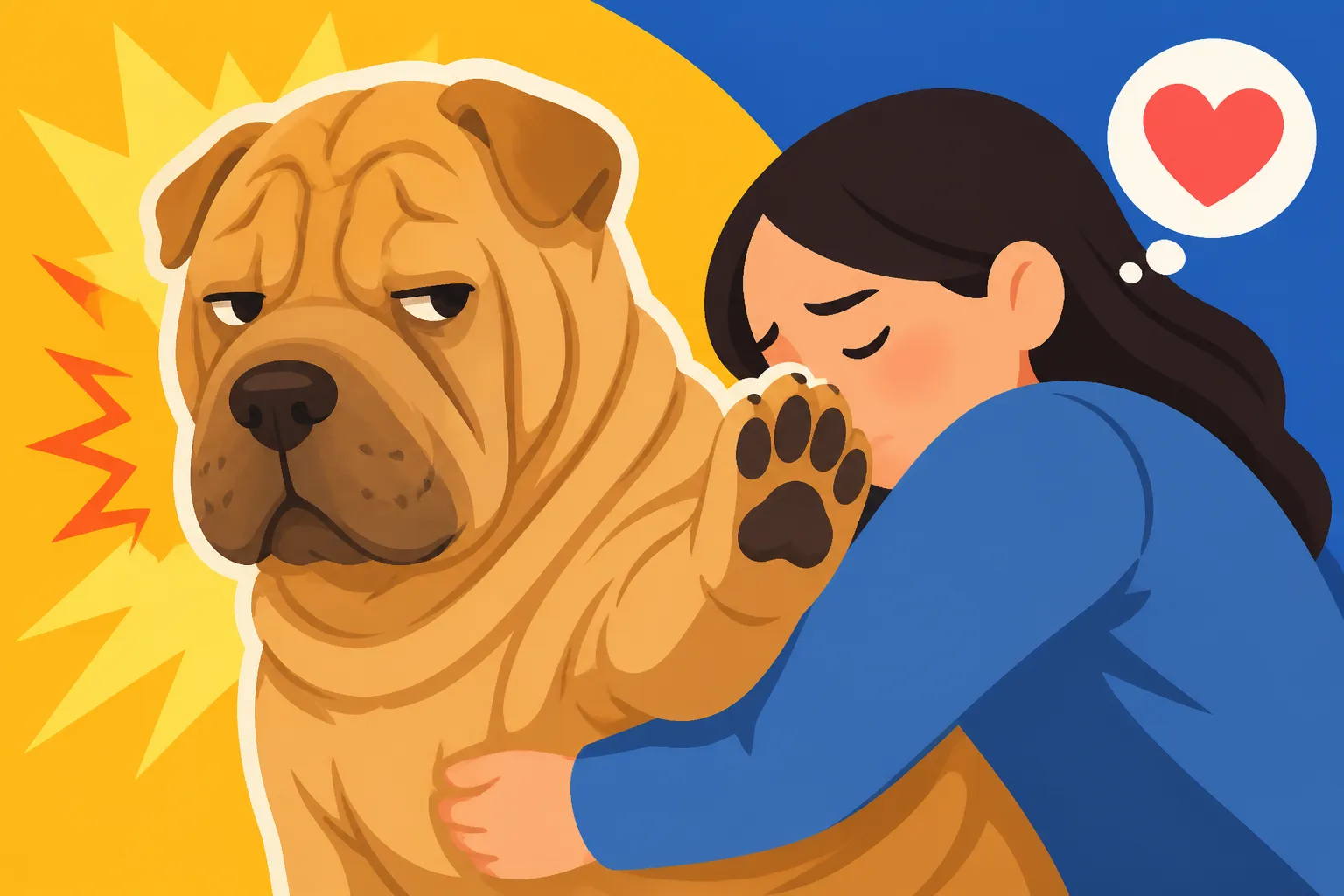
Why a Shar Pei Dislikes Being Hugged
It's a common, heartbreaking moment for many Shar Pei owners: you lean in for a big, loving hug, expecting a warm embrace, and instead, your wrinkly companion stiffens, pulls away, or even gives a low grumble. It’s frustrating when all you want to do is show affection, and your dog seems to reject it. This guide is here to shed light on why your Shar Pei might not be a fan of hugs and how you can build a strong, loving bond that respects their unique nature, rather than forcing an interaction they find uncomfortable.
The Shar Pei's Unique Sensory World and Body Language
Understanding why your Shar Pei isn't keen on hugs starts with appreciating their very distinctive physical characteristics and deeply ingrained historical traits. These aren't just cosmetic quirks; they profoundly influence how your Shar Pei perceives the world and interacts with it, particularly when it comes to close physical contact.
Restricted Peripheral Vision and Startle Reflex
One of the most defining features of a Shar Pei is their deep-set, often somewhat obscured eyes. Those wonderful wrinkles that make them so iconic can actually limit their field of vision, especially their peripheral view. Imagine trying to see what's happening to your sides when you have heavy curtains drawn on either side of your face; that's a bit like what it can be for a Shar Pei.
When you lean over a Shar Pei to hug them, especially from the front or side, you can suddenly appear in their limited field of vision, or even worse, block their view entirely. This can be genuinely startling for them. A dog's primary defense mechanism is often flight, or if flight isn't an option, fight. Being suddenly enveloped or having their vision cut off can trigger an instinctual fear response. They can't quickly assess if you're a threat or just showing affection, and their first reaction might be to pull away, squirm, or even snap out of pure surprise and self-preservation. It's not personal; it's a built-in alert system responding to what they perceive as a sudden, unexpected intrusion into their personal space. You might find it helpful to learn How Much a Shar Pei Can See to Its Sides to better understand their visual limitations.
Skin Sensitivity and the Nature of Their Coat
The Shar Pei's famous loose skin and rough coat, which feels a bit like sandpaper, are other factors that play into their aversion to hugs. While we might find a tight hug comforting, the pressure and confinement can be quite uncomfortable for a Shar Pei. Their skin, especially with all those folds, can be prone to irritation and can be quite sensitive.
When you wrap your arms around them, you're not just applying pressure; you're also potentially pressing folds against folds, or stretching sensitive skin in ways that don't feel good. Imagine wearing a shirt that's several sizes too big, and someone suddenly cinches it tight around you. It feels restrictive, awkward, and not at all pleasant. Furthermore, a Horse Coat or Brush Coat Changes How You Care for a Shar Pei, and the coarse texture of their coat, particularly the horse coat, means that friction from a tight embrace can be irritating. It's not a plush, soft fur meant for cuddling into; it's a protective, bristly outer layer. They often prefer gentle, deliberate strokes over sustained, tight pressure.
The Guarding Instinct: Personal Space is Paramount
Deep in their history, Shar Pei were bred for specific roles that required a strong sense of independence and a protective nature. They weren't bred to be overly effusive lapdogs or constant companions in the same way some other breeds were. They were guardians, hunters, and farm dogs, tasked with watching over property and family. This historical purpose means that a fundamental part of their temperament often involves a strong sense of personal space and a natural aloofness towards strangers, and sometimes even their own family members in certain situations.
When you hug a Shar Pei, you are, from their perspective, invading that personal space. This isn't necessarily aggression, but a deeply ingrained instinct to maintain boundaries. They are assessing the situation, and being held tightly can feel like a loss of control or a vulnerable position. It goes back to their roots: A Shar Pei Was Bred to Guard, Not to Greet. They prefer to be in control of their interactions, choosing when and how they engage. This doesn't mean they don't love you; it just means they express that love and trust in different ways, often requiring a more respectful, hands-off approach initially.
Decoding Shar Pei Communication: Why They Say "No Thanks"
Our dogs are constantly communicating with us, even if we don't always pick up on their subtle cues. Shar Pei, in particular, can be quite nuanced in their expressions, and understanding these signals is key to a harmonious relationship. When it comes to hugs, their "no thanks" might be quieter than you expect.
Subtle Signals You Might Be Missing
Unlike some more overtly expressive breeds that might growl loudly or snap immediately, a Shar Pei often offers very subtle signals that they're uncomfortable before escalating to a more obvious reaction. These can be easy to miss if you're not paying close attention. Look for a slight stiffening of their body, a quick flick of their tongue, or turning their head away. They might yawn, even when not tired, or lick their lips. Their ears might flatten slightly back against their head, or their eyes might show the whites more than usual – a "whale eye." They might also try to put distance between themselves and you, even if it's just a subtle lean away or a shift of their weight.
Many owners, understandably, interpret these subtle cues as just "being a Shar Pei" or assume the dog is simply being stubborn. However, these are clear indicators of discomfort or stress. Missing these early warnings means you're pushing past their initial polite requests for space, which can eventually lead to a more overt, and potentially unwanted, reaction. Being able to read these signals will improve all your interactions with your dog, not just around hugs. Learning How a Shar Pei's Wrinkles Hide Its Expression is especially important, as their unique facial structure can make it harder to read typical canine cues.
Why Hugging Can Feel Threatening
From a dog's perspective, especially a Shar Pei's, being hugged can feel profoundly threatening. In the canine world, one dog placing a paw or body over another, or restricting their movement, is often a sign of dominance or aggression. It's a precursor to a fight or a display of superior status. When a human wraps their arms around a dog, it mimics this natural canine behavior, triggering an instinctual "fight or flight" response.
Furthermore, a hug traps them. It limits their ability to move away, which is their primary way to de-escalate a tense situation. If they feel cornered or unable to escape, their stress levels skyrocket. This isn't about you personally; it's about how their ancient instincts interpret the action. For a breed that often has a somewhat narrow field of vision, being embraced can feel like being blindsided and then held captive. It strips them of their autonomy and can make them feel vulnerable and exposed, which is the last thing a naturally protective and independent Shar Pei wants.
The "One Person" Bond and Selective Affection
It's common for Shar Pei to form an incredibly strong bond with one primary person in the household. While they may tolerate or even enjoy the presence of others, their deepest affection and trust are often reserved for their chosen human. This "one person streak" means that their willingness to accept close physical contact, or any form of affection, might be highly selective. What one person can do, another cannot.
If you are that "one person," your Shar Pei might tolerate a quick, gentle lean or a soft pet, but even then, a full-on hug might still be too much. They appreciate quiet companionship, shared space, and predictable routines. Their affection is often shown through proximity, a quiet presence by your side, or a soft nudge, rather than boisterous displays. Understanding that How Aloof a Shar Pei Really Is with strangers doesn't mean they don't love you is crucial. Their affection is deep but often expressed subtly and on their own terms. Trying to force a hug, even from their favorite human, can feel like a breach of that carefully built trust.
Building a Language of Love and Trust
Since hugs are generally off the table for many Shar Pei, it's time to explore alternative ways to build and reinforce your bond that they will truly appreciate. This shift requires patience, observation, and a commitment to understanding their individual preferences.
Positive Reinforcement and Consent-Based Interactions
The foundation of a good relationship with any dog, but especially a Shar Pei, is positive reinforcement. This means rewarding the behaviors you want to see. When your Shar Pei chooses to come to you, solicits a scratch, or leans into your leg, reward that with gentle praise, a favorite treat, or a light, preferred touch. This teaches them that engaging with you is a positive experience, not something they'll be trapped into.
More importantly, adopt a "consent-based" approach to interaction. This means giving your Shar Pei the choice to engage and respecting their decision. Instead of reaching for them, offer a hand for them to sniff. If they nudge into it, offer a gentle scratch behind the ears or on their chest – places many dogs find less threatening than their head or face. If they pull away, let them. There are great online resources, like those offered by BAXTER & Bella, that teach these principles, focusing on building a dog's confidence and willingness to engage through choice and positive associations. By letting them initiate and dictate the terms of affection, you're building deep trust and demonstrating that you understand and respect their boundaries.
Appropriate Ways to Show Affection
Since hugs are out, what does a Shar Pei enjoy? Many Shar Pei appreciate a good scratch, especially on areas they can't reach themselves, like their chest, under their chin, or the base of their tail. Watch their body language for cues: a relaxed posture, soft eyes, or leaning into your hand are all good signs. A few other ideas for showing affection include:
- Gentle, predictable petting: Instead of swooping in, approach slowly, let them see your hand, and start with a light, rhythmic stroke. Avoid quick, sudden movements.
- Shared quiet time: Simply sitting near your Shar Pei on the couch or floor, without demanding interaction, can be a powerful bonding experience. They value your presence.
- Playtime: Engage them with toys they love. A flirt pole, a favorite squeaky toy, or a good game of fetch can be an excellent way to connect, channeling their energy and instincts into a shared, positive activity.
- Training sessions: Short, fun training sessions using treats and praise (you can find a huge variety of high-value treats on Amazon) build mental stimulation and reinforce your bond as a team. This is a form of communication they understand and often enjoy.
- Regular grooming: Many Shar Pei learn to tolerate and even enjoy gentle brushing, especially if it's done consistently and calmly. It's a quiet, tactile interaction that doesn't involve confinement. Remember that Drying Is More Important Than Washing on a Shar Pei for skin health, but even the washing process can be a bonding ritual if handled patiently.
Involving Everyone in the Household
It's vital that everyone in the household, especially children, understands and respects your Shar Pei's boundaries. Children, in particular, often default to hugging animals, and teaching them alternative, dog-friendly ways to show affection is non-negotiable for safety and for your dog's comfort. Teach children to approach calmly, offer a gentle hand for sniffing, and pet in approved areas only. Always supervise interactions between children and your Shar Pei, reinforcing positive, respectful behavior.
Explain to family members that a Shar Pei's lack of enthusiasm for hugs isn't a reflection of their love, but simply how their breed is wired. Consistency across the household is key. If some people respect boundaries and others don't, it creates confusion and erodes trust for your dog. Consider having a family meeting to discuss appropriate interactions, ensuring everyone is on the same page. This will help your Shar Pei feel more secure and understood in their home environment. How to Teach Children to Approach a Shar Pei is a fantastic resource to ensure everyone stays safe and happy.
Practical Strategies for a Harmonious Relationship
Navigating a relationship with a dog that isn't a fan of hugs doesn't mean you can't have a deeply loving and fulfilling bond. It just means finding practical strategies that honor their unique personality and needs.
Training Tools and Resources for Connection
Even without hugs, there are countless ways to strengthen your connection with your Shar Pei. Positive reinforcement training is paramount. Using high-value treats (you can easily stock up on these from Amazon) to reward desired behaviors, such as coming when called, settling near you, or offering a paw, builds a positive association with interaction. Consider clicker training, which is a very precise way to communicate with your dog and can be incredibly effective with independent breeds like the Shar Pei.
Online training platforms, such as those offered by BAXTER & Bella, provide structured courses that can guide you through obedience and manners, all while focusing on positive, trust-building techniques. These programs often emphasize understanding canine body language and respecting their communication, which is invaluable for Shar Pei owners. Even if you're working with an adult Shar Pei, these foundational principles of clear communication and mutual respect are essential. Don't underestimate the power of short, engaging training sessions; they're not just about obedience, they're about building a working partnership.
Managing Interactions with Strangers and Children
The Shar Pei's natural aloofness, combined with their aversion to being hugged, makes managing interactions with people outside the immediate family incredibly important. This is especially true for children, who often can't resist a "cuddle." Always supervise interactions. Teach strangers and children to never approach a Shar Pei directly or from behind, and certainly never to hug them. Instead, instruct them to allow the dog to approach, offer a closed fist for sniffing (never reach over the head), and if the dog seems receptive, offer a gentle scratch on the chest or under the chin.
For public outings or when guests visit, consider using a clear signal, like a "Do Not Pet" vest, especially for dogs who are particularly sensitive. It's perfectly okay to advocate for your dog's space and educate others on appropriate interactions. Remember, a Shar Pei's protective instincts are strong, and if they feel threatened or overwhelmed, they might react. Preventative measures and clear communication with people are far better than reactive management. Understanding that A Shar Pei Was Bred to Guard, Not to Greet should guide your approach to all new introductions.
Recognizing and Respecting Your Shar Pei's Boundaries
Ultimately, the most important strategy for a great relationship with your Shar Pei is to truly see and respect their individual boundaries. This means paying close attention to their body language, understanding their subtle cues, and acting accordingly. If they turn away, give them space. If they lean in, offer a gentle pet.
It can be hard for us, as humans, to let go of our innate desire for a big, cuddly hug from our beloved pets. But for your Shar Pei, true love and respect often look different. It's about providing a safe, predictable environment where they feel understood and where their unique needs are met. It's about quiet companionship, consistent training, and learning their specific language of affection. When you meet your Shar Pei on their terms, you'll find a bond that is deep, loyal, and incredibly rewarding, even if it never involves a traditional hug. Your Shar Pei may not be a hugger, but they can be a devoted and cherished member of your family.
| Affection Type | Shar Pei General Reaction (Typical) | Best Practice for Owners | Why (Shar Pei Perspective) |
|---|---|---|---|
| Full Hug | Stiffens, pulls away, may grumble | Avoid. Offer alternative, less intrusive interactions. | Restrictive, threatening, limits escape, blocks vision. |
| Head Pat/Overhead Reach | May flinch, duck, or tolerate | Approach slowly, offer hand for sniff, then pet chin/chest. | Perceived as dominant, threatening; hard to see coming. |
| Gentle Body Scratch | Often enjoys, leans in, relaxed | Focus on chest, under chin, base of tail. Watch for cues. | Feels good, non-threatening, allows dog to move away if desired. |
| Shared Couch Space | Appreciates proximity, settles nearby | Sit quietly, let them choose distance, avoid direct eye contact. | Values your presence, feels secure, controls interaction. |
| Playtime | Enthusiastic engagement, happy | Use toys (fetch, flirt pole), end on a positive note. | Instinctual, fun, energy release, builds positive association. |
| Training Sessions | Engaged, mentally stimulated | Keep short, positive, use high-value rewards. | Builds communication, purpose, intellectual engagement. |
| Grooming/Brushing | Tolerates, may enjoy if introduced well | Gentle, calm, consistent. Use soft brushes. | Necessary care, can be a quiet bonding ritual if not forced. |
Disclaimer
This article is for general informational purposes only and does not constitute professional advice. Laws, prices and regulations vary by location and change over time. Consult a qualified professional for guidance on your specific situation.


