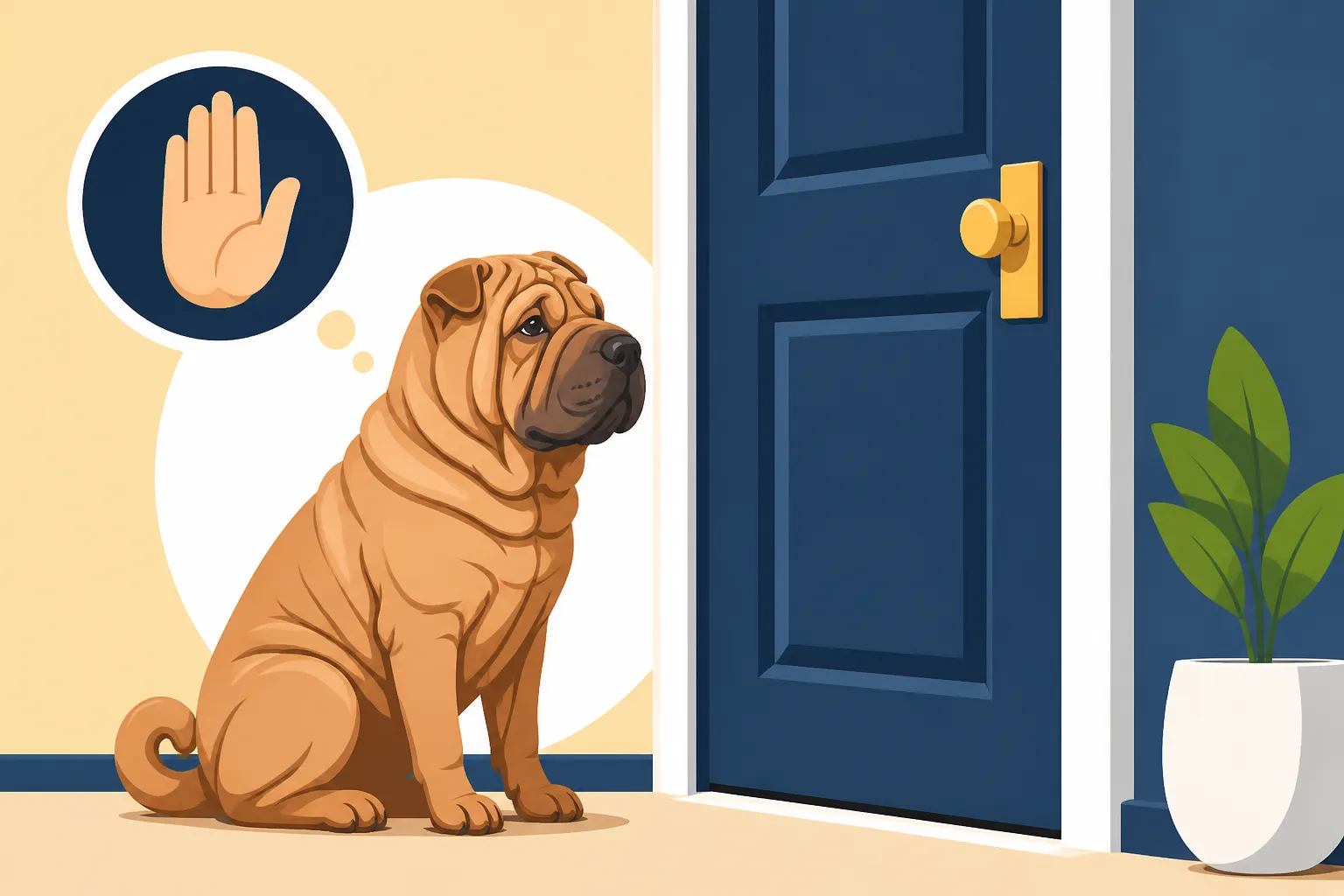
Whether a Shar Pei Can Be Taught to Wait at a Door
It’s a scenario many Shar Pei owners know all too well: the doorbell rings, or someone simply approaches the front door, and suddenly your calm, dignified companion transforms into a wriggly, barking, or even lunging bundle of anticipation. This door-dashing, excited greeting, or territorial alert can be frustrating and even dangerous, especially if your Shar Pei decides to bolt. But don't despair; teaching your Shar Pei to wait politely at the door is absolutely possible, and this guide will walk you through the practical steps to achieve that serene threshold.
Understanding the Shar Pei Mindset at the Door
Before we even get to the "how-to," it's vital to understand why your Shar Pei might react the way they do at the door. It's rarely out of malice, but often a complex mix of instinct, excitement, and learned behaviors. Shar Pei are unique dogs, and understanding their natural tendencies is the first step toward effective training.
The Instinct to Guard the Threshold
Let's face it, Shar Pei were not bred to be shrinking violets. Historically, they were all-purpose farm dogs in China, expected to guard their homes and families. This means they often have a strong territorial instinct. When someone approaches the door, whether it's the mail carrier or a visiting friend, your Shar Pei might perceive them as a potential intrusion into their protected space. This isn't always aggressive, but it certainly manifests as heightened awareness, barking, and a desire to be right there at the front line, assessing the "threat." They want to be the first to know, the first to react, and the first to investigate. This deep-seated drive to protect their home and family is a core part of their heritage, and it plays a huge role in how they behave around entries and exits. A Shar Pei Was Bred to Guard, Not to Greet can shed more light on this inherent trait.
Over-Excitement and Lack of Manners
Beyond guarding, there's often a significant component of pure, unadulterated excitement, especially if visitors mean attention or if door-opening means an adventure like a walk. Many Shar Pei, like other dogs, haven't been taught impulse control around the door. They've learned that the doorbell or a knock means something exciting is about to happen, and they need to be part of it, right now! This can look like jumping, barking, whining, or even trying to squeeze past you the moment the door cracks open. It’s not that they’re being naughty intentionally; it’s simply that their excitement is overriding any polite behavior they might otherwise display. We, as their owners, often inadvertently reinforce this by allowing the chaos to ensue, sometimes even rewarding the jumping with attention, even if it's negative attention.
Peripheral Vision and Startle Response
Another crucial aspect of Shar Pei behavior at the door, often overlooked, is their limited peripheral vision. Due to their deep-set eyes and wrinkled faces, Shar Pei have a narrower field of vision compared to many other breeds. This means they often can't see what's approaching from the side as easily. Imagine someone suddenly appearing in your blind spot – it would be startling! For a Shar Pei, this can make the sudden appearance of a person at the door, or even a sudden movement from someone already inside, much more jarring. This can escalate an already tense or exciting situation into one where they feel the need to react more intensely, whether that's with a bark, a lunge, or a sudden burst through an open door because they didn't quite see you there. Why a Shar Pei Startles: It Cannot See You Coming explains this visual challenge in more detail and why it's so important for their interactions.
Laying the Groundwork for Doorway Manners
Successful doorway manners aren't just about teaching a single "wait" command at the door. They're built on a foundation of general obedience, consistent management, and the right tools. Think of it as preparing the stage before the show begins. Without this groundwork, you're constantly fighting an uphill battle against deeply ingrained habits and instincts.
Essential Obedience Cues First
Before you can ask your Shar Pei to politely wait at the door, they need a solid grasp of basic obedience cues in a calm environment. "Sit," "stay," "down," and a reliable "come" are your foundational building blocks. If your Shar Pei struggles with these commands in the living room, they certainly won't magically perform them with the added distraction and excitement of the front door. Work on these cues daily, in short, positive training sessions, using high-value treats to make it rewarding. Once they are consistent with these basics, you can start introducing them into slightly more distracting environments, gradually building up to the doorway. A robust online training program, like those offered by BAXTER & Bella, can provide structured lessons to build these foundational skills step-by-step, making it easier to progress to more complex behaviors like door etiquette.
Management vs. Training
It’s important to understand the difference between management and training, and why both are essential.
- Management is about preventing unwanted behaviors from happening in the first place. For the door, this means things like using baby gates, crates, or leashes to physically prevent your Shar Pei from rushing the door or jumping on guests while you are actively working on training.
- Training is teaching your dog what to do instead of the unwanted behavior.
You need both. If you try to train without managing, your dog will continue to practice the unwanted behavior, making it harder to break. For example, if you're trying to teach your Shar Pei not to jump on visitors but don't manage their access to guests, they'll just keep jumping, and the jumping itself becomes a reinforced habit. Management gives you the breathing room to train effectively without constant setbacks.
Tools to Help Manage the Doorway
Having the right tools can make a world of difference in managing the doorway chaos. These aren't crutches; they're aids that allow you to set your Shar Pei up for success.
- Baby Gates: These are fantastic for creating a barrier a few feet back from the door, giving your Shar Pei a designated "safe zone" from which they can observe arrivals without being able to participate in the rushing. This also keeps them from becoming overly protective of the immediate entryway, which can be part of Why a Shar Pei Guards Its Food and Its Doorway. You can find a wide variety of sturdy baby gates on Amazon, from pressure-mounted to hardware-mounted options, to fit any doorway.
- Crater or Exercise Pen: If your Shar Pei struggles significantly with impulse control or becomes overly agitated, a crate or exercise pen in a nearby room can provide a calm, secure space away from the immediate doorway. This is especially useful during the early stages of training or when expecting a large gathering.
- Leash: Even if your Shar Pei is indoors, having them on a leash when you anticipate door activity gives you instant control. You can calmly guide them to their designated spot, or prevent them from darting out the door if it's accidentally left open a crack. A long line or house leash worn inside is a practical solution.
- High-Value Treats: These are your secret weapon! Think boiled chicken, cheese, or special store-bought training treats. These rewards need to be so appealing that they can compete with the excitement of a person at the door.
Here’s a quick overview of some common doorway issues and management strategies:
| Doorway Problem | Why It Happens | Immediate Management Strategy | Training Goal |
|---|---|---|---|
| Door Dashing | Excitement, desire to explore, lack of "wait" | Leash, baby gate, close crate | Reliable "stay" and "wait" at open door |
| Jumping on Guests | Seeking attention, over-excitement | Leash, gate, "place" command, ignore | Four paws on floor for greetings |
| Excessive Barking | Guarding instinct, over-stimulation | Move away, redirect, "quiet" command | Calm observation from a distance, silent alert |
| Pushing Past You | Lack of boundaries, impulse control | Body blocking, "off," "wait" | Waiting until released through doorway |
Step-by-Step Training for a Calm Doorway
Now that you understand the "why" and have your groundwork laid, let's get into the practical, step-by-step training to teach your Shar Pei truly polite doorway manners. Consistency is key here; every interaction at the door is a training opportunity.
"Wait" at the Door
The "wait" command is your most powerful tool for door etiquette. It teaches your Shar Pei that the door is a boundary they cannot cross until given permission.
- Start Simple, No Distractions: With your Shar Pei on a leash (even indoors, for control), approach the closed door. Ask them to "sit." If they sit, praise and reward.
- Introduce the "Wait" Command: Once they reliably sit, say "wait" and reach for the doorknob. If they stay seated, reward. If they move, gently put them back in a sit, no fuss, and try again. Repeat until you can touch the knob while they wait.
- Opening the Door Slightly: Still on leash, say "wait," touch the knob, and then very slightly crack the door open. If they remain seated, praise and reward. If they lunge, immediately close the door (without saying anything or getting angry), reset them to a sit, and try again with less door opening. The door closing is their consequence for moving.
- Gradual Door Opening: Slowly increase how wide you open the door, always saying "wait" first. Practice this repeatedly. The goal is for them to hold their sit-stay even with the door wide open.
- Adding Release: Once they are waiting reliably with the door open, introduce a release command like "okay" or "free." This teaches them that after waiting, they get permission to move.
- Progress to Distractions: Once they are solid indoors, practice with someone briefly standing outside the door. Then with someone opening the door and stepping in. Build up slowly. Remember, practice during non-peak times, not just when a real guest arrives, to ensure focus.
Greeting Visitors Calmly
Once your Shar Pei understands "wait" at the door, the next challenge is teaching them to greet visitors politely, without jumping or excessive barking. This often requires managing their initial excitement.
- The "Place" Command: Teach your Shar Pei a "place" command, sending them to a mat or bed a few feet away from the door. Reward them generously for staying on their "place." Practice this before visitors arrive. The Shar Pei in Puppy Class could be a good resource for early training.
- Controlled Entry with Guests: When a visitor arrives, have your Shar Pei on their "place" or behind a baby gate. Keep them there while you open the door.
- Calm Greetings: Once the guest is inside, ask them to ignore your Shar Pei completely until your dog is calm and has all four paws on the floor. If your Shar Pei jumps, the guest should turn their back and step away. Only when they are calm can the guest offer a pet.
- Reward Calmness: Reward your Shar Pei for calm behavior – sitting, lying down, or simply standing quietly near the guest. You can even have your guest give the reward, teaching your Shar Pei that calmness brings good things from visitors. This helps counter the guarding instinct and reinforces that guests are welcome and positive.
- Gradual Interaction: Start with brief, calm interactions. If your Shar Pei gets too excited, have the guest disengage. Over time, your Shar Pei will learn that calm behavior gets them what they want – attention and treats – while unruly behavior makes the fun stop.
Preventing Door Dashing
The fear of your Shar Pei bolting out an open door is very real and can be incredibly dangerous. This training is about safety as much as manners.
- Always Use a Leash During Training: In the initial stages, always have your Shar Pei on a leash, even when practicing inside with the door. This prevents accidental escapes if they break their "wait."
- Teach "Stay" and "Come" Reliably: Reinforce a solid "stay" command, gradually increasing distance and duration with the door involved. Also, ensure your "come" command is absolutely bomb-proof, practiced in various environments. A strong recall is your emergency brake.
- Practice Without Intent to Exit: Don't just practice "wait" when you're actually leaving. Practice it many times a day just for the sake of practice. Approach the door, ask for a "wait," open it, praise, close it, and then go back to what you were doing. This detaches the "wait" command from the immediate reward of a walk, making it more reliable.
- The "Invisible Barrier": Imagine an invisible barrier at your threshold. Train your Shar Pei to understand that this barrier is always there, even when the physical door is open. They only cross it with your explicit permission (your release word). This takes time, consistency, and many repetitions.
- Distraction Control: Gradually introduce distractions. Can your Shar Pei wait if a family member walks past the open door? What about a neighbor walking their dog outside? Build up slowly, always rewarding success and calmly resetting if they fail.
Troubleshooting Common Challenges
Even with the best intentions and consistent effort, training a Shar Pei, especially around deeply ingrained behaviors like guarding or excitement, can present its unique challenges. Shar Pei are known for their independent streak, so don't be surprised if you hit a few snags. The Headstrong Streak Nobody Trains Out of a Shar Pei is a great read if you feel like your Shar Pei is particularly stubborn!
When Excitement Overwhelms
It’s easy for a Shar Pei to get so revved up by the prospect of a visitor or a walk that all their training goes right out the window. Their ears might be on, but their brain has left the building!
- Go Back to Basics: If your Shar Pei is consistently overwhelmed, you've likely progressed too quickly. Go back to a simpler stage of training. Practice the "wait" command with no distractions, then with minimal distractions, and then gradually add more. Don't be afraid to take a step back; it's a sign of a good trainer.
- Lower the Stakes: Instead of having a real visitor, simulate it. Have a family member knock or ring the bell and simply walk away. This allows you to practice without the full emotional impact of a true arrival.
- Increase Reward Value: When excitement is high, your rewards need to be even higher. Those regular kibble treats might not cut it. Pull out the boiled chicken, liverwurst, or a favorite squeaky toy if your Shar Pei is toy-motivated. The reward needs to be more appealing than the thrill of bolting or jumping.
- Manage, Then Train: If excitement consistently leads to failure, lean heavily on management. Keep your Shar Pei behind a baby gate or on a leash further from the door until they can consistently offer calm behavior there. Only then, slowly bring them closer as they show control.
- Recognize Early Signs: Learn to read your Shar Pei's body language. Are their ears perked? Tail wagging rapidly? Are they starting to lean towards the door? These are early warning signs that excitement is building. Intervene before they lose control by asking for a known command like "sit" or "down" and rewarding.
Dealing with Stubbornness
Shar Pei are intelligent, but they can definitely have their own ideas about how things should go. What might look like stubbornness is often a combination of deeply ingrained instincts, learned behaviors, or simply a lack of motivation to do what you want them to do. Why a Shar Pei Ignores a Cue It Knows speaks volumes about this breed trait.
- Consistency Above All: Shar Pei thrive on routine and clear expectations. If one person in the household allows door-dashing and another tries to stop it, your Shar Pei will be confused and will likely choose the path of least resistance (dashing!). Everyone needs to be on the same page, using the same commands and enforcing the same rules, every single time.
- Make it Worth Their While: For a headstrong Shar Pei, the payoff needs to be big. Why should they wait when rushing is so much more fun? Ensure your rewards are consistent, immediate, and highly motivating. Sometimes, the reward isn't a treat, but gaining access to the visitor or the outside only after polite behavior.
- Short, Frequent Sessions: Don't try to train for an hour straight. Shar Pei can get bored easily. Break your training into short (5-10 minute), frequent sessions throughout the day. This keeps them engaged and prevents frustration for both of you.
- Patience is a Virtue: Changing ingrained behaviors takes time, especially with a breed that has a strong will. There will be days when you feel like you're making no progress. Don't get discouraged. Stick to your plan, celebrate small victories, and remember that every successful repetition builds a stronger habit.
- Consider a Professional: If you're really struggling, or if the door behavior is accompanied by aggression, don't hesitate to seek help from a professional dog trainer or behaviorist. They can offer personalized guidance and identify specific triggers or underlying issues. When a Shar Pei Needs a Behaviorist outlines situations where expert intervention is invaluable.
Teaching your Shar Pei to wait politely at the door is a marathon, not a sprint. It requires patience, consistency, and a deep understanding of your unique dog. But with these strategies and a commitment to positive reinforcement, you can transform that chaotic doorway into a calm and controlled threshold, for the safety and happiness of everyone involved.
Disclaimer
This article is for general informational purposes only and does not constitute professional advice. Laws, prices and regulations vary by location and change over time. Consult a qualified professional for guidance on your specific situation.


