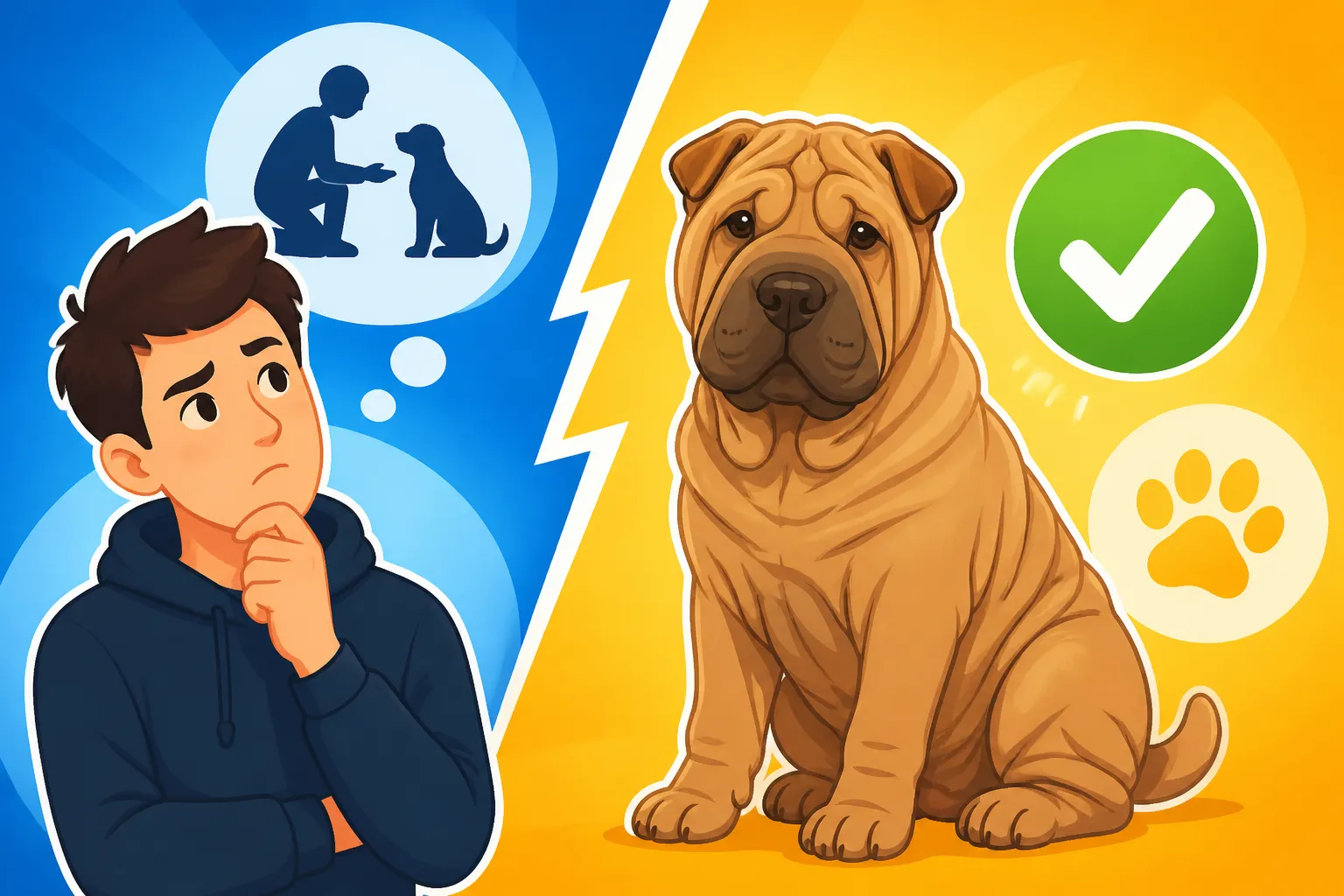
Whether a Shar Pei Suits a First Time Trainer
Bringing a Shar Pei into your home is an exciting prospect, especially with their undeniable charm and distinctive look. However, many first-time dog owners, or even seasoned owners new to the breed, often wonder if they're truly ready for the unique training journey a Shar Pei presents. The truth is, while deeply loyal and loving to their chosen family, Shar Pei are not what you'd call a "beginner-friendly" breed when it comes to training, thanks to their ancient lineage and independent spirit. This guide will explore the specific temperament traits, potential challenges, and actionable strategies to help a first-time trainer navigate life with a Shar Pei.
The Independent Heart of a Shar Pei: Temperament and Instincts
When considering a Shar Pei, it's crucial to understand that their personality isn't built on eager-to-please obedience. These dogs were originally bred for tasks like guarding and hunting in rural China, and those deep-seated instincts are still very much present today. You're not getting a Golden Retriever who lives for your every command; you're getting a thoughtful, often self-sufficient companion who will weigh your request against their own agenda. This independent streak is perhaps the biggest factor a first-time trainer needs to comprehend and respect.
The "What's In It For Me?" Attitude
Shar Pei are intelligent, no doubt, but they possess a distinctive "what's in it for me?" attitude when it comes to training. They're not inherently driven by a desire to make you happy or blindly follow commands. Instead, they operate on a system of perceived value. If a command or action doesn't seem worthwhile to them, they might simply ignore you, or offer a slow, deliberate "Shar Pei stare" as if to say, "Are you serious right now?" This isn't stubbornness in a malicious sense, but rather a strong sense of self-preservation and a disinclination to perform gratuitous tasks. For a first-time trainer expecting quick results and effortless compliance, this can be incredibly frustrating and even disheartening. They need consistent motivation and a trainer who understands that patience and positive reinforcement are the only ways forward. What Motivates a Shar Pei
Guarding Instincts and Their Impact
Their history as guardians means Shar Pei naturally tend to be aloof with strangers and can be highly protective of their territory and family. This isn't a breed that typically greets everyone with a wagging tail. This guarding instinct also extends to resources, and it's not uncommon for a Shar Pei to show tendencies towards Why a Shar Pei Guards Its Food and Its Doorway. For a first-time trainer, managing these natural inclinations requires careful socialization from a young age and consistent, clear boundaries. If not properly channeled, these instincts can lead to reactive behavior towards unfamiliar people or dogs, which can be overwhelming for someone new to dog training.
Peripheral Vision and Its Training Implications
A unique physical trait of the Shar Pei that significantly impacts their training and interaction with the world is their limited peripheral vision. Those wonderful, deep-set eyes, while characteristic, mean they cannot see much to their sides. This often results in them turning their entire head to assess a situation. What does this mean for a trainer? It means a Shar Pei can be easily startled if approached from the side or behind, even by a familiar person. Why a Shar Pei Startles: It Cannot See You Coming A sudden movement that another dog might brush off could provoke a sharp, defensive reaction from a Shar Pei who genuinely didn't see it coming. Understanding this physiological limitation is vital for a first-time trainer to avoid inadvertently creating fear or aggression through startling their dog. All interactions, especially with young children, need to be mindful of this.
Navigating the Training Labyrinth as a Novice
Embarking on the training journey with a Shar Pei as a first-time trainer is certainly an undertaking. It’s not just about teaching basic commands; it’s about understanding a complex breed and adjusting your expectations. The challenges often stem from a mismatch between typical dog training methods and the Shar Pei's specific needs and ingrained behaviors. Without proper awareness, what starts as enthusiasm can quickly turn into exasperation.
The Critical Need for Consistency
For any dog, consistency is key, but for a Shar Pei, it’s practically non-negotiable. Their independent nature means they are constantly testing boundaries and evaluating whether a command is truly firm. If a first-time trainer is inconsistent—sometimes enforcing a command, sometimes letting it slide—the Shar Pei will quickly learn they don't always have to listen. This can lead to a dog that seems to understand commands perfectly well at home but completely ignores them in a distracting environment. A novice trainer might struggle to maintain this unwavering consistency, especially when faced with the breed’s charming but firm refusal. It takes a disciplined approach, and an understanding that The Headstrong Streak Nobody Trains Out of a Shar Pei might mean your Shar Pei never becomes an obedience champion, but a well-behaved companion.
Socialization: The Make-or-Break Factor
Perhaps the most critical challenge for a first-time Shar Pei owner is adequate socialization. Due to their guarding instincts and potential for dog-on-dog aggression, early and comprehensive socialization is not just important; it's absolutely essential. The window for effective socialization is narrow and closes quickly, generally The Age a Shar Pei's Socialization Window Closes. This means Socialize a Shar Pei Before Twelve Weeks or Pay for It Later. A first-time trainer, who might be unaware of the urgency or the nuances of proper socialization, could inadvertently raise a dog with significant behavioral issues, making interactions with other dogs or strangers fraught with tension. Without exposure to a wide variety of sights, sounds, people, and appropriate dog interactions during puppyhood, a Shar Pei can become fearful, reactive, or even aggressive.
Here’s a brief comparison of Shar Pei trainability versus some commonly perceived easier breeds:
| Training Aspect | Shar Pei (Typically) | Golden Retriever (Typically) | Labrador Retriever (Typically) |
|---|---|---|---|
| Motivation for Training | High value rewards, "what's in it for me?" | Eager to please, food, toys, praise | Food, toys, retrieving, eager to please |
| Independent Thinking | High; often chooses to follow own agenda | Low to moderate; looks to owner for direction | Low to moderate; enjoys working with owner |
| Consistency Required | Extremely high; will test boundaries | High, but more forgiving of occasional lapses | High, but generally eager to learn |
| Socialization Needs | Critical, wide exposure, careful management | Important, generally well-adjusted | Important, generally very friendly |
| Sensitivity to Correction | Can shut down or become defensive with harshness | Responds well to positive, can be sensitive to harsh | Responds well to positive, resilient |
| Expressiveness | Subtle, can be hard to read expressions | Clear, easy to read body language and expressions | Clear, easy to read body language and expressions |
This table highlights just how different the Shar Pei's baseline is compared to breeds often recommended for first-time owners. It's not to say they can't be trained, but the approach and understanding required are on another level.
The Challenge of Reading Subtle Signals
Another often-overlooked difficulty for a first-time trainer is the Shar Pei's unique facial structure. Their deep wrinkles, especially on the face, can make it incredibly difficult to read their expressions and body language. Unlike many breeds where a furrowed brow or a tense lip is obvious, a Shar Pei’s skin folds can mask these vital communication cues. How a Shar Pei's Wrinkles Hide Its Expression This means a Shar Pei might be giving subtle warnings—a hard stare, a slight stiffness—that a novice owner misses entirely. Missing these signals can lead to a dog being pushed past its comfort zone, potentially resulting in an unexpected snap or bite, which can be truly frightening and damaging to the owner-dog bond. Understanding their particular communication style takes time, observation, and often, the guidance of someone experienced with the breed.
Strategies for Success: Setting Up a First-Time Shar Pei Trainer
So, does this mean a Shar Pei is absolutely off-limits for a first-time trainer? Not necessarily. It means you need to go into it with your eyes wide open, fully committed to understanding and adapting to this remarkable breed. It's less about whether they suit you, and more about whether you are prepared to suit them. With the right mindset, resources, and commitment, a first-time trainer can absolutely have a well-adjusted and beloved Shar Pei companion.
Prioritize Education Above All Else
Before you even consider bringing a Shar Pei home, immerse yourself in learning everything you can about the breed. Read books, scour reputable websites, and speak to experienced Shar Pei owners and breeders. Understanding their history, temperament, and common health issues (which can also affect behavior, especially if they're in pain) is paramount. Don't fall for the cute puppy pictures alone. Really delve into the realities of living with this breed. Knowledge is your superpower here, and there are many excellent resources out there. Investing time in platforms like Amazon for comprehensive breed books, or exploring online courses from places like BAXTER & Bella that specifically address challenging dog behaviors, can provide an invaluable foundation.
Embrace Positive Reinforcement and Unwavering Patience
Forget traditional, harsh training methods. A Shar Pei will not respond well to force or intimidation. They will either shut down or become defensive and potentially aggressive. How a Shar Pei Responds to Harsh Handling The most effective approach is positive reinforcement, utilizing high-value treats, praise, and play to reward desired behaviors. You need to make training a game where they want to participate because the payoff is irresistible. This requires immense patience. Don't expect immediate results or perfect recall. Celebrate the small victories, keep sessions short and fun, and end on a positive note. Remember that a Shar Pei's sense of self-worth is high, and building trust through positive interactions is key.
Proactive and Diverse Socialization from Day One
This cannot be stressed enough: your Shar Pei puppy needs to be exposed to everything positive and varied as early as possible. This means introducing them safely to:
- Different people of all ages, sizes, and genders.
- A wide range of environments (parks, stores, car rides – once fully vaccinated).
- Various sounds (city noises, vacuum cleaners, thunderstorms).
- Calm, vaccinated adult dogs with good temperaments.
Start as soon as you bring them home, ensuring all experiences are positive and non-threatening. Carry your puppy in public places before they are fully vaccinated to expose them to sights and sounds safely. Enroll in a well-run puppy class led by a positive reinforcement trainer. For a first-time trainer, this structured environment can be incredibly helpful. When a Shar Pei Puppy Should Meet New People Never force interactions; always allow your Shar Pei to approach on their own terms.
Setting Realistic Expectations and Seeking Support
As a first-time trainer, managing a Shar Pei's distinct personality can feel like a full-time job. It's okay to acknowledge that some days will be harder than others. What’s important is to maintain a long-term perspective and to understand that you don't have to go it alone. Being a responsible Shar Pei owner often means being humble enough to ask for help when you need it.
This Is a Journey, Not a Destination
Training a Shar Pei is an ongoing commitment. It's not a one-and-done process where you learn a few commands and then you're finished. Their independent nature means you'll likely be reinforcing behaviors and managing situations throughout their life. The first year, in particular, will be a period of intense learning for both you and your dog. The First Year With a Shar Pei Puppy Expect setbacks, understand that perfection is an unrealistic goal, and focus on building a strong, trusting relationship based on mutual respect. Your goal should be a well-managed dog that is a joy to live with, even if they occasionally decide they have "selective hearing."
When to Bring in Professional Help
There's absolutely no shame in seeking professional guidance, especially for a first-time trainer with a Shar Pei. In fact, it's highly recommended. A good professional dog trainer, particularly one experienced with guardian breeds or those with independent streaks, can provide invaluable insight and hands-on assistance. They can help you understand your dog’s unique communication style, offer tailored strategies for specific challenges, and guide you through complex socialization scenarios. Don't wait until problems escalate to an unmanageable point. If you find yourself struggling with reactivity, aggression, or simply feeling overwhelmed, seek out a certified professional behaviorist or trainer. When a Shar Pei Needs a Behaviorist Online platforms like BAXTER & Bella also offer extensive support, from live Q&A sessions to behavior guides, which can be a lifeline for first-time owners who need flexible, accessible advice.
The decision to welcome a Shar Pei into your life as a first-time trainer is a significant one. While they require a dedicated, patient, and consistent approach, the rewards of a loyal, devoted, and unique companion are immense. With careful research, proactive training, and a willingness to seek support, a first-time trainer can absolutely thrive with a Shar Pei by their side.
Disclaimer
This article is for general informational purposes only and does not constitute professional advice. Laws, prices and regulations vary by location and change over time. Consult a qualified professional for guidance on your specific situation.


