Whether a Shar Pei Should Be Blow Dried
One of the biggest worries for Shar Pei owners after a bath is making sure our wrinkly companions are completely dry. It’s not just about comfort; it’s a critical health concern for a breed prone to skin issues. So, should your Shar Pei be blow-dried? The short answer is often yes, but with careful consideration and the right technique, because dampness can quickly turn into a nightmare for their sensitive skin.
The Importance of Thorough Drying for a Shar Pei's Skin
For any Shar Pei parent, the bath ritual is a careful dance between getting them clean and ensuring they’re really dry afterward. It’s a step that many new owners underestimate, often leading to a cascade of problems that are frustrating, painful for the dog, and expensive to treat. The unique architecture of a Shar Pei's skin, with its characteristic folds and sometimes dense coat, means that simply letting them "air dry" is almost always asking for trouble.
Why Dampness is a Shar Pei's Enemy
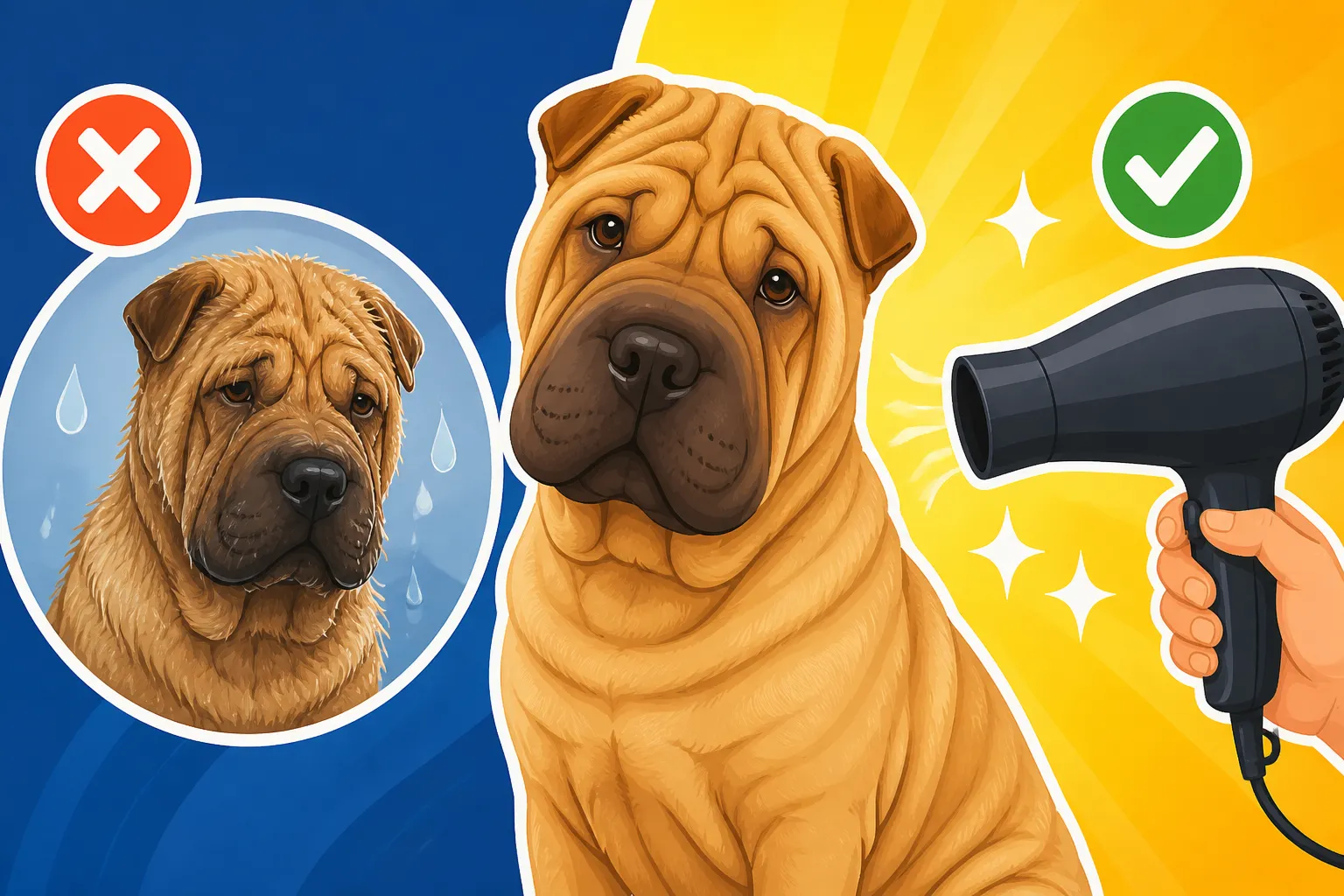
Think about what happens when moisture gets trapped in a warm, dark place. It becomes a breeding ground for all sorts of unwelcome guests – bacteria, yeast, and fungi – that thrive in such environments. For a Shar Pei, their abundant wrinkles create countless hidden pockets where water can linger, sometimes for hours, even after you think they're mostly dry. These deep folds, especially around the face, neck, tail, and even between their toes, are particularly vulnerable. It's not just the external skin folds either; their relatively dense coat, especially if it's a brush coat, can hold onto moisture close to the skin. This isn't just about feeling a bit damp; it's about creating a perfect incubator for skin infections.
I’ve heard countless stories from owners, myself included, who thought a good towel drying was enough, only to find red, angry skin or a tell-tale yeasty smell emerging a day or two later. That distinct, sweet-ish, often unpleasant odor is usually the first sign that yeast or bacteria are setting up shop, leading to conditions like skin fold dermatitis. This is why the drying process is perhaps even more critical than the washing itself. Drying Is More Important Than Washing on a Shar Pei isn't just a suggestion; it's a golden rule for this breed.
The Risks of Air Drying Alone
Many dogs can air dry with no issues, perhaps rolling around on the carpet a bit, shaking off excess water, and then they're good to go. A Shar Pei, however, is rarely one of those dogs. The depth and sheer number of their skin folds mean that even if their outer coat feels dry to the touch, moisture can still be trapped deep within the skin layers and folds. This prolonged dampness irritates the skin, breaks down its natural barrier, and allows opportunistic pathogens to take hold.
The consequences of insufficient drying can range from mild irritation to full-blown, painful infections. You might notice your Shar Pei scratching more, rubbing their face on furniture, or even developing a fever from the inflammation. These infections can become chronic if not addressed properly, leading to recurring veterinary visits, antibiotics, antifungals, and medicated shampoos. It's a frustrating cycle for both you and your beloved pet. Understanding Why a Damp Shar Pei Develops Infection is key to preventing these costly and uncomfortable health setbacks.
Understanding Blow Drying for Your Shar Pei
When it comes to blow drying, it’s not about blasting them with the hottest setting on your human hairdryer. That's a recipe for disaster, potentially causing skin burns or overheating. The goal is efficient, gentle drying that targets those tricky spots without causing distress. This means investing in the right tools and knowing how to use them effectively.
Choosing the Right Dryer and Technique
First and foremost, ditch the human hairdryer. They get too hot, are too loud, and can easily damage a dog's sensitive skin and ears. You need a dryer specifically designed for pets. These come in two main types: stand dryers and forced-air dryers (also known as high-velocity dryers).
Forced-air dryers are incredibly efficient because they blow a high volume of air, often without much heat, effectively "blasting" water off the coat. They can be a bit noisy, which requires careful introduction, but they are incredibly effective for getting water out of thick coats and deep folds. Stand dryers, on the other hand, allow you to have both hands free for brushing and manipulating folds, which can be a huge bonus. Many owners find a combination of a good forced-air dryer for initial drying and then a gentler stand dryer for finishing touches works best. Brands like Shernbao or B-Air (often found on Amazon or Chewy) offer reliable pet dryers that are much safer and more efficient than anything you'd use on your own hair.
When using any dryer, the technique is crucial. Always keep the nozzle moving. Never hold it in one spot, especially over a fold, as this can still concentrate heat and cause discomfort or burns. Use your free hand to gently open up skin folds, ensuring air gets into those crevices. Brush the coat as you dry to help separate hairs and further aid the drying process. The goal is to lift the coat and expose the skin to the airflow.
Gradual Introduction and Positive Reinforcement
Let's be real: a loud, air-blowing machine can be terrifying for a dog, especially a Shar Pei who might already be sensitive about handling. A gradual introduction is non-negotiable. Start by simply having the dryer in the room, turned off, letting your Shar Pei sniff it and get used to its presence. Offer treats and praise.
Next, turn it on in another room or a distant corner, letting them hear the sound from afar while continuing with positive reinforcement. Gradually, bring it closer, always pairing the sound with high-value treats and calm, reassuring words. When you finally introduce the air on their body, start with the lowest setting, farthest away, and in a less sensitive area like their back or hindquarters. Work in very short sessions, just a few seconds at a time, building up duration as they tolerate it.
It’s all about creating a positive association. Make it a game. Give them a special chew toy or a lick mat covered in something delicious while the dryer is on. If your Shar Pei shows signs of fear or stress – cowering, tail tucked, trying to escape, excessive panting – stop immediately. Pushing them too fast will only create a lifelong aversion. Patience is your best friend here. Remember, a forced-air dryer can be quite powerful, and its noise might even hurt their sensitive hearing, so be mindful of the noise level and their reaction.
Step-by-Step Guide to Blow Drying Your Shar Pei Safely
Now that you understand the "why" and "how" of choosing a dryer, let's walk through the actual drying process. This isn't a race; it's a methodical process that prioritizes your Shar Pei's comfort and, most importantly, their health.
Prepping for a Smooth Drying Session
Before you even turn on the water for the bath, set yourself up for success. Gather all your tools: a pet-specific blow dryer, several highly absorbent towels (microfiber works wonders), a good brush suitable for their coat type, and plenty of high-value treats. If your Shar Pei is particularly sensitive to noise, consider cotton balls or a Happy Hoodie (a soft, snug fabric band that covers their ears to dampen sound) to protect their ears during the drying process.
After the bath, the first step is always thorough towel drying. Don't just dab; gently but firmly rub with absorbent towels to remove as much surface water as possible. This significantly reduces the amount of time you'll need to spend with the blow dryer. Pay special attention to their head folds, neck wrinkles, and under the chin. How to Dry a Shar Pei Properly starts with this critical towel work. If you are doing a full bath, make sure you are using a shampoo that is gentle and appropriate for their skin. Which Shampoo Suits a Shar Pei's Skin is important, as harsh chemicals can exacerbate skin issues.
Once towel-dried, give your Shar Pei a short break, if needed, to shake off any remaining water and calm down before the dryer comes out. Have those treats ready to create a positive association from the very start of the drying session.
The Drying Process: Folds, Body, and Finish
Start with the forced-air dryer on a low setting and at a safe distance. Begin drying a less sensitive area first, like their back or shoulders, keeping the air moving constantly. As they get comfortable, you can gradually move to more sensitive areas.
Here's where the Shar Pei specific work comes in:
- Head and Face Folds: This is critical. Gently use one hand to spread open the prominent folds around their muzzle, eyes, and forehead. Direct the airflow into these crevices, ensuring they are completely dry. Be extremely careful around their eyes and ears. Many Shar Pei will need How Often a Shar Pei's Folds Need Cleaning, and thorough drying after a bath is part of that regular hygiene.
- Neck and Body Folds: Continue opening up any folds you find along their neck, chest, and body. Use the brush to lift their coat, allowing air to penetrate right down to the skin. Keep the dryer moving, never letting it linger in one spot.
- Legs and Paws: Don't forget their legs and especially between their toes. Moisture can get trapped here and cause irritation or yeast infections.
- Tail Fold: If your Shar Pei has a tight tail curl, gently lift it and dry the skin underneath. This area is often overlooked and can become a source of irritation.
- Ears: Shar Pei have notoriously narrow ear canals, making them prone to infections. While you shouldn't direct a forced-air dryer directly into the ear canal, gently dry the outer ear flaps and around the base of the ear. For proper ear hygiene, addressing The Shar Pei Ear You Cannot Reach Into requires careful veterinary guidance. If you notice a funny smell from the folds or ears, that's often What a Shar Pei's Skin Tells You Before Its Behavior Does about an impending issue.
As you dry, constantly feel their skin, especially in the folds, to check for any lingering dampness. You want them completely, bone-dry. Once you're confident they're dry everywhere, give them a final brush-through to ensure their coat is smooth and free of tangles. Reward them generously with praise and treats for their cooperation!
| Drying Method | Pros | Cons | Best Use for Shar Pei |
|---|---|---|---|
| Air Drying | No equipment needed, quiet | High risk of skin infections, takes a very long time | Not recommended for full baths; maybe minor spot cleaning |
| Towel Drying | Readily available, gentle, helps remove bulk water | Insufficient for full dryness in folds, still leaves dampness | Essential first step for all drying methods |
| Forced-Air Dryer | Highly efficient, blasts water off, speeds drying | Can be noisy, requires training/acclimation, can be powerful | Primary drying method for full baths, getting deep into folds |
| Stand Dryer | Hands-free operation, good for brushing while drying | Still noisy, less powerful than forced-air, takes up space | Finishing touches, owners who prefer two-hand grooming |
Alternative and Supplemental Drying Methods
While a blow dryer, particularly a forced-air pet dryer, is often the most effective tool for completely drying a Shar Pei, it's not the only component of a good drying strategy. Sometimes you need backup, or you need to manage the drying process in steps.
High-Quality Towels and Microfiber Wonders
Even if you use a powerful pet dryer, high-quality towels are still your first line of defense against dampness. They absorb a tremendous amount of water right after the bath, cutting down significantly on the time you'll spend with the dryer. Microfiber towels are particularly effective because of their super-absorbent properties. They can hold several times their weight in water and are soft enough not to irritate sensitive skin.
Invest in a few large, plush microfiber towels. After bathing, gently press and squeeze water from your Shar Pei's coat and then vigorously but carefully rub their body and folds. This initial towel-off is crucial for removing the bulk of the water and helps prepare their coat for the blow dryer. Remember, the less water the dryer has to remove, the quicker and less stressful the overall process will be. You can often find great multi-packs of these towels on Chewy or Amazon.
When Professional Grooming Might Be Best
Sometimes, despite your best efforts, blow-drying your Shar Pei at home feels like an Olympic sport, or perhaps you're just not getting them quite dry enough. This is where a professional groomer, ideally one experienced with Shar Pei, can be a lifesaver.
Professional groomers have industrial-strength forced-air dryers that are even more powerful than consumer models, and they are skilled in handling dogs, including those who are less than thrilled about the drying process. They know how to efficiently and safely dry every wrinkle and crevice, significantly reducing the risk of skin infections. While Whether a Shar Pei Owner Can Bathe at Home is certainly possible, opting for professional grooming, especially if your dog has chronic skin issues or you struggle with the drying, can be a worthwhile investment in your Shar Pei's health and your own peace of mind. Discussing your Shar Pei's specific needs, like their wrinkle depth or any known skin sensitivities, with the groomer beforehand is always a good idea. They might also be able to recommend specific shampoos or conditioners that benefit your dog's unique skin.
Disclaimer
This article is for general informational purposes only and does not constitute professional advice. Laws, prices and regulations vary by location and change over time. Consult a qualified professional for guidance on your specific situation.