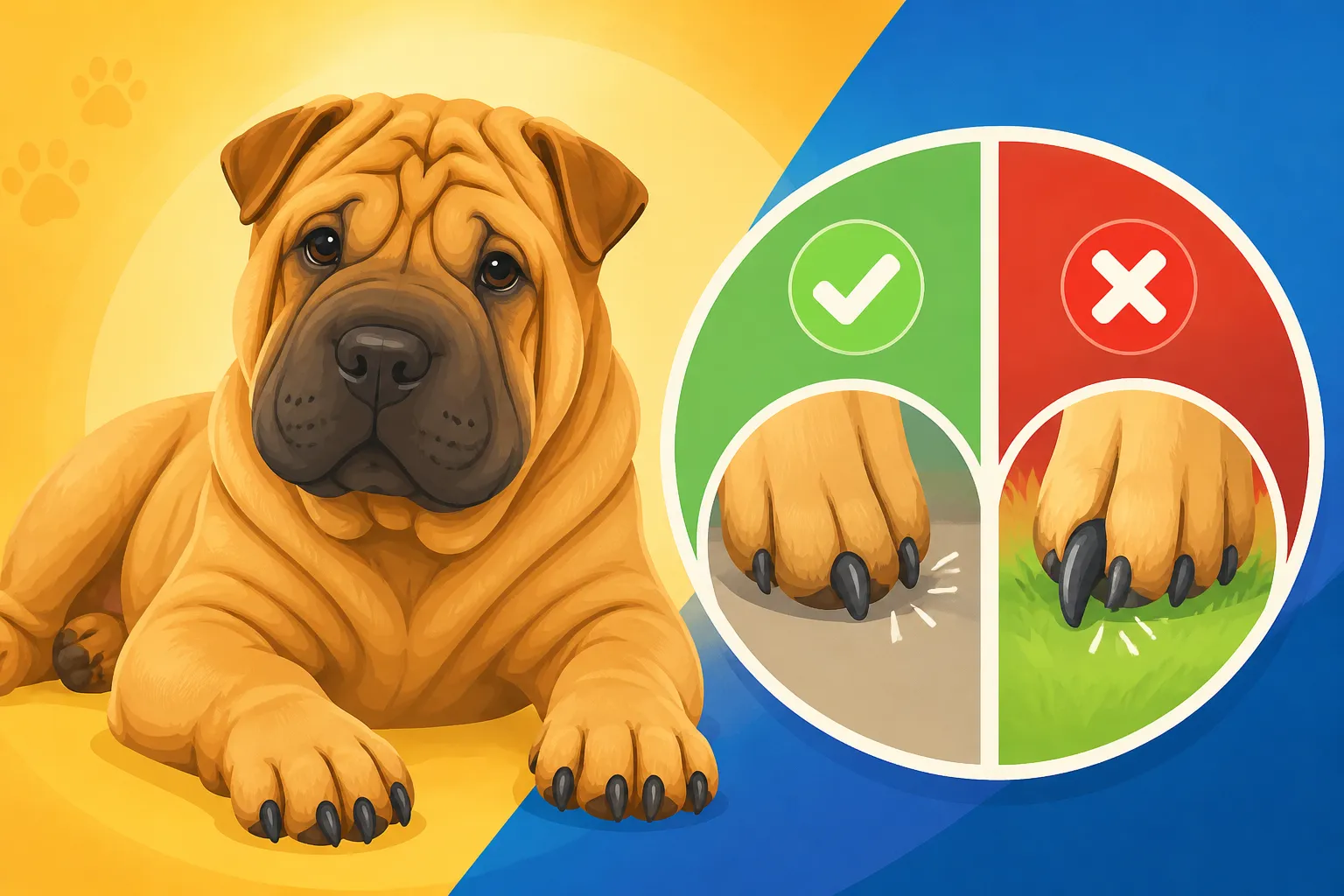
Whether a Shar Pei’s Nails Wear Down Naturally
As Shar Pei owners, we often hear whispers about how some dogs just "wear down their nails naturally" through daily walks and playtime. It’s a lovely thought, isn't it? The idea of skipping those sometimes-stressful nail trimming sessions. But for those of us sharing our lives with these wonderfully unique, sometimes challenging, dogs, the reality often hits differently. If you've found yourself staring at your Shar Pei's long claws and wondering if they're ever going to shorten themselves, you're not alone, and this guide is here to shed some realistic light on why "natural wear" usually isn't enough for our beloved wrinkled companions.
The Persistent Myth: Do Shar Pei Nails Truly Wear Down on Their Own?
Let's be upfront: for the vast majority of Shar Pei, the answer is a resounding "not sufficiently." The idea of natural wear often stems from observations of very active dogs, perhaps those that spend hours running on rough terrain or working outdoors, or even smaller, lighter breeds with different foot structures. While some level of wear certainly happens whenever your dog moves, it's rarely enough to maintain healthy nail length for a Shar Pei. This breed presents a unique combination of factors that actively work against the "natural wear" ideal, leading to nails that, left unchecked, can quickly become overgrown and problematic.
Think about it from a practical standpoint. How often is your Shar Pei truly trotting for miles on concrete or asphalt? Most urban or suburban dogs get walks on sidewalks, sure, but often on softer grass, dirt, or carpet indoors. These surfaces simply don't provide the abrasive friction needed to file down thick, strong nails effectively. And even if they did, a Shar Pei's particular build and gait often mean their nails don't make consistent, firm contact with the ground in a way that promotes even wear. It's a common frustration, and one that leads many well-meaning owners to realize they have to take matters into their own hands, literally, to keep those paws healthy.
What "Natural Wear" Actually Means
When people talk about natural nail wear, they're generally envisioning a dog whose nails are consistently kept short and blunt by their regular activities. Ideally, a dog's nails should not touch the ground when they are standing normally. If you can hear a clicking sound as your Shar Pei walks across a hard floor, their nails are already too long. This clicking isn't just an annoying sound; it's a sign that their nails are pushing back into the nail bed, distorting their paw structure, and potentially causing discomfort or pain.
For some breeds, particularly those with splayed feet or lighter body weights that allow for more consistent nail-to-ground contact on abrasive surfaces, "natural wear" can actually be quite effective. Imagine a working dog on a farm, constantly moving over varied terrain. That's the ideal scenario for natural wear. But our Shar Pei, often content with a good walk and then a long nap on the couch, just don't typically engage in the kind of high-abrasion activities needed for this to happen. The reality is that for most pampered pups, and especially our Shar Pei with their unique physical characteristics, human intervention is almost always necessary.
The Shar Pei's Unique Challenges with Nail Wear
Our Shar Pei are just built a little differently, aren't they? Their heavy bodies, often combined with somewhat smaller, compact feet, means that their weight distribution can actually lift the nails slightly off the ground, reducing the friction that would otherwise contribute to wear. Add to that their often calm, deliberate gait, and you have a recipe for nails that simply aren't getting the workout they need to stay short.
Moreover, the texture and thickness of a Shar Pei's nails can vary, but generally, they tend to be quite strong and sturdy. They're not delicate little claws that easily chip or file down. This robustness, while good for durability in other contexts, means they need a more aggressive approach to trimming than what natural abrasion can provide. It's not a fault of the dog, or the owner; it's just a reality of the breed's physical makeup and lifestyle for most modern Shar Pei. Understanding this is the first step in accepting that regular nail care is a non-negotiable part of responsible Shar Pei ownership.
Why Natural Wear Isn't Enough for Most Shar Pei
It boils down to a few key factors that are quite specific to our wonderful wrinkly friends. It’s not about how much you love them or how many walks you take; it’s about their anatomy, their typical activity levels, and even the surfaces they most often encounter.
Anatomy and Gait: The Shar Pei's Walking Style
Take a moment to observe your Shar Pei walking, especially on a hard surface. You might notice their distinctive, somewhat deliberate gait. While elegant in its own way, it's often not the kind of stride that forces consistent, high-friction contact between their nails and the ground. Many Shar Pei tend to walk with their toes slightly curled or lifted, minimizing the scraping action that would naturally wear down the tips of their nails.
Their sturdy, often compact feet, while offering good support, don't always splay out in a way that allows the nails to meet abrasive surfaces head-on. Furthermore, the sheer weight of a Shar Pei's body can mean that even if the nails do touch, the pressure might not be distributed optimally for wear. Instead of grinding down, the nail might just push against the ground, transferring the pressure up into the toe joints rather than wearing away the nail itself. This subtle interaction, over time, can make nails even more prone to overgrowth.
Activity Levels and Environment
Let’s be honest, while some Shar Pei are veritable athletes, many are perfectly happy with a brisk walk or two and then some serious couch potato time. They’re not typically long-distance runners, nor do they often spend their days herding sheep or traversing rocky trails. Their exercise needs are moderate, often around An Hour a Day Suits a Shar Pei, and Heat Cuts It Short, but this doesn't always translate to the kind of vigorous activity that naturally files nails.
The surfaces your Shar Pei walks on also play a huge role. Walks on grass, dirt, or padded indoor flooring provide very little abrasive wear. Even concrete, while better than grass, often isn't enough to keep up with nail growth, especially if the walks are relatively short or infrequent. Imagine trying to file your own fingernails by simply walking around; it's just not effective. Our dogs need dedicated nail care because their daily lives, for the most part, simply don’t offer the consistent, high-friction environment needed for natural wear. It's not a criticism, just a fact of modern dog ownership.
| Surface Type | Abrasion Level (for nails) | Typical Shar Pei Activity | Impact on Natural Wear |
|---|---|---|---|
| Concrete/Asphalt | Moderate to High | Daily walks | Some wear, often insufficient for full trim |
| Gravel/Rocky Paths | High | Occasional hikes | Good wear, but not consistent enough for most dogs |
| Grass/Dirt | Low | Backyard play, park walks | Minimal to no wear |
| Carpet/Indoors | Very Low | Resting, indoor play | No effective wear |
| Sand | Moderate | Beach trips (rare) | Can smooth, but rarely shortens significantly |
The Quick: A Living Part of the Nail
One of the biggest misunderstandings about dog nails is the "quick." The quick is a living tissue inside each nail that contains blood vessels and nerves. When nails are allowed to grow long, the quick grows with them. This is the real kicker – even if the very tip of an overgrown nail wears down, the quick is still extended. This means you can't just trim a very long nail back to a healthy length in one go, because you'd cut into the quick, causing pain and bleeding.
This is why How Often a Shar Pei's Nails Need Trimming is so crucial. Regular, small trims actually encourage the quick to recede, allowing you to gradually shorten the nails to their appropriate length. If you only trim when they become excessively long, you’re constantly battling a recessed quick, making the task harder, more stressful for your dog, and more prone to accidental nicks. It's a continuous process, not a one-time fix that natural wear could ever hope to accomplish.
The Silent Dangers of Neglected Shar Pei Nails
Leaving your Shar Pei’s nails to their own devices can lead to a cascade of problems that go far beyond just aesthetics. These issues can be painful, impact their mobility, and even lead to more significant health complications over time. It's a silent problem because dogs are incredibly stoic, and our Shar Pei are particularly known for their ability to Whether a Shar Pei Hides Pain, making it even more important for us to be proactive guardians of their well-being.
Pain and Discomfort
The most immediate and obvious danger of overgrown nails is physical pain. When a Shar Pei’s nails get too long, they hit the ground with every step. This constant pressure pushes the nail back into the nail bed, creating discomfort in the toe joints. Imagine walking with tiny pebbles permanently stuck under your toenails – that’s a bit like what your dog might feel. This pain can be subtle at first, manifesting as a reluctance to walk, a slight limp, or just being less enthusiastic about their usual activities.
Over time, this discomfort can worsen. The pressure can cause the toes to splay out unnaturally or force the paw to compensate, leading to uneven weight distribution. This can strain muscles, ligaments, and tendons further up the leg, affecting their posture and even their spine. It's a domino effect, all stemming from something as seemingly simple as a neglected nail.
Impaired Mobility and Joint Problems
When nails are too long, they change the way your Shar Pei’s paw interacts with the ground. Instead of landing on the tough paw pads, the weight shifts onto the nails. This not only causes discomfort but also reduces traction. Your dog might slip more easily on hard floors, leading to falls or injuries. Over time, this unnatural posture can lead to or exacerbate joint problems, particularly in the ankles, knees, and hips.
For a breed that can already be prone to certain orthopedic considerations due to their sturdy build, adding the stress of overgrown nails is a serious concern. It can limit their willingness to walk, run, or play, robbing them of joy and necessary exercise. An old Shar Pei, who might already be navigating some age-related stiffness, would find overgrown nails particularly debilitating, making it harder for them to maintain a good quality of life in their senior years. Caring for a Shar Pei Past Seven definitely includes meticulous paw care.
Increased Risk of Injury and Infection
Long nails are also more prone to catching on things, snagging on carpet, or breaking. A broken nail, especially if it tears deeply into the quick, is incredibly painful and will often bleed profusely. This type of injury almost always requires a vet visit to clean, trim, and potentially bandage, to prevent infection. An open wound in the paw area is highly susceptible to bacterial contamination, especially since dogs walk on all sorts of surfaces.
Even without a full break, chronically long nails can cause stress fractures or micro-traumas to the nail bed. These small injuries can become entry points for bacteria or fungi, leading to persistent and difficult-to-treat infections. You might notice your Shar Pei licking their paws excessively, or a foul odor emanating from their feet – these can be signs of infection that have taken hold due to compromised nail health. Neglecting something as simple as nail trimming can inadvertently open the door to far more serious and painful medical issues.
Proactive Pawdicures: Taking Charge of Your Shar Pei's Nail Health
Alright, so natural wear is a bust for our Shar Pei. That means it's up to us to keep those nails in tip-top shape! Don't fret, it might seem daunting at first, especially if your Shar Pei isn't thrilled about paw handling, but with patience, the right tools, and a consistent routine, you can make nail care a much more manageable, even positive, experience. Think of it as a bonding activity, a "pawdicure" session!
Essential Tools for Shar Pei Nail Care
Having the right equipment is half the battle. You have two main options: clippers or a grinder.
- Nail Clippers: There are two main types: scissor-style (often called "Guillotine" style) and plier-style. For a Shar Pei's sturdy nails, plier-style clippers with sharp blades are generally recommended as they provide more leverage and a cleaner cut, reducing the chance of crushing the nail. Brands like Safari or Resco are popular and can be found on Chewy or Amazon. Make sure they are sharp; dull clippers will just make the job harder and more uncomfortable for your dog.
- Nail Grinders (Dremel-style): Many Shar Pei owners find a dremel tool, or a pet-specific nail grinder, to be a game-changer. These tools use a rotating abrasive head to grind the nail down smoothly. This method allows for more precise control, significantly reduces the risk of cutting into the quick (especially if you take your time), and leaves a smoother finish, which is great for preventing snags. It can be a bit noisy and vibrate, so desensitization is key. Whether a Dremel Suits a Shar Pei's Nails is a topic many owners explore for their comfort and their dog's. You can find excellent pet-friendly grinders on Amazon or Chewy.
- Styptic Powder: Always, always have styptic powder (like Kwik Stop) on hand. Accidents happen, especially when you're learning, and this powder will quickly stop bleeding if you nick the quick. It's a safety net that provides peace of mind.
- High-Value Treats: Crucial for positive reinforcement! Small, soft, incredibly delicious treats will be your best friend in making nail trims a good experience. Ollie's fresh food rolls, cut into tiny pieces, work wonders for many dogs.
Creating a Positive Routine
The key to successful nail care is starting early and making it positive. If you have a Shar Pei puppy, begin handling their paws frequently, gently squeezing their toes and touching their nails, rewarding them with treats and praise. This builds a foundation of trust and acceptance. For adult Shar Pei who might be more sensitive, it's about gradual desensitization and counter-conditioning.
- Introduce the Tools: Let your Shar Pei sniff the clippers or grinder. Turn the grinder on briefly, far away, and give treats. Slowly bring it closer over days or weeks, always pairing it with positive experiences.
- Touch and Reward: Start by just touching a paw, then treating. Progress to touching a nail, then treating. Slowly work your way up to touching a nail with the tool, then making a small clip or grind.
- Short Sessions: Keep sessions very short, especially at first – just a few seconds or one nail, then stop and praise generously. It's better to do one nail well and have a positive experience than to struggle through all four paws and create a negative association.
- Consistency is King: Regular, frequent trims are far less stressful than infrequent, extensive ones. Aim for once a week or every two weeks, even if it's just to take off tiny tips. This keeps the quick receding and prevents the nails from getting too long in the first place. This is essential, as Whether a Shar Pei Tolerates Nail Trimming is highly dependent on consistent, positive exposure.
- Professional Help: Don't hesitate to consult your vet or a professional groomer if you're struggling. They can demonstrate proper technique, or even do the trims for you until you feel more comfortable. Sometimes, a professional touch helps get the nails back to a manageable length before you take over maintenance.
Nail care might not be the most glamorous part of Shar Pei ownership, but it's one of the most vital for their long-term health and comfort. By understanding why natural wear isn't enough and committing to a consistent, positive routine, you'll ensure your Shar Pei's paws are happy and healthy for years to come. Remember, those little "small jobs" like nail trims are just as important as the big stuff for their overall well-being! Nails, Teeth and the Small Jobs on a Shar Pei are the foundation of good care.
Disclaimer
This article is for general informational purposes only and does not constitute professional advice. Laws, prices and regulations vary by location and change over time. Consult a qualified professional for guidance on your specific situation.