What the Shar Pei Was Used For in China
When you look at a modern Shar Pei, curled up on the sofa or trotting along on a leash, it's easy to forget that this wonderfully unique dog has a long, storied past rooted in utility and hard work in ancient China. Many owners today might be surprised to learn that these loving companions were once much more than just pretty faces with wrinkled brows; they were truly multi-faceted working dogs, bred for a range of demanding tasks that speak volumes about their inherent intelligence, tenacity, and independent spirit. This guide will explore the fascinating historical roles the Shar Pei played, shedding light on how these roles shaped the breed we know and love today.
The Ancient Origins of the Shar Pei's Work Ethic
To truly understand the Shar Pei, we have to travel back in time to the southern provinces of China, particularly around the city of Dialak in the Kwangtung province. Here, these dogs were not pampered pets but integral members of rural households, performing vital duties that contributed directly to the family's survival and security. Their lineage stretches back centuries, with archaeological evidence suggesting dogs resembling the Shar Pei were present in China during the Han Dynasty (206 BC to 220 AD). These were robust, versatile dogs, prized for their physical capabilities and unwavering loyalty, though not necessarily to a single handler in the way some modern breeds are. They were very much a product of their environment and the needs of the people who bred them.
From Farm Dog to Feared Guardian: Protecting Property and Livestock
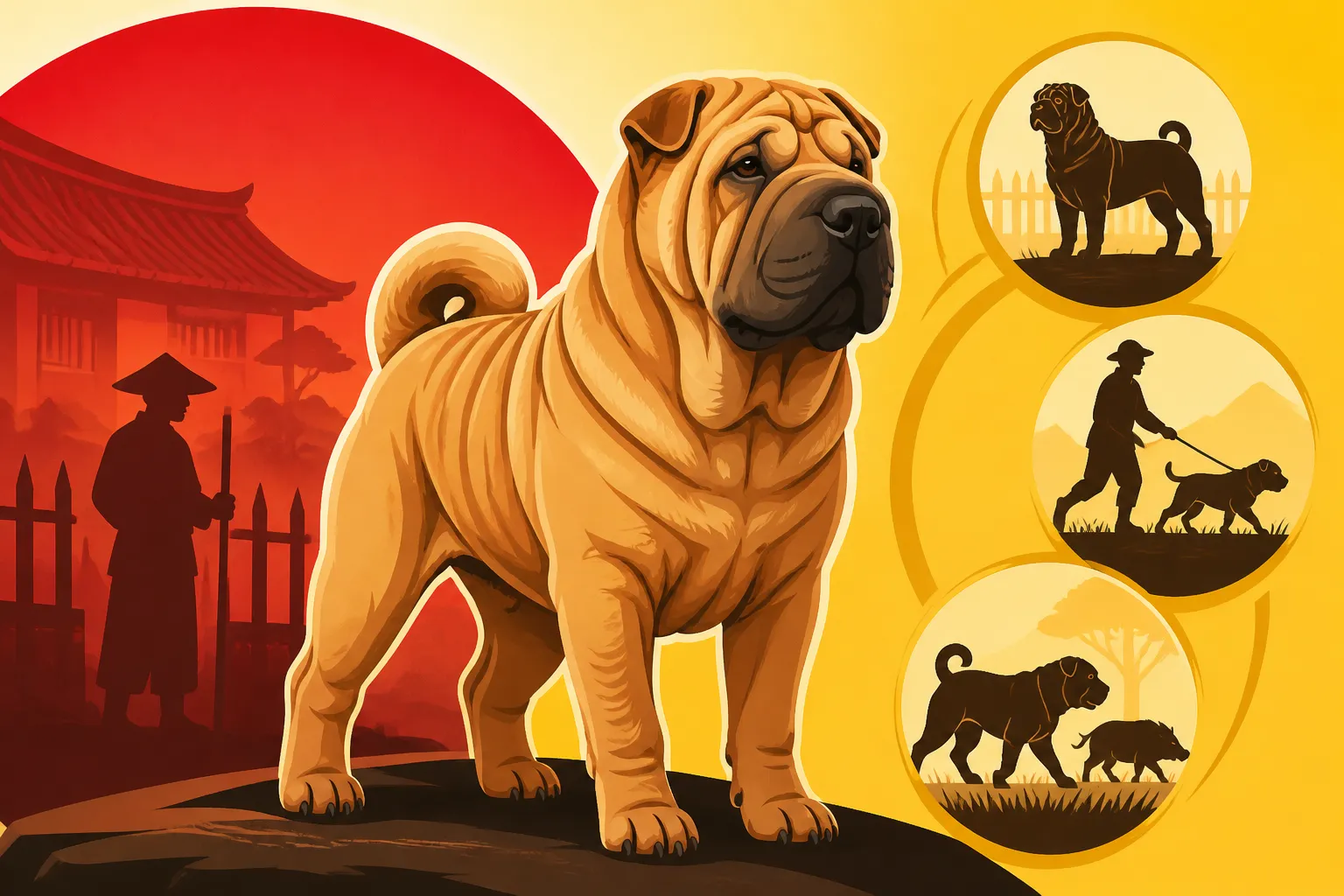
One of the primary and most critical roles of the ancient Shar Pei was that of a guardian. They were the vigilant sentinels of farms, homes, and livestock, tasked with protecting their families and property from various threats, both animal and human. Imagine a small, remote farmstead, often isolated, where the safety of the harvest, the integrity of the livestock, and the well-being of the family depended heavily on a watchful eye and a strong deterrent. This is where the Shar Pei excelled. Their keen senses and natural wariness of strangers made them ideal guard dogs, sounding the alarm at any perceived intrusion and standing their ground with courage. What a Shar Pei Was Originally Bred to Do gives more context on this foundational role.
These dogs weren't just alarm bells; they were formidable protectors. They had to be capable of deterring predators like wolves, wild dogs, and even human thieves who might attempt to steal precious resources. Their loose skin, often a hallmark of the breed, wasn't just for show; it offered a defensive advantage, making it difficult for an aggressor to get a solid grip during a confrontation. This physical trait, combined with their powerful build and stoic demeanor, allowed them to hold their own, sometimes against much larger threats. The Shar Pei's protective instincts are deeply ingrained, a legacy of centuries spent safeguarding their families and everything they owned.
The Shar Pei as a Hunter and Game Dog
Beyond their guarding duties, the Shar Pei also proved itself highly capable in the field as a hunter. They were not typically used for delicate retrieving or pointing specific game, but rather for a more direct, pragmatic approach to hunting, often for sustenance. In rural China, every resource counted, and a dog that could assist in acquiring food was invaluable. The Shar Pei's athleticism, stamina, and strong prey drive made them effective in flushing out and catching small game like rabbits and pheasants, contributing meat to the family's table. What Job the Shar Pei Held in Rural China often involved these kinds of practical, daily tasks.
Their physical characteristics, such as their compact, muscular build and surprising agility, were well-suited to navigating diverse terrains, from dense undergrowth to open fields. These dogs possessed the intelligence to track and the endurance to pursue, making them versatile partners in the hunt. They weren't just chasing prey; they were actively engaging with it, showcasing a tenacious spirit that is still evident in the breed today. This hunting background contributes to their independent nature and problem-solving abilities, as they often had to make decisions quickly and without constant human direction in the pursuit of game.
The Shar Pei's Role in a Changing Chinese Society
As society evolved, so did the specific demands placed upon working dogs like the Shar Pei. While their core instincts remained, their roles sometimes adapted to the changing landscape of rural and even semi-urban life. The pressures of population growth, resource scarcity, and evolving economic structures meant that dogs often had to be even more self-sufficient and capable of performing multiple duties for their human companions. This adaptability ensured their continued presence and value within Chinese households for centuries.
Guarding Against Human Intrusion
The Shar Pei's reputation as a vigilant guardian naturally extended to protecting against human threats. In a world where law enforcement might be distant and property ownership tenuous, a loyal and fierce dog was often the best defense a family had. They were not merely pets; they were living security systems, an important deterrent against banditry or opportunistic theft. Their reserved nature and inherent suspicion of strangers, traits that some modern owners might find challenging, were once highly desirable attributes that ensured the safety of their homes. This made them excellent watchdogs, instinctively aware of their surroundings. How a Shar Pei Guards Its Food and Its Doorway today is a direct echo of this ancestral need for security.
The intensity of their guarding instinct meant they were often quite territorial, especially around their home and their people. They weren't necessarily looking to engage in a fight, but they certainly weren't going to back down from one if their family or property was threatened. This serious demeanor, coupled with their powerful build, commanded respect and often deterred potential intruders before any physical confrontation was necessary. Their alert nature meant few things escaped their notice, making them an ever-present, silent sentry that families relied upon deeply for peace of mind.
Companion to the Peasant Class
While undeniably working dogs, the Shar Pei also served as steadfast companions, particularly for the peasant class. In harsh economic times and often isolated rural settings, a dog was more than just a tool; it was a loyal friend, a confidant, and a source of comfort. They shared the meager existence of their owners, often living close by and forming strong, if sometimes subtle, bonds. This companionship wasn't about elaborate games or constant affection, but about a deep, mutual understanding and shared purpose. They were silent partners in daily life, providing a sense of security and presence in often lonely circumstances.
This role as a companion, especially in working households, highlights the Shar Pei's deep loyalty to its chosen family. They might be aloof with strangers, but they are incredibly devoted to those they consider their own. This blend of fierce protectiveness and quiet companionship made them invaluable members of the family unit. They weren't just working alongside their owners; they were living alongside them, enduring the same hardships and sharing in the small joys of daily life. Even today, many Shar Pei retain this quiet devotion, preferring the company of their immediate family over boisterous interactions with outsiders.
Physical Attributes Tailored for Specific Tasks
The unique physical characteristics of the Shar Pei – those wrinkles, that coarse coat, the distinct head shape – are not arbitrary. They are a direct result of centuries of selective breeding for specific functions in ancient China. Each trait had a purpose, contributing to the dog's effectiveness in its roles as guardian, hunter, and, unfortunately, sometimes even as a combatant. Understanding these origins helps us appreciate the breed's functional beauty, rather than seeing these traits merely as aesthetic quirks.
The Loose Skin: More Than Just a Wrinkle
Perhaps the most iconic feature of the Shar Pei is its profusion of loose skin and deep wrinkles. While aesthetically pleasing to many, this trait was primarily functional in its historical context, particularly when the dog was used in guarding or even in the grim reality of dog fighting. If an aggressor, whether animal or human, managed to grab hold of the dog, the loose skin allowed the Shar Pei to twist and turn within its own hide, often freeing itself and gaining a crucial advantage to retaliate. This made it incredibly difficult for an opponent to maintain a grip or inflict a serious, debilitating bite. Whether a Shar Pei's Loose Skin Was Bred for Fighting delves deeper into this aspect.
This protective skin barrier was a critical defense mechanism, minimizing damage to vital organs and allowing the dog to continue its protective duties. It also provided a degree of shock absorption during physical altercations. The deep folds around the neck and shoulders were strategic, offering maximum protection where a bite could be most incapacitating. While modern Shar Pei owners may face challenges like Skin Fold Dermatitis on a Shar Pei due to these wrinkles, their historical purpose was entirely practical and survival-oriented, reflecting the harsh realities of their working lives.
The Powerful Jaws and Independent Spirit
The Shar Pei possesses a formidable set of jaws and a strong, robust bite. This physical attribute was essential for a dog tasked with guarding livestock, hunting game, and deterring intruders. Their powerful bite force allowed them to effectively hold struggling prey or to defend themselves and their territory with decisive action. This isn't a dog designed for nips or warnings; when a Shar Pei commits, it does so with significant physical capability. Providing appropriate chew toys and training for bite inhibition from a young age is paramount, and many owners find durable options at retailers like Chewy invaluable for these powerful jaws.
Coupled with their physical strength is an independent and somewhat stubborn spirit. This trait, often a challenge for modern owners, was a necessity for a dog that had to make quick decisions and act autonomously in the absence of direct human command. When guarding a remote farm or pursuing game, the dog couldn't wait for instructions. It had to assess the situation and react effectively on its own initiative. This independence is a legacy of their working past, where self-reliance was a virtue. The Headstrong Streak Nobody Trains Out of a Shar Pei is a testament to this deep-seated trait.
The Horse Coat's Practicality
The traditional Shar Pei often sported what is known as a "horse coat"—a very short, harsh, and bristly fur that feels somewhat coarse to the touch, almost like sandpaper. This unique coat type also served a practical purpose in their working lives. In a world without readily available grooming tools or regular baths, a coat that naturally repelled dirt and debris was highly advantageous. The harsh texture meant that burrs, thorns, and other foreign objects were less likely to embed themselves deeply, making it easier for the dog to keep itself clean in rugged environments.
Furthermore, this coat offered protection from minor scrapes and scratches during hunts through brush or while patrolling rough terrain. It was a low-maintenance, durable covering perfectly suited for a utilitarian dog. While some modern Shar Pei have a softer "brush coat," the horse coat is considered by many to be closer to the original working type. Managing either coat type today requires understanding its properties, and good quality grooming tools, often found at places like Chewy, can make a real difference in keeping their skin healthy.
The Decline and Rediscovery of the Working Shar Pei
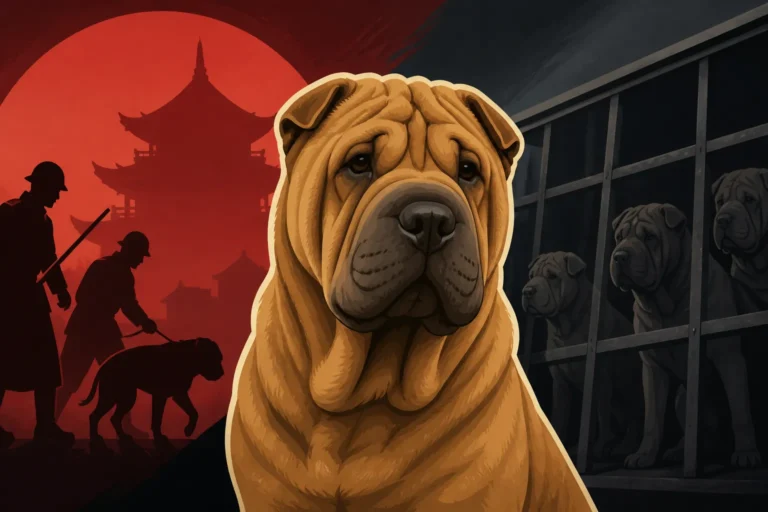
The long and stable history of the Shar Pei in China faced immense challenges in the 20th century. Political and economic upheavals, particularly during the mid-20th century, led to a dramatic decline in dog populations across mainland China. Dogs, once valued members of the household, became symbols of bourgeois decadence, and stringent taxes and official policies actively discouraged dog ownership. This period nearly led to the extinction of the breed, a stark reminder of how quickly centuries of tradition can be undone. Sixty Shar Pei Were Left in 1978 captures the dire situation the breed faced.
The Impact of Political and Economic Changes
During the establishment of the People's Republic of China, and especially during the Cultural Revolution, dog ownership was largely outlawed or made prohibitively expensive through heavy taxation. Dogs were seen as luxuries that diverted resources and attention from the collective effort. This devastating period meant that countless dogs, including the Shar Pei, were culled, and their numbers plummeted to critically low levels. The rich tapestry of working dog traditions was all but erased in mainland China. Only a handful of individuals in Hong Kong and Taiwan managed to keep the breed alive, recognizing its unique cultural and historical significance.
This period of severe decline meant that the working roles of the Shar Pei were largely abandoned. Survival became the primary concern, and the selective breeding for specific working traits ceased. The focus shifted from utility to mere preservation of the breed itself. The dogs that survived were often those smuggled out or carefully hidden, carrying with them the last vestiges of their ancient lineage, but no longer actively engaged in the demanding jobs that had once defined them. What Being Saved Did to the Shar Pei's Health is a topic that closely follows this period of near extinction and subsequent revival.
Modern Perceptions Versus Ancient Purpose
Today, the Shar Pei is primarily known as a companion animal and a show dog, particularly in Western countries. The intense working life of their ancestors—guarding, hunting, and fighting—is largely a thing of the past. Modern breeding efforts have focused more on conformation and temperament suitable for family life, sometimes at the expense of understanding or preserving their original working drives. This shift has led to some interesting contradictions; while Shar Pei are undeniably loving and loyal, their deeply ingrained independence, territoriality, and sometimes reserved nature can be misinterpreted as stubbornness or aloofness, rather than the vestiges of a highly capable, self-reliant working dog.
For instance, their natural tendency to guard property might manifest as resource guarding or suspicion of strangers, requiring careful socialization and training. Their strong prey drive might still surface, making them a challenge with smaller pets or in unfenced areas. Understanding their ancient purpose helps owners appreciate why their Shar Pei behaves in certain ways and empowers them to manage these traits effectively and empathetically. It's a journey from ancient China to our modern homes, and respecting that history is key to a harmonious life with this extraordinary breed. For owners seeking appropriate training aids or enrichment tools that cater to their Shar Pei's instincts, reputable pet supply sites like Chewy offer a wide array of options.
| Historical Role | Associated Physical/Temperamental Trait | Modern Manifestation (and potential challenge) |
|---|---|---|
| Guardian/Watchdog | Alertness, territoriality, suspicion | Resource guarding, aloofness with strangers |
| Hunter/Game Dog | Strong prey drive, independence, tenacity | Chasing small animals, stubbornness in training |
| Protector (Combat) | Loose skin, powerful jaws, stoicism | Skin fold issues, strong bite, reserved demeanor |
| Farm Dog (Versatile) | Hardiness, low maintenance (horse coat) | Resilient health (if well-bred), unique grooming needs |
| Peasant Companion | Loyalty, devotion to chosen family | One-person dog, separation anxiety if not managed |
Disclaimer
This article is for general informational purposes only and does not constitute professional advice. Laws, prices and regulations vary by location and change over time. Consult a qualified professional for guidance on your specific situation.