Whether the Shar Pei Is on a Watch List
A Shar Pei may appear on a breed-health or show-conformation watch list, but “watch list” does not mean the same thing everywhere. Some lists flag physical traits judges should monitor; others track health concerns or conservation status. This guide explains what the label can mean, how to check which list is being discussed, and what it does—and does not—tell you about an individual dog.
Is the Shar Pei on a watch list
The answer depends on which list you mean
There is no single worldwide watch list for dog breeds. A kennel club, animal-welfare group, veterinary organization, or conservation project may each use the term for a different purpose. So a post saying “the Shar Pei is on a watch list” needs a follow-up question: whose list, and what is it monitoring?
In the United Kingdom, the Kennel Club’s Breed Watch framework has identified Shar Pei as a breed requiring particular attention in the show environment. The framework is concerned with whether dogs show visible signs linked to health or welfare, and with encouraging judges to notice and respond to them. Its categories and guidance can change, so check the Kennel Club’s current Breed Watch information if you need the present classification.
That kind of listing is not the same as a government declaring the breed endangered, banning ownership, or deciding that every Shar Pei is unhealthy. Nor does a watch-list designation diagnose your dog. It is a signal to pay attention to breed-related issues and the way dogs are bred, presented, and assessed.
“Watch list” can refer to very different concerns
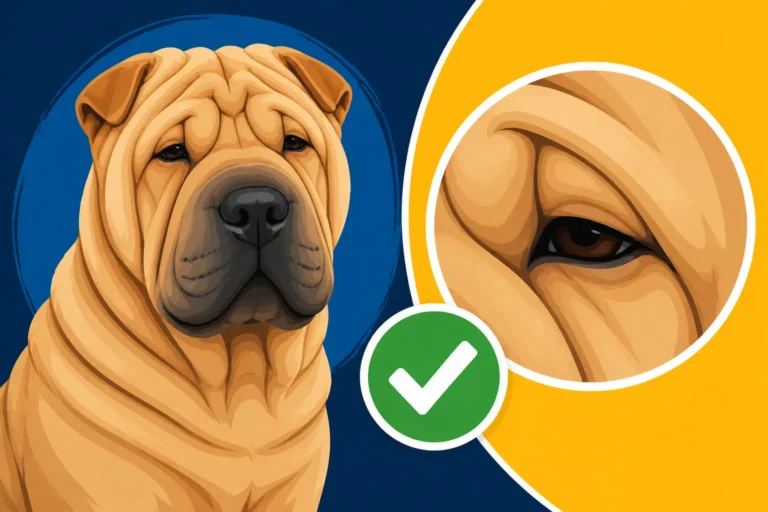
A show-focused list may draw attention to physical features that could affect a dog’s comfort or function. With Shar Pei, that discussion can involve heavy skin folds, eyes and eyelids, the muzzle, and other features associated with the breed’s appearance. The point is not that every dog with folds has a problem; it is that visible traits should not be valued over health and ease of movement.
A health-focused list has a different purpose. It may highlight conditions that deserve awareness in a breed, such as skin or ear problems, entropion, and Shar Pei fever with its possible connection to amyloidosis. These concerns call for sensible health care, not a blanket assumption that a particular dog is ill. A useful overview of how breeding choices and the breed’s modern history intersect is What Being Saved Did to the Shar Pei's Health.
A conservation list would ask another question entirely: whether a population is small or at risk of disappearing. That is not what a show-conformation watch list measures. If a claim does not name the organization or explain what “watch” means, treat it as incomplete rather than as a definitive verdict on the breed.
What a watch-list designation means for the breed
It draws attention to welfare, not just appearance
The Shar Pei’s distinctive look is part of its appeal, but no single feature should be judged in isolation from the dog’s comfort. A responsible discussion asks whether a dog can see, breathe, move, eat, and live normally—not simply whether it looks especially wrinkled or conforms to a fashionable image.
That distinction matters in everyday decisions, too. A prospective owner may see a dramatic photograph and assume that abundant folds are the ideal. A watch-list discussion should instead prompt questions about the dog’s health, the parents’ history, and the breeder’s priorities. For background on how the breed’s appearance developed, see Whether the Shar Pei Was Bred for Wrinkles After 1980.
A designation is also not proof that every breeder is acting irresponsibly or that every Shar Pei has the same risks. It is a reason to look beyond promotional language and ask for practical information. Can the dog open its eyes comfortably? Are skin folds being kept clean and dry? Has the breeder discussed known health issues candidly? Those questions are more useful than judging a puppy by how wrinkled it looks.
It can encourage better judging and breeding conversations
When a breed is watched in a show setting, judges may be asked to notice signs that a dog’s condition or exaggeration of a trait could affect welfare. That can help make health part of the conversation around what is rewarded. It does not, by itself, change every breeding decision or guarantee that a puppy will be healthy.
For breeders, a watch-list designation can be an invitation to examine priorities: selecting for functional features, considering family health history, and being open with puppy buyers. For owners, it can be a reason to ask how the breeder thinks about health rather than relying on a general claim that a line is “healthy.” The broader question of changing breed standards is explored in Whether the Shar Pei Standard Should Change.
The idea is not to demand a dog with no breed traits. It is to distinguish a healthy expression of those traits from an extreme that interferes with comfort. A moderate appearance does not guarantee good health, and a very wrinkled appearance alone cannot diagnose a problem. The dog’s actual condition and veterinary assessment matter.
What the designation does not tell you about an individual Shar Pei
It is not a diagnosis or a prediction
A breed listing describes a population-level concern or a standard for observation. It does not tell you whether one particular Shar Pei has a skin infection, an eye condition, or a fever episode. Those questions depend on the dog’s signs, medical history, and examination.
For example, a dog with facial folds that are clean, dry, and not irritated is not automatically experiencing a skin disorder. On the other hand, redness, odor, discharge, persistent scratching, or discomfort deserves attention even if the dog has never appeared on any list. Breed awareness can help you notice changes, but it cannot replace veterinary care.
The same applies to Shar Pei fever and kidney monitoring. A watch-list label does not mean your dog will develop either problem. It can, however, remind you to learn what signs warrant prompt veterinary advice and to discuss an appropriate health-monitoring plan. For a closer look at the breed’s health concerns, read One Mutation Gave the Shar Pei Its Wrinkles and Its Fever and Why a Shar Pei's Kidneys Need Watching From Two Years Old.
It does not automatically change ownership rules
A breed-health or show-watch designation is not the same as a legal restriction. It does not, by itself, mean that an owner must register a dog, stop breeding, or change insurance. Rules and terminology vary by country and organization, so check the relevant authority if the question concerns an actual legal requirement.
It also does not automatically affect whether a dog can be registered or entered in a show. Kennel clubs have their own standards, registration policies, and event rules. If you are buying a puppy, showing a dog, or considering breeding, ask the relevant club or event organizer for the current requirements rather than assuming that a watch-list label answers those questions.
A listing is also not a product recommendation. If your veterinarian recommends particular cleaning or care supplies, you might find routine items through a retailer such as Chewy, but a retailer’s product information cannot confirm a breed’s official watch-list status or diagnose a health problem. Chewy can be a place to source ordinary supplies; the organization named on the list is the place to verify the designation.
How to check a watch-list claim and respond sensibly
Identify the organization and the purpose of the list
When you encounter a claim online, look for the name of the organization that maintains the list. Then check the list itself, not just a screenshot or a social-media caption. Look for a date or update note, the exact name of the breed, and an explanation of what is being monitored. A list called “Breed Watch” may focus on show-ring health observations, while another organization may use “watch” in an entirely different sense.
Use this quick guide to keep the categories separate:
| Type of list | What it generally monitors | What it does not establish |
|---|---|---|
| Show or conformation watch | Whether visible features or conditions may affect welfare in the show environment | That every dog in the breed is unhealthy |
| Breed-health guidance | Conditions or risks that owners and breeders should understand | A diagnosis for an individual dog |
| Conservation or population list | Population size or risk of a breed disappearing | Whether a dog is suitable for a particular home |
| Legal or regulatory list | Requirements imposed by a jurisdiction | A universal rule that applies in every country |
If the source is unclear, search for the organization’s own explanation of its criteria. For international context, kennel-club recognition and standards are not identical in every country; Whether the Shar Pei Is Recognized Worldwide offers a useful starting point for understanding those differences.
Turn the information into practical questions
If you already own a Shar Pei, the most useful response is steady, routine care—not panic. Keep regular veterinary appointments, mention the breed’s relevant health history, and ask what signs should prompt an earlier visit. Watch for changes in the eyes, skin, ears, energy, appetite, comfort, or movement. If something seems wrong, describe what you have noticed rather than trying to diagnose it from a list.
If you are choosing a puppy, ask the breeder direct questions about health and temperament in the puppy’s family. Ask what health conditions they monitor, what veterinary care the puppies have received, and how they make decisions about breeding dogs with known problems. A careful breeder should be able to discuss concerns without dismissing them or promising that a puppy is guaranteed to avoid every condition.
It can also help to read broadly instead of relying on one label. The breed’s population history and health questions are connected, but one does not offer a simple answer to the other. For more context, see Whether Shar Pei Numbers Are Falling Again and Whether a Wider Gene Pool Would Fix Shar Pei Fever. If a practical care question leads you to shop for supplies, Chewy may be one option for routine items, but base medical choices on your veterinarian’s advice.
Treat the label as a prompt for informed care
The clearest takeaway is that a watch-list designation is a prompt to learn what is being watched. In the Shar Pei’s case, the discussion may concern health, welfare, or show presentation, depending on the organization. It should encourage careful breeding and attentive ownership without turning every dog into a diagnosis or every owner into a worrier.
If someone says the Shar Pei is “on a list,” ask them to name the list and explain its purpose. Verify the information with the organization responsible for it. Then focus on the individual dog in front of you: its comfort, health, behavior, and veterinary needs. Chewy can help with ordinary supplies when they are appropriate, but it is not a substitute for checking the official listing or getting professional care.
Disclaimer
This article is for general informational purposes only and does not constitute professional advice. Laws, prices and regulations vary by location and change over time. Consult a qualified professional for guidance on your specific situation.