Whether a Pink Spotted Tongue Is a Fault in a Shar Pei
A Shar Pei’s tongue may have blue-black pigment alongside pink patches, and that can prompt an understandable worry: is it a normal variation, a health problem, or a show-ring fault? The answer depends partly on the breed standard and partly on whether the pigment has always looked that way. This guide explains how to tell those questions apart and when a change deserves veterinary attention.
Is a pink-spotted tongue a fault in a Shar Pei?
What the breed standard says
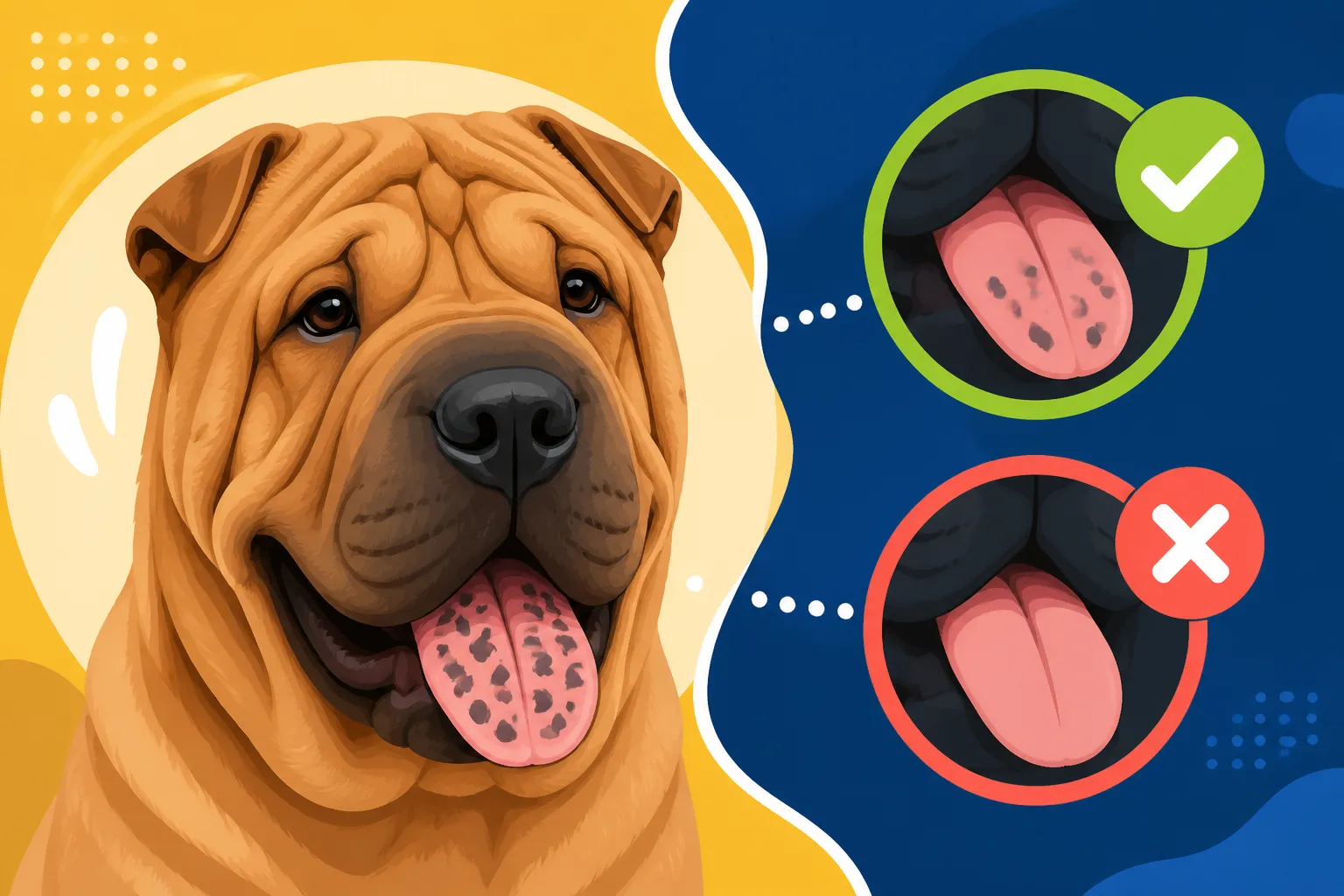
Under the American Kennel Club breed standard, a Shar Pei’s tongue, gums, roof of the mouth, and flews are preferably bluish black. A solid pink tongue is considered a major fault, and a pink-spotted tongue is also considered a fault. That is a show-conformation judgment: it describes how a dog’s appearance compares with a written standard.
That distinction matters. A fault in the show ring does not automatically mean a dog is unhealthy, poorly bred, or unsuitable as a companion. A Shar Pei with a pink spot may be perfectly comfortable and otherwise thriving. The standard is used to assess breed appearance, not to diagnose the cause of a mark or determine whether a dog needs treatment.
Standards can differ between kennel clubs and countries, so the rules that apply depend on which organization’s events you have in mind. If showing is important to you, check the current standard and ask the relevant club or a qualified show judge how it interprets tongue pigmentation. You can read more about the wording in Which Type the AKC Standard Describes and Whether the Shar Pei Standard Differs Between Countries.
Why a standard fault is not the same as a health problem
A stable pink spot present since puppyhood may simply be an area with less dark pigment. In that situation, the spot’s appearance alone does not establish illness. Nor does it tell you whether the dog has a particular genetic condition. A breeder, seller, or online discussion cannot reliably diagnose a dog’s health from tongue color alone.
The more important question is whether the spot is new or changing. A pink area that appears suddenly, grows, becomes raised, bleeds, looks sore, or seems painful is different from a small, unchanged mark that has been there for years. Those changes call for a veterinary assessment, because the cause may involve irritation, injury, inflammation, or another problem that needs an examination.
It is reasonable to take a clear photo and note when you first noticed the area. If the dog is eating normally, acting comfortably, and the spot has not changed, you can mention it at a routine appointment. If there is bleeding, swelling, marked pain, trouble swallowing, or a sudden change in appetite, contact a veterinary clinic promptly rather than waiting for a show-related opinion.
What Shar Pei tongue color can tell you
Blue-black pigment is a familiar breed trait
Many Shar Pei have dark blue-black pigment on the tongue and in parts of the mouth. It is a recognizable feature of the breed, but it is not unique to Shar Pei; Chow Chows are also well known for dark tongues. The biology of pigmentation is more nuanced than a simple breed label, and a particular tongue pattern should not be treated as a complete health report. For more background, see Why a Shar Pei's Tongue Is Blue Black and Which Other Breed Has a Blue Black Tongue.
A dark tongue can still include areas of lighter pigment. Looking at one small patch does not tell you how much pigment the dog has overall, why that patch is present, or whether it will change. Photos can also mislead: lighting, camera color balance, saliva, and the angle of the tongue may make a spot look paler or darker than it is.
Coat color is another reason not to make quick assumptions. Some dilute-colored Shar Pei may have lighter, lavender-toned pigmentation rather than the deeper blue-black shade people expect. If you are trying to understand how coat color and pigmentation are described, What a Dilute Shar Pei Is and Which Colors a Shar Pei Comes In offer useful breed context. Still, coat color does not let you diagnose the reason for a new mark.
A quick way to separate appearance questions from health concerns
Use the pattern, timing, and the dog’s comfort as a starting point. This table is a guide for deciding what to ask—not a way to diagnose a mouth condition at home.
| What you notice | What it may mean | A sensible next step |
|---|---|---|
| A small pink spot that has looked the same for a long time | A stable pigment variation; it may be a show fault under a particular standard | Photograph it for your records and mention it at a routine veterinary visit |
| Pink areas on a young puppy’s tongue | Pigmentation may still be developing, or the pattern may remain | Keep an eye on it and ask the breeder or veterinarian if you are unsure |
| A spot that appears or changes suddenly | Could reflect irritation, injury, or another oral issue | Arrange a veterinary assessment, especially if it grows or looks sore |
| Bleeding, swelling, pain, drooling, or difficulty eating | Possible discomfort or illness that needs attention | Contact a veterinarian promptly |
| A pink spot but normal eating, energy, and behavior | The spot alone may not be causing a problem | Do not use color alone to decide that treatment is needed |
Try to compare the tongue under similar lighting when monitoring a spot. One photo taken in bright sunlight and another taken indoors can make the same area appear different. A short note with the date and any changes—such as tenderness, bleeding, or reluctance to chew—will be more useful to your veterinarian than repeated close inspection without context.
You do not need to scrub or treat a pink patch. Avoid applying human mouthwash, antiseptics, or home remedies unless a veterinarian has specifically advised you to do so. If you are already shopping for routine oral-care supplies, a retailer such as Chewy may carry dog toothbrushes and toothpaste; those products support dental care, but they will not identify or correct tongue pigmentation.
How to tell a stable spot from a new change
Check the history before you assume something is wrong
If you have had your Shar Pei since puppyhood, look back at early photographs where the tongue is visible. If the same spot appears in several older photos, that is reassuring evidence that it is longstanding, though it is not a substitute for an exam if the area now looks different or causes discomfort.
For a newly adopted dog, ask the previous caregiver, rescue, or breeder whether they have older photos or veterinary records. A spot that is visible in earlier records may be a long-standing feature. If no history is available, take a clear picture now, keep track of any obvious changes, and bring it up at the dog’s next veterinary appointment.
Puppy tongue color can be confusing because owners may expect a finished pattern early on. Pigmentation can vary as a dog grows, so a light patch in a puppy does not, by itself, predict the exact adult appearance. For more on early development, see Whether a Shar Pei Puppy's Tongue Is Blue at Birth. If you are considering a puppy, ask the breeder what they have observed in the litter and its parents, but treat claims about tongue color as appearance information—not proof of future health.
Watch for symptoms, not just color
A tongue spot deserves more attention when it comes with signs of discomfort. These might include avoiding hard food, chewing on one side, dropping food, pawing at the mouth, unusual drooling, bad breath that is new or pronounced, or pulling away when the face is touched. Some dogs hide pain, so a change in ordinary eating or handling tolerance can be worth noting even if the tongue looks only mildly different.
Look, but do not force the mouth open if your dog resists. Shar Pei can be sensitive about handling, and a stressful struggle may make an uncomfortable area worse—or make future mouth checks harder. If your dog is relaxed, a brief visual check in good light is usually more practical than repeated poking. Stop if the dog seems worried or painful.
For a veterinarian, useful details include when you first saw the spot, whether it has changed, what the dog is eating, and whether there has been bleeding, swelling, or altered behavior. A clinic can examine the whole mouth and decide whether the mark looks like normal pigmentation or needs further investigation. That assessment is more reliable than trying to match a photo online.
Care and questions for owners and prospective buyers
What to ask a breeder or seller
If you are choosing a Shar Pei puppy, ask straightforward questions: Have the puppy’s mouth and tongue been examined? Has the breeder noticed any change or discomfort? Are there veterinary records, and can you see the puppy’s parents? A responsible breeder should be willing to discuss what they know without presenting tongue color as a guarantee of health or a reason to overlook other questions about the dog.
If your main concern is whether a pink spot affects show eligibility, clarify which show standard applies and ask someone familiar with that standard. A spot may matter in conformation judging while being medically unimportant. Conversely, a dog that is not intended for the show ring still needs veterinary care if the mark is new, painful, or changing.
Be cautious of anyone who promises that a particular tongue color proves a puppy is healthier, or who insists a pink mark must be treated without an examination. Appearance, health, and show eligibility are related only in limited ways. They should be discussed separately so you can make a sound decision about the dog in front of you.
Keep mouth care practical and low-stress
Routine dental care is useful for every dog, but it is separate from changing a tongue’s natural pigment. If you use a dog toothbrush and dog-formulated toothpaste, introduce them gently and reward calm cooperation. A veterinary team can demonstrate a safe technique if your Shar Pei dislikes having its muzzle handled.
If you purchase oral-care supplies from Chewy or another pet retailer, check that the toothpaste is intended for dogs and follow your veterinarian’s advice about products. Do not use human toothpaste, and do not put a product directly on a pink spot in an attempt to darken or “heal” it. Pigmentation is not dirt that can be wiped away.
A second mention of Chewy is useful only in this practical shopping context: buying a toothbrush online can make supplies convenient, but it cannot replace an oral examination when the tongue has changed. Keep the focus on the dog’s comfort, eating habits, and the history of the spot rather than on trying multiple products.
The practical answer
A pink-spotted tongue is a fault under the American Kennel Club Shar Pei standard, but that classification is about conformation, not a diagnosis. A stable spot that has been present for a long time may simply be a pigment variation. A new, enlarging, painful, bleeding, or swollen area—and any change that interferes with eating—should be checked by a veterinarian.
If you are unsure, take a photo, note when you noticed the spot, and ask your veterinary clinic. For show questions, consult the organization whose rules apply. Keeping those two conversations separate helps you avoid unnecessary worry while making sure a genuine change is not ignored. Chewy and other pet retailers can help with routine supplies, but they cannot determine what a tongue mark means.
Disclaimer
This article is for general informational purposes only and does not constitute professional advice. Laws, prices and regulations vary by location and change over time. Consult a qualified professional for guidance on your specific situation.