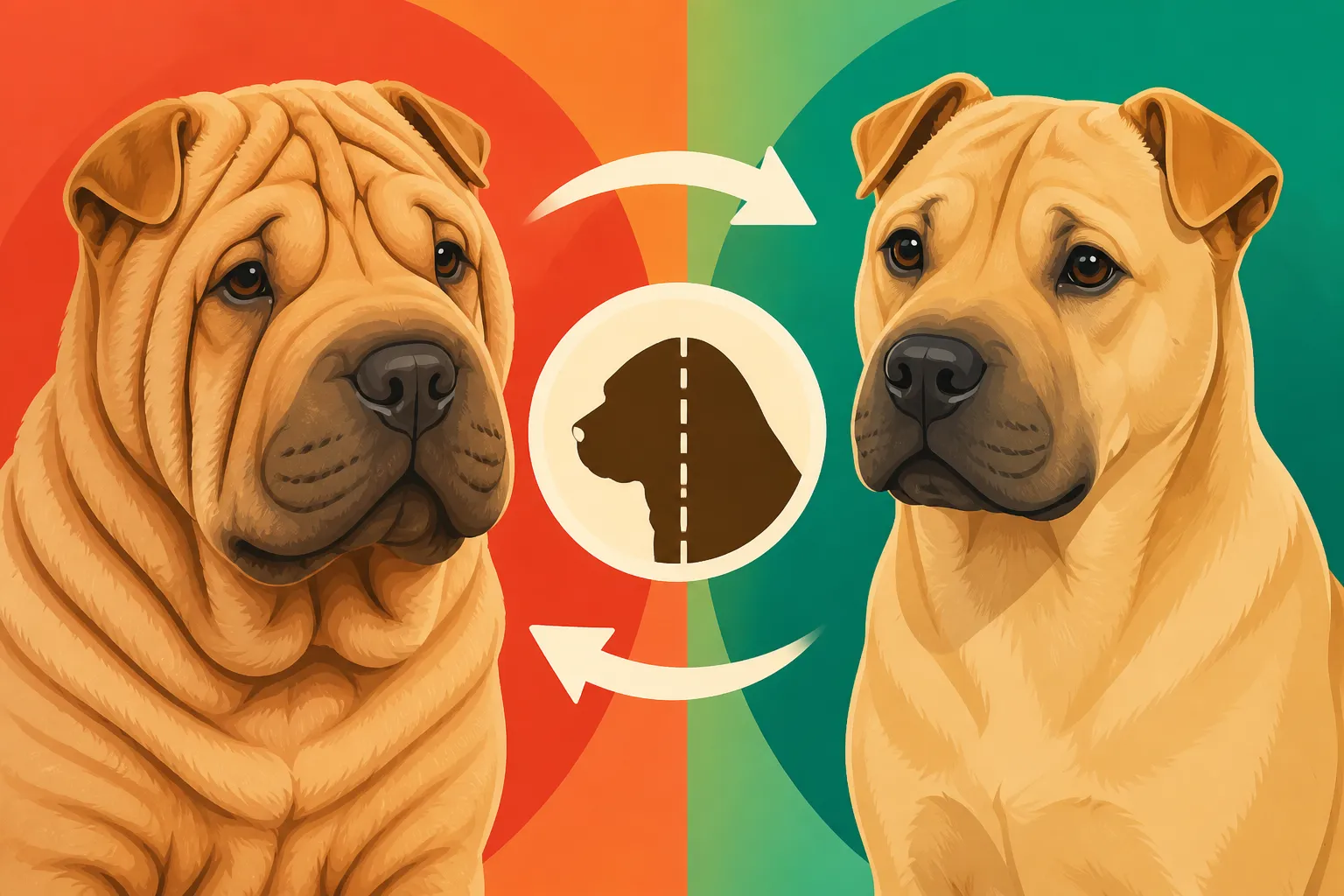
Whether the Wrinkles Could Be Bred Out Entirely
For many Shar Pei owners, the breed's iconic deep wrinkles, while charming, are often a source of heartbreaking health issues. You find yourself wondering if it's even possible to have a Shar Pei without the constant struggle against skin infections, eye problems, and fevers directly tied to their unique coat. This guide dives deep into the genetics behind those signature folds and explores the complex question of whether breeding them out entirely is a realistic goal for the future of our beloved wrinkly companions.
Understanding the Shar Pei's Signature Wrinkles
It’s easy to look at a Shar Pei and just see a cuddly, wrinkly face, but those folds are far more than just a cute aesthetic. They are the visible manifestation of a specific genetic quirk that, unfortunately, brings a host of potential health challenges. Understanding where these wrinkles come from is the first step in comprehending why they’re so difficult to address.
The Genetic Basis of Wrinkles
The sheer volume of loose skin and deep wrinkles on a Shar Pei isn't just a random occurrence; it's a direct result of a genetic mutation. Specifically, it's linked to an extra copy of the HAS2 gene, which is responsible for producing hyaluronic acid. This acid is a fundamental component of skin, and when there's an overproduction, it leads to that characteristic thick, gelatinous skin and the prominent folds we associate with the breed. Think of it like a body factory suddenly churning out too much of one ingredient – the end product changes dramatically.
This genetic uniqueness is precisely Which Gene Duplication Causes a Shar Pei's Wrinkles. Early breeders, especially during the breed's resurgence, likely found the heavily wrinkled look desirable, inadvertently or otherwise selecting for dogs with more copies of this gene. It created the distinctive appearance that captivated so many, leading to the rapid increase in their popularity. However, what was aesthetically pleasing also laid the groundwork for many of the health issues these dogs face today. The irony is, the very thing that made them famous is also what makes them vulnerable.
The Health Consequences of Excessive Folds
Those adorable wrinkles, sadly, aren't just cosmetic; they create perfect environments for problems to fester. The deep skin folds, particularly around the face, neck, and sometimes even the body, can trap moisture, dirt, and bacteria, leading to a common and stubborn issue known as skin fold dermatitis. This is often characterized by redness, itching, a foul odor, and persistent infections that require diligent, often daily, care. It's a constant battle for many owners, trying to keep those nooks and crannies clean and dry.
Beyond skin issues, the excess skin around the face is directly responsible for eye problems like entropion, where the eyelids roll inward, causing the eyelashes to rub against the cornea. This is incredibly painful and, if left untreated, can lead to corneal ulcers, scarring, and even blindness. It's why Entropion in a Shar Pei Puppy Is an Emergency, Not a Cosmetic Issue. Similarly, the narrow and often folded ear canals are a breeding ground for chronic ear infections, making A Shar Pei Has the Narrowest Ear Canals of Any Breed a frustrating reality for many. These aren't minor inconveniences; they are significant, painful conditions that require ongoing veterinary attention and can drastically impact a Shar Pei's quality of life and an owner's budget. It really highlights how Skin Is the Shar Pei's Largest Problem by Surface Area.
The Challenges of Breeding Out Wrinkles
When faced with these ongoing health struggles, it’s only natural for a loving owner to wish those troublesome wrinkles simply didn't exist. The idea of a Shar Pei without the burden of excessive folds sounds like a dream, but the reality of breeding for such a change is incredibly complex, running up against genetics, history, and established breed standards.
The Interconnectedness of the Wrinkle Gene and Health Issues
The HAS2 gene duplication that gives the Shar Pei its wrinkles isn't just about skin depth. It has a far more profound and sinister connection: it’s directly implicated in Familial Shar Pei Fever (FSF). This means the very same genetic characteristic that causes their unique appearance also predisposes them to recurrent episodes of high fever, swelling, and sometimes painful inflammation. It's a sobering thought that How the Wrinkle Gene Also Triggers Fever. You can't simply "turn off" the wrinkle-producing aspect of the gene without affecting its other functions.
This genetic link creates a significant dilemma for breeders. If you select for fewer wrinkles, you are, by definition, selecting for dogs with fewer copies of the HAS2 gene. In theory, this should lead to a reduced incidence and severity of FSF. However, the exact mechanisms are still being researched, and it's not a simple switch. You're trying to unwind decades of selective breeding that, perhaps unknowingly, amplified this specific genetic trait. It means that while reducing wrinkles might correlate with less fever, it's not a guaranteed solution, and changing a breed's core genetic makeup takes generations, not just a few litters.
The Role of Breed Standards and Aesthetics
Beyond the complex genetics, there's the equally formidable hurdle of breed standards. For decades, kennel clubs and breed fanciers have championed a specific "look" for the Shar Pei, and those abundant wrinkles are a defining characteristic. The AKC breed standard, for example, describes a Shar Pei as having "loose skin and wrinkles over the head, neck, and body" in puppies, with adults retaining "wrinkles on the head and withers, and possibly some on the back legs." This means that excessively breeding for a completely smooth-coated Shar Pei would fundamentally alter the breed's recognized appearance, potentially leading to disqualification in the show ring and a deviation from what many consider the "true" Shar Pei.
This creates a tension between health and aesthetics. Breeders who prioritize health and attempt to reduce wrinkles might find their dogs are no longer competitive in conformation shows, which can be a primary driver for many breeding programs. It begs the question: Whether a Less Wrinkled Shar Pei Is Healthier? The answer is often yes, but moving away from the "meat mouth" type, with its heavily padded muzzle and abundant wrinkles, towards the more traditional "bone mouth" Shar Pei, which has a less fleshy muzzle and fewer wrinkles, challenges established norms. You also have to consider Whether a Bone Mouth Shar Pei Has Fewer Copies of the problematic gene, which is a key area of discussion within the breed community. It’s a slow cultural shift within the breeding world, requiring a consensus to redefine what an ideal Shar Pei should truly look like, prioritizing wellness above all else.
Practical Approaches to Reducing Wrinkles and Improving Health
While the idea of entirely eliminating wrinkles might be a long and winding road, there are practical and ethical approaches that responsible breeders and dedicated owners can take to mitigate the associated health risks and work towards a healthier future for the Shar Pei. It’s a journey of careful choices, not quick fixes.
Selective Breeding for Moderate Wrinkles
The most direct way to address the issue of excessive wrinkles is through conscious, selective breeding. This means moving away from the extreme "meat mouth" type, which gained popularity in the West for its abundant folds, and selectively breeding for dogs with a more moderate wrinkle pattern, often referred to as the "bone mouth" type. These dogs generally have less loose skin, particularly around the face and body, while still retaining the distinctive Shar Pei characteristics.
Breeders committed to health are already focusing on producing Shar Pei with fewer extreme wrinkles, particularly ensuring that eye folds do not necessitate early surgical intervention like entropion tacking. It’s about finding that balance where the unique Shar Pei look is preserved, but the dogs are not burdened by painful, life-long conditions. This requires careful genetic screening and a deep understanding of pedigrees, prioritizing health over exaggerated features. So, Whether Breeding for Fewer Wrinkles Would Help is a resounding yes, as it directly impacts the expression of the HAS2 gene and subsequently, the likelihood of related health complications. This shift needs support from puppy buyers too, who should seek out breeders actively working towards these healthier standards.
Supporting Shar Pei Health Despite Wrinkles
For existing Shar Pei, especially those with significant wrinkling, daily care and proactive management are absolutely crucial. You can't "breed out" the wrinkles on your current companion, but you can certainly mitigate their impact. This means being incredibly diligent with hygiene. Regularly cleaning and thoroughly drying deep skin folds is essential to prevent infections. Your vet might recommend special medicated wipes or shampoos, especially for areas prone to yeast or bacterial growth.
If your Shar Pei has had issues like entropion, you know the urgency of proper eye care, potentially involving surgery. And for those with chronic ear infections, specialized cleaning solutions and regular veterinary check-ups are key to managing their incredibly narrow ear canals. Beyond daily care, a strong partnership with your veterinarian is vital. Regular check-ups, even when your dog seems fine, can catch problems early. For example, if your Shar Pei experiences fevers, your vet might discuss options like colchicine to help manage the inflammatory response. Investing in comprehensive pet insurance like Healthy Paws can also provide crucial financial support for these ongoing, often expensive, breed-specific health needs. Caring for a Shar Pei's unique needs can be costly, and understanding What a Shar Pei's Skin Costs a Year or other chronic conditions can help you budget, with the help of a good insurance policy alleviating some of that stress.
The Future of the Shar Pei Breed and Ethical Considerations
The journey to a healthier Shar Pei is not just about genetics; it's also deeply rooted in ethical responsibilities, breed recognition, and the collective choices of breeders and prospective owners alike. It’s about looking ahead while honoring the breed’s past.
The Ethical Dilemma for Breeders and Owners
Breeders face a profound ethical dilemma: how to preserve the unique traits of the Shar Pei while simultaneously improving its health and lifespan. On one hand, there's a strong desire to maintain the traditional "look" and conformation standards that define the breed. On the other, there's an increasing awareness of the suffering caused by exaggerated features, driven by the genetic load carried by many Shar Pei. This isn't just about superficial changes; it's about the very well-being of these animals.
For owners, the ethical consideration comes in their choices. Do you support breeders who prioritize extreme wrinkles, even if it means potentially inheriting a dog with higher health risks? Or do you actively seek out and advocate for breeders who are striving for healthier, more moderately wrinkled dogs, even if their appearance deviates slightly from the popular image? This collective choice by buyers has immense power to shape the future of the breed. It can encourage a shift towards a focus on longevity and comfort. The good news is that Whether Shar Pei Lifespan Is Improving is a topic of ongoing discussion, with many dedicated individuals working towards a brighter, healthier future for these dogs.
Advocating for Change and Health-Focused Breeding
Creating lasting change in a breed requires more than just individual effort; it demands a unified movement. Breed clubs, ethical breeders, veterinarians, and owners must collaborate to promote health testing, educate the public, and, perhaps most importantly, re-evaluate breed standards. Whether the Shar Pei Standard Should Change is a critical question that needs to be addressed by kennel clubs worldwide to genuinely support healthier breeding practices. If the standard rewards moderation rather than exaggeration, the incentive for breeders to produce healthier dogs increases dramatically.
As a prospective owner, you have a vital role to play by doing your homework. Look for breeders who openly discuss health concerns, perform genetic testing, and are actively trying to produce dogs with fewer health issues. Ask about the health history of the parents and grandparents, specifically regarding FSF, entropion, and skin problems. Supporting these responsible breeders helps shift the market demand towards health. Organizations like Healthy Paws, through their support of pet wellness, also implicitly encourage responsible pet ownership and awareness of breed-specific health issues. Ultimately, the question of Whether the Shar Pei Was Bred for Health Now is something that every potential owner needs to investigate and champion. By making informed choices, we can collectively ensure that the beautiful, loyal Shar Pei has a future where its defining features don't come at the cost of its well-being.
Comparing Meat Mouth and Bone Mouth Shar Pei Features
The distinction between "Meat Mouth" and "Bone Mouth" Shar Pei is crucial when discussing wrinkles and health, as these terms broadly describe the two ends of the spectrum in terms of their physical characteristics and, by extension, their potential health profiles. Understanding these differences can help owners and prospective buyers make more informed decisions.
| Feature | Meat Mouth Shar Pei | Bone Mouth Shar Pei |
|---|---|---|
| Wrinkles | Abundant, heavy folds over head, neck, and body | Moderate wrinkles, primarily on head and withers |
| Muzzle | Fleshy, heavily padded, often appears broad | Leaner, more defined, less padded |
| Eyes | More prone to entropion due to excess skin around eyes | Less prone to entropion due to less excess skin |
| Skin Issues | Higher incidence of skin fold dermatitis | Lower incidence of skin fold dermatitis |
| Ancestry/Origin | More prominent in Western breeding post-1970s | Closer to the original, traditional Chinese working type |
| Health Risks (General) | Generally higher risk of wrinkle-related health issues | Generally lower risk of wrinkle-related health issues |
This table highlights that while both are Shar Pei, the subtle differences in their physical structure, particularly regarding wrinkles, can have significant implications for their overall health and the level of care they will require throughout their lives.
Disclaimer
The information provided in this article is for general informational purposes only and is not intended as a substitute for professional veterinary advice. Always consult with a qualified veterinarian for any health concerns or before making any decisions about your pet's health or treatment.


