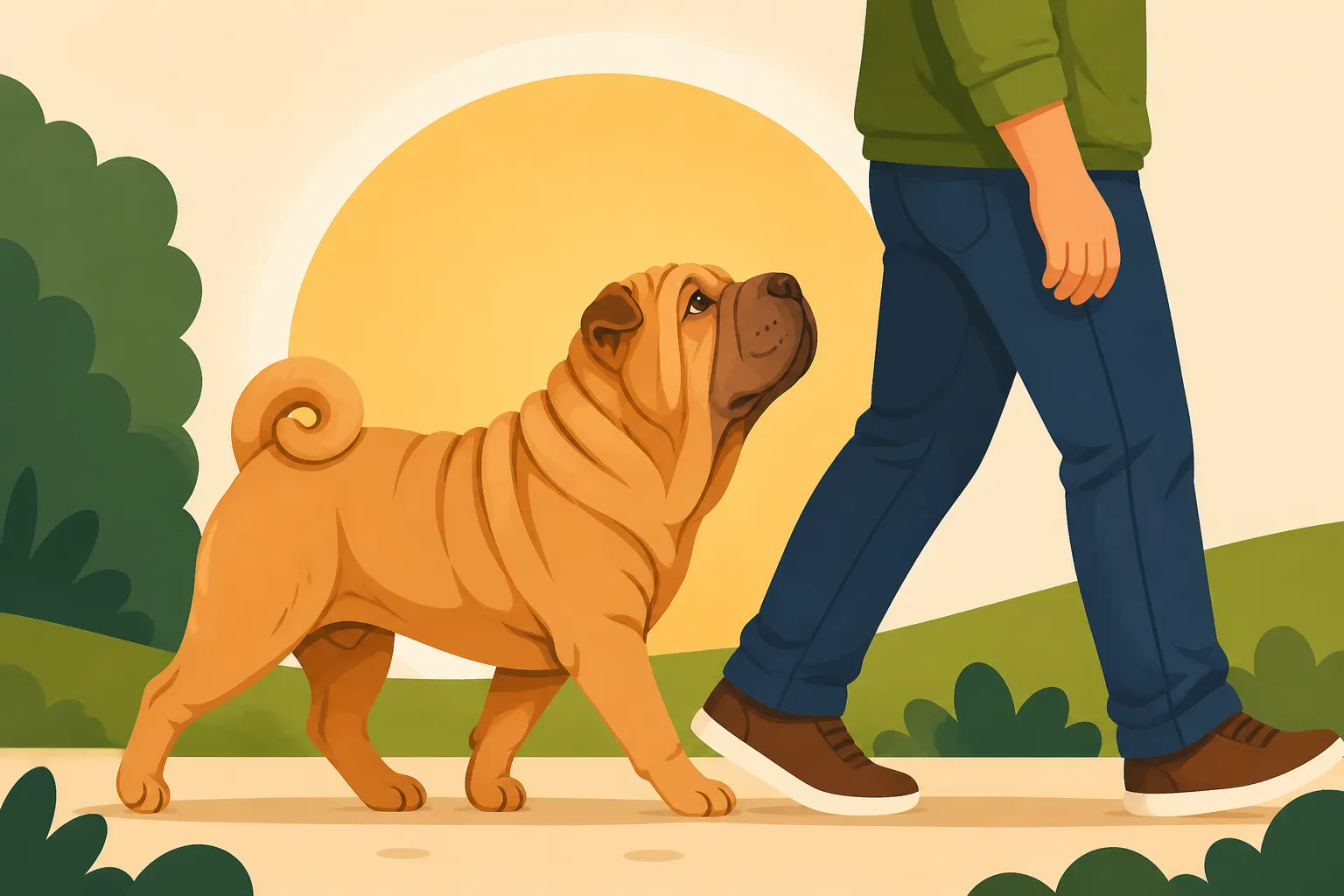
How Closely a Shar Pei Follows Its Owner
It's easy to fall in love with the idea of a dog that's your constant shadow, a furry companion glued to your side through every waking moment. But if you're a Shar Pei owner, or considering becoming one, you've probably noticed that your beloved wrinkly friend often marches to the beat of their own drum. It can leave you wondering, "Do they even like me?" or "Have I done something wrong?" This guide is here to reassure you and shed some light on the unique way a Shar Pei demonstrates attachment, often in ways that are far more subtle than other breeds.
The Independent Streak of the Shar Pei
Let's be real: Shar Pei aren't typically the "Velcro dogs" you see plastered all over social media, the ones who seem to exist purely to sit on your lap or trip you up in the kitchen. Their origins and inherent temperament have sculpted a dog that values its personal space and operates with a remarkable sense of self-possession. This isn't a flaw; it's simply who they are, and understanding this fundamental aspect is key to appreciating their loyalty.
A Breed Built for Purpose, Not Constant Closeness
Think about the Shar Pei's history. They weren't bred to be ornamental lapdogs or to constantly seek human validation. These were working dogs, multi-purpose farm dogs from China, tasked with guarding property, hunting vermin, and even herding. Their very survival depended on their ability to assess situations, make decisions, and act independently, often without direct human command. This historical role ingrained a self-reliant nature into the breed's DNA.
This means that while they cherish their family, they don't necessarily feel the need to be physically touching you at all times to prove it. A Shar Pei's loyalty is often expressed through watchful vigilance, surveying their territory and ensuring their people are safe. They might be lying across the room, seemingly snoozing, but their ears are often twitching, and an eye might be cracked open, constantly aware of your presence and any changes in their environment. It’s their way of keeping tabs, a quiet form of devotion. A Shar Pei Was Bred to Guard, Not to Greet speaks volumes about this ingrained instinct.
Personal Space Is Key for Many Shar Pei
For many Shar Pei, personal space isn't just a preference; it's a fundamental aspect of their comfort. Unlike some breeds that thrive on being constantly cuddled or draped over you, a Shar Pei often appreciates having their own designated spot – perhaps a comfy dog bed in the corner of the living room or a crate that serves as their personal den. They want to be with you, but not necessarily on you.
Imagine trying to work from home with a dog constantly bumping your elbow or trying to squeeze onto your already crowded chair. A Shar Pei often grants you that space, choosing to occupy a nearby spot where they can still observe and feel connected without being intrusive. This isn't a sign of aloofness; it's often a sign of respect and comfort within their environment. Learning to read these subtle cues, like a relaxed sigh from their bed as you move around the room, can help you understand their unique form of companionship.
The Myth of the "Velcro Dog" and the Shar Pei
Many first-time dog owners, or even seasoned owners of more traditionally effusive breeds, come into Shar Pei ownership with certain expectations. They anticipate the head nudges, the constant following from room to room, the insistence on lap time that characterize many retrievers or companion breeds. When their Shar Pei doesn't exhibit these behaviors, it can lead to confusion or even a feeling of rejection.
It’s crucial to adjust your expectations. The Shar Pei isn't built to be a "Velcro dog" in the conventional sense. They are deeply loyal, fiercely protective, and often incredibly affectionate on their terms, but their expression of these traits is simply different. Their independence isn't a sign of a lack of bonding; it's a hallmark of the breed. Embracing this unique characteristic allows you to build a stronger, more authentic relationship with your Shar Pei, one that respects their inherent nature rather than trying to force them into a mold that doesn't fit. The Headstrong Streak Nobody Trains Out of a Shar Pei really emphasizes this independent spirit.
How a Shar Pei Does Show Attachment
So, if they're not constantly underfoot, how do Shar Pei show they care? It's all about recognizing their distinct love language. Their affection might not be flamboyant, but it's deep-seated and incredibly genuine once earned.
Proximity Without Being Underfoot
This is perhaps the most common form of "following" you'll see from a Shar Pei. They like to be in the same room as you, or at least within earshot. You might be cooking in the kitchen, and they're lying just outside the doorway, observing. You move to the living room to watch TV, and they'll relocate to their favorite spot on the rug, facing you. It's a quiet, reassuring presence that says, "I'm here, I'm with you, I'm part of this pack."
This proximity is their way of staying connected without demanding constant physical interaction. It’s their version of being your shadow, just a few feet removed. They are participating in the family life, soaking in the ambient energy, and offering their silent companionship. It's a bond built on shared space and mutual respect, rather than constant physical contact. You might notice them subtly shifting their position if you move, always ensuring they have a good vantage point to keep an eye on you.
The Silent Observer and Guard Dog Instinct
Beneath that calm, sometimes stoic exterior, lies the heart of a vigilant guardian. A Shar Pei's "following" behavior often manifests as quiet observation. They're watching you, watching the house, watching the world outside the window. This isn't just curiosity; it's their ingrained sense of responsibility for their family and territory. How a Shar Pei Bonds to Its Family often highlights this protective element as a core part of their attachment.
Think about when someone comes to the door. While another dog might leap excitedly, a Shar Pei will often position themselves, observe the visitor, and only then decide how to react. This thoughtful, protective observation is a powerful form of attachment. They're not just following you; they're ensuring your safety and the security of the home you share. Their loyalty is in their quiet surveillance, their readiness to act if a perceived threat arises, even if it's just the mail carrier. This deep-seated protective instinct means they are always mentally "following" your lead and assessing your interactions.
Rituals and Routines as Love Language
Shar Pei thrive on routine and predictability. For them, shared rituals often become profound expressions of love and connection. The morning walk, the evening treat, the quiet cuddle on the couch before bed – these consistent moments build a deep sense of security and belonging for your Shar Pei, and they are powerful ways they connect with you.
If you have a specific time you take them out, they might start "following" you to the door a few minutes beforehand, tail giving a subtle wag. If you always give them a belly rub after dinner, they'll likely position themselves nearby, waiting patiently. These established patterns become moments of connection that they anticipate and cherish. It's not about being underfoot every second, but about showing up for the moments that matter, consistently. How a Shar Pei Shows Affection delves deeper into these unique ways they express their feelings, often through these shared routines and subtle gestures rather than overt displays.
Factors Influencing a Shar Pei's Closeness
While independence is a breed trait, individual Shar Pei will still vary in their level of "closeness." Several factors play a significant role in shaping how much your particular dog chooses to follow you around.
Early Socialization and Its Impact
The foundation for a well-adjusted Shar Pei is laid during their critical puppyhood. Early, positive socialization isn't just about preventing aggression; it's also about helping your Shar Pei become comfortable and confident in the world, which in turn influences their comfort level with people and their willingness to engage. A puppy exposed to a wide variety of sights, sounds, people, and appropriate dog interactions is more likely to be a confident adult.
A well-socialized Shar Pei might feel more secure in their environment and therefore more relaxed about expressing affection or simply choosing to be near you. Conversely, an undersocialized Shar Pei might be more wary, retreating into themselves or exhibiting avoidance behaviors. They might "follow" less out of a lack of interest, and more out of a need for personal space born from anxiety. Engaging in puppy classes or structured social outings is vital. For those who adopted an older Shar Pei with an unknown history, positive reinforcement training programs, such as those offered by BAXTER & Bella, can be invaluable for slowly building trust and comfort, allowing their natural affectionate side to emerge. Socialize a Shar Pei Before Twelve Weeks or Pay for It Later emphasizes just how crucial this early period is.
Individual Personality and Coat Type
Just like people, every Shar Pei has a unique personality. While the breed as a whole leans towards independence, you'll find a spectrum. Some Shar Pei might be more naturally outgoing and prone to seeking attention, while others are incredibly reserved. This individual temperament will greatly influence how much they choose to "follow" you.
Interestingly, some owners observe subtle differences even between coat types. A "horse coat" Shar Pei, with its shorter, rougher fur, is sometimes perceived as being a bit more assertive or perhaps a tiny bit less tolerant of prolonged physical contact than a "brush coat" with its slightly softer, longer fur. This isn't a hard-and-fast rule, and plenty of horse coats are cuddly bears, but it's an observation some long-time Shar Pei enthusiasts share. Ultimately, getting to know your individual dog's preferences is paramount. For more on coat types, see How a Horse Coat Shar Pei Differs From a Brush Coat.
Training and Trust Building
Positive, consistent training is not just about teaching commands; it's about building a strong, communicative relationship based on trust and mutual respect. When a Shar Pei trusts you and understands what's expected of them, they are more likely to feel secure and comfortable in your presence. This security can foster a greater willingness to be near you, to follow your lead (literally and figuratively), and to seek out your company.
Harsh training methods or a lack of clear boundaries can lead to a Shar Pei who is wary or withdrawn, further increasing their tendency to keep a distance. Instead, focus on positive reinforcement, making interactions fun and rewarding. Treats, praise, and engaging games are excellent motivators for this intelligent breed. What Motivates a Shar Pei goes into detail about what truly gets their attention and cooperation. Building this kind of relationship means they choose to be with you, not because they have to, but because they enjoy your company.
| Trait Category | "Velcro Dog" Stereotype | Shar Pei Attachment Style |
|---|---|---|
| Physical Proximity | Often physically touching, lying on lap, leaning against leg. | Prefers to be in the same room, often a few feet away; enjoys a designated bed nearby. |
| Following Behavior | Follows owner from room to room, even to the bathroom. | Relocates to the same room; may not immediately follow but will rejoin within minutes. |
| Greeting | Enthusiastic, jumping, tail wags, licking. | Reserved, may offer a subtle tail wag, "snuffle" for attention, or lean slightly. |
| Affection Display | Demands petting, constant nudges, overt cuddles. | Accepts petting on their terms, leans, gives "Shar Pei snuggles" (a brief, intense cuddle), enjoys routine pats. |
| Independence | Low tolerance for being alone, prone to separation anxiety. | High tolerance for solitude, enjoys quiet time, values personal space. |
| Vigilance | Alert but often seeks reassurance from owner. | Observant, watchful, often positions themselves to monitor surroundings, acts as a silent guardian. |
Practical Strategies for Fostering Connection (Without Smothering)
Understanding your Shar Pei's independent nature is the first step, but how do you foster a deeper bond and encourage their unique form of closeness without overwhelming them? It's all about respectful, consistent interaction.
Structured Interaction and Play
Instead of constantly calling your Shar Pei to your side, try initiating structured play sessions throughout the day. These don't need to be long; even 10-15 minutes of focused interaction can be incredibly valuable. A game of fetch in the yard, a puzzle toy filled with treats, or a short training session practicing commands like "sit" or "stay" can strengthen your bond. These activities engage their minds and bodies, and because you are the facilitator of these fun experiences, they learn to associate your presence with positive, enjoyable moments.
Consider interactive toys you can find on Amazon, like snuffle mats or treat-dispensing balls, which encourage problem-solving and can be part of these structured engagement times. Even a simple tug-of-war game, played on your terms and ending with you winning and putting the toy away, can build a sense of shared activity and respect. It's about quality over quantity when it comes to attention for a Shar Pei.
Creating a Shared Space They Enjoy
While they might not want to be on you, most Shar Pei still want to be near you. Create comfortable, inviting spaces for them in the rooms where your family spends the most time. This could be a plush dog bed in the living room, a soft mat in the kitchen, or their open crate positioned where they can see you. The goal is to give them their own "station" within your sphere of activity.
Ensuring these spaces are comfortable and secure makes it more likely they will choose to settle there, rather than retreating to another room entirely. For example, a raised dog bed might give them a better vantage point, or a cozy blanket might make their spot feel more like a den. This allows them to "follow" you by simply moving to their designated spot in the room you're in, feeling included without feeling pressured.
Respecting Their Boundaries
Perhaps the most crucial strategy for fostering closeness with a Shar Pei is learning to respect their boundaries. If your Shar Pei moves away when you try to cuddle, don't chase them. If they turn their head when you reach for a pet, acknowledge the signal and try a different approach, or give them space. How a Shar Pei Feels About Being Petted is an excellent resource for understanding their preferences regarding physical contact.
Forcing interaction can damage trust and make them even less likely to seek you out. Instead, let them initiate contact. Offer a gentle hand for them to sniff, and if they lean into it or bump your hand, then you know they're open to more interaction. Often, a Shar Pei will approach you for a brief head rub or a moment of quiet connection on their terms. These are the moments to savor, as they are genuine expressions of their affection and trust. When you respect their need for space, they learn that your presence is safe and comforting, not demanding, and this ironically encourages them to be closer.
Disclaimer
This article is for general informational purposes only and does not constitute professional advice. Laws, prices and regulations vary by location and change over time. Consult a qualified professional for guidance on your specific situation.


