Why a Shar Pei Is Hard to Read
Many Shar Pei owners find themselves staring at their beloved dog, wondering what on earth is going on in that wonderfully wrinkled head. Unlike many other breeds whose faces are open books, a Shar Pei's unique appearance can make it incredibly challenging to decipher their emotions or intentions, leading to frustrating misunderstandings. This guide will delve into the specific physical traits and breed characteristics that contribute to this "hard to read" phenomenon and offer practical strategies to help you better understand your enigmatic companion.
The Unique Shar Pei Facial Structure and Its Impact
The very features that make a Shar Pei so distinct and endearing are often the same ones that create barriers to communication. Their deep-set eyes, profuse wrinkles, and small, folded ears, while charming, fundamentally alter how their expressions are perceived – or not perceived – by humans and sometimes even other dogs. It's a daily puzzle, trying to piece together what your dog is trying to tell you when their face isn't giving you the usual clues.
The Deep Set Eyes and Restricted Vision
One of the most defining characteristics of a Shar Pei is their small, deeply set eyes. While undeniably cute, this feature significantly impacts their peripheral vision. Imagine wearing blinders all the time; that's a bit like what a Shar Pei experiences. They simply cannot see things approaching from the sides as easily as other dogs can. This isn't just a minor inconvenience for them; it's a fundamental aspect of how they interact with their world.
When a dog has limited peripheral vision, they are more prone to being startled. If someone or something suddenly appears in their direct field of vision, or worse, from an angle they can't easily perceive, their natural reaction might be to react defensively. This can be misconstrued as aggression or an unpredictable temperament, when in reality, it's often a startle response. Understanding that Why a Shar Pei Cannot See to the Side and that they need a wider personal bubble, especially from the sides and rear, is crucial for preventing these moments of surprise and the reactions that follow.
This visual limitation also ties into their inherent guarding instincts. A Shar Pei was historically bred to be a watchful guardian, and their restricted vision might make them rely more heavily on other senses, like hearing and smell, to detect potential threats. It means they might be hyper-vigilant in their forward gaze, and if something sneaks up on them due to their visual limitations, their protective instincts can kick in quickly. This isn't them being "mean"; it's them trying to keep themselves, and by extension, their beloved family, safe. Knowing What a Shar Pei Does When Surprised can help owners manage these interactions proactively.
The Wrinkles That Mask Expression
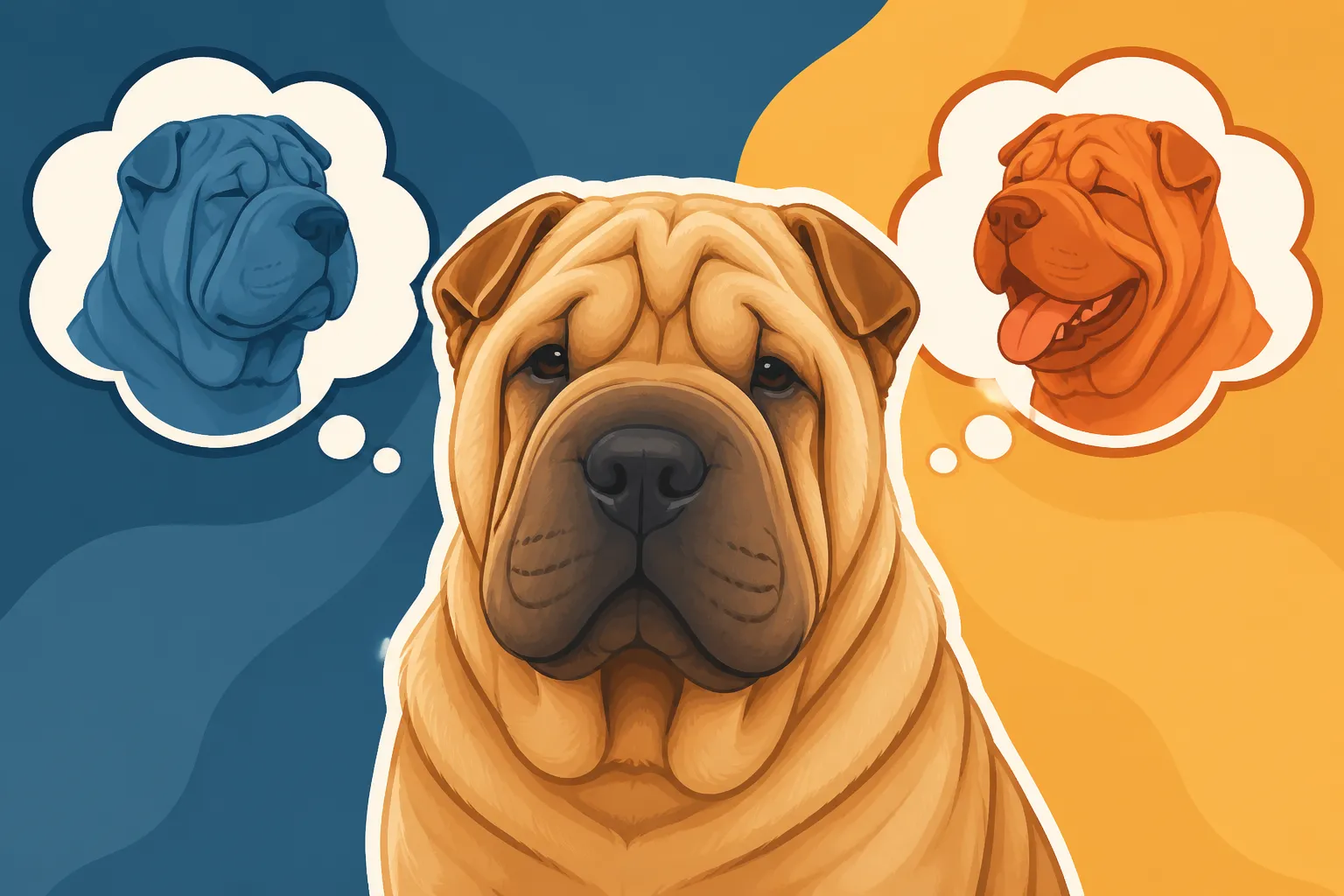
Now, let's talk about those glorious wrinkles! They're the breed's signature, but they also act as a natural camouflage for facial expressions that are easily readable in other breeds. Think about how a dog raises its eyebrows, furrows its brow, or tightens its muzzle in response to different stimuli. These subtle shifts communicate curiosity, concern, happiness, or even stress. On a Shar Pei, however, these movements can be completely hidden.
The deep folds around their eyes and muzzle can obscure the very muscles that create these expressions. A Shar Pei might be feeling anxious, but the wrinkles around their mouth might hide the tell-tale lip licking or slight retraction of the lips that would be obvious on a flatter-faced dog. Similarly, it's incredibly difficult to tell if a Shar Pei is smiling or grimacing because their facial skin doesn't move in the same expressive way. This makes it challenging to gauge their comfort level in various situations, whether they're meeting a new person or encountering an unfamiliar object. It's a frustration many owners share: trying to read a face that simply doesn't cooperate with typical canine communication cues. How a Shar Pei's Wrinkles Hide Its Expression is a topic many owners grapple with daily.
This lack of visible facial expression can also lead to misinterpretations by other dogs. Dogs communicate extensively through facial signals, and when another dog can't read these cues from a Shar Pei, it can lead to confusion or even conflict. A Shar Pei might appear stoic or unreadable to canine companions, which can sometimes escalate situations, especially in crowded or unpredictable environments like a dog park where rapid communication is essential.
The Small Ears and Their Limited Role in Communication
Just like their eyes and wrinkles, a Shar Pei's ears are distinctive. They are typically small, thick, and lie flat against their head. While this might protect them from injury (a trait from their historical purpose), it significantly reduces their ability to convey emotion through ear movement. Most dogs use their ears as highly expressive antennas, rotating them, pinning them back, or perking them up to signal attention, fear, aggression, or contentment.
With a Shar Pei, those small, folded ears offer very little in the way of visual cues. They don't have the range of motion or visibility to convey the subtle nuances that a German Shepherd's erect ears or a Labrador's floppy ears might. A Shar Pei might be listening intently, but their ears might not move much at all, leaving you guessing. Are they relaxed, or are they tense and on alert? Without the expressive ear signals, another important layer of dog-to-dog and dog-to-human communication is lost.
This isn't to say their ears never move, but the movement is far less pronounced and therefore less communicative than in other breeds. It further compounds the challenge of understanding their internal state. When you're trying to figure out if your dog is comfortable in a new situation, you might instinctively look at their ears, only to find them mostly static, offering no additional information.
Understanding Shar Pei Body Language Beyond the Face
Since their faces are often inscrutable, learning to read a Shar Pei requires a shift in focus. You have to become an expert in their entire body, paying close attention to cues that might be secondary in other breeds but are primary indicators for a Shar Pei. It's like learning a whole new language, one where the emphasis is on posture, tail, and subtle shifts rather than facial expressions.
Reading the Tail: The Unsung Hero of Shar Pei Communication
For a Shar Pei, the tail is often the most expressive part of their body. It becomes the "unsung hero" of their communication, conveying emotions and intentions that their face cannot. Shar Pei typically carry their tails in a tight curl over their back, often resting on their hip or even flat against their spine. However, the tightness of that curl, its height, and any movement can tell you a great deal.
A tail held in a very tight, rigid curl, especially if combined with a stiff body, can indicate tension, alertness, or even stress. If the tail starts to loosen slightly, perhaps dropping a little or even uncurling partially, it might signal relaxation or curiosity. A truly happy, comfortable Shar Pei might have a slightly looser curl, maybe even a gentle wag of the entire hindquarters, rather than just a frenetic tail tip. Conversely, a tucked tail, pulled firmly between the legs, is a clear sign of fear or extreme submission, just as it would be in any other dog. Paying close attention to How a Shar Pei Uses Its Tail can provide a wealth of information.
It takes consistent observation to learn your individual Shar Pei's specific tail language. What's a relaxed curl for one might be slightly alert for another. The key is to establish a baseline for your dog in various states – happy, calm, excited, cautious – and then note any deviations. This continuous learning process will significantly improve your ability to understand their mood and intentions.
Posture and Movement: Subtle Cues
When the face and ears offer few clues, a Shar Pei's overall body posture and movement become critical indicators of their emotional state. A stiff body, with legs braced and a rigid stance, often signals tension, anxiety, or a readiness to react. This can be seen when they are uncertain about an approaching stranger or another dog. Their muscles might appear tensed, and their movement might be hesitant or deliberate.
In contrast, a relaxed Shar Pei will have a softer body outline, perhaps a slight curve to their spine when standing, and fluid movements. They might stretch out, roll on their back, or simply lie in a loose, comfortable posture. Their eyes, though deep-set, can also offer clues: a soft gaze rather than a hard stare, or blinking instead of wide-eyed vigilance. Sometimes, a focused, unblinking stare from a Shar Pei can be a precursor to a reaction, especially if combined with a stiff body. This "Shar Pei stare" is something owners learn to recognize as a signal of intense focus or concern.
Observing how they move their weight is also important. Are they leaning away from something, indicating avoidance or fear? Or are they leaning slightly forward, showing interest or readiness to engage? The subtleties of their weight distribution, the way their head is carried (high and proud, or lowered), and the speed of their movements all contribute to a fuller picture of their internal state. It's a whole-body analysis, not just a glance at their face.
Vocalizations: More Than Just Barks
While Shar Pei are not known as prolific barkers, their vocalizations are definitely another piece of the communication puzzle. They have a surprisingly wide range of sounds, from deep, resonant grumbles to contented sighs, and even a unique "woo-woo" sound some owners describe. Understanding these sounds in context is paramount.
A low growl, for instance, is a clear warning sign from any dog, and a Shar Pei is no exception. It indicates discomfort, a desire for space, or a feeling of being threatened. However, they might also emit soft grumbles when playing or when being petted, which are expressions of pleasure. The key is to differentiate between the two, often by observing the accompanying body language. A playful grumble will likely come with a loose body and perhaps a wagging tail, while a warning growl will be paired with a stiff posture and possibly a hard stare.
Some Shar Pei "talk" to their owners with a variety of mumbles, sighs, and sounds that seem almost conversational. These are often signs of comfort and bonding within their chosen family. Pay attention to the situations in which your Shar Pei vocalizes: Do they sigh heavily when settling down for a nap? Do they make a particular sound when they want attention or a walk? Building a vocabulary of your individual dog's sounds will greatly enhance your ability to understand their needs and desires.
Practical Strategies for Deciphering Your Shar Pei
Deciphering a Shar Pei's communication isn't just about understanding their unique anatomy; it's also about proactive strategies and consistent effort on your part. It requires patience, a keen eye, and a willingness to adapt your understanding of canine communication.
Consistent Observation and Learning Your Dog's Baselines
The single most effective strategy for understanding your Shar Pei is consistent, diligent observation. Every dog is an individual, and while breed traits provide a general framework, your dog will have their own unique quirks and communication style. You need to become an expert in your dog's normal. What does their tail look like when they are truly relaxed? How do they carry their body when they are unsure? What subtle shifts occur before they react to something?
Keeping a mental log, or even a written one, can be incredibly helpful. Note down situations and your dog's corresponding body language, tail position, and any vocalizations. For example, "When the doorbell rings, Fido always stiffens, his tail curl tightens, and he emits a low 'woof'." Over time, you'll start to recognize patterns and predictive cues. This will allow you to anticipate their reactions and intervene appropriately, whether that means giving them space, redirecting their attention, or offering reassurance. Recognizing How a Shar Pei Warns Before It Reacts is vital for safe interactions.
This deep level of observation extends to noticing even the slightest changes in their routine or behavior. Is your normally quiet Shar Pei suddenly restless? Is their appetite off? These could be subtle signs of discomfort, pain, or illness, and knowing their baseline helps you identify when something isn't right.
Creating Predictable Environments and Routines
Shar Pei thrive on predictability. Because they can be easily startled due to their vision and are often sensitive to new stimuli, a consistent environment and routine can significantly reduce their stress levels and make their behavior more interpretable. When the world is predictable, their reactions are less likely to be rooted in surprise or anxiety, and more likely to reflect their true feelings about a situation.
Establish clear routines for feeding, walks, playtime, and rest. Avoid sudden changes in their environment or schedule whenever possible. When introducing new people, pets, or experiences, do so slowly and in a controlled manner, allowing your Shar Pei ample time to observe and process without feeling overwhelmed. This might mean starting with short, positive exposures, and always ensuring they have a safe retreat if they become uncomfortable. This controlled exposure is a continuation of The Shar Pei in Puppy Class, but adapted for adult life.
Providing a secure, comfortable "den" or crate where they can retreat when feeling overwhelmed is also invaluable. This space should be their sanctuary, a place where they are never bothered. Knowing they have this safe haven can empower them to cope better with stressors in their environment, and you'll likely see less reactive behavior and more clear communication from them when they feel secure.
Seeking Professional Guidance
If you find yourself consistently struggling to understand your Shar Pei's behavior, or if they are exhibiting concerning behaviors that you can't decipher or manage, don't hesitate to seek professional guidance. A qualified dog behaviorist or trainer with experience in guardian breeds and their unique communication styles can be an invaluable resource. They can help you interpret your dog's cues, identify triggers, and develop a tailored plan to improve communication and behavior.
Sometimes, what appears to be a behavioral issue might have an underlying medical cause. A vet check-up can rule out pain or discomfort that might be making your Shar Pei anxious or reactive. Only after ruling out medical issues should behavioral interventions be fully explored. Seeking help early is always better than waiting for problems to escalate, as it gives you the best chance of successful resolution and a stronger bond with your Shar Pei. When a Shar Pei Needs a Behaviorist is not a sign of failure, but a responsible step in pet ownership.
The Role of Socialization and Training in Communication
Beyond physical traits and observational skills, how your Shar Pei is socialized and trained plays a monumental role in their ability and willingness to communicate with you. A well-socialized and positively trained Shar Pei will generally be more confident, less reactive, and therefore, more transparent in their signals.
Early and Ongoing Socialization for Better Understanding
Socialization, particularly during the critical puppy period (before 12-16 weeks), is absolutely vital for a Shar Pei. Because of their inherent guarding instincts and potential visual limitations, they can easily become suspicious or fearful of new experiences if not properly introduced. Socialize a Shar Pei Before Twelve Weeks or Pay for It Later is not just a catchy phrase; it's a fundamental truth for this breed. Early exposure to a wide variety of sights, sounds, people, and appropriate dog interactions helps them build confidence and resilience.
An undersocialized Shar Pei might be more prone to fear-based reactions, which can make them even harder to read. Their body language might be subtle, and their reactions could seem disproportionate to the situation. A well-socialized Shar Pei, however, will have a broader understanding of the world and typically react with more confidence and less apprehension, making their signals clearer. Continued positive socialization throughout their lives, even into adulthood, helps maintain this confidence and keeps their world-view balanced, allowing for more overt communication from them.
Positive Reinforcement Training to Build Trust
Training a Shar Pei using positive reinforcement methods is key to building a strong, trusting relationship. When a dog trusts their owner, they are more likely to communicate openly, rather than shutting down or acting out of fear. Harsh training methods or punishment can make a Shar Pei withdraw, leading them to suppress their natural communication cues, which in turn makes them even harder to understand. Positive reinforcement, using rewards like high-value treats from a trusted source like Amazon or favorite toys, encourages them to offer behaviors and makes them feel safe expressing themselves.
A training program like BAXTER & Bella, which focuses on positive, force-free methods, can be incredibly beneficial for Shar Pei owners. These programs often emphasize clear communication from the human side, which in turn encourages clear communication from the dog. By teaching your Shar Pei basic obedience cues and ensuring they understand your expectations, you're not just training behaviors; you're establishing a dialogue. This dialogue, built on trust and mutual understanding, is essential for truly deciphering your Shar Pei's needs and emotional state. Remember, while they are intelligent, The Headstrong Streak Nobody Trains Out of a Shar Pei means consistency and positive motivation are paramount.
Understanding Breed-Specific Traits
Finally, to truly understand why a Shar Pei is hard to read, you must always remember their breed history and inherent traits. They were not bred to be universally friendly greeters or effusive companions. A Shar Pei Was Bred to Guard, Not to Greet. This means their natural inclination might be to be reserved, watchful, and even aloof with strangers. They aren't necessarily being rude; they're simply being a Shar Pei.
Their independent nature often means they process information internally before reacting. This internal processing can appear as stoicism or a lack of immediate emotional response, which makes them seem unreadable. Once a Shar Pei accepts you into their inner circle, they are incredibly loyal and affectionate, but that initial guardedness is a fundamental part of who they are. Accepting and respecting these breed-specific traits is the first step toward understanding them. Don't expect them to act like a Golden Retriever; appreciate them for the unique, devoted, and yes, sometimes enigmatic, companions they are.
By combining careful observation of their subtle body language, creating a predictable and safe environment, seeking professional help when needed, and committing to positive, trust-building training and socialization, you can bridge the communication gap and foster a deeper, more profound connection with your wonderfully complex Shar Pei.
| Shar Pei Communication Cue | Typical Appearance / Behavior | Potential Meaning | What to Look For |
|---|---|---|---|
| Tail Curl | Tight, rigid curl over back | Tension, Alertness, Stress | Stiff body, focused gaze, muscle rigidity |
| Looser curl, slightly lowered | Relaxation, Curiosity, Contentment | Fluid body, soft gaze, relaxed muscles | |
| Tucked between legs | Fear, Submission, Extreme Anxiety | Trembling, panting, avoidance | |
| Body Posture | Stiff, rigid stance | Watchfulness, Uncertainty, Readiness to React | Muscles tensed, head high or lowered, unblinking eyes |
| Loose, fluid movements | Relaxation, Confidence, Playfulness | Soft body outline, easy movement, stretching | |
| Eyes | Hard, unblinking stare | Intense focus, Challenge, Warning | Paired with stiff body, often directed at perceived threat |
| Soft gaze, blinking | Calmness, Affection, Engagement | Accompanied by relaxed body, often directed at owner | |
| Mouth/Muzzle | Closed, tight lips (often hidden by wrinkles) | Tension, Discomfort | May be paired with ear flicks or head turn |
| Slightly open, panting (if not hot) | Stress, Anxiety | Rapid panting, avoidance, yawning | |
| Vocalizations | Low growl | Warning, Discomfort, Threat | Stiff body, direct stare, guarding behavior |
| Soft grumbles, sighs | Contentment, Affection, Relaxation | Relaxed body, leaning into touch, settling down |
Disclaimer
This article is for general informational purposes only and does not constitute professional advice. Laws, prices and regulations vary by location and change over time. Consult a qualified professional for guidance on your specific situation.