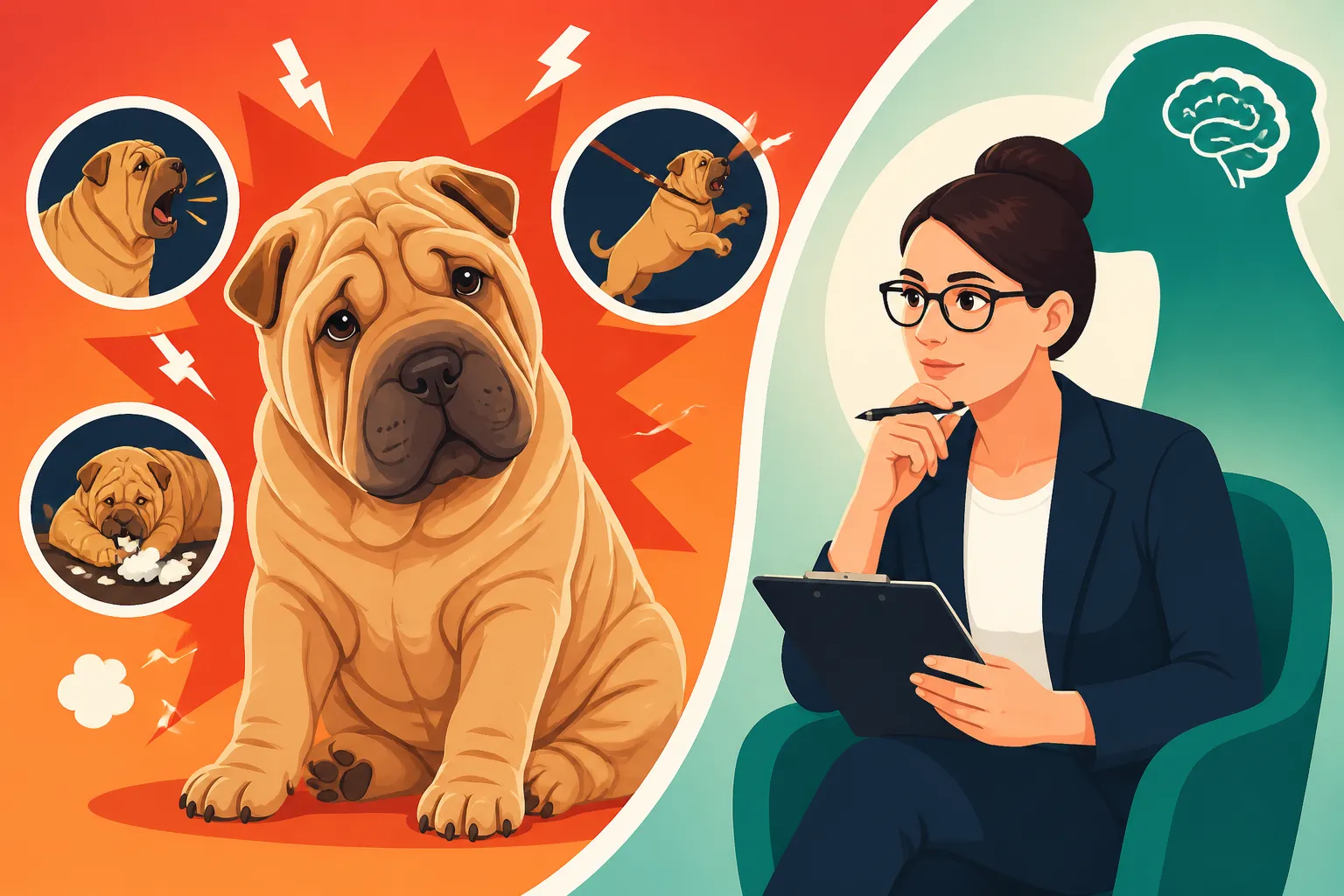
When a Shar Pei Needs a Behaviorist
It's incredibly frustrating, isn't it? You bring home your beloved Shar Pei, expecting a loyal, calm companion, only to find yourself grappling with behaviors that go far beyond typical puppy shenanigans or a bit of stubbornness. When those challenging moments turn into genuine concerns – aggression, severe anxiety, or behaviors that just don't seem to respond to your best efforts – it can feel isolating and overwhelming. This guide is here to help you understand when those challenging behaviors cross the line from something a regular trainer can address to a situation where a qualified professional, specifically a veterinary behaviorist, is not just helpful but absolutely necessary.
Understanding Typical Shar Pei Behavior and When It's More Than "Just a Shar Pei Thing"
Before we dive into when to call in the cavalry, let's talk about what makes a Shar Pei, well, a Shar Pei. These dogs are unique, and their breed traits often manifest in ways that might seem challenging to a first-time owner or someone used to more biddable breeds. It's easy to dismiss certain behaviors as "just how Shar Peis are," but there's a fine line between a quirky breed trait and a genuine behavioral problem that needs professional intervention.
The Independent and Aloof Nature
Shar Peis were originally bred for various roles, including guarding, hunting, and even fighting. This history has ingrained a strong sense of independence and a naturally protective instinct. They aren't typically the effusive, "everyone's best friend" type of dog you might see in a Golden Retriever. Instead, they often form deep bonds with one or two primary caregivers and can be quite aloof with strangers. This isn't rudeness; it's a characteristic of their breed. They're not always looking to please, and they think for themselves, which can make training a patient, consistent endeavor.
A Shar Pei might not greet every visitor with a wagging tail, preferring to observe from a distance, or they might even choose to ignore strangers entirely. This is often normal. However, if this aloofness escalates into fear-based aggression, where your dog barks, lunges, or attempts to bite every new person or dog they encounter, that's a red flag. A Shar Pei Was Bred to Guard, Not to Greet perfectly captures this inherent trait. It's crucial to differentiate between a dog who is simply reserved and one who is genuinely afraid or reactive due to an underlying anxiety. An independent streak can be managed with consistent, positive reinforcement training, but deep-seated fear requires a more nuanced approach.
Resource Guarding and Protective Instincts
Another common Shar Pei trait stemming from their guarding heritage is resource guarding. This can manifest in protecting their food bowl, favorite toys, or even specific spots in the house, like a doorway or their bed. They might growl, stiffen, or even snap if someone approaches their valued item or space. Again, to a certain extent, this is a natural instinct for many dogs, especially those bred to protect. Understanding Why a Shar Pei Guards Its Food and Its Doorway is key to managing it effectively with prevention and training.
However, when resource guarding becomes severe – where a dog aggressively attacks anyone who comes near their things, or if it extends to guarding people in a possessive, dangerous way – it's no longer just a breed quirk. It indicates a deeper insecurity or underlying behavioral issue that can be extremely dangerous in a family setting. Early, consistent training can mitigate mild guarding, but once it becomes ingrained and aggressive, a professional behaviorist needs to step in. It's about establishing clear boundaries and trust, not dominance, and sometimes that trust needs a professional guide.
Identifying When Your Shar Pei Needs More Than a Basic Trainer
It’s easy to think a trainer can fix everything. And for many common issues like leash pulling, basic obedience, or mild reactivity, a good trainer is invaluable. But there are distinct signs that indicate your Shar Pei's struggles have moved beyond the scope of general obedience and require the specialized expertise of a certified veterinary behaviorist. These are often complex, deeply rooted issues that stem from fear, anxiety, or even neurological factors.
Aggression That Escalates or Is Unpredictable
Aggression is perhaps the most serious behavioral issue an owner can face, and it's where the line between a trainer and a behaviorist becomes most critical. If your Shar Pei is showing consistent aggression towards people (family members or strangers) or other animals, especially if it's escalating in intensity or becoming unpredictable, you need a behaviorist. This isn't just about a growl when someone steps on their tail; it's about lunging, snapping, biting, or exhibiting intense displays of territoriality or fear that put others at risk.
For instance, if your Shar Pei suddenly starts snarling and biting when you try to move them off the couch, or if they've had multiple incidents with other dogs that result in injury, this is beyond basic training. A behaviorist can help determine the root cause of the aggression, which could be fear, pain, genetic predisposition, or a combination of factors. They can then develop a safety plan and a specific modification protocol. Sometimes, what looks like aggression is actually rooted in profound fear. If you find yourself asking How a Fearful Shar Pei Becomes Aggressive, it’s a strong indicator that professional help is needed to address the underlying emotional state. This isn't just about teaching "sit" or "stay" but fundamentally reshaping your dog's emotional response and perception of the world.
Severe Anxiety, Phobias, or Destructive Behaviors
Many Shar Peis can be a bit sensitive or particular, but extreme anxiety or phobias can severely impact their quality of life and yours. Signs of severe anxiety include persistent destructive chewing (beyond normal puppy chewing), inappropriate urination or defecation when left alone, incessant barking or howling, pacing, panting, or trembling. If your dog exhibits a complete meltdown when you leave, even for short periods, you might be dealing with separation anxiety.
Similarly, if your Shar Pei develops a debilitating phobia – a paralyzing fear of thunderstorms, fireworks, specific objects, or even walks outside – a behaviorist is essential. These aren't just minor inconveniences; they're genuine distress signals. A trainer might offer management techniques, but a behaviorist can delve into medical causes, prescribe medication if necessary (which trainers cannot do), and implement comprehensive desensitization and counter-conditioning protocols. Think of it this way: if your dog's fear makes them unable to function normally or leads to self-harm or property destruction, it’s a behaviorist’s domain. Separation Anxiety in a Shar Pei is a perfect example of a complex issue that frequently requires a veterinary behaviorist's intervention.
Unexplained Changes in Behavior or Obsessive Compulsive Behaviors
Any sudden, unexplained change in your Shar Pei's behavior warrants a vet visit first, as pain or illness can often manifest as behavioral issues. But once medical causes are ruled out, if the behavior persists or is bizarre, it points toward a behaviorist. This includes things like suddenly refusing to walk, changes in house-training habits, or extreme lethargy or hyperactivity.
Beyond sudden changes, some Shar Peis develop obsessive-compulsive behaviors (OCBs). This could be tail chasing to the point of self-mutilation, compulsive licking of a certain body part (even if there’s no underlying dermatological issue), or air snapping. These repetitive, often ritualistic behaviors are not usually amenable to typical training methods. A behaviorist can distinguish between a learned habit and a genuine OCB, which often has a strong genetic component and may require pharmaceutical intervention alongside behavioral modification techniques. These are deep-seated patterns that often require medical management to even begin to address through behavioral exercises.
The Role of a Certified Veterinary Behaviorist
So, what exactly is a certified veterinary behaviorist, and how do they differ from the dog trainer you might hire for basic manners? This distinction is crucial, as their training, qualifications, and approach are fundamentally different. Understanding this can save you time, money, and most importantly, get your Shar Pei the right kind of help.
Education and Expertise
A certified veterinary behaviorist (often referred to as a Diplomate of the American College of Veterinary Behaviorists, or DACVB) is, first and foremost, a veterinarian. This means they have a veterinary degree, just like your family vet. After vet school, they complete a residency program specifically focused on animal behavior, which is typically a multi-year, intensive program. This involves rigorous study of animal learning theory, psychopharmacology (the use of medication to treat behavioral issues), neurobiology, and clinical behavior. They are also trained to rule out any underlying medical conditions that could be causing or exacerbating behavioral problems.
This extensive medical and behavioral background allows them to approach complex issues holistically. They can diagnose conditions like canine compulsive disorder, separation anxiety, or various forms of aggression, understanding the intricate interplay of genetics, environment, learning, and physiology. Unlike a general dog trainer, a behaviorist can prescribe medications, which are often a critical component of treating severe anxiety or fear-based aggression, especially in breeds like the Shar Pei where these issues can be intense. This medical lens is what truly sets them apart; they don't just see the behavior, they look for the root biological and psychological causes.
Comprehensive Assessment and Tailored Treatment Plans
When you consult a veterinary behaviorist, expect a deep dive into your Shar Pei's life. The initial consultation is often extensive, involving a thorough review of their medical history, detailed questionnaires about their behavior from puppyhood to the present, and often video analysis of specific incidents. They want to understand everything from your dog's daily routine and diet to their past experiences and current environment. This comprehensive approach is vital because behavioral issues are rarely simple; they're a complex tapestry of many threads.
Based on this assessment, the behaviorist will formulate a tailored treatment plan. This plan often combines environmental management strategies (how to modify your home or routine to reduce triggers), specific behavioral modification exercises (like desensitization and counter-conditioning), and potentially medication. For example, if your Shar Pei has severe Leash Reactivity in a Shar Pei, a behaviorist might suggest a combination of anti-anxiety medication, a specific type of harness for better control, and a step-by-step program to gradually expose your dog to triggers at a distance they can tolerate, slowly building positive associations. They won't just tell you to "correct" the behavior; they'll help you change the underlying emotional response that drives the behavior.
| Feature | Dog Trainer | Certified Veterinary Behaviorist |
|---|---|---|
| Qualifications | Varies widely; no standardized certification required. | DVM (Veterinary Degree) + specialized residency + board certification (DACVB). |
| Scope | Basic obedience, manners, mild behavior issues (e.g., jumping, house-training). | Complex behavior disorders: severe aggression, anxiety, phobias, OCD. |
| Approach | Focus on teaching and modifying learned behaviors. | Holistic: considers medical, genetic, environmental, and learning factors. |
| Medical Expertise | None. | Extensive medical background; can diagnose underlying conditions. |
| Medication | Cannot prescribe. | Can prescribe behavior-modifying medications. |
| Cost | Generally lower per session. | Higher initial consultation; long-term commitment. |
| Referral | Often refers complex cases to a behaviorist. | May work in conjunction with positive reinforcement trainers for implementation. |
Working with a Behaviorist: What to Expect and How to Prepare
Deciding to work with a behaviorist is a big step, but it's often the most effective path to resolution for serious issues. It requires commitment, patience, and a willingness to follow through with the treatment plan. It's not a quick fix, but a journey towards a happier, safer life for your Shar Pei and your family.
The Initial Consultation and Diagnostic Process
Once you've made the decision to consult a behaviorist, the first step is typically a very detailed initial consultation. This can often last several hours and may take place virtually or in person. You'll likely be asked to fill out extensive questionnaires beforehand, covering everything from your Shar Pei's daily routine, medical history (so make sure you have your vet records handy!), diet, and a complete history of the problematic behaviors, including when they started, what triggers them, and how you've responded. Bringing videos of the behavior, if safe to record, can be incredibly helpful for the behaviorist to observe without directly triggering your dog in the clinic.
During the consultation, the behaviorist will discuss their findings, provide a diagnosis (or differential diagnoses), and explain the underlying causes of your Shar Pei's behavior. They will outline a comprehensive treatment plan that often involves a combination of environmental management, behavioral modification techniques, and potentially medication. Don't be surprised if they recommend a physical exam or additional diagnostics with your regular veterinarian to completely rule out any lingering medical issues contributing to the behavior. This thoroughness is precisely why their expertise is so valuable.
Commitment to the Treatment Plan
Working with a behaviorist is a collaborative effort, and your commitment is paramount. The treatment plan they develop will require consistent effort on your part, often for weeks or months. This isn't just about attending sessions; it's about diligently implementing the strategies and exercises every single day at home. This might mean making significant changes to your household routine, using specific training tools recommended by the behaviorist (which you might find on Amazon), or administering medication reliably.
For instance, if your Shar Pei struggles with being alone (How Long a Shar Pei Copes Alone), the behaviorist might prescribe medication to reduce anxiety, recommend specific enrichment toys to keep them occupied, and guide you through a gradual desensitization program where you slowly increase the time your dog is left alone. This takes time and consistency. It’s not uncommon for behaviorists to work in conjunction with local force-free trainers who can help you implement the hands-on training components of the plan. Many online resources, like those offered by BAXTER & Bella, can also provide valuable foundational training skills that complement a behaviorist's deeper intervention. The key is patience and perseverance, understanding that true behavioral change is a marathon, not a sprint.
Disclaimer
This article is for general informational purposes only and does not constitute professional advice. Laws, prices and regulations vary by location and change over time. Consult a qualified professional for guidance on your specific situation.


