How Many Shar Pei Reached America First
When we look at our beloved Shar Pei today, with their distinctive wrinkles and loyal demeanors, it's easy to forget that this incredible breed was once teetering on the very edge of extinction. Many passionate owners and breed enthusiasts know the general story of their miraculous rescue, but often the specifics get a little blurry. One question that frequently pops up is, "Just how many Shar Pei actually made it to America to kickstart the breed's revival?" It’s a vital piece of history that directly impacts the genetic makeup and health challenges we see in the breed even now. This guide aims to pull back the curtain on those critical early days, revealing the surprisingly small number of Shar Pei that became the foundation for the breed in the Western world, and what that truly meant for their future.
The Grim Reality: Shar Pei on the Brink in Their Homeland
To understand the sheer significance of how many Shar Pei eventually reached America, we first need to grasp the desperate situation they faced in their native China. It wasn't just a slight decline; it was an active and devastating eradication.
Why the Breed Faced Extinction in China
The mid-20th century was a brutal time for dogs in China, particularly after the establishment of the People's Republic of China in 1949. Dogs, once companions and working animals, became symbols of bourgeois decadence. The government imposed crippling taxes on dog ownership, making it economically impossible for most people to keep them. If you couldn't pay the tax, the dogs were often culled. This wasn't just a minor inconvenience; it was a systematic campaign that saw millions of dogs slaughtered, driving many native breeds, including the Shar Pei, to the very brink of non-existence.
Imagine living in a society where keeping your beloved dog was not just frowned upon, but actively penalized to the point of extinction. Families who had shared their lives with these loyal animals for generations were forced to make impossible choices. The once-thriving Shar Pei, a breed deeply embedded in rural Chinese life as a farm dog, guard dog, and even a fighting dog, simply vanished from public view. By the 1970s, many believed the breed was entirely gone from mainland China, with only a tiny, isolated population surviving in places like Hong Kong and Taiwan. The breed's unique characteristics, like its sandpaper coat and furrowed brow, almost became mere memories.
The Role of Matgo Law
Amidst this bleak backdrop, a hero emerged: a Hong Kong businessman named Matgo Law. He was deeply concerned about the disappearing Shar Pei and knew he had to act. He understood that without intervention, the breed would be lost forever. His desperate plea, a letter titled "Save the Chinese Shar-Pei," was published in the American magazine Dogs in 1978. This wasn't just a casual article; it was a global SOS for a dying breed.
Matgo Law's letter was a direct appeal to Western dog lovers, describing the Shar Pei as a unique and ancient breed facing imminent extinction. He highlighted their distinctive appearance and their plight, hoping to stir compassion and action. The letter, passionate and urgent, described the Shar Pei as "the last remaining specimens" of their kind. This single act of bravery became the turning point. The Year Matgo Law Wrote His Letter marked a pivotal moment, as did Which Magazine Published the Shar Pei Appeal, for these brought the Shar Pei's desperate situation to international attention, igniting a spark of hope that would eventually lead to their rescue. Without Matgo Law's intervention, it's highly probable we wouldn't be discussing this wonderful breed today.
The Initial Lifeline: A Handful to America
Matgo Law's desperate cry for help didn't just generate sympathy; it spurred a small but incredibly dedicated group of American breeders and enthusiasts into action. However, the path to bringing these dogs to the United States was fraught with challenges, and the numbers were astonishingly small.
The Exact Number of Early Arrivals
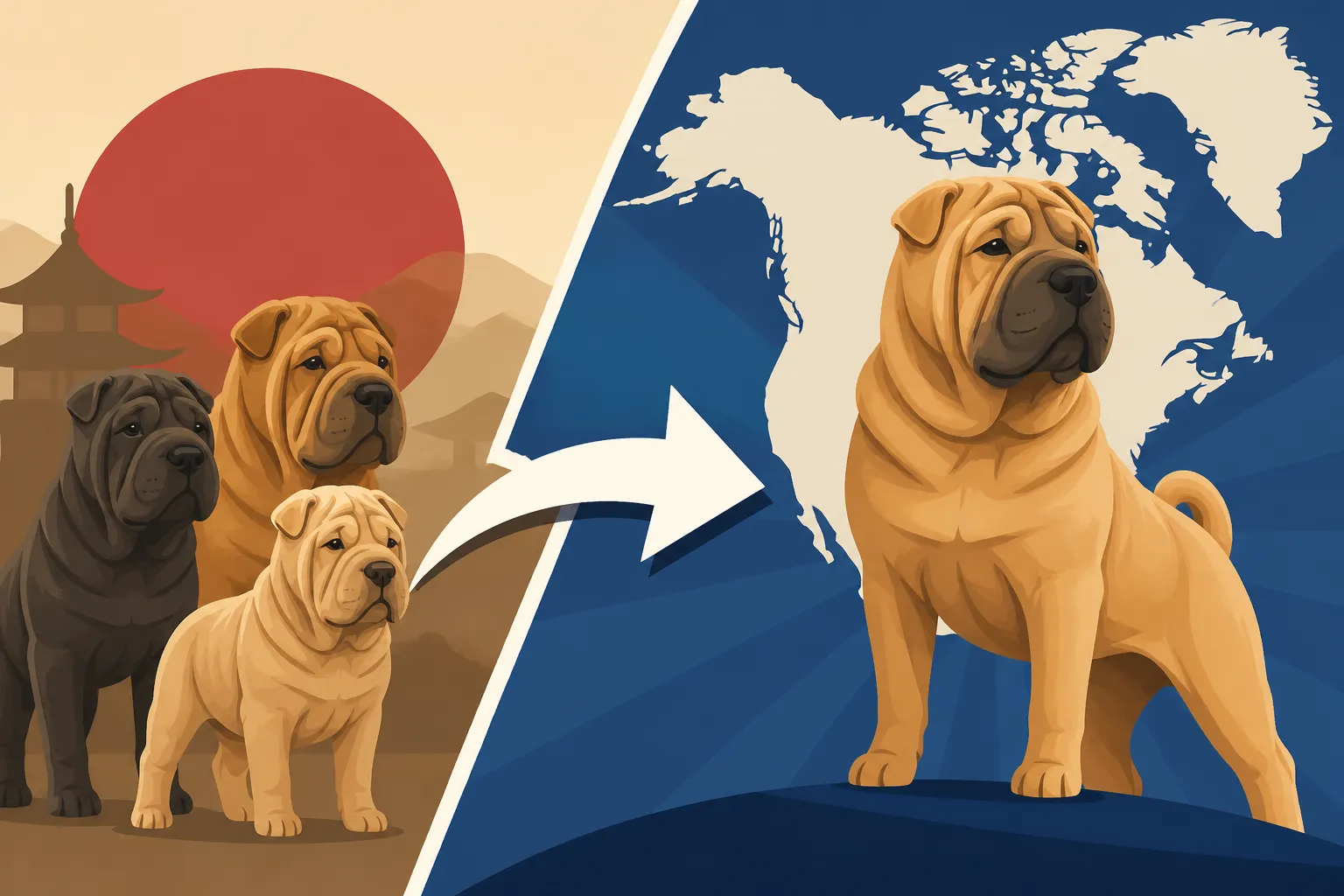
When Matgo Law first sent his plea, the numbers were truly dire. He himself gathered what he believed were the last remaining Shar Pei in Hong Kong, and through his efforts and the passionate response from American enthusiasts, a minuscule group of these dogs made their way across the Pacific. While the exact, universally agreed-upon number is often debated due to differing accounts and the clandestine nature of some early exports, it's widely accepted that fewer than 20 Shar Pei formed the initial foundation stock that reached America in the late 1970s. Some sources even cite figures as low as 12 to 14 dogs being the progenitors of the vast majority of Western Shar Pei.
Think about that for a moment: an entire breed's future, its genetic diversity, its very existence in the Western world, rested on the shoulders of fewer than two dozen individuals. This wasn't a mass exodus; it was a trickle. These dogs were precious cargo, each one representing a priceless genetic lifeline. The logistics alone were immense, involving careful selection, quarantine, and expensive international travel. Each arrival was a triumph against overwhelming odds. This tiny group, often referred to as the "founding stock," laid the entire genetic groundwork for every Shar Pei that would come after them in the West. How Many Shar Pei Reached America First might seem like a simple question, but its answer profoundly impacted the breed forever.
The Genesis of the Western Shar Pei Population
This tiny initial group wasn't just a starting point; it was the starting point. Every Shar Pei in America, and indeed much of the Western world, can trace its lineage back to these few individuals. This created what geneticists call a "bottleneck" effect. Imagine trying to rebuild an entire library with only a handful of books – you'd be missing a lot of variety, wouldn't you? That's what happened with the Shar Pei's gene pool.
The limited genetic diversity meant that any health issues present in those founding dogs became highly concentrated in subsequent generations. If one of those original dogs carried a predisposition for a certain condition, the chances of it showing up in their offspring, and then spreading through the entire population, dramatically increased. This is a critical factor in understanding the breed's health challenges today. It explains, for example, why certain health conditions are so prevalent within the breed. For a deeper dive into this, consider How Narrow the Shar Pei's Founding Gene Pool Was, which explores the implications of this limited gene pool in detail. It’s a testament to the dedication of early breeders that they were able to propagate the breed at all from such a small starting point, but the genetic cost was undeniable.
The Shar Pei Boom and Its Enduring Legacy
The story of the Shar Pei didn't end with their arrival in America. In fact, it was just the beginning of another dramatic chapter: a surge in popularity that, while ensuring their survival, also brought its own set of complications.
The Rapid Rise in Popularity
Once these unique, wrinkled dogs arrived in the States, they quickly captured the public's imagination. The "Save the Chinese Shar-Pei" campaign, coupled with their exotic appearance, created a sensation. For a time, the Shar Pei was actually listed by Guinness World Records as the "rarest dog in the world." The Year Guinness Named the Shar Pei the Rarest Breed marks the period when this title truly cemented their status as a must-have, designer breed. Everyone wanted one of these distinctive dogs, and demand skyrocketed.
This intense demand led to what is often referred to as the "Shar Pei boom." Prices soared, and unfortunately, this attracted unscrupulous breeders looking to make a quick profit. These individuals, often called "backyard breeders" or "puppy mill" operators, focused solely on quantity over quality, breeding dogs without proper health screening or regard for temperament. They capitalized on the breed's rarity and unique look, often selling puppies that might not have been healthy or well-socialized. This unfortunately led to many heartbreak stories for new owners who were unprepared for the health issues or behavioral quirks that could arise from poorly bred dogs. It's a stark reminder of how public demand can inadvertently harm a breed, a topic explored further in Whether Puppy Mills Followed the Shar Pei Boom.
The Health Consequences of a Limited Gene Pool
The combination of the initial genetic bottleneck and the subsequent rapid, unregulated expansion of the breed had profound and lasting consequences on Shar Pei health. With such a small founding population, certain genes became concentrated, including those that predisposed the breed to particular health issues. When the breed rapidly expanded, these concentrated genes were spread even wider. This means that many of the breed-specific health problems we see today are directly linked to that very narrow genetic foundation.
One of the most well-known examples is Shar Pei Fever (often known as FSF), a hereditary inflammatory disease. One Mutation Gave the Shar Pei Its Wrinkles and Its Fever delves into the genetic link between their distinctive skin and this recurring fever. Other common issues include eye problems like entropion, where the eyelids roll inward and irritate the eye. Entropion in a Shar Pei Puppy Is an Emergency, Not a Cosmetic Issue explains why this isn't just a cosmetic concern but a serious health threat that can lead to blindness if not addressed. Skin conditions are also a major concern, given their abundant wrinkles. Skin Is the Shar Pei's Largest Problem by Surface Area highlights how these folds can harbor infections. These aren't random ailments; they are often direct consequences of the breed's unique rescue story.
However, the dedicated Shar Pei community has been working tirelessly to address these challenges. Reputable breeders today are committed to health testing and making informed breeding decisions to improve the breed's overall well-being. Organizations now conduct studies and develop tools, like genetic testing, to help identify carriers of certain conditions. You can even explore questions like Whether a Shar Pei's Copy Number Can Be Tested to understand how science is helping breeders make better choices. Many owners carefully choose food from reputable sources like Chewy, knowing that good nutrition is key to supporting their dog's health, especially one with potential sensitivities. While the health legacy of their near extinction and boom still lingers, there's a strong, ongoing effort towards creating healthier futures for these magnificent dogs. This long-term commitment is vital in fulfilling the initial promise of Matgo Law's rescue, ensuring that Whether the Shar Pei Is Bred for Health Now is a question with an increasingly positive answer.
Here's a quick look at the Shar Pei's journey:
| Period | Estimated Numbers (Global/US) | Key Event/Challenge | Genetic Impact |
|---|---|---|---|
| Pre-1950s (China) | Thousands | Thriving in rural China | Broader, healthier gene pool |
| 1950s-1970s (China) | < 200 (worldwide) | Government culling, dog taxes; near extinction | Massive genetic loss, severe bottleneck |
| Late 1970s (Initial US) | ~12-20 | Matgo Law's plea, first exports to America | Extremely narrow genetic foundation for Western population |
| 1980s-1990s (US) | Rapidly growing (thousands) | "Rarest Dog" boom, widespread popularity, rapid breeding | Proliferation of health issues from limited founding stock, potential for dilution |
| 2000s-Present (US) | Stable, regulated growth | Increased health awareness, genetic testing, responsible breeding efforts | Ongoing efforts to broaden gene pool and mitigate hereditary conditions |
This journey underscores the incredible resilience of the Shar Pei and the dedication of the people who saved them. From a handful of dogs, a worldwide population has grown, and while challenges remain, the commitment to their future is stronger than ever. Finding the right products, from food to supplements, on platforms like Chewy, is often part of a dedicated owner's routine to manage the specific needs that arise from this unique history.
Disclaimer
This article is for general informational purposes only and does not constitute professional advice. Laws, prices and regulations vary by location and change over time. Consult a qualified professional for guidance on your specific situation.