Whether the First American Shar Pei Were Related
It’s a common heartache for Shar Pei owners, or even those just considering bringing one of these uniquely wrinkled dogs into their lives: the nagging concern about their health. With all the discussions about genetic predispositions to certain conditions, it’s only natural to wonder if these issues stem from the very roots of the breed in the West. This article will delve into the fascinating, albeit somewhat challenging, history of the Shar Pei's journey to America, examining just how related those initial foundational dogs truly were and what that has meant for the breed's genetic blueprint today.
The Near Extinction and Matgo Law's Appeal
The story of the Shar Pei in America really begins with their near disappearance in their homeland, China. Understanding this critical period is key to grasping the genetic picture we face today.
A Breed on the Brink in China
For centuries, the Shar Pei served as a versatile working dog in rural China, fulfilling roles from guarding and hunting to herding. They were a common sight, loyal companions to farmers and fishermen. However, the political and social upheavals of the mid-20th century, particularly the rise of communism and the subsequent crackdown on dog ownership, led to devastating consequences for many indigenous breeds. Dogs were seen as luxuries, even symbols of decadence, and taxes on dog ownership became prohibitively high, leading to widespread culling. Many old breeds simply vanished or were pushed to the very brink of extinction. The Shar Pei, unfortunately, was one of these casualties. By the 1950s and 60s, their numbers dwindled dramatically, becoming incredibly rare, almost a ghost of a breed.
The Call for Help
It was a man named Matgo Law, a dedicated breeder living in Hong Kong, who effectively became the Shar Pei's unlikely savior. Witnessing the rapid decline of these magnificent dogs, he understood that if something wasn't done quickly, the breed would be lost forever. In 1978, he penned a desperate plea, writing to Dogs magazine in the United States, describing the Shar Pei as "the last dogs of China" and warning of their impending extinction. This was an extraordinary and courageous act, as he was essentially asking for international help to save a breed that was being actively suppressed in its native country. His heartfelt letter struck a chord with dog enthusiasts across America, sparking an urgent interest in saving the exotic and unique Shar Pei. You can learn more about this pivotal moment in One Letter to a Dog Magazine Saved the Shar Pei.
The Journey to America and the Founding Stock
The response to Matgo Law's appeal was immediate and overwhelming, but the actual number of dogs that could be sourced and brought to the US was incredibly small. This formed the genetic foundation of what would become the American Shar Pei.
A Handful of Pioneers
Following Matgo Law's plea, a small number of Shar Pei were carefully smuggled out of Hong Kong. It wasn't a mass exodus; rather, it was a trickle of individual dogs, each one a precious link to the past. These initial imports, mostly between the late 1970s and early 1980s, amounted to only a few dozen dogs. Think about that: a whole new population for a country as vast as the United States, all built upon a foundation of perhaps 60-100 dogs at most. When you consider the genetic diversity present in a healthy, thriving breed, this is an astonishingly small number. It’s a bit like trying to start a brand new civilization with only a few families – there's just not much variety to work with. These few dogs became the literal ancestors of almost every American Shar Pei alive today. To truly grasp the scale, consider How Many Shar Pei Reached America First.
Inbreeding and the Genetic Bottleneck
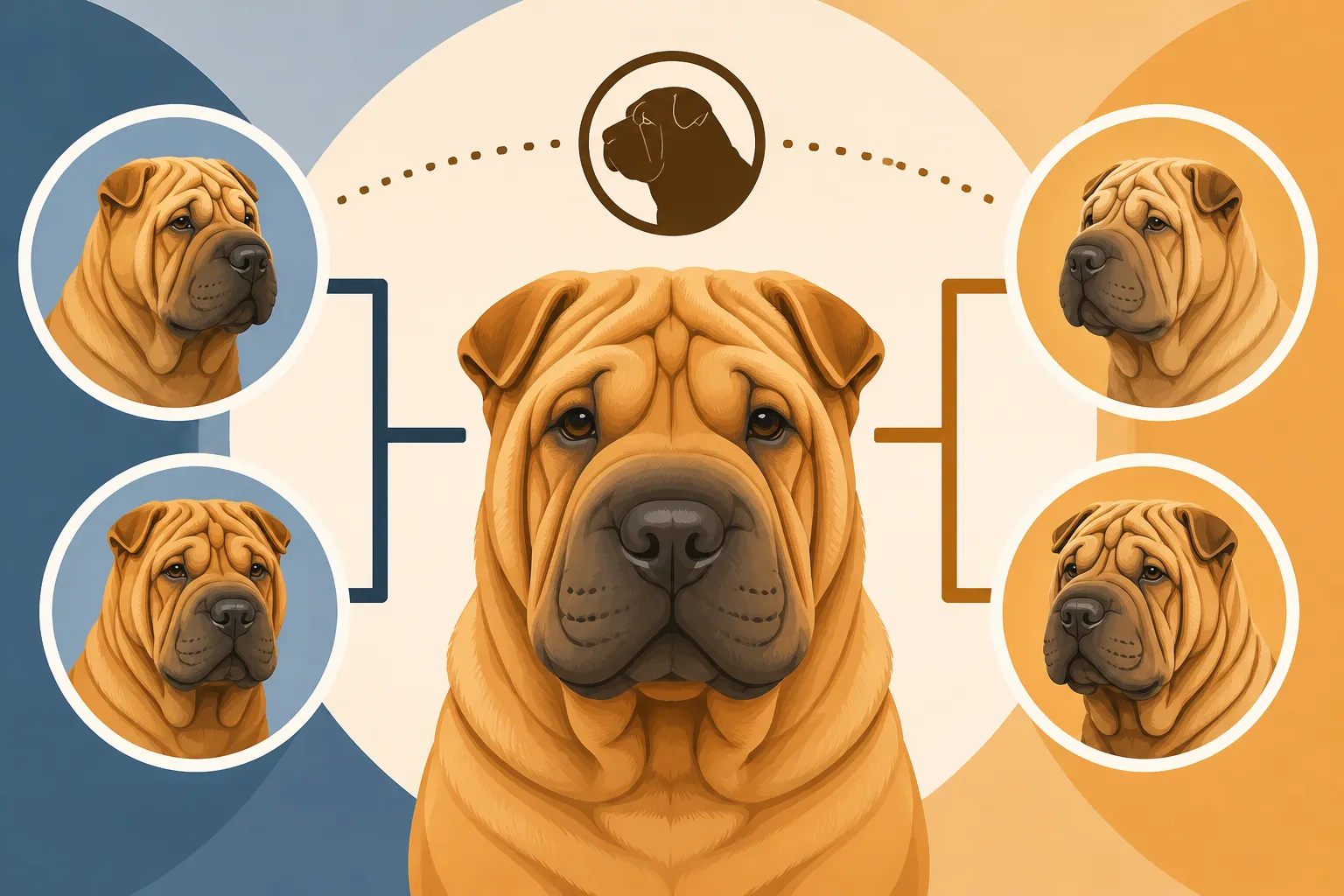
Given the minuscule number of Shar Pei that formed the breed's foundation in America, it was practically inevitable that these dogs were all closely related. Even if not direct siblings, they likely shared common ancestors within a generation or two, simply because there were so few unrelated dogs left in Hong Kong to draw from. This situation created what geneticists call a "bottleneck effect." Imagine pouring water from a wide jug into another wide jug through a very narrow funnel – only a small portion of the original water (genetic diversity) can pass through.
What this means for the Shar Pei is that the entire American population effectively started from a very limited gene pool. Breeders, despite their best intentions and efforts to diversify, were working with what they had. This led to a significant degree of inbreeding, not necessarily through intentional close sibling breedings, but through the sheer lack of unrelated options. Over generations, this concentration of genes from a small founding group meant that any genetic traits, good or bad, became widely distributed and fixed within the population. It’s crucial to understand How Narrow the Shar Pei's Founding Gene Pool Was to appreciate the profound impact this had.
| Characteristic | Broad Gene Pool (Ideal) | Narrow Gene Pool (Shar Pei's Reality) |
|---|---|---|
| Genetic Diversity | High | Low |
| Relatedness | Lower average relatedness among individuals | Higher average relatedness among individuals |
| Recessive Trait Expression | Less likely to express genetic diseases | More likely to express genetic diseases |
| Adaptability | Higher ability to adapt to environmental changes | Lower ability to adapt, more vulnerable |
| Immune System Health | Generally stronger and more varied | Can be compromised, less varied |
| Breed Vigor | Robust and resilient | Can lead to reduced vigor and specific health challenges |
The Consequences of Limited Ancestry
The genetic legacy of this bottleneck isn't just an academic discussion; it has very real, tangible impacts on the health and well-being of the Shar Pei we know and love today. Many of the breed-specific health challenges are directly traceable to this foundational period.
Inherited Health Challenges
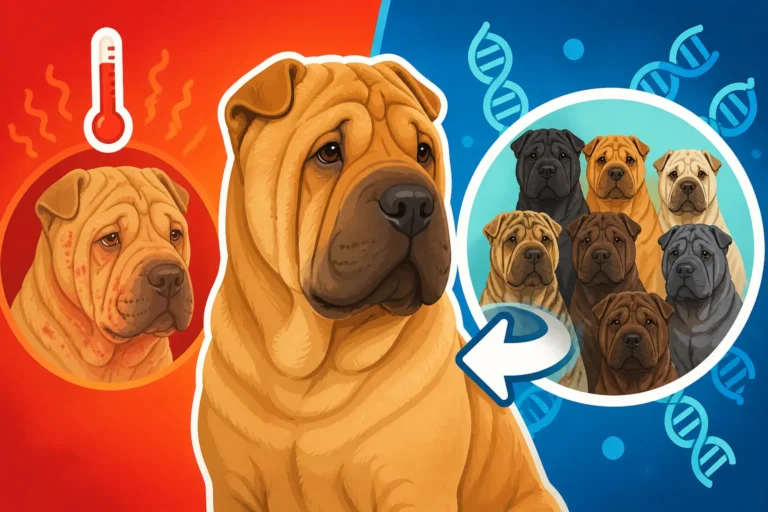
When a breed originates from such a small group of individuals, there's an increased chance that any existing genetic predispositions for health problems within that small group will be amplified and spread throughout the entire population. This is precisely what happened with the Shar Pei. We often hear about specific conditions that seem to plague the breed, and these are direct consequences of that genetic bottleneck. For instance, the infamous Familial Shar Pei Fever (FSF), a hereditary inflammatory disorder, is a prime example. All Shar Pei carry the genetic mutation responsible for FSF, to varying degrees. This isn't an infection your dog catches; it's something inherent in their genetic makeup, passed down from those founding dogs. Familial Shar Pei Fever Is Not an Infection explains this in more detail.
Similarly, other characteristic health issues, such as specific skin problems like mucinosis or fold dermatitis, and eye conditions like entropion, are often more prevalent in Shar Pei due to this inherited lack of genetic diversity. The breed's unique skin, while a defining feature, also presents its own set of challenges. Skin Is the Shar Pei's Largest Problem by Surface Area is a testament to this fact. It's a bittersweet reality: the very act of saving the breed from extinction inadvertently concentrated genes that predisposed them to these conditions. It really makes you think about What Being Saved Did to the Shar Pei's Health.
Modern Breeding Practices and the Legacy
Today's responsible Shar Pei breeders are acutely aware of this genetic legacy. They aren't turning a blind eye to the health challenges; quite the opposite. Many dedicated individuals are working tirelessly to improve the health of the breed within the constraints of the existing gene pool. This involves a commitment to rigorous health testing of breeding stock, carefully studying pedigrees to minimize further inbreeding, and making informed decisions about pairings. They strive to select dogs that exhibit excellent health, robust temperaments, and conformation that adheres to the breed standard without exaggerating traits that might exacerbate health issues.
This also means being transparent with puppy buyers about potential health risks and providing comprehensive health guarantees. A good breeder will talk openly about the breed's history and challenges, ensuring that prospective owners are fully informed and prepared for the unique care requirements of a Shar Pei. You'll often find resources, even from major pet suppliers like Chewy, that offer specific products designed for Shar Pei's sensitive skin or unique dietary needs, indicating how widespread these issues are, and how committed owners are to managing them.
Understanding Relatedness in Today's Shar Pei
While the foundational American Shar Pei were undeniably closely related, the breed has evolved over decades. Modern tools and responsible practices offer ways to understand and manage this genetic heritage.
Pedigrees and Genetic Testing
For any purebred dog, a pedigree is a family tree, tracing back generations of ancestors. In the Shar Pei world, looking at a pedigree is like looking at a map of genetic relatedness. You’ll often see common ancestors appearing multiple times, which is a clear indicator of the bottleneck effect. Dedicated breeders use these pedigrees to calculate "coefficient of inbreeding" (COI) values for potential pairings, aiming to keep these numbers as low as possible to introduce some degree of genetic outcrossing within the existing lines.
Beyond traditional pedigrees, genetic testing has become an invaluable tool. There are now specific tests available that can identify carriers for certain genetic conditions, including those related to Familial Shar Pei Fever and other inflammatory responses. By using these tests, breeders can make educated choices to avoid breeding two carriers together, thus reducing the risk of producing affected puppies. This proactive approach helps to slowly, incrementally, improve the breed's overall health picture. It’s about working with the hand you’ve been dealt, and doing the very best you can with it.
The Future of the Shar Pei Gene Pool
The question of how to move forward with the Shar Pei gene pool is a complex one. Some argue that true progress requires outcrossing to other breeds to introduce fresh genetic material, while others believe that the essence of the Shar Pei breed would be lost in such an endeavor. For now, the focus within the dedicated Shar Pei community largely remains on careful, health-conscious breeding within the existing purebred lines.
This includes continuing to utilize genetic testing, maintaining comprehensive health databases, and collaborating internationally to share genetic information where possible. The goal is to maximize the genetic diversity that does exist within the breed, while minimizing the expression of inherited diseases. It's a continuous balancing act, a testament to the dedication of those who love these dogs. While it's a long shot, the hope is that through careful management, the breed's health can continue to improve. Many wonder Whether a Wider Gene Pool Would Fix Shar Pei Fever, and it's a valid discussion point that continues to be debated in responsible breeding circles. Ultimately, the health and longevity of the Shar Pei depend on sustained, thoughtful efforts from breeders and owners alike. Getting appropriate, high-quality food from a trusted source like Chewy, which caters to specific dietary needs often arising from these genetic predispositions, is just one small part of providing the best possible care for these unique dogs.
Disclaimer
This article is for general informational purposes only and does not constitute professional advice. Laws, prices and regulations vary by location and change over time. Consult a qualified professional for guidance on your specific situation.