Whether Any Insurer Will Cover a Shar Pei’s Skin
It's a frustrating reality for many Shar Pei owners: you adore those beautiful, distinctive wrinkles, but you know they come with their own set of challenges, especially when it comes to skin health. You're probably wondering if, amidst all the care and potential veterinary visits, pet insurance can actually be a reliable safety net for these breed-specific skin issues. This guide is here to shed some light on the often-confusing world of pet insurance and whether it will truly cover your Shar Pei's skin, helping you understand what to look for and what to expect.
The Reality of Shar Pei Skin and Insurance
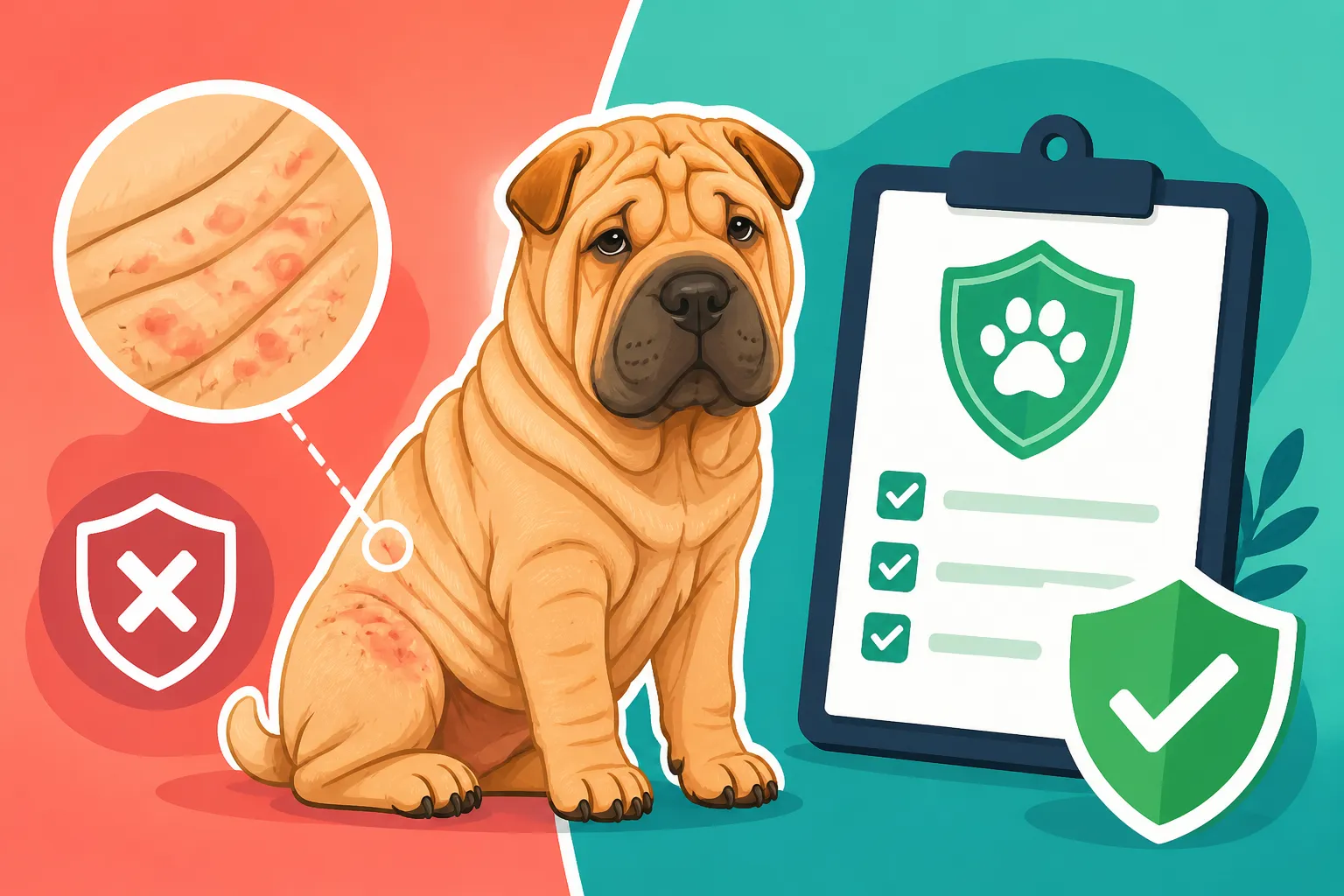
Let's be honest, the Shar Pei's glorious, wrinkled skin is also its Achilles' heel. It's what makes them so unique and beloved, but it's also the source of many of their potential health issues. When it comes to pet insurance, this unique physiology can make things a bit tricky, and it's essential to go in with your eyes wide open.
Why Shar Pei Skin is a Pre-Existing Condition Minefield
The sheer volume of skin on a Shar Pei is something to behold, but it means there are more places for things to go wrong. We're talking about everything from Skin Fold Dermatitis on a Shar Pei (those lovely wrinkles becoming irritated or infected), to allergic reactions manifesting as intense itching, or even more complex conditions like What Cutaneous Mucinosis Is, where the skin can become puffy or develop blisters. Then there's the possibility of parasites like Whether a Shar Pei Gets Demodectic Mange, which can cause hair loss and irritation.
The biggest hurdle with pet insurance for these conditions often comes down to the term "pre-existing condition." If your Shar Pei showed any signs of a skin issue – a scratch, a rash, even just excessive licking – before you enrolled in insurance or during the policy's waiting period, the insurer might classify that specific issue, or even related ones, as pre-existing. This means they likely won't cover treatment for it. It's a tough pill to swallow, especially when many Shar Pei puppies show early signs of skin sensitivity. Owners often find themselves in a bind, where the very thing they need coverage for is deemed ineligible because it's so inherent to the breed and can manifest early.
Navigating Breed-Specific Exclusions
Some pet insurance providers, recognizing the particular health predispositions of certain breeds, might have specific exclusions or limitations for Shar Pei. While it's less common for an insurer to outright refuse coverage for all skin conditions in a Shar Pei, they might have clauses that target conditions known to be prevalent in the breed. For instance, some policies might be more hesitant to cover chronic, recurring fold infections or mucinosis if they can link it back to a genetic predisposition.
It's not about being discriminatory; it's about managing risk for the insurer. They look at the historical data for claims made on certain breeds. This is why it’s absolutely paramount to read the policy document's fine print. Don't just rely on a summary you see online. Get a sample policy and comb through the sections on breed-specific conditions, hereditary conditions, and how they define pre-existing issues. What one insurer considers "normal wear and tear" for a Shar Pei's skin, another might view as a chronic, uninsurable condition. It's like comparing apples and oranges, but the juice is your peace of mind and your wallet.
The Importance of Early Enrollment
Given the pre-existing condition challenge, timing is everything with a Shar Pei. If you're considering pet insurance, the ideal scenario is to enroll your Shar Pei puppy as early as possible, typically before they've even had their first routine vet check, certainly before any symptoms, however minor, appear. This fresh slate helps minimize the chances of a skin issue being flagged as pre-existing.
Most pet insurance policies come with waiting periods – a period of time after you enroll before coverage for certain conditions begins. This might be a few days for accidents, but often weeks or even months for illnesses, and sometimes even longer for orthopedic issues. If your Shar Pei develops a skin irritation, allergy, or fold infection during this waiting period, it will almost certainly be considered pre-existing, even if you hadn't taken them to the vet for it yet. Your best bet is to get coverage in place well before any sniffles, limps, or, yes, even subtle skin redness appears. Think of it like getting car insurance before you ever leave the dealership. It's about protecting against the unknown future, not the already present issues.
What Kinds of Skin Issues Might Be Covered (and Under What Circumstances)
So, is all hope lost for Shar Pei skin coverage? Not necessarily! While the "pre-existing" clause is a major hurdle, there are certainly situations where pet insurance can be a lifesaver for your Shar Pei's dermatological needs. It truly depends on the nature of the condition and when it arises.
Acute vs. Chronic Conditions
This is a critical distinction in the world of pet insurance.
- Acute Conditions: Imagine your Shar Pei, while playing a bit too enthusiastically in the yard, gets a nasty cut or develops a sudden, isolated hot spot from a bee sting. If this is truly a one-off event, not related to an ongoing or previously documented skin issue, and occurs after waiting periods have passed, insurance is very likely to cover the diagnostic tests, antibiotics, pain medication, and any necessary stitches. These are unexpected, sudden events, which is exactly what insurance is designed for. The challenge, of course, is that a "hot spot" on a Shar Pei can quickly escalate into Skin Is the Shar Pei's Largest Problem by Surface Area if it's left unchecked.
- Chronic Conditions: This is where it gets trickier. Conditions like recurring Skin Fold Dermatitis on a Shar Pei, widespread environmental allergies, or ongoing issues like What Cutaneous Mucinosis Is are typically chronic. If these conditions are diagnosed or even suspected before you enroll, or during the waiting period, they will almost certainly be excluded. However, if your Shar Pei developed, say, environmental allergies after being insured for a significant period with no prior symptoms or vet visits mentioning itching, then many comprehensive accident and illness policies might cover the diagnostic workups and ongoing treatment. The key is that it must be considered a new illness, not merely a flare-up of an old, pre-existing one. This is why a detailed veterinary history is so vital for both you and your insurer.
Diagnostic Workups and Treatments
If a skin condition is deemed covered by your policy, pet insurance can be incredibly helpful for the often-expensive diagnostic journey and subsequent treatments.
- Diagnostic Tests: This includes things like allergy testing (intradermal or blood tests), skin scrapes to check for mites like Demodex, fungal cultures, biopsies of suspicious lumps, or even specialized consultations with a veterinary dermatologist. These tests can add up quickly, and a good policy can cover a significant portion.
- Medications: Prescription medications such as antibiotics for bacterial infections, antifungals for yeast, anti-inflammatory drugs, or immune-modulating drugs like Apoquel can be very costly, especially when prescribed long-term.
- Therapeutic Shampoos and Wipes: While daily cleaning supplies might be out-of-pocket, specific medicated shampoos or wipes prescribed by a vet for a covered condition might sometimes be included, though this varies greatly by policy. Some pet food and supply retailers like Chewy often carry these vet-recommended products, but insurance usually won't cover them unless explicitly part of a treatment plan.
- Special Diets: For Shar Pei with Food Allergies in a Shar Pei, a prescription hydrolyzed or limited ingredient diet might be recommended. Generally, pet insurance does not cover the cost of food, even prescription diets, as they consider it a "maintenance" item. However, it's always worth checking, as exceptions can sometimes be made for specific, short-term therapeutic needs. This is where brands like Ollie might come into play for their general healthy food offerings, but again, insurance usually draws a line at covering the actual food cost itself.
Lifetime vs. Accident/Illness Policies
When choosing pet insurance, you'll generally encounter two main types that could affect coverage for chronic skin issues:
- Accident-Only Policies: These are usually more affordable but only cover injuries from accidents (e.g., a broken bone, a swallowed toy). They offer no coverage for illnesses, including skin conditions. For a Shar Pei, this type of policy would be insufficient given their breed predispositions.
- Accident and Illness Policies (Comprehensive): These are the ones you'll want to focus on. They cover a wide range of conditions, from infections and diseases to injuries. Within this category, policies can be structured differently regarding chronic conditions.
- Per-Condition Limits: Some policies might have a maximum payout per condition, meaning once you hit that limit for, say, "allergies," that's all they'll pay for that specific issue.
- Annual Limits: Others have a total annual limit for all conditions combined.
- Lifetime Limits: A truly comprehensive "lifetime" policy offers a new annual limit each year for covered conditions, which can be invaluable for chronic issues that require ongoing management over years. For a Shar Pei dealing with recurrent skin problems, a lifetime policy offers the most robust protection, assuming the condition wasn't pre-existing. It's crucial to understand these limits because What a Shar Pei's Skin Costs a Year can quickly add up, easily reaching into thousands of dollars annually for severe or multiple conditions.
Strategies for Securing Coverage for Your Shar Pei's Skin
Okay, so we know it's not always straightforward, but there are proactive steps you can take to give yourself the best chance of securing pet insurance coverage for your Shar Pei's potential skin issues. It's all about being informed, diligent, and choosing wisely.
Choosing the Right Policy and Provider
This isn't a "one-size-fits-all" situation. What works for a Golden Retriever might not be ideal for a Shar Pei.
- Research Breed-Specific Reputations: Start by looking into insurers known for being Shar Pei-friendly, or at least those with clear policies on hereditary and chronic conditions. Some companies are more transparent or flexible than others. Don't be afraid to call their customer service and ask very specific, hypothetical questions about Shar Pei skin conditions.
- Ask About Hereditary/Congenital Conditions: Shar Pei skin issues often have a genetic component, such as the excess mucin that causes the wrinkles and can lead to problems like mucinosis. Ensure your chosen policy offers robust coverage for hereditary and congenital conditions, provided they are not pre-existing.
- Understand Pre-Existing Condition Definitions: This is non-negotiable. How does the insurer define a pre-existing condition? Is it only based on a vet diagnosis, or can observable symptoms (even if not diagnosed) trigger an exclusion? What about conditions that resolve and then recur? Clarify these points meticulously.
- Check for Wellness Add-ons: While general grooming isn't covered, some wellness plans might contribute to things like routine vet check-ups, which can catch early signs of skin issues before they become chronic and costly. However, these are separate from illness coverage.
Brands like Healthy Paws are often mentioned for their comprehensive accident and illness coverage. While I can't speak to their specific current policies or prices, they are generally known for not having per-condition limits, which can be beneficial for chronic issues, assuming they weren't pre-existing. Always visit their official website or speak directly with their representatives to get the most accurate, up-to-date information for your specific situation.
Documenting Your Shar Pei's Health History
This step cannot be overstated. Your Shar Pei's veterinary records are the single most important tool when dealing with insurance claims.
- Initial Vet Visit: When you first get your Shar Pei, schedule a comprehensive "new pet" vet visit immediately. Ensure the vet performs a thorough head-to-tail examination, and that everything is documented, including a clean bill of health or any minor observations. If there are no skin issues noted, this provides a baseline.
- Regular Check-ups: Continue with routine wellness exams. These annual or bi-annual visits create a continuous health record. If a skin issue develops later, these clear records can help demonstrate that it appeared after your policy's inception and waiting periods.
- Be Specific with Your Vet: If you notice anything on your Shar Pei's skin, no matter how minor – a bit of redness in a fold, some scratching, a small bump – bring it to your vet's attention and ask them to document it. Even if they deem it insignificant at the time, having it on record can protect you. However, be aware that if they diagnose something, that diagnosis will be used by the insurer. This is the fine line you walk: you want to be proactive for your dog's health, but mindful of how it impacts future insurance claims.
Comparing Costs: Premiums, Deductibles, and Reimbursement
Understanding the financial structure of pet insurance is key to knowing what you're actually paying for and what you'll get back.
- Premiums: This is your monthly or annual payment. It varies based on your Shar Pei's age, breed, location, and the level of coverage you choose. Higher coverage or lower deductibles often mean higher premiums.
- Deductibles: This is the amount you pay out-of-pocket before your insurance kicks in. It can be per incident (meaning you pay it once for each new condition) or annual (you pay it once a year, regardless of how many new conditions arise). Annual deductibles are generally preferred for breeds like the Shar Pei, which may have multiple, unrelated health concerns over a year.
- Reimbursement Percentage: This is the percentage of the covered vet bill (after your deductible) that the insurance company will pay. Common percentages are 70%, 80%, or 90%. So, if you have a $1,000 bill, a $250 annual deductible, and 80% reimbursement, you'd pay the $250 deductible, and the insurer would pay 80% of the remaining $750 ($600), leaving you to pay $150.
- Annual Limits: This is the maximum amount the policy will pay out in a policy year. Policies can have limits from a few thousand dollars up to unlimited coverage. Given the potential chronic nature and expense of Shar Pei skin conditions, higher annual limits (or even unlimited options) are generally more desirable.
Here's a simplified look at how these elements interact:
| Policy Feature | Impact on Coverage & Cost |
|---|---|
| Premium | Monthly cost. Generally higher for more comprehensive plans, lower deductibles, and higher reimbursement rates. |
| Deductible | Amount you pay first (annually or per incident). Higher deductible = lower premium, but more out-of-pocket before claims are paid. |
| Reimbursement % | Percentage of the remaining bill the insurer pays. Higher % = more money back, but often a higher premium. |
| Annual Limit | Maximum payout per year. Unlimited is ideal for chronic conditions but often costs more. Limited policies cap total claims. |
| Waiting Periods | Time before coverage starts. Crucial for Shar Pei; conditions arising during this period are often pre-existing. |
Always compare several quotes and consider how each policy's structure would impact your potential out-of-pocket expenses for typical Shar Pei skin care. A lower premium might seem attractive initially, but if it comes with a high deductible, low reimbursement, or strict exclusions, it might not be the safety net you truly need for a breed like ours.
Beyond Insurance: Other Ways to Manage Skin Costs
Even with the best insurance policy, a Shar Pei's skin care can be a significant investment. And for those who can't get comprehensive coverage or find the premiums prohibitive, it's vital to have other strategies in place. Managing a Shar Pei's health, especially their skin, is truly a lifestyle commitment.
Self-Insurance and Emergency Funds
For many, especially if their Shar Pei already has documented skin issues that would be excluded by insurance, self-insurance becomes a viable and often necessary approach.
- Dedicated Savings Account: The simplest way to "self-insure" is to set up a separate savings account specifically for your dog's medical expenses. You can contribute a set amount each month—perhaps what you would have paid in insurance premiums—and let it grow. This fund is then readily available for vet visits, medications, and specialized treatments.
- Flexibility: The beauty of an emergency fund is its flexibility. There are no exclusions for "pre-existing conditions," no waiting periods, and no reimbursement percentages. The money is yours to use as needed. It's often recommended that every pet owner, even those with insurance, maintains an emergency fund to cover deductibles, unexpected costs, or services not covered by their policy. Whether a Shar Pei Owner Needs an Emergency Fund is a resounding yes!
- Potential Drawbacks: The main downside is that a sudden, catastrophic illness or injury could quickly deplete your fund before it has a chance to grow substantially. This is where traditional insurance excels, as it pools risk across many policyholders. However, for predictable, ongoing costs like a Shar Pei's chronic skin management, a well-managed emergency fund can be a very effective alternative.
Discount Plans and Wellness Packages
While not traditional insurance, some options can help ease the financial burden of routine and preventative care, which can indirectly help manage skin health.
- Veterinary Wellness Plans: Many veterinary clinics offer their own wellness packages. These are typically subscription-based plans that cover routine exams, vaccinations, and sometimes even discounted lab work, dental cleanings, or spay/neuter services. While they don't usually cover treatments for diagnosed illnesses, they can make regular check-ups more affordable, allowing your vet to catch early signs of skin irritation or infection before they escalate into major problems. This proactive approach can sometimes prevent an issue from becoming a costly emergency.
- Discount Programs: Certain organizations or retailers might offer discount programs for pet care services or products. These aren't insurance, but they can provide a percentage off vet bills at participating clinics. Always read the terms carefully to understand what's covered and what restrictions apply.
- Online Pet Supply Retailers: Sites like Chewy and, to some extent, Ollie (with its focus on fresh food delivery that can be tailored for sensitivities), offer convenient access to a wide range of pet supplies, often at competitive prices. While they don't directly cover vet costs, being able to purchase specialized foods, medicated shampoos, or supplements at a discount can certainly chip away at the overall What a Shar Pei's Skin Costs a Year. For instance, if your vet recommends a particular medicated shampoo, finding it more affordably through an online retailer can ease the burden.
Proactive Care and Prevention
The old adage "an ounce of prevention is worth a pound of cure" is incredibly true for a Shar Pei's skin. Good daily care can significantly reduce the frequency and severity of skin problems, thereby reducing your vet bills, whether insured or not.
- Consistent Fold Care: Those adorable wrinkles are prime breeding grounds for bacteria and yeast. Regular, gentle cleaning and drying of all skin folds – especially around the muzzle, eyes, and tail – is absolutely non-negotiable. Use appropriate wipes or solutions recommended by your vet. Every Fold on a Shar Pei Is a Place Something Grows, and diligent care can prevent many common infections.
- Appropriate Bathing and Drying: While a Shar Pei doesn't need constant bathing, when they do, it's crucial to use a gentle, appropriate shampoo (perhaps medicated if prone to issues) and, most importantly, to dry them thoroughly. Drying Is More Important Than Washing on a Shar Pei. Dampness trapped in folds is an open invitation for infection.
- High-Quality Diet: Nutrition plays a huge role in skin health. If your Shar Pei shows signs of allergies or sensitivities, working with your vet on an appropriate diet (which might include a Whether a Shar Pei Needs an Elimination Diet to identify triggers) can make a world of difference. Sometimes, simply finding the right food can drastically improve their coat and reduce itching.
- Environmental Management: Minimize exposure to known allergens (pollen, dust mites) where possible. Regular vacuuming, washing bedding (and remember, Whether a Shar Pei's Bed Should Be Washable is a must!), and air purification can help for environmental allergies.
- Regular Vet Check-ups: Even if your Shar Pei seems perfectly healthy, routine vet visits allow for early detection of subtle changes in their skin or coat that you might miss. Your vet can spot a developing issue and recommend interventions before it becomes a full-blown crisis requiring expensive treatment.
By combining careful research into pet insurance, a robust emergency fund, and diligent, proactive daily care, you can create a comprehensive plan to manage the unique and often costly skin health needs of your beloved Shar Pei.
Disclaimer
This article is for general informational purposes only and does not constitute professional advice. Laws, prices and regulations vary by location and change over time. Consult a qualified professional for guidance on your specific situation.