Whether a Shar Pei Tolerates Ear Cleaning
It's a common lament among Shar Pei owners: getting anywhere near those adorable, tiny ears with a cleaner often feels like trying to wrestle a grease pig. Many of us know the struggle of a Shar Pei that absolutely refuses to tolerate ear cleaning, turning routine hygiene into a full-blown battle. This guide is here to shed light on why your Shar Pei might be so resistant and, more importantly, to arm you with strategies to make ear care a less stressful, and hopefully, even a tolerable experience for both of you.
Understanding the Shar Pei's Unique Ear Anatomy and Why It Matters for Cleaning
Let's be honest, those little shell-like ears are undeniably cute, sitting high and tight on their heads. But what makes them so endearing also makes them a real challenge to maintain. We're not dealing with floppy, open ears here; we're dealing with a highly specialized anatomy that often predisposes our beloved wrinkly companions to ear issues, making them understandably sensitive to any intrusion.
The Narrow Ear Canal: A Design Flaw for Hygiene
The reality is that a Shar Pei's ear canal is, by breed standard and unfortunate genetics, incredibly narrow. In fact, it's widely recognized that A Shar Pei Has the Narrowest Ear Canals of Any Breed. Think of it like a long, winding, and very tight tunnel, rather than the open, airy hallway found in many other breeds. This anatomical quirk isn't just an inconvenience for us; it's a major factor in why Shar Pei can be so resistant to ear cleaning.
Imagine trying to clean a cramped space you can barely see into, a space that might already be inflamed or painful. The narrowness makes it difficult for air to circulate, creating a warm, moist environment – a perfect breeding ground for bacteria and yeast. Furthermore, the small opening means that any dirt, debris, or moisture that does get in struggles to get out naturally. When you add a cleaning solution or a cotton ball into this already tight space, it can feel invasive and uncomfortable, even for a healthy ear. If there's any underlying irritation, the discomfort is amplified, leading to a strong aversion to having their ears touched at all. It's not stubbornness for the sake of it; often, it's a learned response to discomfort or even pain.
Underlying Chronic Conditions Fueling Resistance
It’s often not just the act of cleaning itself that your Shar Pei resists; it’s the discomfort they associate with their ears in general. Shar Pei are unfortunately prone to a host of chronic ear issues, which can make them dread any touch around their ears. These aren't just one-off infections; for many Shar Pei owners, Ear Infections Are a Subscription With a Shar Pei.
Chronic ear infections, whether bacterial, yeast, or a combination, lead to persistent inflammation, itching, and pain. Even when an infection seems cleared, the lining of the ear canal can remain sensitive and thickened, making future cleaning attempts uncomfortable. Allergies, both environmental and food-related, are also rampant in the breed and frequently manifest as ear problems. A Shar Pei suffering from allergies might constantly shake their head, scratch their ears, or rub them against furniture, exacerbating the irritation. When you approach them with an ear cleaner, they're not just reacting to the unknown; they're reacting to a history of discomfort and pain that they've come to associate with their ears. This creates a vicious cycle: the ears need cleaning because they're prone to issues, but they resist cleaning because the issues make them painful. Breaking this cycle requires a combination of medical management and a very patient, positive approach to handling.
Strategies for Successful and Stress-Free Shar Pei Ear Cleaning
Okay, so we understand why they might be resistant. Now, let's talk about how to tackle this often-dreaded task without turning it into a wrestling match every single time. It's going to take patience, consistency, and a whole lot of positive reinforcement, but it's absolutely crucial for their long-term health and comfort.
Building Positive Associations and Desensitization
The key to getting your Shar Pei to tolerate ear cleaning is to change their emotional response to it. Right now, it's likely a negative experience. We need to flip that script entirely. This process is called desensitization and counter-conditioning, and it takes time and consistency.
Start by simply touching their ears gently, for just a second or two, followed immediately by a high-value treat and verbal praise. Don't try to clean them yet. Just touch, treat, praise. Repeat this many times a day, gradually increasing the duration of the touch. Move from just touching the outside of the ear flap to gently lifting it, then perhaps briefly touching the opening of the ear canal. Each tiny step forward gets a treat and praise. You want them to associate ear touches with wonderful things, like their favorite salmon treats or a spoonful of peanut butter. Keep sessions short and positive, always ending on a good note. If your dog pulls away, you've gone too far too fast. Go back to an easier step. You might also incorporate handling of other body parts during these sessions to normalize touch all over their body. Remember, consistency is key; short, frequent positive sessions are far more effective than rare, lengthy, stressful ones. For tips on starting this early, check out How to Teach a Shar Pei Puppy to Accept Ear Handling.
Once they're comfortable with gentle handling, introduce the ear cleaning solution itself. Let them sniff the bottle, then give a treat. Put a drop on your finger, let them lick it off, then treat. Gradually, you can introduce a small amount of cleaner near the ear, then into the ear, always followed by immediate rewards. The goal is to make the entire routine feel like a game that leads to delicious outcomes. Products that offer interactive feeding, like slow-feeder mats or puzzle toys smeared with a treat, can be invaluable during these sessions, keeping them distracted and happily engaged while you work. You can find a variety of these tools, as well as high-quality training treats, on platforms like Chewy or Amazon.
Choosing the Right Tools and Techniques
Having the right equipment and knowing how to use it gently can make a world of difference. It's not just about what you use, but how you present it and execute the cleaning.
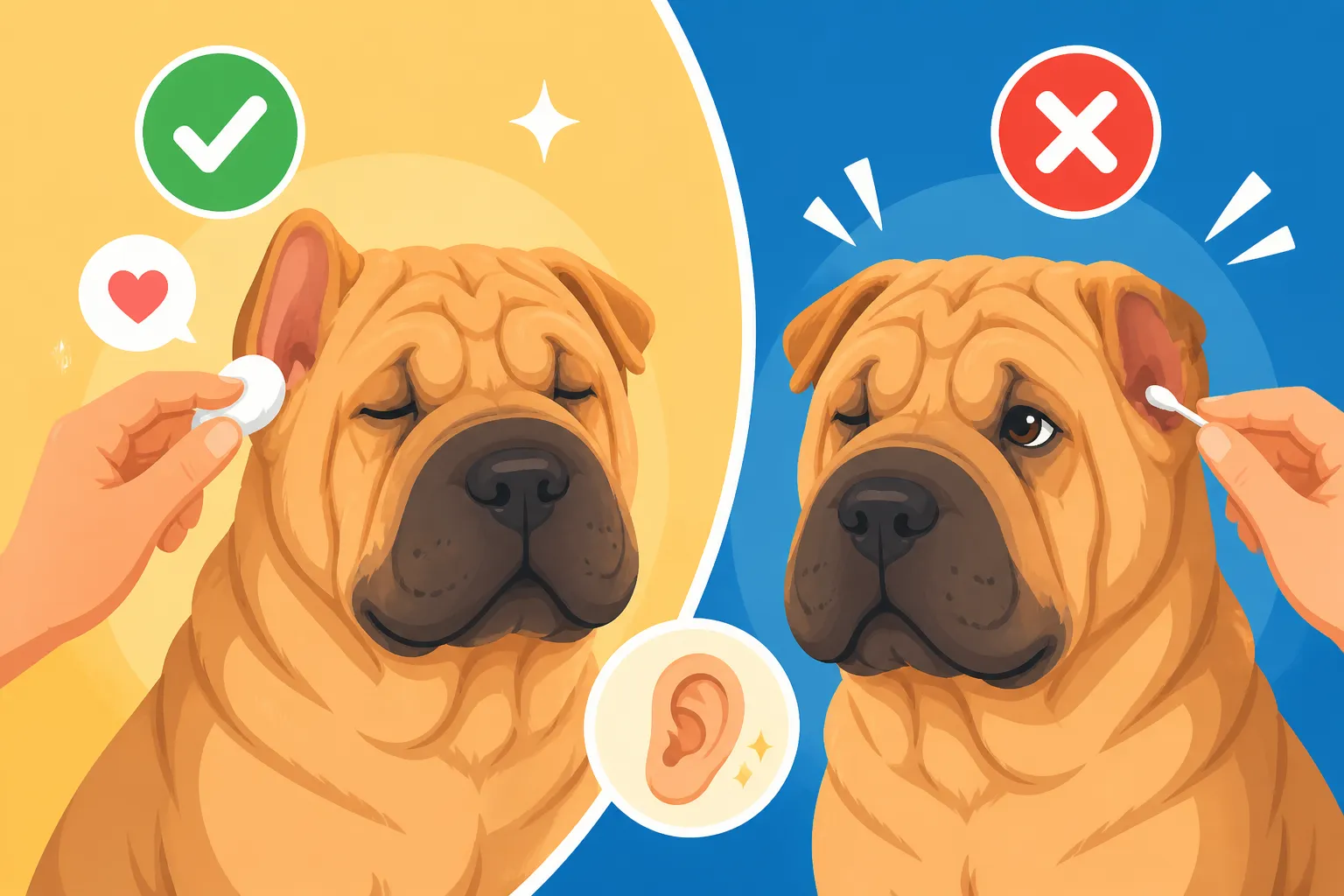
First, let's talk about cleaners. Not all ear cleaners are created equal, and some can be irritating to sensitive Shar Pei ears. Always consult your vet for a recommendation, especially if your dog has a history of infections. Generally, look for gentle, pH-balanced, non-stinging solutions. There are many excellent veterinary-approved brands available through your vet or online retailers like Chewy. For guidance on appropriate products, you might find more detail in What to Clean a Shar Pei's Ears With. When applying, don't use a cotton swab deep in the canal – that's a big no-no for Shar Pei ears, as it can push debris further in or damage the delicate canal lining. Instead, use cotton balls or gauze pads to wipe the visible parts of the ear and to absorb excess solution after you’ve applied it.
Here’s a step-by-step approach:
- Gather your supplies: Your vet-approved ear cleaner, plenty of cotton balls or gauze pads, and those high-value treats. A headlamp can also be useful for better visibility into the narrow ear canal.
- Choose a calm environment: A quiet room, perhaps with some soft music, away from distractions.
- Position your Shar Pei: Have them in a comfortable position, ideally with someone else gently holding them if they're particularly wiggly. You can also try doing it while they're settled on a comfy bed or distracted by a long-lasting treat (like a lick mat covered in peanut butter).
- Administer the cleaner: Gently lift the ear flap. Squirt the recommended amount of cleaner into the ear canal. Don't be shy; you need enough to flush things out.
- Massage: Gently massage the base of the ear for 20-30 seconds. You should hear a squishy sound as the cleaner breaks up debris. This is often the part that makes them shake their head, but resist the urge to stop!
- Allow shaking: Let your Shar Pei shake their head. This helps dislodge debris. Have a towel ready!
- Wipe clean: Use cotton balls or gauze wrapped around your finger to gently wipe out any visible debris or excess solution from the outer part of the ear canal and the ear flap. Never go deeper than your finger can reach.
- Reward! Lavishly praise and treat your Shar Pei immediately after. Make it a celebration!
Remember the importance of drying. After any cleaning or even after a bath, it's critical to ensure their ears are dry, which is elaborated on in Whether a Shar Pei's Ears Should Be Dried After Bathing. This prevents moisture from setting up shop and encouraging new infections.
| Ear Cleaning Tool/Method | Pros | Cons | Shar Pei Specific Considerations |
|---|---|---|---|
| Veterinary Ear Cleaner | Formulated for pet ears, often contains drying agents or antimicrobials. | Can be costly, some formulations may sting if ear is inflamed. | Consult vet for best type; look for gentle, non-irritating formulas. Essential. |
| Cotton Balls/Gauze Pads | Soft, absorbent, disposable. Safe for external wiping. | Can leave fibers if poor quality. Not for deep insertion. | Use to wipe visible ear and absorb excess cleaner. Never push deep. |
| Cotton Swabs | Good for crevices on the outer ear. | NEVER for inside the ear canal. Can push debris deeper, cause damage. | Avoid entirely for the narrow canal of a Shar Pei. Stick to cotton balls. |
| Ear Drying Solution | Helps prevent moisture buildup after cleaning/swimming. | Can be irritating if ears are raw or inflamed. | Highly recommended after baths or if water gets in. Choose a vet-approved product. |
| Positive Reinforcement | Builds trust, makes sessions less stressful, leads to long-term cooperation. | Requires patience and consistency, can take a long time to establish. | ABSOLUTELY ESSENTIAL. Start early, use high-value treats (available from Amazon or Chewy). |
| Professional Groomer | Some offer ear cleaning as part of grooming. | May not be equipped for severely problematic ears; can be stressful if dog is resistant. | Best for routine cleaning of already cooperative dogs. Vet is better for issues. |
| Veterinary Sedation | Ensures thorough cleaning without stress/pain for severe cases. | Costly, requires anesthesia, not a routine solution. | Necessary for Shar Pei with extremely painful, deep infections, or phobia. See Whether a Shar Pei Needs Sedation for an Ear Exam. |
Seeking Professional Guidance
Sometimes, despite your best efforts, your Shar Pei's ears just don't get better, or their resistance is so strong that you can't get near them. This is when professional help isn't just an option; it's a necessity.
A trip to the vet is crucial if you suspect an infection or if your dog is in significant pain. Your vet can perform an otoscopic exam, often requiring sedation given the narrow canals and the Shar Pei's sensitivity, to properly visualize the ear canal and eardrum. They can take a swab for cytology (looking at the cells under a microscope) or culture (growing bacteria/yeast) to identify the specific type of infection. This is the only way to get targeted treatment, which might include prescription ear drops, oral antibiotics, or anti-inflammatories. Early intervention can prevent minor issues from becoming chronic, agonizing problems. It's truly heartbreaking to see a Shar Pei suffer unnecessarily because we're afraid of the vet bill or the struggle of getting them there.
Your vet can also guide you on the best long-term management plan. This might include exploring dietary changes if allergies are suspected. Sometimes, a limited ingredient diet or a fresh food diet (some of which can be found through services like Ollie) can significantly improve overall skin and ear health, reducing inflammation and making your Shar Pei more comfortable and less prone to chronic irritation. They can also demonstrate proper cleaning techniques and offer advice on pain management during severe flare-ups. Don't hesitate to ask your vet for a referral to a veterinary dermatologist if the ear issues are persistent and severe; these specialists have advanced tools and knowledge to manage complex cases.
Recognizing Signs of Discomfort and When to Seek Veterinary Help
It’s easy to dismiss a head shake here or an ear scratch there as typical dog behavior, but with a Shar Pei, these subtle cues can be screaming signs of underlying pain or irritation. Learning to read these signals is vital for their well-being and can help you intervene before a minor issue becomes a major, painful ordeal.
Subtle and Overt Signs of Ear Discomfort
Your Shar Pei, like many dogs, might try to hide pain, but their body language will often give them away. It's up to us to be observant and understand what those signals mean.
Initially, discomfort might manifest as increased head shaking, perhaps just after eating or waking up. You might notice them scratching their ears more frequently with a back paw, or rubbing their head against furniture or the carpet. These actions, while seemingly innocuous, are often the first indicators of an itch or irritation deep within the ear canal. As the problem progresses, the signs become more obvious. You might notice a strong, unpleasant odor emanating from the ear – often described as yeasty or pungent. There could be a discharge, ranging from waxy dark brown to yellowish pus. The skin around the ear opening might appear red, inflamed, or greasy. Their ear flap itself might be hot to the touch or swollen.
Beyond the physical signs, pay attention to behavioral changes. A Shar Pei who usually loves a head scratch might suddenly become head-shy, pulling away or even yelping if you try to touch their ear. They might become lethargic, lose their appetite, or seem generally grumpy and withdrawn. These are all clear signals that something is seriously wrong and causing them significant pain. For a more comprehensive look at what to watch for, refer to Signs a Shar Pei's Ear Is Infected. Ignoring these signs not only prolongs their suffering but can also lead to more severe, chronic conditions that are harder to treat and make future ear cleaning impossible without sedation.
When to Consult a Veterinarian Immediately
While routine cleaning is something you can learn to manage at home with patience, there are definite red flags that warrant an immediate trip to the vet. Procrastinating on these can have serious consequences for your Shar Pei's hearing and overall health.
If you observe any of the following, do not delay in contacting your veterinarian:
- Sudden onset of severe pain: If your Shar Pei cries out when you try to touch their ear, or holds their head tilted to one side constantly, they are in significant pain.
- Excessive discharge or foul odor: While a little ear wax is normal, a large amount of thick, smelly, or pus-like discharge is a clear sign of infection that requires medical treatment.
- Swelling of the ear flap or canal: This indicates severe inflammation, possibly a hematoma from excessive head shaking, or a deep-seated infection.
- Lethargy, loss of appetite, or fever: These are systemic signs that the infection might be affecting their general health.
- Bleeding from the ear: Never a good sign, this could indicate trauma or a severe infection.
- Any suspicion of a foreign body: If you think something might have gotten lodged in their ear canal (like a grass awn), it needs professional removal.
Delaying treatment for severe ear issues can lead to chronic pain, permanent hearing loss, and even necessitate complicated and expensive surgeries like a Total Ear Canal Ablation (TECA) in extreme cases where the canal is irreversibly damaged and closed off. Many Shar Pei suffer from recurring infections, and while frustrating, it's crucial to understand that these often require a vet's intervention. Ignoring the problem will only make it worse, more painful, and more costly in the long run. If your Shar Pei is constantly getting infections, it might be worth revisiting How Often a Shar Pei Gets an Ear Infection and discussing long-term preventative care with your vet, which could involve more frequent prescription cleanings or allergy management. Your Shar Pei deserves a life free from chronic ear pain, and getting proactive with veterinary care is the best way to ensure that.
Disclaimer
This article is for general informational purposes only and does not constitute professional advice. Laws, prices and regulations vary by location and change over time. Consult a qualified professional for guidance on your specific situation.