How Much an Adult Shar Pei Eats
Figuring out exactly how much food to give your adult Shar Pei can feel like cracking a secret code. You pick up a bag of dog food, look at the feeding chart, and then look at your unique, wrinkly companion, and the numbers just don't seem to quite fit. This guide is here to walk you through all the nuances, from understanding your Shar Pei's specific needs to translating generic guidelines into a perfect meal plan for your cherished family member.
Understanding the Shar Pei's Dietary Landscape
When it comes to feeding, Shar Pei aren't just any dog. They carry a unique genetic blueprint that influences everything from their metabolism to their propensity for certain health issues, all of which play a significant role in their dietary needs. Ignoring these breed-specific traits can lead to overfeeding, underfeeding, or exacerbating underlying health conditions.
The Shar Pei Metabolism and Energy Levels
Shar Pei are generally not considered a high-energy breed, especially compared to working or sporting dogs. They tend to have a moderate metabolism, which means they don't burn through calories at an exceptionally fast rate. This is a crucial distinction because many commercial dog food feeding guides are designed for a broader range of breeds, often assuming a higher activity level than a typical Shar Pei might exhibit. If you feed strictly according to the bag without adjusting for your dog's actual energy expenditure, you might inadvertently be overfeeding them.
Think about it: a Shar Pei who enjoys a leisurely stroll around the block once a day and spends the rest of their time napping on the sofa simply won't need the same caloric intake as a Labrador who runs miles daily. Their compact build and often more sedate nature mean their energy requirements are generally lower. However, this isn't a hard and fast rule; some individual Shar Pei can be surprisingly active, enjoying longer walks or even some casual playtime. Observing your own dog's daily routine is paramount to getting their food portions right.
Breed-Specific Health Concerns Impacting Diet
The Shar Pei breed is prone to several health conditions that directly influence their nutritional requirements. One of the most talked-about is Familial Shar Pei Fever (FSF) and the subsequent risk of amyloidosis. While diet isn't a direct cause or cure for FSF, managing overall health and inflammation through a balanced, high-quality diet is always beneficial. Whether a Shar Pei's Diet Affects Its Fevers is a common question, and while diet won't prevent a fever episode, supporting their immune system and kidney health through appropriate nutrition can be part of a comprehensive care plan.
Beyond FSF, Shar Pei are notoriously susceptible to skin issues, allergies, and sometimes sensitive digestive systems. These conditions often necessitate careful consideration of food ingredients. Many owners find their Shar Pei thrives on a limited ingredient diet to minimize exposure to potential allergens like common proteins (chicken, beef, corn, wheat) or artificial additives. Whether a Shar Pei Needs a Limited Ingredient Food is a conversation many Shar Pei owners have with their vets. This focus on specific ingredients can impact the type of food chosen, and subsequently, its caloric density and the amount needed to provide adequate nutrition.
Coat Type and Dietary Requirements
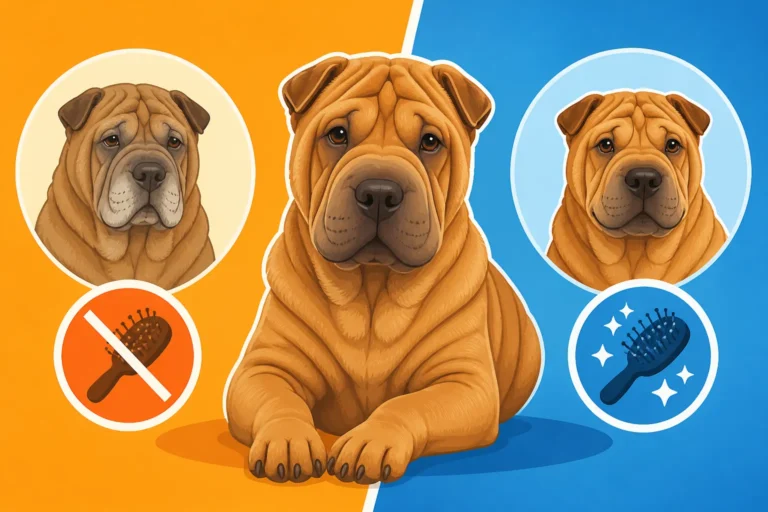
You might not immediately think of coat type when considering diet, but for a Shar Pei, it can be a subtle indicator of overall skin health, which is very much tied to nutrition. Shar Pei come in different coat types: the very short, prickly "horse coat" and the slightly longer, smoother "brush coat." While the underlying genetic health issues are similar, some owners report that dogs with certain coat types may be more prone to skin irritation, which a diet rich in omega fatty acids can help support. Whether a Horse Coat Shar Pei Differs From a Brush Coat in terms of care is a distinct discussion, but healthy skin, regardless of coat length, benefits from good nutrition.
A diet that supports a healthy skin barrier can reduce inflammation and improve coat quality. Ingredients like fish oil, flaxseed, and other sources of Omega-3 and Omega-6 fatty acids are often recommended. If your Shar Pei suffers from dry, flaky skin, or recurrent skin infections, a conversation with your vet about dietary supplementation or a change in food formula might be in order. The overall health of their coat and skin can be a visual cue that their diet is either working well or needs some adjustment, rather than just focusing on weight gain or loss.
Key Factors Dictating Your Shar Pei's Food Intake
Determining the perfect portion size for your Shar Pei is not a "one size fits all" scenario. It’s a dynamic process that requires understanding several key factors that influence their daily caloric needs. These factors can change over time, meaning what works for a young adult Shar Pei might not be suitable for a senior dog or one recovering from illness.
Age, Weight, and Activity Level
These three factors are the cornerstones of calculating a dog's caloric needs. A young adult Shar Pei, typically between one and seven years old, is still developing and maintaining muscle mass. Their energy requirements will be different from a puppy who is growing rapidly, or an older, more sedentary senior. The Age a Shar Pei Reaches Full Weight usually falls around 12-18 months, at which point their caloric needs will stabilize into an adult maintenance phase.
- Weight: This is the most obvious factor. A larger Shar Pei will naturally need more calories than a smaller one to maintain its body functions. However, don't confuse target weight with current weight; if your Shar Pei is overweight, you'll be feeding for a lean body weight, not their current heavier state. What an Adult Shar Pei Weighs can vary, but generally falls within 45-60 pounds for males and 40-55 pounds for females.
- Activity Level: This is where individualization really comes into play. A Shar Pei who enjoys two brisk 30-minute walks daily will require more calories than one whose exercise consists primarily of backyard pottering. If your Shar Pei is a true couch potato, you'll need to reduce their food intake accordingly to prevent weight gain. Conversely, if you have a surprisingly energetic Shar Pei who loves to hike or play fetch vigorously, their energy demands will be higher.
It's a delicate balance, and you'll need to observe your dog's energy levels and adjust their food intake incrementally. A sudden increase or decrease in activity, perhaps due to a change in your schedule or the weather, should prompt a review of their food portions.
Spaying, Neutering, and Hormonal Changes
The decision to spay or neuter your Shar Pei is a significant one, and it comes with potential metabolic changes that can affect their food requirements. After spaying or neutering, many dogs experience a decrease in their basal metabolic rate, meaning they burn fewer calories at rest. This hormonal shift, combined with sometimes a slightly less active lifestyle, can lead to weight gain if their food intake isn't adjusted. Whether a Neutered Shar Pei Gains Weight is a very real concern for many owners.
It's common for vets to recommend reducing a dog's caloric intake by about 10-20% after spaying or neutering to prevent this post-surgical weight creep. This doesn't necessarily mean feeding less volume of the same food; it might mean switching to a lower-calorie formula or being much more precise with measurements. Regular weigh-ins and body condition scoring become even more important in the months following the procedure to ensure you're keeping them at a healthy weight.
Environmental Factors and Climate
While less commonly discussed than age or activity, the environment your Shar Pei lives in can also play a subtle role in their caloric needs. Dogs burn calories to regulate their body temperature. In colder climates, a dog spending more time outdoors (even if just for potty breaks and short walks) might expend slightly more energy to stay warm. Conversely, in very hot climates, a Shar Pei might be less active overall, seeking shade and cooler indoor spaces, which would reduce their energy output. What Temperature Is Too Hot for a Shar Pei is an important consideration, as overheating is a risk for them.
Beyond temperature, factors like living in a bustling city versus a quiet rural area can influence activity levels. A dog in a city might experience more short, leashed walks, while a rural dog might have more opportunity for off-leash exploration in a secure area. All these small variables contribute to their overall energy expenditure and should be factored in when determining how much to feed. It's about looking at the whole picture of your Shar Pei's daily life, not just the numbers on a bag.
Navigating Dog Food Labels and Portioning Realities
The instructions on a dog food bag are a starting point, at best. They offer generic guidelines that don't account for the unique physiology of a Shar Pei or their individual lifestyle. Relying solely on these can easily lead to over or underfeeding. Understanding how to interpret these labels and accurately measure food is critical for your Shar Pei's health.
The Problem with Generic Feeding Charts
Most dog food manufacturers provide a feeding chart based on an adult dog's weight. The issue is that these charts are designed for the "average" dog, which very few dogs actually are. They don't differentiate between breeds with varying metabolic rates, activity levels, or predispositions to weight gain. A chart might suggest a certain amount for a 50-pound dog, but that 50-pound dog could be a lean, muscular Border Collie or a more moderately-built Shar Pei, both with vastly different caloric requirements.
Furthermore, these charts often give a broad range, for example, "2 to 3 cups per day." This leaves a huge margin for error. If you consistently feed at the higher end of the spectrum for a less active Shar Pei, weight gain is almost inevitable. It’s also important to remember that these recommendations are for the food as packaged. If you add treats, table scraps, or other supplements, those extra calories need to be accounted for, which the bag can't possibly know. Always consider the feeding guide as an initial estimate, not a definitive command.
Calorie Density and Nutrient Content
Not all dog foods are created equal, and their calorie density can vary wildly. A "premium" kibble, often rich in protein and fat, might be far more calorically dense than a "lite" or "senior" formula. This means that two different brands of dog food, fed at the same volume (e.g., 2 cups), could deliver a significantly different number of calories. Always check the "guaranteed analysis" and "caloric content" (often listed as metabolizable energy or ME in kcal/kg or kcal/cup) on the label.
A Shar Pei requiring a Which Protein Suits a Shar Pei often means looking for novel proteins or specific fat sources to support their skin and immune system. These specialized diets can sometimes have different caloric profiles. High-protein, high-fat foods might mean you feed a smaller volume to achieve the same caloric intake as a lower-density food. Understanding the ME per cup or per gram is far more accurate than simply going by the cup measurement alone. This is particularly true if you ever switch food brands; a direct cup-for-cup swap could drastically change your Shar Pei's daily calories.
Measuring Food Accurately
This might sound like a no-brainer, but it's astonishing how often people eyeball portions or use inconsistent measuring tools. Using a standard kitchen measuring cup (the kind for baking ingredients) is far more accurate than scooping with an old coffee mug or a generic pet food scoop, which can have inconsistent capacities. Investing in a digital kitchen scale is even better. This allows you to measure food by weight (grams or ounces), which is the most accurate method and eliminates variations in how densely you scoop kibble.
For example, a "cup" of kibble can vary significantly in weight depending on the size and shape of the kibble, how packed it is, and the specific food. By measuring by weight, you ensure consistency every single time. This precision is especially important if your Shar Pei is on a weight loss program or has specific dietary needs. You can find accurate digital scales readily available on platforms like Amazon or Chewy, which makes it easier to be consistent with your Shar Pei's meals.
Exploring Different Feeding Styles for Your Shar Pei
Just as there are many types of dog food, there are various feeding styles, each with its own considerations when it comes to portion sizes and overall management. Your Shar Pei's health, preferences, and any specific dietary requirements will guide your choice.
Kibble, Wet Food, and Home-Cooked Meals
- Kibble (Dry Food): This is the most common and often most convenient feeding method. Kibble is typically calorically dense, and portion control is straightforward with accurate measuring. However, it's crucial to select a high-quality kibble formulated for adult dogs of your Shar Pei's size and activity level, paying attention to ingredients if your dog has sensitivities. Whether a Shar Pei Reacts to Chicken or Beef is a common concern, prompting many to look for lamb, salmon, or duck-based kibbles.
When feeding kibble, remember that the portion size recommended on the bag is for that specific food. If you choose a different brand, you'll need to re-evaluate the portion based on its caloric density. Also, ensure your Shar Pei always has access to fresh water, as kibble has very low moisture content. - Wet Food (Canned Food): Wet food is significantly higher in moisture and generally less calorically dense per volume than kibble. This means you’ll often need to feed a larger volume of wet food to provide the same number of calories. It can be a great option for picky eaters, dogs who need increased hydration, or those with dental issues. However, the cost per calorie can be higher, and it spoils more quickly once opened.
Many owners mix wet food with kibble as a "topper" to increase palatability. If you do this, remember to reduce the kibble portion accordingly to avoid overfeeding. It’s all about calculating the total caloric intake from all sources. - Home-Cooked Meals: Preparing home-cooked meals for your Shar Pei can be incredibly rewarding, offering complete control over ingredients. However, it requires extensive research and often consultation with a veterinary nutritionist to ensure it's nutritionally balanced. It's incredibly easy to inadvertently create a deficient diet without proper guidance.
Portioning home-cooked meals is also more complex. You'll need to calculate the caloric and nutrient content of each ingredient to ensure your Shar Pei is getting everything they need without over or under-eating. This is a commitment, and it's vital to get it right. Companies like Ollie offer fresh, human-grade food that can be a good compromise for those who want the benefits of fresh food without the complexities of preparing it themselves.
Limited Ingredient Diets and Hypoallergenic Options
For Shar Pei prone to allergies or skin issues (and many are!), a limited ingredient diet (LID) or a hypoallergenic hydrolyzed protein diet might be recommended by your vet. These diets are specifically formulated with a minimal number of ingredients or with proteins broken down to be less allergenic. What a Shar Pei's Allergy Workup Costs can be significant, so finding the right food often becomes a priority.
The caloric content of LIDs and hypoallergenic foods can vary, just like regular diets. Don't assume that because it's a "specialty" food, the portion size will be the same as your previous food. Always check the ME on the label. Sometimes, these foods might be slightly less palatable due to their novel proteins, so you might need to find creative ways to encourage your Shar Pei to eat it, potentially by warming it slightly or adding a little water, without adding extra calories. The goal remains consistent: provide the necessary calories and nutrients in the right amount to support their health and manage their sensitivities.
Raw Feeding Considerations
Raw feeding, or a Biologically Appropriate Raw Food (BARF) diet, has gained popularity, with proponents believing it aligns more closely with a dog's ancestral diet. These diets typically consist of raw meat, bones, organs, and sometimes fruits and vegetables. For a Shar Pei, proponents might suggest it could help with skin issues or digestive sensitivities. However, raw feeding also comes with significant responsibilities and potential risks, including nutritional imbalances if not properly formulated, and bacterial contamination.
When considering raw feeding, portioning is crucial and typically based on a percentage of the dog's ideal body weight (e.g., 2-3% for adult maintenance). This percentage needs to be adjusted based on activity level and whether your Shar Pei is gaining or losing weight. The density of raw meat and bones is very different from kibble, so measuring by weight is absolutely essential. Consultation with a veterinary nutritionist experienced in raw feeding is highly recommended to ensure the diet is complete and balanced for your Shar Pei's specific needs and avoids any potential deficiencies.
Keeping Your Shar Pei's Weight in Check
Monitoring your Shar Pei's weight and body condition is perhaps the most important tool you have for ensuring they are eating the correct amount. The number on the scale tells part of the story, but how that weight is distributed on their unique, wrinkly body is just as, if not more, crucial.
Recognizing Ideal Body Condition
With all those adorable wrinkles, it can be tricky to assess a Shar Pei's body condition. You can't always just look for a tucked waist or easily palpable ribs like you might with other breeds. However, there are still key indicators. Ideally, you should be able to feel, but not easily see, their ribs with gentle pressure. Their spine should also be palpable without much effort. When viewed from above, there should be a slight waist or hourglass shape behind the ribs, though this can be subtle with a very wrinkly Shar Pei. From the side, their abdomen should tuck up slightly, rather than hanging low or appearing distended.
A good way to learn how to assess this is to gently run your hands over your Shar Pei's ribs, spine, and hips. Get a feel for their healthy frame. Compare this to images of ideal body condition scores for dogs. Remember that a healthy Shar Pei doesn't have excess fat masking its underlying structure, even with all the loose skin. Regularly feeling their body will give you a much better indication of their condition than just looking at them or relying solely on their weight. How to Feel a Shar Pei's Ribs Through Its Folds is a skill worth developing.
Signs Your Shar Pei is Overweight or Underweight
It’s important to catch weight issues early, as both being overweight and underweight can lead to serious health problems.
Signs your Shar Pei is overweight:
- You can't easily feel their ribs, spine, or hip bones without significant pressure.
- They have a broad, barrel-shaped body when viewed from above, with no discernible waist.
- Their belly sags or hangs low, rather than tucking up.
- They may move more slowly, tire easily during walks, or seem less enthusiastic about play.
- Their facial wrinkles might appear "fuller" or their neck folds more pronounced due to fat deposits.
- Signs a Shar Pei Is Overweight can include difficulty breathing, especially in warmer weather, and a worsening of skin fold infections due to increased friction and moisture.
Signs your Shar Pei is underweight:
- Their ribs, spine, and hip bones are very prominent and easily visible or feel sharp to the touch.
- There's no muscle mass visible or palpable over their hips.
- Their abdomen is severely tucked up.
- They may seem lethargic, have a dull coat, or exhibit signs of nutrient deficiency.
- For Shar Pei puppies, Signs a Shar Pei Puppy Is Not Thriving can include being underweight and listless, indicating they're not getting enough nutrition or have an underlying health issue.
If you suspect your Shar Pei is either overweight or underweight, the first step is always to consult your veterinarian. Don't make drastic changes to their diet without professional guidance.
The Role of Your Veterinarian
Your veterinarian is your best partner in determining and maintaining your Shar Pei's ideal weight and dietary needs. They can accurately assess your dog's body condition score, recommend a target weight, and help calculate a precise caloric intake based on their individual factors. They can also advise on appropriate food choices, especially if your Shar Pei has underlying health conditions or allergies.
During routine check-ups, your vet will weigh your Shar Pei and evaluate their body condition. Don't hesitate to bring up any concerns you have about their eating habits, weight, or stool quality. If your Shar Pei needs to lose or gain weight, your vet can help formulate a plan, suggesting specific foods, portion sizes, and exercise routines. How Often a Shar Pei's Kidney Values Should Be Checked might also influence dietary recommendations, as kidney-friendly diets often have specific protein and phosphorus restrictions that your vet can guide you on. They might even suggest a referral to a veterinary nutritionist for complex cases or home-cooked diets. Always lean on their expertise to ensure your Shar Pei is getting exactly what they need to thrive.
| Factor | Impact on Food Quantity | Considerations |
|---|---|---|
| Age | Young adults: higher, Seniors: lower | Puppies have higher needs for growth, seniors need fewer calories to maintain weight. |
| Weight | Larger dogs: more, Smaller dogs: less | Always feed for ideal target weight, not current overweight status. |
| Activity Level | High activity: more, Low activity: less | A working Shar Pei needs more than a sedentary one. Adjust for daily walks, play, and lifestyle. |
| Spay/Neuter Status | Typically reduces caloric needs | Metabolic rate often drops post-surgery; a 10-20% reduction in calories is a common starting point. |
| Health Conditions | Can increase/decrease needs; alter food type | Allergies, FSF, kidney issues, etc., might require specific diets or calorie adjustments. |
| Food Caloric Density | High ME: less volume, Low ME: more volume | Always check kcal/cup or kcal/kg on the label. A cup of one kibble might not equal a cup of another. |
| Climate/Environment | Cold weather: slightly more, Hot weather: less | Dogs burn calories to stay warm. Hot climates can reduce activity, thus lowering caloric needs. |
| Treats & Supplements | Add to total daily calories | Account for all extra calories given throughout the day to avoid accidental overfeeding. |
Disclaimer
This article is for general informational purposes only and does not constitute professional advice. Laws, prices and regulations vary by location and change over time. Consult a qualified professional for guidance on your specific situation.