How to Feel a Shar Pei’s Ribs Through Its Folds
It can be incredibly frustrating to try and figure out if your beloved Shar Pei is at a healthy weight when their beautiful, characteristic wrinkles seem to hide everything! Unlike other breeds where you can easily eyeball their waistline or see their ribs, a Shar Pei's unique physique makes visual assessment almost impossible. This guide is here to walk you through a practical, hands-on method to accurately gauge your Shar Pei's body condition and ensure they stay happy and healthy.
The Unique Challenge of Shar Pei Body Condition
Anyone who loves a Shar Pei knows that their rolls and folds are part of their charm, but they're also a bit of a mystery when it comes to figuring out what's going on underneath. You might stare at your dog, trying to discern a waist, and just see a continuous landscape of velvety skin. This isn't just a minor inconvenience; it's a significant factor in their health care.
Why Visual Cues Are Unreliable for Shar Pei
When you look at most dog breeds, the standard advice for checking weight is to look for a tuck in their waist, visible ribs (but not sharply prominent), and a nice hourglass figure from above. For a Shar Pei, that advice often feels utterly useless. Their entire body, from their deep muzzle folds to the rolls over their neck and body, is designed to defy a sleek silhouette. This means that if you're waiting to see a waist or ribs, you'll likely either underfeed a dog that's actually quite lean or, more commonly, overfeed one who is already carrying too much weight, all because their skin camouflages the true shape of their frame. It’s a bit like trying to read a book while wearing a blindfold – you just don’t have the right tools.
The amount of loose skin varies dramatically even within the breed. A heavily wrinkled "meat mouth" Shar Pei will present a very different challenge than a less wrinkled "bone mouth" type. Furthermore, Shar Pei puppies naturally have more exaggerated wrinkles than adults, and while some of these folds will "fill out" as they grow, a significant amount of loose skin remains. It’s easy to assume a puffy puppy means a well-fed puppy, when in reality, that puffiness is often just their genetic predisposition to extra skin. Whether a Shar Pei Puppy's Skin Predicts the Adult This inherent difference means we can't rely on the same visual standards applied to, say, a Labrador or a Greyhound.
The Dangers of Misjudging Your Shar Pei's Body Condition
Mistaking your Shar Pei's body condition can have serious consequences, impacting their quality of life and potentially shortening their lifespan. An underweight Shar Pei might be missing crucial nutrients, struggle with energy levels, and be more susceptible to illness. Their immune system might not be functioning optimally, and they could lack the reserves needed to fight off common ailments or recover from injury. This is less common in Shar Pei but can happen with picky eaters or underlying health issues.
More frequently, owners unknowingly allow their Shar Pei to become overweight or obese, simply because those extra pounds are hidden beneath layers of skin. Excess weight puts undue strain on their joints, especially crucial for a breed that can already be prone to orthopedic issues. It can also exacerbate respiratory problems, worsen heat intolerance – which Shar Pei already struggle with – and contribute to conditions like diabetes and heart disease (see Signs a Shar Pei Is Overweight). Carrying extra weight also impacts their mobility and overall comfort, making them less inclined to play or exercise, creating a vicious cycle.
Mastering the Hands-On Rib Test for Your Wrinkled Friend
Since visual assessment is such a non-starter for Shar Pei, the most reliable method for checking their weight is through touch, often called the "rib test" or "palpation method." It’s a technique that takes a little practice but becomes second nature with consistency. It empowers you, as their owner, to be an active participant in their health monitoring.
Preparing for the Palpation Method
Before you even start, it's essential to get your Shar Pei comfortable with being touched, especially along their sides and back. If your dog isn't used to this kind of handling, introduce it gradually. Start by gently petting them in their favorite spots, then slowly move your hands towards their rib cage, offering plenty of praise and perhaps a small, high-value treat. You want this to be a positive, calm experience, not a wrestling match. Choose a quiet moment when your dog is relaxed, perhaps when they're lying down or getting a belly rub.
A comfortable Shar Pei will be more cooperative, allowing you to get an accurate feel. If they're tense or pulling away, you won't be able to properly assess their body condition. You can use calming words, a soft voice, and even practice this during regular cuddle sessions. The goal is for them to associate your hands on their ribs with pleasant sensations, not discomfort or scrutiny. This groundwork is vital for building trust and ensuring you can reliably check their condition throughout their life.
Step-by-Step Guide to Feeling the Ribs
Okay, let's get down to business. The trick here is to be gentle but firm, and to understand what you're actually feeling for.
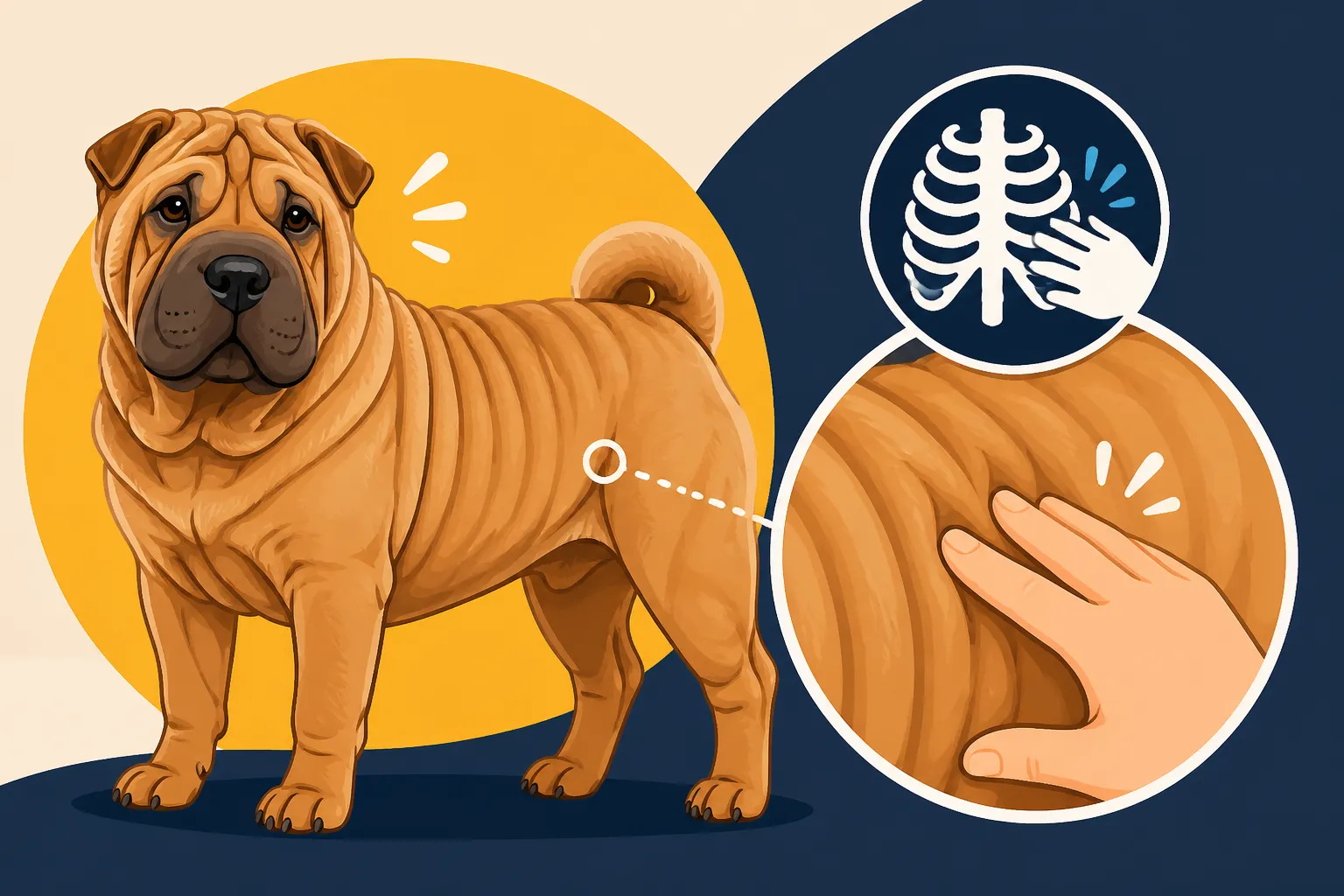
- Start at the Shoulder: Begin by placing both hands flat on your Shar Pei's side, just behind their shoulder blades. This is generally a less sensitive area and gives you a good starting point.
- Slide Back Gently: Slowly slide your hands backward, along their rib cage, moving towards their tail. As you do this, apply a light, consistent pressure with the flats of your fingers, not just your fingertips. Think of it like feeling for the bumps on a washboard, but covered by a soft blanket.
- Feel for Individual Ribs: Your goal is to feel the individual ribs. In an ideal body condition, you should be able to feel each rib distinctly, almost like the slats of a venetian blind under a thin sheet, without having to press hard. There should be a slight layer of fat covering them, but no thick padding. If you can't feel them at all without really digging, your dog is likely overweight. If they feel extremely sharp and prominent with no fat covering, they are likely underweight.
- Repeat on Both Sides: Make sure to repeat this on both sides of their body, as some dogs might carry weight slightly differently or be more sensitive on one side.
Here's a quick guide to what you should be feeling:
| Body Condition | What You See (Other Breeds) | What You Feel (Shar Pei Rib Test) | Action Needed |
|---|---|---|---|
| Too Thin | Ribs, spine, hip bones visibly sharp | Ribs feel very sharp, distinct, and prominent with no discernible fat covering; sometimes visually apparent. | Consult vet; increase appropriate food intake. |
| Ideal | Ribs easily felt, not seen; tucked waist | Ribs easily felt with light pressure, individual ribs distinct, thin layer of fat. | Maintain current diet and exercise. |
| Overweight | Ribs difficult to feel; no waist tuck | Ribs felt only with moderate to firm pressure; thick layer of fat covers them; hard to distinguish individual ribs. | Consult vet; reduce caloric intake, increase exercise. |
| Obese | Ribs not felt; no waist; distended belly | Ribs not felt at all, even with firm pressure; thick, soft padding. | Immediate vet consultation; significant diet/exercise changes. |
What You Should Feel (and What You Shouldn't)
When you run your hands along your Shar Pei's ribs, what exactly is the ideal sensation? You should feel the distinct outline of each rib bone. It’s not about seeing them, or even having them feel completely bare, but rather feeling them as individual structures beneath a thin, supple layer of skin and muscle, with just a minimal cushion of fat. Think of it like running your hand over the knuckles on your own hand – you feel the bones, but they’re not painfully sharp or protruding, and there’s a bit of soft tissue in between.
If you have to press down hard, really sink your fingers in, just to vaguely perceive the ribs, then your Shar Pei is likely carrying too much weight. That thick, soft padding is excess fat. Conversely, if the ribs feel like a corrugated washboard – sharp, angular, and with no discernible cushioning – your dog is probably too thin. This sensation means there isn't enough fat or muscle covering the bones. It's a delicate balance, and it’s a skill that improves with consistent practice. Don't be discouraged if you don't nail it on the first try; consistency is key to becoming attuned to your individual Shar Pei's physique.
Beyond the Ribs: A Full Body Condition Assessment for Shar Pei
While the rib test is paramount, a comprehensive assessment involves a bit more than just the ribs. Looking at the bigger picture, using other tactile clues, will give you an even better understanding of your Shar Pei’s overall body condition. Remember, every part of their body is cloaked in that characteristic skin, so touch is always your best friend.
Incorporating Other Body Condition Cues
Once you're comfortable with the rib test, extend your tactile examination to other parts of their body. Run your hands over their spine, just above their rib cage, moving from their neck towards their tail. You should be able to feel the individual vertebrae, but they shouldn’t feel like sharp, prominent bumps. A slight, smooth ripple is ideal. If the spine feels like a string of beads, very sharp and bony, it’s a sign of being underweight. If you can barely feel the spine at all, even with moderate pressure, your Shar Pei is likely carrying too much extra weight along their back.
Next, feel along their hips and the base of their tail. Similar to the ribs and spine, the hip bones should be palpable but not protruding. There should be a smooth transition from their back to their tail, without excessive fat deposits around the tail base. If you feel lumps or a thick padding, that’s another indicator of excess fat. These combined tactile observations help you build a mental "map" of your Shar Pei's body condition, confirming what the rib test initially told you.
Diet and Exercise Considerations for Shar Pei
Maintaining an ideal body condition in your Shar Pei isn't just about knowing how to feel their ribs; it's about a consistent approach to their diet and exercise. Shar Pei can sometimes be prone to food sensitivities, so choosing the right food is crucial. Many owners find success with limited ingredient diets or specific protein sources if their Shar Pei shows signs of allergies. It's not always about cutting calories drastically, but ensuring they receive balanced, high-quality nutrition. How Much an Adult Shar Pei Eats Pay attention to portion sizes – measuring food accurately is far more reliable than eyeballing it. Using a kitchen scale for portions can make a huge difference in controlling caloric intake.
Exercise is equally important, but it needs to be managed carefully for Shar Pei. They aren't typically endurance athletes, and their brachycephalic (short-nosed) tendencies, combined with their dense coat and skin, make them prone to overheating. What Temperature Is Too Hot for a Shar Pei Short, regular walks are usually better than long, strenuous hikes. Aim for around an hour of moderate activity daily, broken into a couple of sessions, but always adjust based on the weather and your individual dog's stamina. How Much Exercise a Shar Pei Needs Remember, a brisk walk in the park on a cool morning can be perfect, while a leisurely stroll in the midday summer sun could be dangerous.
When to Consult Your Veterinarian
Even with diligent home checks, there are times when a professional opinion is indispensable. If you’re consistently struggling to get a good read on your Shar Pei's ribs, or if you notice sudden changes in their weight – either a rapid loss or gain – it’s time to call your veterinarian. Significant, unexplained weight loss can be a symptom of various underlying health issues, from dental problems to more serious conditions like kidney disease or cancer. Signs a Shar Pei is Too Thin Likewise, unexplained weight gain could point to metabolic issues or other health concerns that need addressing.
Your vet has the experience and often specialized charts or scales to give you a definitive assessment. They can help you develop a tailored nutrition plan, suggest appropriate exercise routines, and rule out any health problems that might be affecting your Shar Pei's weight. It’s especially helpful if your vet is familiar with the Shar Pei breed and its unique health considerations, as they can offer breed-specific advice that accounts for their skin and health predispositions. Whether a Shar Pei's Vet Should Know the Breed Don't hesitate to seek their expertise – it's an investment in your dog's long-term well-being.
Practical Strategies for Maintaining Your Shar Pei's Ideal Weight
Keeping your Shar Pei at a healthy weight is an ongoing commitment, but it's one of the most impactful ways you can contribute to their health and happiness. With a few practical habits, you can make weight management a seamless part of your daily routine.
Consistency in Feeding and Monitoring
One of the simplest yet most effective strategies is consistency. Feed your Shar Pei at regular times each day and stick to precisely measured portions. Don't just scoop; actually use a measuring cup or, even better, a kitchen scale to ensure accuracy. Those little extra sprinkles of kibble or an "almost full" scoop can add up to hundreds of extra calories over a week, silently contributing to weight gain beneath those deep folds. Keeping a brief log of their food intake for a week or two can be incredibly eye-opening, especially if you suspect they might be overeating.
Regularly performing the hands-on rib test is another crucial aspect of monitoring. Aim to check your Shar Pei's body condition weekly or bi-weekly. This frequent checking allows you to catch minor fluctuations early, before they become significant weight problems. Think of it like a routine self-check; it helps you stay attuned to their body and react quickly if adjustments to their diet or exercise are needed.
Choosing the Right Food and Treats
When it comes to food, quality matters. Look for dog foods with whole, identifiable protein sources as the first ingredient. Many Shar Pei can be sensitive to common proteins like chicken or beef, so exploring options with novel proteins such as lamb, duck, or fish might be beneficial. Which Protein Suits a Shar Pei Sometimes a limited ingredient diet can help pinpoint sensitivities and reduce inflammation that might contribute to weight issues or skin problems. Whether a Shar Pei Needs a Limited Ingredient Food Brands like Ollie offer fresh, customized meal plans which some owners find helpful for managing weight and sensitivities, while platforms like Chewy and Amazon provide a vast selection of different diets to explore.
Treats, while great for training and bonding, are often hidden calorie bombs. Opt for low-calorie treats, or better yet, use small pieces of steamed vegetables like carrots, green beans, or broccoli as healthy rewards. Remember, if you're giving treats, those calories need to be factored into their daily intake. A handful of biscuits here and there might seem insignificant, but for a dog, it can be the equivalent of you eating an entire extra meal.
Regular Vet Check-ups and Professional Advice
Even if your Shar Pei seems perfectly healthy, routine veterinary check-ups are non-negotiable. These annual or bi-annual visits allow your vet to perform a thorough examination, including a professional body condition score, and address any potential health concerns before they become serious. They can also perform bloodwork to check for underlying conditions like hypothyroidism, which can contribute to weight gain. What a Shar Pei's Yearly Bloodwork Costs
As your Shar Pei ages, their metabolism and activity levels will naturally change, making regular vet visits even more important. Senior Shar Pei, generally considered to be seven years and older, often require more frequent monitoring, including kidney function tests, as their organs can become less efficient. The Age a Shar Pei Should Start Kidney Monitoring Your vet can provide tailored advice on diet and exercise adjustments for their senior years, ensuring they remain comfortable and healthy as they age gracefully.
Disclaimer
This article is for general informational purposes only and does not constitute professional advice. Laws, prices and regulations vary by location and change over time. Consult a qualified professional for guidance on your specific situation.