Signs a Shar Pei Is Too Thin
It can be incredibly worrying when you look at your beloved Shar Pei and wonder if they’re losing weight, especially with all those wonderful wrinkles making it tough to tell. It’s not like trying to gauge the physique of a sleek greyhound! This guide will walk you through the subtle, and not-so-subtle, signs that your Shar Pei might be too thin, helping you understand what to look for and when to take action.
The Unique Challenge of Assessing Weight in a Shar Pei
For most dog breeds, a quick glance or a gentle run of your hands over their sides can tell you a lot about their weight. Can you see their ribs? Can you easily feel them? For a Shar Pei, however, this visual and tactile assessment is a whole different ballgame. Their signature loose skin, often referred to as mucin, and those glorious wrinkles can be a fantastic camouflage, hiding a multitude of issues – including a dwindling waistline. Many owners have been caught off guard, thinking their Pei was maintaining a healthy weight, only to discover a problem when other symptoms arose.
The very characteristic that makes our Shar Pei so distinctive, their abundant skin, can unfortunately mask underlying changes in their body condition. A dog might be losing muscle mass or body fat, but the skin still hangs, giving the illusion of a full figure. This is particularly true for "meat mouth" Shar Pei, who tend to have more pronounced wrinkling and padding compared to "bone mouth" types. It's not uncommon for owners to miss early signs of weight loss, leading to a delay in addressing potential health concerns. This is why learning to feel your Shar Pei's body condition is even more critical than just looking at them.
Furthermore, a Shar Pei's temperament can sometimes make physical examination a bit of a challenge. While loving with their families, they can be reserved or wary, which might make a thorough hands-on check feel like an invasion of personal space if they're not used to it. Gentle, consistent handling from puppyhood, even when they're not at the vet, helps immensely. Remember, building trust through calm, reassuring interactions will make these essential health checks easier for both of you.
Visual Cues That Your Shar Pei Might Be Too Thin
Even with all those folds, there are still visual signs that can hint at a Shar Pei being underweight, though you often have to look very closely and sometimes from specific angles. You might not see ribs poking out like a typical skinny dog, but you can certainly observe other changes if you know what you’re looking for.
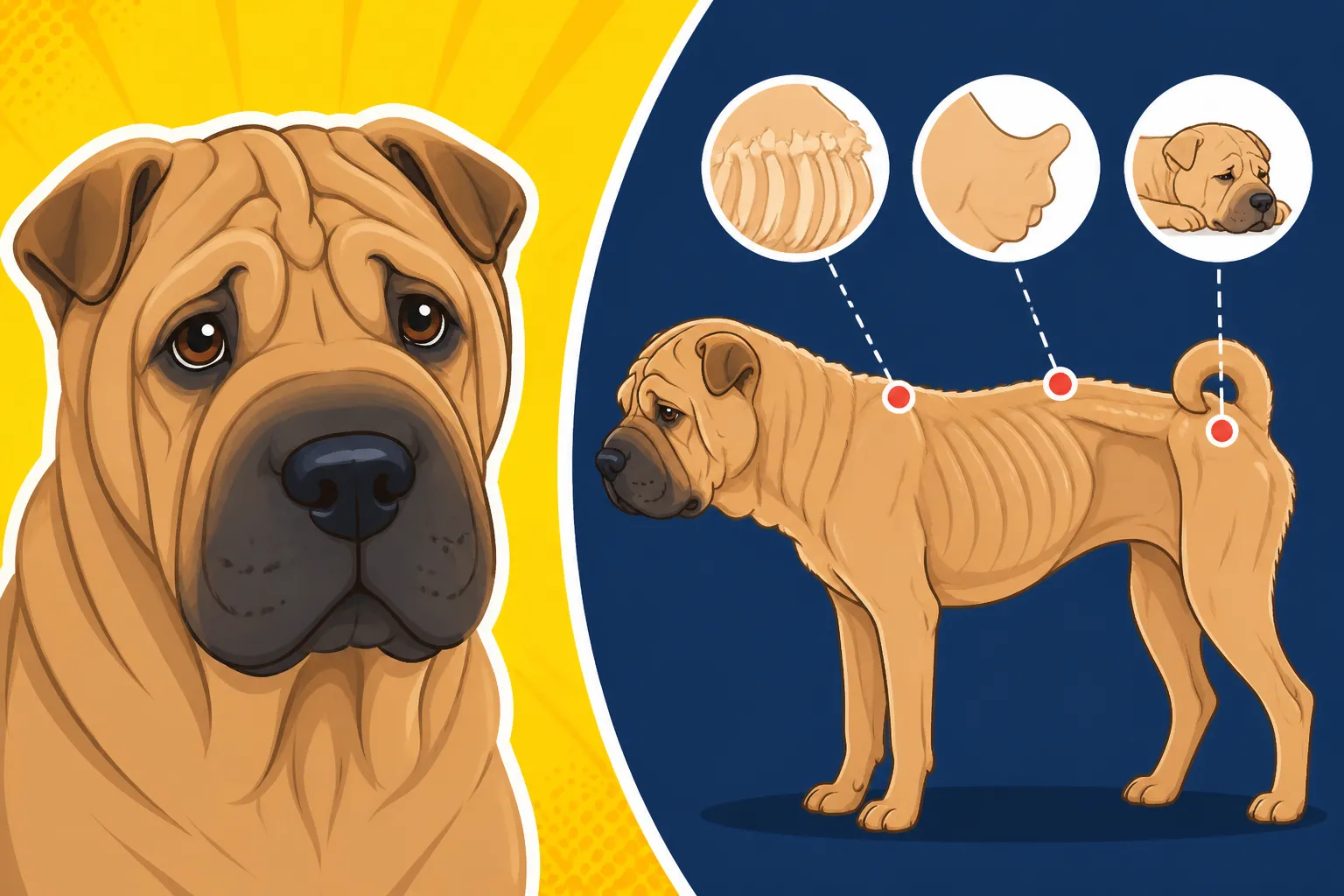
One of the first places to look is the area around their hips and tail base. While the wrinkles might obscure the ribs, the pelvic bones are often less covered by loose skin in an underweight dog. If you notice the hip bones becoming more prominent, almost bony, or if the area around the tail base seems sunken and the vertebrae are easily visible, these are significant red flags. Normally, this area should have a smooth curve. If it looks angular or bony, it’s time to pay closer attention. Another subtle sign can be the prominence of their spine, especially when they are standing. Instead of a smooth line, you might start to see individual bumps of vertebrae showing through, even if they're still nestled within some folds.
Beyond the bones, take a look at their overall body shape from above and from the side. A healthy Shar Pei should have a tucked-up waist, but it shouldn't be overly dramatic. If their waist appears severely pinched behind the ribs, creating a very obvious hourglass figure, or if their stomach area seems much more drawn in than usual, they could be underweight. From the side, an underweight Shar Pei might appear less substantial, less "square" or "stocky" than is typical for the breed. Their muscle definition, particularly over the hindquarters, might also seem diminished. A once-round and powerful rump might now appear somewhat flat or wasted.
Finally, observe their coat condition and general demeanor. While not directly a sign of being too thin, a dull, dry, or sparse coat can sometimes accompany malnutrition or underlying illness that causes weight loss. Similarly, a noticeable decrease in energy, even for a breed known for being a bit more laid-back, could be a symptom. If your typically playful or energetic Shar Pei seems unusually lethargic or reluctant to move, and this coincides with suspected weight loss, it definitely warrants investigation. Pay attention to how they hold themselves; a slightly hunched posture can sometimes indicate discomfort or weakness associated with being underweight.
How to Feel for Underlying Thinness Through the Folds
This is where the real detective work comes in for Shar Pei owners. Feeling your dog’s body condition is arguably more important than seeing it. You need to get your hands on your dog and learn what a healthy Shar Pei feels like underneath all that glorious skin. It’s a skill that improves with practice, and it’s invaluable for monitoring your dog’s health.
Start by gently running your hands along your Shar Pei’s ribs, just behind their front legs. You should be able to feel their ribs without having to press hard, almost like feeling the knuckles on your hand when your palm is flat. You shouldn't be able to see them, but you should definitely be able to feel them distinctly. If you can clearly see the outline of each rib or if they feel very sharp and prominent with almost no fat covering, your dog is likely too thin. On the flip side, if you can't feel the ribs at all without a lot of pressure, they might be overweight. The ideal is that "just right" feeling – a slight cushioning layer over the bones. This tactile assessment needs a bit more focus on a Shar Pei because of their unique skin, so be patient and persistent. You'll get a better idea if you start by doing this when they are a healthy weight to establish a baseline. Many owners find it helpful to compare with body condition score charts specifically adapted for breeds with unique body types.
Next, move your hands along their spine, from the base of the neck all the way to the tail. Again, you should be able to feel the individual bumps of the vertebrae, but they should be covered by a nice layer of muscle and fat. If the bony protrusions of the spine feel very sharp, prominent, and easy to distinguish without much cushioning, this is a strong indicator of being underweight. Similarly, check their hip bones (pelvic bones). These are located on either side of their lower back, just before the tail. In a healthy Shar Pei, you should feel a smooth contour over these bones, whereas an underweight dog will have hip bones that feel much more angular and stark beneath the skin. This can be one of the clearest tactile indicators, even with the presence of loose skin.
Don't forget to assess muscle mass, especially over their hind legs and shoulders. Healthy dogs have well-developed, firm muscles. If your Shar Pei is too thin, you might notice a loss of muscle definition, and their muscles might feel softer or "wasted" to the touch. This muscle wasting is a common sign of chronic undernourishment or illness. How to Feel a Shar Pei's Ribs Through Its Folds delves deeper into these specific techniques for feeling through the layers. Regularly checking these areas as part of your routine petting and grooming sessions will help you catch any subtle changes early.
Here’s a quick comparison of what you might feel:
| Body Area | Healthy Weight Shar Pei | Underweight Shar Pei |
|---|---|---|
| Ribs | Easily palpable with light pressure, slight cushioning. | Very prominent, sharp, and easily felt with almost no pressure. |
| Spine | Palpable but smooth, with good muscle coverage. | Individual vertebrae feel sharp and distinct, minimal coverage. |
| Hip Bones | Covered by a smooth layer of fat and muscle, not prominent. | Very angular and pronounced, little to no cushioning. |
| Waist | Clearly tucked, but still a smooth curve. | Severely tucked, almost hollow. |
| Muscle Mass | Firm and well-developed, especially in hindquarters. | Soft, reduced, or wasted, especially over hips and legs. |
Potential Reasons for Weight Loss and What to Do
If you suspect your Shar Pei is too thin, it’s natural to feel a knot of worry in your stomach. There are several reasons this could be happening, ranging from simple dietary needs to more serious underlying health conditions. The first and most important step is always a visit to your veterinarian. They can provide a professional assessment and help you pinpoint the cause.
One common reason for unexplained weight loss, even in a dog that seems to be eating, can be internal parasites. Worms can steal vital nutrients from your dog, leading to a dull coat, pot-bellied appearance (sometimes), and general failure to thrive. A routine deworming or a fecal test can rule this out. Another major factor is simply not consuming enough calories for their activity level or metabolic needs. This could be due to a poor-quality diet, insufficient food portions, or even fussiness with their food. Some Shar Pei can be particular eaters, or they might simply have higher caloric needs than you realize. It's important to consider How Many Cups a Day an Adult Shar Pei Eats and adjust if necessary, or explore different food options. High-quality dog foods, available from brands like Ollie or found on Chewy and Amazon, often provide better nutrient density, which can make a big difference.
Beyond dietary and parasitic issues, weight loss can be a symptom of various underlying medical conditions. Shar Pei are unfortunately prone to certain breed-specific health challenges that can impact their ability to maintain weight. For example, Amyloidosis Is What Actually Kills a Shar Pei and kidney disease can lead to a gradual decline in health and body condition. Dogs with compromised kidneys often lose their appetite, become nauseous, and struggle to absorb nutrients, leading to weight loss. Whether a Shar Pei on a Renal Diet Loses Weight is a key consideration for dogs with kidney issues. Other conditions like gastrointestinal issues, chronic inflammation (which our Shar Pei are unfortunately prone to, especially with conditions like Shar Pei Auto-Inflammatory Disease, or SPAID), hypothyroidism, or even certain dental problems that make eating painful, can all contribute to weight loss. Your vet will likely perform a thorough physical exam, bloodwork (to check organ function and thyroid levels), and possibly a urinalysis to check for protein loss, which is a strong indicator of kidney issues. This is why Why a Shar Pei's Kidneys Need Watching From Two Years Old is so important.
If your vet confirms your Shar Pei is underweight, they’ll work with you on a plan. This might involve switching to a more calorie-dense food, increasing meal frequency, or incorporating specific supplements. For dogs with underlying health issues, treatment for that condition will be paramount. For example, if kidney disease is diagnosed, a special renal diet and medications will be prescribed. If it’s a simple matter of needing more calories, your vet might recommend specific high-calorie formulations available at pet supply stores or online marketplaces like Amazon or Chewy. Always follow your vet’s advice closely and monitor your Shar Pei’s weight and appetite diligently. Keeping a food log and noting any changes in their energy levels or bathroom habits can provide valuable information during follow-up appointments.
Increasing Your Shar Pei's Weight Safely and Effectively
Once you’ve identified that your Shar Pei is too thin and ruled out any serious underlying medical conditions with your vet, the next step is to help them gain weight in a healthy, controlled manner. It’s not just about piling on extra food; it’s about providing the right kind of nutrition and monitoring their progress carefully. Rapid weight gain can be just as unhealthy as rapid weight loss, especially if it's mostly fat and not healthy muscle mass.
Start with your current food. Is it a high-quality, nutritionally complete diet? Many owners, in an effort to save money, opt for lower-quality foods that might have fillers and lack the dense nutrients a Shar Pei needs. Invest in a premium dog food that lists meat as the first ingredient. Brands like Ollie often offer fresh, human-grade ingredients that are highly palatable and nutrient-dense, which can be a game-changer for picky eaters or those needing to put on weight. If you're buying from places like Chewy or Amazon, read reviews and look for formulations specifically designed for active dogs or those needing weight support. You might also consider whether Whether a Shar Pei Needs a Limited Ingredient Food is a factor, as undetected allergies or sensitivities could be impacting nutrient absorption.
Once you have a good quality food, gradually increase their portion sizes. Don’t double their food overnight; instead, add a small amount, perhaps a quarter cup, to each meal for a few days, then slowly increase again if they tolerate it well and are finishing their bowls. It can be better to feed smaller, more frequent meals rather than two large ones, as this can aid digestion and absorption. Three or even four meals a day might be more effective for a dog that needs to gain weight. You can also incorporate healthy, calorie-dense toppers. Cooked, lean meats like chicken or turkey (without skin or bones), a spoonful of plain canned pumpkin, or a little low-fat cottage cheese can boost palatability and caloric intake. Some vets also recommend fish oil supplements, which provide healthy fats and can improve skin and coat condition, which is a bonus for a Shar Pei.
Throughout this process, regular weigh-ins are crucial. Your vet can show you how to accurately weigh your Shar Pei, or you can do it at home using a bathroom scale (weigh yourself, then weigh yourself holding your dog, and subtract the difference). Keep a log of their weight weekly to ensure they are gaining steadily. Alongside increased food, ensure your Shar Pei is still getting appropriate, gentle exercise. Building muscle mass is just as important as gaining fat. Short, consistent walks are better than intense, infrequent bursts, especially if they're currently underweight. Remember, patience is key. Healthy weight gain takes time, often several weeks or even months. Celebrate the small victories, like a slight increase in muscle tone or a less prominent hip bone, and stay in close communication with your vet about their progress.
Disclaimer
This article is for general informational purposes only and does not constitute professional advice. Laws, prices and regulations vary by location and change over time. Consult a qualified professional for guidance on your specific situation.