Whether a Slow Feeder Suits a Shar Pei
It’s a common sight for many Shar Pei owners: you put down a fresh bowl of kibble, and before you can even turn around, your beloved wrinkled companion has inhaled every single piece. This frantic eating isn't just a quirky habit; it can lead to some serious discomfort and even health issues for our unique pups. This guide will delve into why your Shar Pei might be eating so fast, the potential risks involved, and how a slow feeder can be a fantastic tool to help them enjoy their meals at a healthier pace.
Understanding Your Shar Pei's Eating Habits
If your Shar Pei acts like every meal is their last, you're not alone. Many dog owners face this, and it’s especially pertinent for breeds like ours, given some of their inherent health predispositions. It's not necessarily a sign that you're starving them; often, it's rooted in instinct and can have unintended consequences.
The Shar Pei's Natural Inclination to Gobble Food
Dogs, generally speaking, are opportunistic eaters. In the wild, food was scarce and competition was fierce. Eating quickly meant securing a meal before another animal could snatch it away. While our domesticated Shar Peis live a far cry from that wild existence, these ancient instincts still run deep. A Shar Pei might have been bred for guarding and companionship, but that primal urge to eat quickly can still manifest. They might perceive other pets, or even you, as potential competitors for their food, even if it's completely irrational in your calm home environment. It's a throwback, a relic of their ancestors that surfaces at mealtime. You might notice this behavior even if your Shar Pei is the only pet in the house, showing just how ingrained it can be.
Sometimes, especially with rescue dogs, their history might play a role. If a dog experienced food insecurity in their past, they might develop a habit of eating rapidly to ensure they get enough. Even without such a history, the sheer excitement of mealtime can override any slower, more measured approach to eating. The delicious aroma of their Which Protein Suits a Shar Pei wafting through the air is often enough to send them into a feeding frenzy.
Health Risks Associated with Fast Eating in Shar Peis
While a quick meal might seem harmless, for a breed like the Shar Pei, fast eating can pose several health risks. One of the most severe, and frankly terrifying, concerns for many deep-chested breeds is Gastric Dilatation-Volvulus (GDV), commonly known as bloat. While not exclusively a Shar Pei problem, and not all fast eaters will get bloat, consuming food too quickly can lead to a dog swallowing excessive amounts of air, which contributes to stomach distension. Bloat is a life-threatening emergency where the stomach twists, cutting off blood supply and trapping gas. It's truly a nightmare scenario no owner wants to face. I've had friends describe the sudden onset and the panic of rushing to the emergency vet. It's a situation where every second counts, and prevention is absolutely key. For more information on this, you might want to read Whether a Shar Pei Gets Bloat.
Beyond bloat, fast eating can lead to a host of other digestive issues. Choking is a very real danger, especially if your Shar Pei gulps large pieces of kibble without proper chewing. This can cause immediate distress and require urgent intervention. Even if they don't choke, the rapid ingestion can result in indigestion, excessive gas, stomach upset, and regurgitation or vomiting shortly after eating. This isn't just messy; it means your Shar Pei isn't properly digesting their food and absorbing all the vital nutrients they need. Over time, this can impact their overall health and energy levels. It’s a vicious cycle where fast eating leads to discomfort, which in turn might make them even more anxious about their next meal.
What a Slow Feeder Is and How It Works
So, if fast eating is such an issue, what’s the solution? Enter the slow feeder. These ingenious inventions are designed specifically to put the brakes on mealtime, transforming a quick gulp into a more measured, enjoyable experience for your Shar Pei. They're not just a gimmick; they're a practical tool that can make a real difference in your dog's digestive health and overall well-being.
Types of Slow Feeder Bowls and Mats
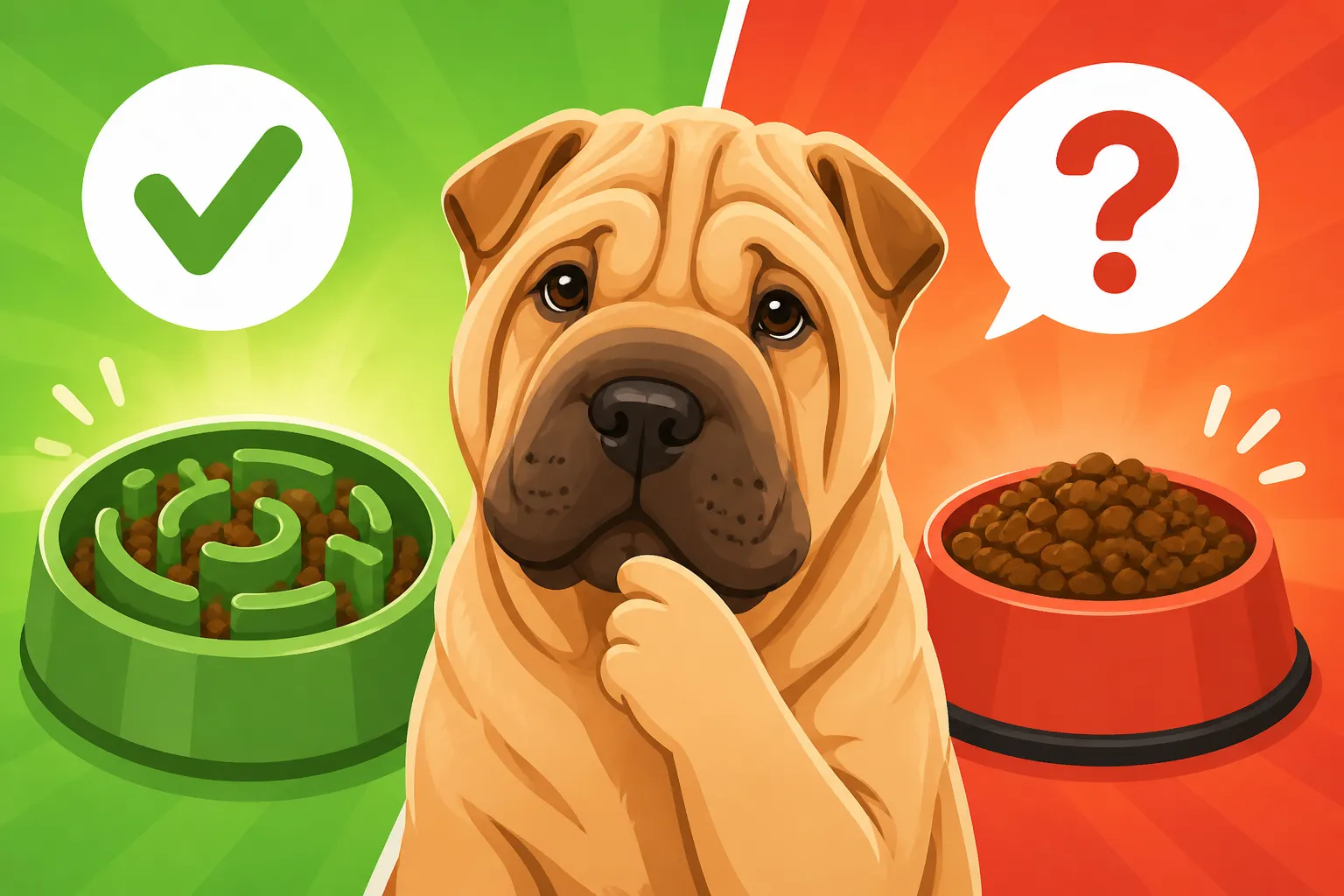
Slow feeders come in a surprisingly wide array of designs, each with its own approach to slowing down consumption. The most common is the slow feeder bowl, which looks like a regular dog bowl but features various ridges, mazes, pillars, or obstacles built into the bottom. Instead of a wide-open surface, your Shar Pei has to navigate these barriers to get to their kibble. You can find many options on popular pet supply sites like Chewy or Amazon, offering everything from simple spiral designs to more intricate patterns.
Then there are slow feeder mats, often made of silicone with a textured surface, sometimes called "lick mats." These are fantastic for wet food, raw diets, or even spreadable treats like peanut butter (xylitol-free, of course!). Your Shar Pei has to use their tongue to meticulously lick the food out of the crevices, which is not only slowing but also incredibly soothing and mentally stimulating. Some puzzle feeders take it a step further, requiring your dog to move levers, slide panels, or lift compartments to access their food. These are wonderful for providing mental enrichment and making mealtime a true "work to eat" activity. Consider the size and depth of your Shar Pei's unique muzzle when selecting a design; a too-deep maze might frustrate them unnecessarily, while one that's too shallow won't provide enough challenge.
The Mechanism Behind Slow Feeding
The core idea behind a slow feeder is simple: create physical barriers or mental challenges that prevent your Shar Pei from taking large gulps of food. When food is spread out or hidden within a maze, your dog is forced to eat around the obstacles, picking up smaller portions at a time. This requires more focused effort, more licking, and more deliberate chewing. Instead of a huge mouthful, they might get a few pieces of kibble at a time, extending the meal from mere seconds to several minutes, or even longer with more complex designs.
This extended mealtime has multiple benefits. Firstly, it naturally reduces the amount of air they ingest with their food, lessening the risk of bloat. Secondly, it encourages them to chew their food more thoroughly. Chewing is the first step in digestion, breaking down food into smaller particles and mixing it with saliva, which contains digestive enzymes. This pre-digestion process makes it easier for their stomach and intestines to do their job, leading to better nutrient absorption and less digestive upset. It also provides a valuable source of mental enrichment. For a smart and sometimes stubborn breed like the Shar Pei, engaging their brain with a food puzzle can be just as tiring and satisfying as a short walk. It turns mealtime into an activity, rather than just a quick transaction.
The Benefits of Using a Slow Feeder for Your Shar Pei
Embracing a slow feeder isn't just about addressing a problem; it's about actively improving your Shar Pei's health and happiness. The positive impacts extend beyond just slowing down their eating pace, touching on critical aspects of their overall well-being.
Reducing the Risk of Bloat and Choking
This is arguably the most significant benefit for any deep-chested breed, including our Shar Peis. As we discussed, bloat (GDV) is a terrifying condition. When a dog eats too fast, they tend to gulp down a lot of air along with their food. This air gets trapped in the stomach, causing it to distend. While bloat is complex and has multiple contributing factors, reducing air intake during meals is a crucial preventative measure. A slow feeder forces your Shar Pei to take smaller bites and eat more deliberately, significantly cutting down on the amount of air they swallow. It's not a foolproof guarantee against bloat, but it dramatically lowers one of the known risk factors. Many vets recommend slow feeders for any dog prone to eating too quickly, and especially for those with anatomical predispositions like the Shar Pei's body shape.
Beyond bloat, the risk of choking is also greatly diminished. When your Shar Pei is forced to pick up individual kibble pieces or smaller mouthfuls, they are less likely to accidentally inhale food into their windpipe. This can save you from a truly frightening emergency. Observing your Shar Pei struggling to eat or making strange noises while eating can be really unsettling, but a slow feeder can provide peace of mind by encouraging a safer eating pace. This simple change in how you present their How Much an Adult Shar Pei Eats can literally be a lifesaver.
Improving Digestion and Nutrient Absorption
Think about how you feel after you've rushed a meal. Probably a bit bloated, maybe some indigestion, right? Dogs are no different. When your Shar Pei eats at a more leisurely pace, several digestive benefits kick in. Firstly, they chew their food more thoroughly. This mechanical breakdown of food is essential because it increases the surface area for digestive enzymes to work on. Larger chunks of food are harder for the stomach to break down, potentially leading to incomplete digestion.
Secondly, slower eating allows for increased saliva production. Saliva isn't just for lubrication; it contains enzymes that start the chemical digestion process right in the mouth. When food is quickly swallowed whole, much of this crucial initial breakdown is skipped. By extending mealtime, your Shar Pei's digestive system has more time to prepare for the incoming food, leading to a more efficient process overall. This means less gas, less stomach upset, and ultimately, better absorption of the vitamins, minerals, and protein from their food. They're getting more out of every bite, which is vital for their long-term health, especially if they are on a specialized diet like Whether a Shar Pei Needs a Special Diet for Its Kidneys. A calmer digestive system also means a happier, more comfortable dog.
Enhancing Mental Stimulation and Engagement
Let's be honest, feeding a dog out of a plain bowl can be a bit boring for them. There's no challenge, no thought involved. Slow feeders, especially the more intricate puzzle-style ones, turn mealtime into a stimulating activity. This is particularly beneficial for intelligent breeds like the Shar Pei, who thrive on having their brains engaged. Instead of just "eating," they are "working for food," which taps into their natural foraging instincts.
This mental stimulation can help reduce boredom and related behavioral issues. A bored Shar Pei might find other, less desirable ways to occupy themselves, like chewing on furniture or excessive barking. A slow feeder provides a positive outlet for their energy and problem-solving skills. It can also help reduce mealtime anxiety or stress, as the act of focusing on extracting food can be calming. For a breed that sometimes struggles with anxiety or sensitivity, such as how they might react to a How a Shar Pei Reacts to a Raised Voice, a calm and engaging mealtime can be incredibly beneficial. It turns feeding into a positive ritual, enriching their day and contributing to a more well-rounded, content companion. You might even find them more settled after a meal, having expended some mental energy rather than just filling their belly.
Choosing the Right Slow Feeder for Your Shar Pei
With so many options on the market, selecting the perfect slow feeder for your Shar Pei might seem a little overwhelming. But by considering a few key factors, you can make an informed choice that will benefit your unique dog.
Factors to Consider: Material, Size, and Difficulty
When you're looking at slow feeders, the first thing to consider is the material. Most are made from durable, food-grade plastic, silicone, or sometimes ceramic. Plastic is often the most affordable and lightweight, but ensure it's BPA-free and sturdy enough to withstand your Shar Pei's determined efforts without cracking. Silicone mats are excellent for wet food and are generally very flexible and easy to clean. Ceramic bowls are heavy, which prevents tipping, but can break if dropped. Always prioritize non-toxic materials, as your dog will be interacting with this extensively. Sites like Chewy and Amazon usually specify the materials clearly in product descriptions, so always double-check.
Next, size is crucial. A slow feeder that's too small for your Shar Pei's muzzle will be frustrating and ineffective. Conversely, one that's too large might not provide enough challenge. Consider the dimensions of your dog's face, especially their unique muzzle shape. A bowl designed for a small pug might be too compact, while one for a giant breed might have ridges too far apart to be effective for your Shar Pei. You want a size that encourages them to work but doesn't cause them discomfort.
Finally, think about the difficulty level. Slow feeders come in various designs, from simple spirals to complex mazes or interactive puzzles. If your Shar Pei is new to slow feeding, start with an easier design. A bowl with wide, shallow ridges is a good starting point. As they get the hang of it and you see improvement in their eating speed, you can gradually introduce more challenging designs. Some dogs might prefer a flat lick mat over a deep bowl, especially if they have a Whether a Shar Pei's Muzzle Affects Its Breathing or face folds that make reaching into deep crevices difficult. Observe your Shar Pei’s reaction; the goal is to slow them down, not to frustrate them to the point of giving up on eating.
Introducing the Slow Feeder to Your Shar Pei
Introducing any new feeding tool to your Shar Pei should be a positive and gradual process. You don't want to create an aversion to mealtime. Here’s a simple step-by-step approach:
- Start with a small portion: For the very first few meals, try putting only a small amount of their regular food, perhaps a quarter of their usual How Many Cups a Day an Adult Shar Pei Eats, into the slow feeder. This allows them to explore it without feeling overwhelmed by a full meal's worth of obstacles.
- Mix with familiar food: If you're using a lick mat or puzzle feeder that takes wet food, try spreading a small amount of their favorite wet food or a safe treat like unsweetened applesauce or a bit of Ollie fresh food into it. The high value will encourage them to engage.
- Supervise closely: Especially during the first few uses, stay with your Shar Pei. Observe how they interact with the feeder. Are they getting frustrated? Are they trying to flip it over? Some dogs might try to "cheat" by pushing the bowl around, so a non-slip base or a heavier ceramic option can be useful.
- Positive reinforcement: When they successfully eat from the slow feeder, offer verbal praise ("Good dog!") and calm, gentle encouragement. You want them to associate the slow feeder with a positive experience. Avoid showing frustration if they don't get it right away; remember, this is a learning process for them.
- Gradually increase difficulty: Once they're comfortable with the initial setup, you can gradually increase the food portion or move to a slightly more challenging design. Some slow feeders have adjustable sections or removable parts, which can be a good way to scale the difficulty.
- Patience is key: Your Shar Pei might not love it immediately. Some are more adaptable than others. Be patient, consistent, and always keep the experience positive. If they seem overly frustrated, take a step back and try an easier method or a different type of slow feeder. The goal is to make mealtime a calm, engaging, and healthy experience. Remember to provide fresh water too, as drinking can also be a hurried affair for some dogs.
Remember, every Shar Pei is an individual. What works perfectly for one might not be ideal for another. You might need to experiment a little, but the benefits of slowing down their mealtime are absolutely worth the effort.
| Feature | Maze Bowl | Lick Mat | Interactive Puzzle Feeder |
|---|---|---|---|
| Primary Use | Dry kibble | Wet food, raw food, spreadable treats | Dry kibble, treats |
| Material | Plastic, ceramic, stainless steel | Silicone | Plastic, wood |
| Difficulty | Low to Medium (depending on maze complexity) | Low (focused licking) | Medium to High (requires problem-solving) |
| Benefits | Reduces gulping, encourages chewing, less air intake | Soothing, mental stimulation, extends treat time | High mental stimulation, reduces boredom, slows eating |
| Pros for Shar Pei | Good for daily kibble, various sizes available | Calming, great for sensitive muzzles or flat-faced dogs | Engages intelligent Shar Peis, prevents boredom |
| Cons | Can be frustrating if too complex, some dogs tip | Limited to spreadable/wet food, less "chewing" action | Can be expensive, may frustrate easily, harder to clean |
| Cleaning | Dishwasher safe (most), hand wash | Easy to hand wash or dishwasher safe | Can be complex to clean depending on design |
Remember that incorporating a slow feeder is just one aspect of comprehensive Shar Pei care. Considering all their unique needs, from their diet like Whether a Shar Pei Needs a Limited Ingredient Food to managing their activity levels, contributes to a happier, healthier life. You might also want to look into other ways to provide mental enrichment, such as what constitutes How a Shar Pei Plays. Taking proactive steps like using a slow feeder shows you’re a dedicated owner who truly understands and addresses the specific needs of this incredible breed. After all, ensuring their well-being throughout their life, which for many Shar Peis can be around How Long a Shar Pei Lives, is paramount.
Disclaimer
This article is for general informational purposes only and does not constitute professional advice. Laws, prices and regulations vary by location and change over time. Consult a qualified professional for guidance on your specific situation.