Whether a Shar Pei Snores
A Shar Pei may snore because of its short muzzle and compact upper airway, but a rumble during sleep is not automatically harmless. The important clues are whether the noise is new, getting louder, happening while your dog is awake, or paired with struggling to breathe. This guide explains common causes, warning signs, and practical next steps.
Why Shar Pei snore
Their muzzle and airway shape can contribute
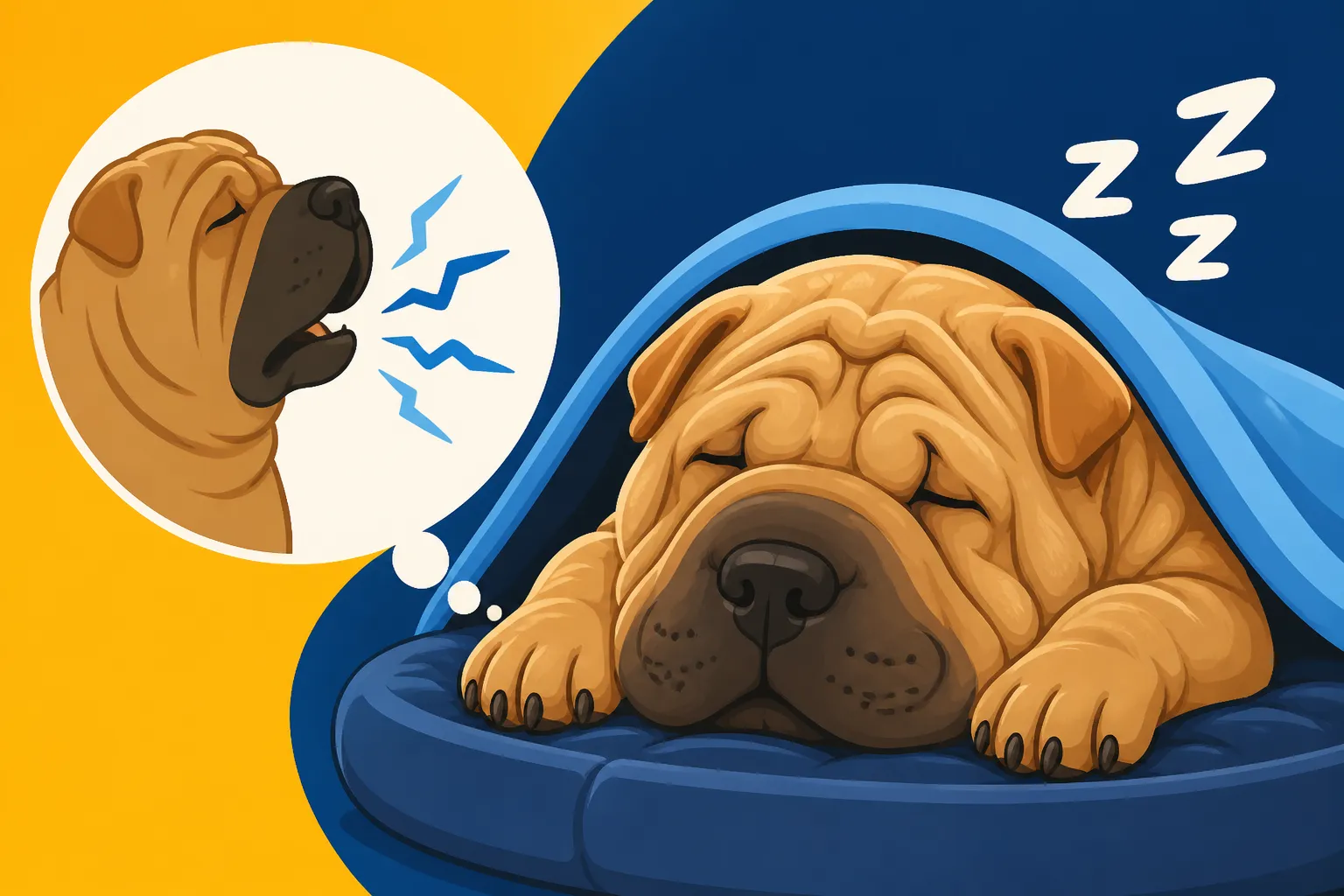
Shar Pei have relatively short muzzles and distinctive facial anatomy. In some dogs, the nostrils are narrow or soft tissues in the upper airway leave less room for air to move freely. When a sleeping dog relaxes, those tissues can vibrate as air passes, producing a snore.
That doesn’t mean every Shar Pei has a breathing disorder, or that every snore signals a problem. Some dogs make a quiet, occasional sound only in a certain sleep position. Others have noisy breathing that is more persistent or noticeable during activity. The pattern matters as much as the sound itself. For a broader explanation of breed anatomy, see Whether a Shar Pei Is a Brachycephalic Breed and Whether a Shar Pei's Muzzle Affects Its Breathing.
Shar Pei are not all built identically, either. Muzzle length, nostril shape, body condition, and individual airway structure can vary. So it is more useful to judge your own dog’s breathing than to assume a particular sound is “normal for the breed.”
Sleeping position and everyday conditions matter
A dog sprawled on its back, curled with its chin tucked, or sleeping with its neck bent may snore more than it does in another position. If the sound stops when your Shar Pei shifts naturally, and breathing is otherwise quiet and easy, position may be contributing. Don’t force your dog into a different position or handle them roughly while they’re asleep; simply notice whether the noise changes on its own.
A stuffy room, dust, smoke, or other airway irritants can also make breathing sounds more noticeable. Seasonal irritation or nasal congestion may be part of the picture, especially if snoring comes with sneezing or nasal discharge. A snore that begins suddenly, persists after a cold-like illness, or occurs alongside other symptoms deserves a veterinary conversation rather than an assumption that it is just a sleep quirk.
Body condition can influence breathing, too. Extra weight may place additional strain on a dog’s ability to move air comfortably, especially during exercise or in warm weather. If your dog has gained weight, ask your veterinarian how to assess body condition and make any changes safely. Shar Pei can be sensitive to heat, so questions about panting and warm-weather comfort may also be relevant; see Whether a Shar Pei Pants More Than Other Dogs and What Temperature a Shar Pei Is Comfortable In.
When snoring may signal a breathing problem
Look at the whole pattern, not just the noise
A soft snore during sleep is different from noisy or labored breathing when your dog is awake. Take note of whether the sound happens only while resting, whether it appears during walks or play, and whether your Shar Pei seems to recover comfortably afterward. Changes from your dog’s usual breathing are especially useful to mention to a veterinarian.
Watch for signs such as struggling to draw breath, repeated pauses followed by gasping, persistent coughing or gagging, poor tolerance for ordinary activity, or waking suddenly in apparent distress. A dog that seems unusually tired after mild exertion may also need an assessment. These signs don’t identify one specific cause on their own, but they make it more important to seek veterinary advice.
Noisy breathing can be hard to judge because a snore, snort, reverse sneeze, cough, and gag can sound similar to an owner. If you are unsure what you are hearing, a short video recorded from a safe distance can help your veterinarian understand the episode. Don’t put your hands near your dog’s mouth or nose to try to inspect the airway.
Know the signs that need urgent attention
Seek emergency veterinary care if your dog appears unable to breathe, collapses, becomes weak or unresponsive, or has gums or tongue that look blue, gray, or unusually pale. Severe breathing effort, especially when your dog is resting, should not be watched at home in the hope that it will pass.
Heat can make breathing trouble more dangerous. Move a dog showing distress to a cooler area and contact a veterinarian promptly; don’t use ice-cold water or delay care while trying home remedies. Heat management is a real consideration for the breed, and How to Cool a Shar Pei Down and Whether a Shar Pei Needs Air Conditioning cover related day-to-day planning.
If the snoring is not an emergency but is new, worsening, or accompanied by coughing, nasal discharge, reduced stamina, or disturbed sleep, arrange a veterinary appointment. Describe what has changed and when it started. A vet can decide whether an examination or further assessment is appropriate.
What to do if your Shar Pei snores
Keep a simple record before the appointment
A few observations can make a vet visit more productive. Note when the snoring occurs, how often you hear it, whether it happens in a particular sleep position, and whether it is louder than it used to be. Record any associated signs, such as waking abruptly, coughing, gagging, exercise intolerance, or changes in appetite and energy.
A brief video or audio recording can be useful, particularly if the noise is intermittent and your dog is quiet during the appointment. Capture the sound without waking, restraining, or crowding your dog. If your Shar Pei is breathing noisily while awake or seems distressed, do not spend time trying to record it—call your veterinarian or an emergency clinic.
| What you notice | What to do |
|---|---|
| Occasional soft snoring only during sleep, with easy breathing otherwise | Mention it at a routine veterinary visit and watch for changes |
| New or increasingly loud snoring, or snoring with coughing or reduced stamina | Arrange a veterinary appointment and bring notes or a short recording |
| Labored breathing, collapse, blue or gray gums, or severe distress | Seek emergency veterinary care immediately |
Make the sleep area comfortable without trying to treat the airway yourself
Keep your Shar Pei’s sleeping space clean, comfortable, and away from smoke and strong fragrances. Washable bedding can make routine cleaning easier; retailers such as Chewy carry pet bedding options, but bedding will not correct an underlying airway problem. Choose a setup your dog can enter and leave easily, and avoid anything that could restrict movement or breathing.
If you are considering a different bed or bedding because your dog seems uncomfortable, look for a stable surface that lets them rest in a natural position. Chewy is one place owners may browse washable bedding, but the most important step is still to discuss persistent or concerning breathing noise with a veterinarian. Avoid raising a dog’s head with an unstable pile of pillows or using devices that hold the neck in an awkward angle.
Do not give human decongestants, cough medicine, sedatives, or other medication unless a veterinarian specifically instructs you to. A medicine that seems reasonable for a person may be unsafe for a dog or may complicate the real problem. Likewise, don’t use a muzzle or tight collar to manage snoring. If your dog pulls on walks, ask your veterinarian about suitable walking equipment rather than putting pressure on the neck.
What a veterinarian may assess
The appointment starts with your dog’s history and breathing
Your veterinarian will likely want to know when the snoring began, whether it is changing, and whether it occurs only during sleep or also when your Shar Pei is awake. They may ask about exercise, heat tolerance, sleep interruptions, coughing, nasal symptoms, and any recent weight change. Bringing your notes and a recording can help answer those questions clearly.
An examination may include looking at the nostrils and mouth, listening to the chest, and observing your dog’s general breathing pattern. Depending on what they find, the vet may recommend additional assessment or referral. The appropriate next step varies from dog to dog; an owner should not try to determine the anatomy or diagnose an airway condition at home.
If an airway procedure or sedation is ever discussed, ask the veterinary team to explain the reason, risks, and available options for your individual dog. Shar Pei’s anatomy can make planning important, so it is sensible to raise any history of noisy breathing before anesthesia. For related reading, see Whether a Shar Pei Tolerates Anesthesia Well.
Ask clear questions and plan around your dog’s routine
You can ask whether the snoring sounds like a sleep-only noise or whether it suggests restricted airflow, what changes should prompt a call, and whether your dog’s weight or activity level may be affecting breathing. If your Shar Pei is sensitive to warm weather, discuss a safe walking routine and what signs of heat stress to watch for. Whether a Shar Pei Suits a Hot Climate offers additional context for owners thinking about environmental comfort.
If the vet recommends monitoring, agree on what to track and when to check back. For example, you might note whether the sound happens nightly, whether it changes with position, and whether your dog wakes or gasps. Follow-up is particularly useful when symptoms evolve, because a pattern that was mild and occasional can be different from persistent or worsening noise.
You know your dog’s normal habits best. If a familiar snore becomes louder, starts happening while awake, or comes with effortful breathing, treat that change as useful information—not something to dismiss simply because Shar Pei can be noisy sleepers. A quick call to your veterinary clinic can help you decide how promptly your dog should be seen.
Disclaimer
This article is for general informational purposes only and does not constitute professional advice. Laws, prices and regulations vary by location and change over time. Consult a qualified professional for guidance on your specific situation.