Whether a Shar Pei’s Small Eyes Are in the Standard
A Shar Pei’s eyes can look unusually small, deep-set, or partly hidden by folds, so it is easy to wonder whether something is wrong—or whether that look is simply part of the breed. Small, almond-shaped eyes are described in the breed standard, but appearance is not a substitute for healthy eyelids and comfortable vision. This guide explains what is typical, what deserves a vet’s attention, and how to tell the difference.
What the Shar Pei standard says about eye size
Small, almond-shaped eyes are a breed trait
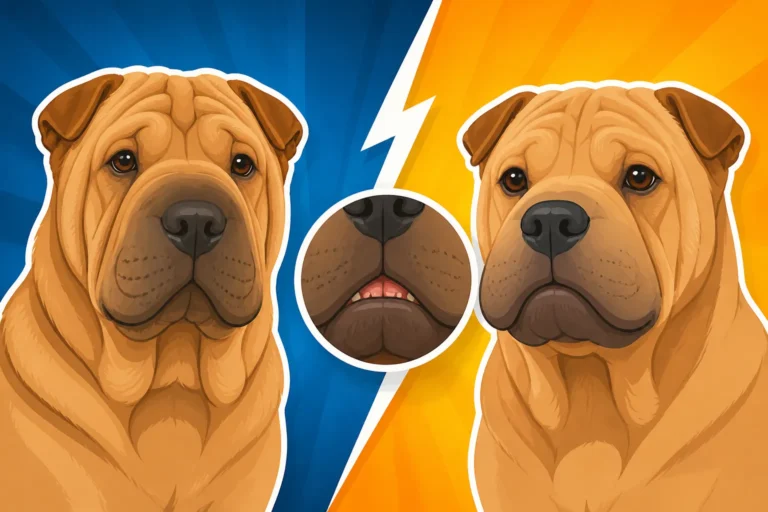
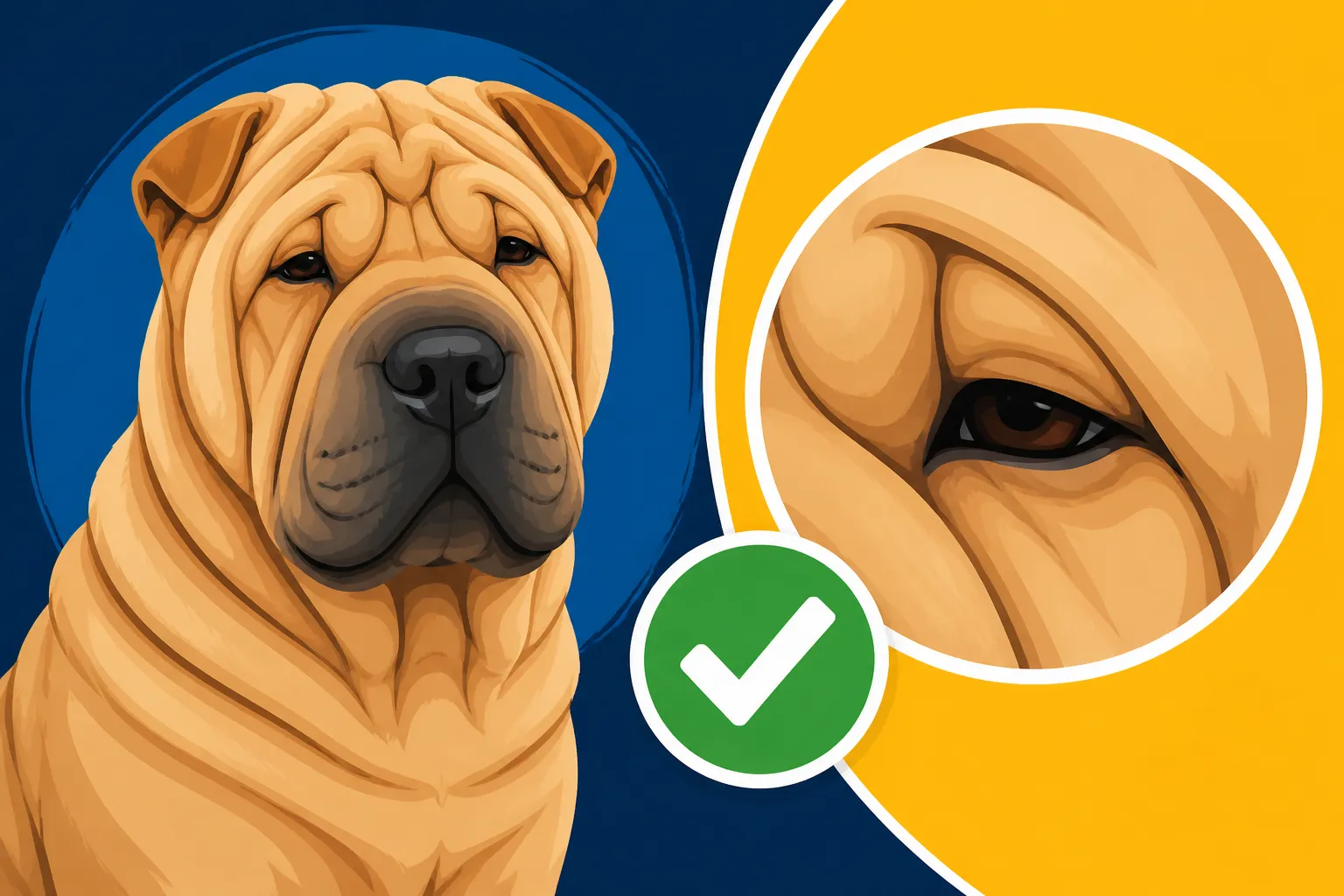
The Shar Pei breed standard describes the eyes as small, almond-shaped, and set deeply in the head. So, compared with the more open-looking eyes of many breeds, a healthy Shar Pei may naturally have an eye area that appears compact or slightly shaded by the brow and surrounding skin.
That description refers to the breed’s desired appearance. It does not mean that every Shar Pei should have eyes that are difficult to see, or that discomfort is acceptable because the dog is wrinkled. A dog can have the characteristic small-eye look while still opening its eyes normally, tracking movement, and showing no sign of irritation.
Standards can vary somewhat between kennel clubs and countries, so wording and judging details may not be identical everywhere. If you are preparing for a conformation show, check the rules of the organization you plan to enter. For a pet owner, though, eye comfort and function matter more than whether a particular eye shape looks especially dramatic.
A small-looking eye is not always a small eyeball
What you see from the outside is the visible opening between the eyelids, not a direct measure of the eyeball’s size. Deep-set eyes, a heavy brow, and surrounding facial skin can make the eye opening look smaller than it would on a dog with a flatter face or less skin around the eyes.
This distinction matters when looking at a puppy. A puppy may have abundant skin around the head, and the folds can change as the dog grows. But you should not assume that squinting, persistent tearing, or difficulty opening the eyes is just a puppy feature. If something looks uncomfortable, a veterinarian should assess it rather than relying on comparisons with photos of other Shar Pei.
The same caution applies when judging a dog from pictures online. Lighting, camera angle, facial expression, and the position of the skin can all make the eyes look more or less open. A photograph cannot show whether the eyelids rub against the eye or whether the dog can see and blink comfortably.
Breed appearance should not come at the cost of comfort
A breed standard is a guide to appearance and structure, not permission to overlook pain or impaired vision. If a dog’s skin or eyelids interfere with normal eye function, that deserves attention whether or not the dog otherwise resembles the expected Shar Pei look.
When comparing a Shar Pei’s appearance with the standard, keep these questions separate:
| What you notice | What it may mean | What to do |
|---|---|---|
| Naturally small, almond-shaped eyes with relaxed eyelids | A typical breed feature | Keep an eye on comfort and routine health |
| Eyes that look deep-set but open normally | Often related to head shape and surrounding skin | Mention it during routine veterinary care if you are unsure |
| Squinting, frequent blinking, or holding an eye shut | Possible irritation or pain | Arrange veterinary advice promptly |
| Eyelid edges rolling inward or lashes touching the eye | Possible entropion or another eyelid problem | Ask a veterinarian to examine the eye |
| Sudden cloudiness, marked redness, or vision changes | A potentially urgent eye problem | Contact a veterinarian urgently |
How to tell normal small eyes from an eye problem
Look at comfort and function, not just shape
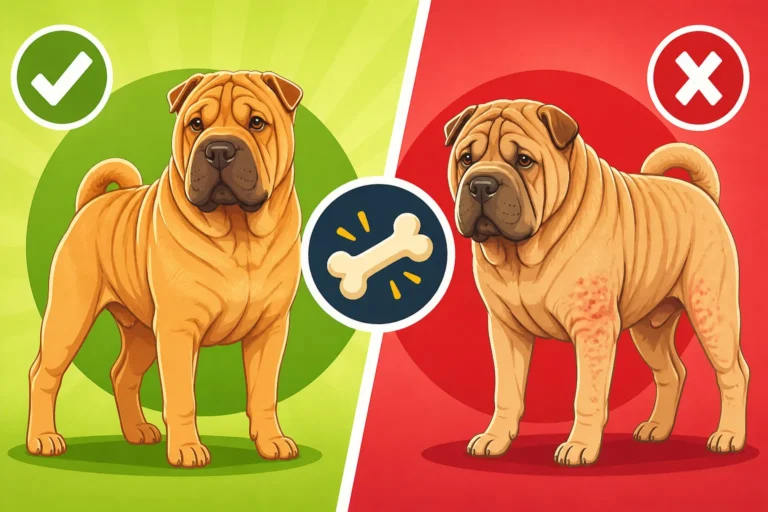
A comfortable Shar Pei should be able to open and close its eyes without obvious effort. Notice whether your dog squints in ordinary indoor light, blinks much more than usual, paws at its face, or keeps one eye partly closed. Those signs are more useful than trying to decide whether the eyes look small compared with a breed photo.
Also pay attention to changes. If your dog’s eyes have always looked compact but it behaves normally, that is different from an eye that suddenly becomes red, watery, cloudy, or difficult to open. A change in one eye can be important even when the other eye looks completely normal.
Some dogs do not make their discomfort obvious. A Shar Pei might withdraw, become less interested in play, or resist having its head touched instead of crying or pawing at the eye. If you are unsure whether a change is meaningful, describe what you have noticed to your veterinarian and explain when it began.
Entropion is a key concern in the breed
Entropion occurs when an eyelid rolls inward. The lid or lashes can rub against the surface of the eye, causing irritation and, in some cases, injury to the cornea. Because Shar Pei facial skin and eyelids can be affected by the breed’s characteristic folds, an eye that looks small should be assessed for function as well as appearance.
Possible signs include squinting, tearing, redness, rubbing the face, or a visible change in the eye’s surface. These signs do not prove that a dog has entropion—other eye conditions can look similar—but they are reasons to seek veterinary evaluation. You can read more about What Entropion Does to a Shar Pei Puppy's Eye and The Age a Shar Pei Puppy Shows Entropion if you are trying to understand why young dogs may need particular attention.
A veterinarian can examine the eyelid position and the eye itself. Treatment depends on the dog’s age, the cause and severity of the problem, and whether the eye is being damaged. Eye tacking is one procedure a veterinary professional may discuss in some situations; it is not a cosmetic choice for an owner to make based on photos. For more detail, see What Eye Tacking Involves for a Shar Pei.
Watch for signs that need prompt attention
Seek veterinary advice promptly if your Shar Pei is holding an eye shut, squinting persistently, rubbing at the face, or showing a sudden increase in tearing or redness. A cloudy-looking eye, a visible injury, or an abrupt change in how your dog navigates its surroundings should also be treated seriously.
Do not try to pull an eyelid into position, trim hair close to the eye, or put human eye drops into it. Even products sold for pets may be unsuitable for the specific problem. If the eye looks painful or your dog is resisting touch, avoid forcing an examination at home; handling a sore eye can make the situation more stressful and may worsen an injury.
If the veterinarian recommends a specific eye product, follow the directions and use the exact product they approve. If you are ordering through a retailer such as Chewy, check with the clinic before substituting a similar-looking item. Chewy can also be a convenient place to find a recovery collar if your veterinarian recommends one, but fit and suitability should be confirmed for your dog.
Caring for a Shar Pei with small or deep-set eyes
Make gentle observation part of routine care
You do not need to handle your dog’s eyes repeatedly to monitor them. During normal interaction, notice whether both eyes look clear, whether the eyelids appear relaxed, and whether your dog responds to movement on either side. A brief look during a calm moment is often more useful than an elaborate inspection that makes the dog anxious.
If your Shar Pei is comfortable with gentle handling, build a positive association gradually. Let the dog approach your hand, reward calm behavior, and stop if it pulls away or seems uncomfortable. This makes routine checks easier without turning eye care into a struggle. If your dog dislikes having its face touched, ask your veterinary team to show you a safe approach rather than trying to hold the head still.
For a puppy, mention the eyes at veterinary appointments, especially if the eyelids seem to roll inward or the puppy repeatedly squints. A routine check is not a reason to panic, but it gives the veterinarian a chance to assess growth and comfort over time. For broader guidance, Whether a Shar Pei's Eyes Should Be Checked Yearly covers the role of regular exams.
Keep the area clean without irritating the eye
If there is a small amount of discharge, ask your veterinarian what is appropriate for your dog. Use only a method and product they recommend, and be careful not to press on the eyeball or rub the eyelid. A clean, soft cloth may be suitable for wiping away material from the surrounding skin when your vet has said it is safe, but it should not be used to treat redness or pain.
Avoid fragranced wipes, household cleaners, and products intended for skin folds near the eye unless your veterinarian has specifically approved them for that location. The skin around the eyes is delicate, and a product that is fine elsewhere on the body may sting or cause irritation near the eye. If a veterinarian recommends a particular item, Chewy may be one place to check for it; confirm that the listing matches the product and instructions from your clinic.
Keep facial folds dry and reasonably clean, but do not mistake fold care for eye treatment. A wet or irritated fold near the eye can add to discomfort, yet cleaning the fold will not correct an eyelid that rolls inward or an injured cornea. If your dog’s vision seems affected, Whether a Shar Pei's Wrinkles Block Its Vision may help explain how surrounding skin can affect what you notice, but a veterinary exam is the way to assess an individual dog.
Prepare for an eye appointment
Before an appointment, note when you first saw the change, whether it affects one eye or both, and whether it comes and goes. You can also write down any recent changes in grooming products, exposure to dust or plants, or incidents such as a scratch during play. A short video of intermittent squinting can be helpful if the symptom is not present when you reach the clinic.
Bring a list of any eye products or medications your dog is already using. Do not start leftover drops from a previous problem, even if the symptoms look similar; the cause may be different, and some medications are inappropriate for certain eye injuries. If the clinic prescribes something, ask how and where to apply it, how often to use it, and what changes should prompt a recheck. If you use Chewy to obtain a vet-approved supply, follow the clinic’s exact product instructions rather than choosing based on a product description alone.
A prompt exam can help distinguish a normal deep-set appearance from entropion, irritation, or another eye condition. For additional reading about possible consequences of untreated eyelid problems, see Whether a Shar Pei's Cornea Scars From Entropion and Whether a Shar Pei Goes Blind From Untreated Entropion. These topics are not a substitute for an examination, but they can help you understand why persistent signs should not be dismissed as part of the breed’s look.
Choosing a Shar Pei with healthy eyes
Ask about eye history, not just appearance
When speaking with a breeder or rescue, ask whether the dog has had eye irritation, eyelid evaluation, or treatment such as eye tacking. Ask for relevant veterinary records where available, and find out whether the current caregiver has noticed squinting, excessive tearing, or repeated eye problems. A seller’s reassurance that “all Shar Pei have small eyes” does not answer whether a particular dog’s eyelids are comfortable.
Look at the dog when it is relaxed, not only when it is excited or posed for a photo. Does it open both eyes naturally? Does it track movement and navigate comfortably? Are the eyelids visibly turned inward, or does the dog repeatedly blink or rub its face? These observations cannot diagnose a problem, but they can help you decide what questions to ask and whether a veterinary assessment should happen before adoption or purchase.
If a puppy’s eyes appear partly closed, ask how long that has been happening and whether a veterinarian has examined them. A puppy with suspected entropion needs professional assessment; waiting for the dog to “grow into” its face without advice may put the eye at risk. This is especially important when the puppy is squinting or seems reluctant to have its head touched.
Do not select for an extreme look
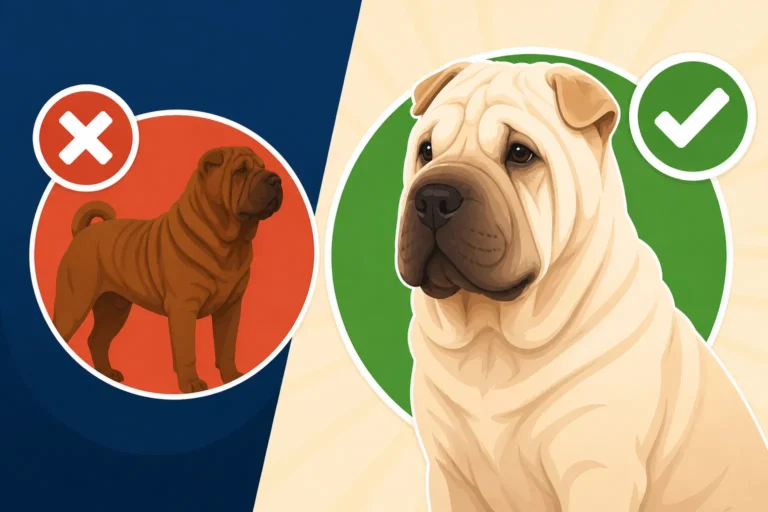
The most deeply folded face or smallest-looking eye is not necessarily the healthiest or best choice. When considering a dog, prioritize comfortable eyes, sound eyelids, and a caregiver who takes health questions seriously. A responsible discussion should make room for questions about function, not only coat color, wrinkles, or show appearance.
If you already share your home with a Shar Pei whose eyes look small but seem comfortable, there may be no reason to assume something is wrong based on appearance alone. Keep routine veterinary care, watch for changes, and raise concerns when you notice signs such as squinting, redness, discharge, or rubbing. The breed standard can explain why the eyes look different; only an individual examination can determine whether they are healthy.
Disclaimer
This article is for general informational purposes only and does not constitute professional advice. Laws, prices and regulations vary by location and change over time. Consult a qualified professional for guidance on your specific situation.