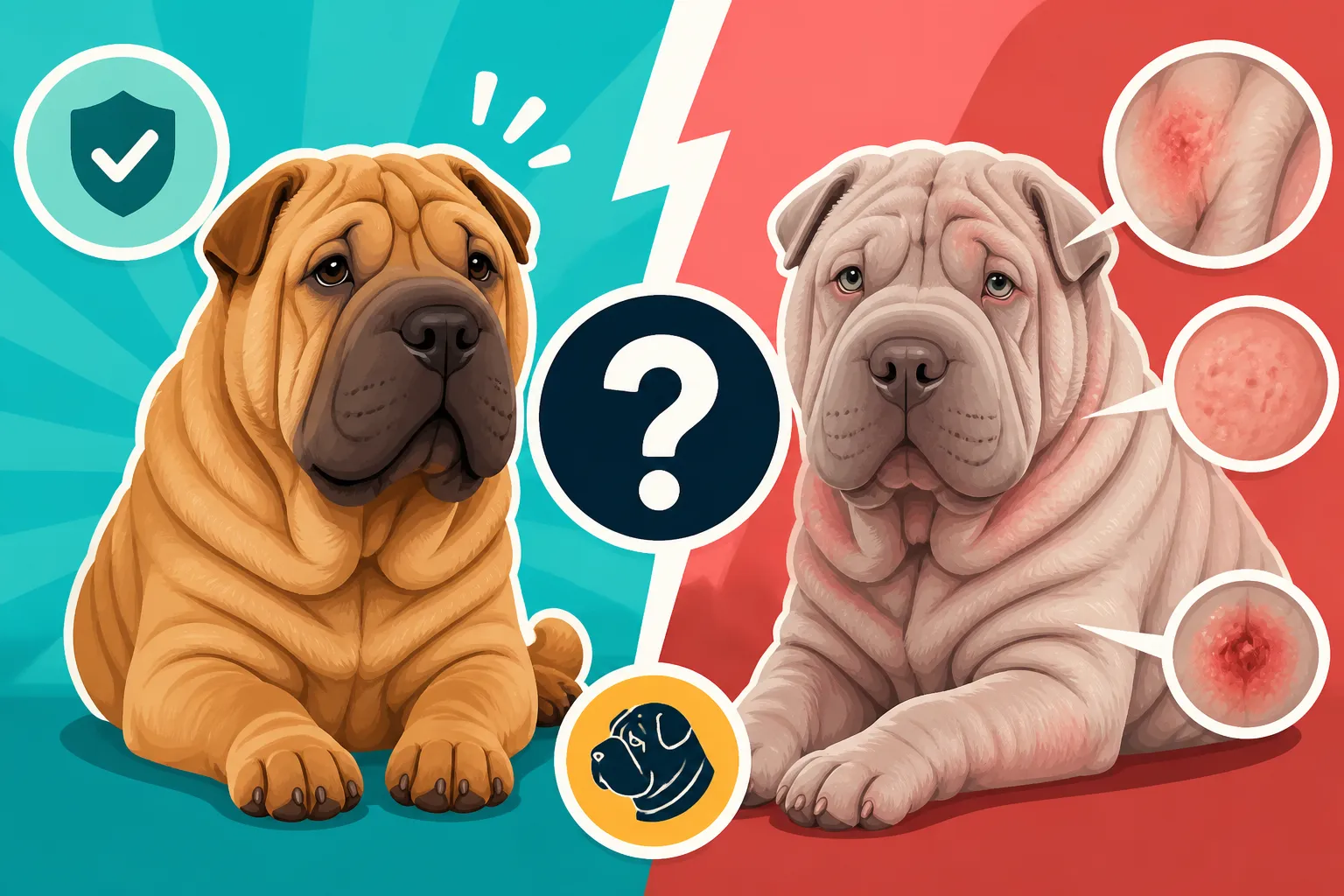
Whether a Dilute Shar Pei Has More Skin Problems
A blue, lilac, or other dilute Shar Pei may have itchy skin, thinning hair, or recurring infections, but coat color alone does not tell you why. Dilution is not proof that a dog will develop skin disease, and many Shar Pei skin problems have nothing to do with coat pigment. This guide explains the possible connection, what to watch for, and when to ask your vet.
Does a dilute Shar Pei have more skin problems
Not automatically. “Dilute” describes a coat color created by a change in how pigment is distributed in the hair. It does not mean the dog has a skin infection, an allergy, or an unhealthy coat. A dilute Shar Pei can have healthy skin, just as a non-dilute Shar Pei can have significant skin trouble.
There is a possible pigment-related issue called color dilution alopecia. It can affect some dogs with diluted coats, causing changes in hair and skin. But that possibility should not be confused with the broader skin problems the Shar Pei breed can be prone to, such as irritation in skin folds, allergies, and infections. A dog’s color may be one clue for a veterinarian to consider; it is not a diagnosis.
What dilute coat color means
Dilute colors include shades such as blue and lilac, among others. The appearance reflects a genetic difference in pigmentation, not a different breed or a separate category of skin. A dilute coat is not the same as albinism, and pale-looking fur does not by itself mean a dog’s skin barrier is weak.
It is also easy to mistake coat shade for a health signal. For example, a blue Shar Pei with a healthy, full coat is not necessarily at risk simply because of its color. Conversely, a dog with a standard coat color can develop skin disease due to allergies, parasites, moisture, or another cause.
Breed-related skin concerns deserve attention regardless of color. If you want a broader overview of those issues, Skin Is the Shar Pei's Largest Problem by Surface Area explains why a dog’s skin deserves more than a quick glance at the folds.
What color dilution alopecia can look like
Color dilution alopecia is a condition associated with some dilute-coated dogs. It can cause the hair to become fragile, break, or thin, often in areas where the coat is dilute. Some dogs may also develop dry, flaky skin or small plugged hair follicles. The pattern can vary, and a dilute dog does not inevitably develop the condition.
The signs are different from the sudden redness, odor, or dampness that may occur with an infection in a skin fold. Hair thinning that gradually becomes more noticeable, especially alongside brittle or easily broken hair, is worth discussing with a veterinarian. It is not possible to confirm the cause by looking at coat color alone.
| What you notice | Possible explanations | Helpful next step |
|---|---|---|
| Gradual thinning or broken hairs | Coat or follicle disorder, including possible color dilution alopecia | Photograph the area and arrange a veterinary assessment |
| Itching and red, inflamed skin | Allergies, parasites, infection, or irritation | Ask the vet to examine the skin rather than treating it based on appearance |
| Moisture or odor in a fold | Skin-fold irritation or infection | Keep the area dry and contact your vet if it is sore, red, or persistent |
| Hair loss with scabs or spreading patches | Several possible skin conditions | Avoid home diagnosis; ask whether skin tests are needed |
Why color is only one part of the skin picture
Shar Pei skin can be affected by several overlapping factors. A dog may have a coat-related issue, an allergy, or an infection—or more than one problem at once. That is why “it’s because he’s blue” or “it’s just the wrinkles” can lead owners down the wrong path and delay effective care.
Breed-wide skin concerns affect dogs of every color
Skin folds can trap moisture and debris, particularly if they stay damp after a bath, a walk in the rain, or a drink of water. Warm, moist skin can become irritated, and irritation can create an opportunity for infection. The face, neck, tail area, and other folds may need attention, but constant wiping or aggressive scrubbing can also irritate sensitive skin.
Allergies can cause persistent itching, licking, chewing, or recurring skin and ear problems. Parasites and other skin disorders can produce some of the same signs. The symptoms do not reliably identify the cause, so a veterinarian may recommend an examination or testing instead of simply switching shampoos. Skin Fold Dermatitis on a Shar Pei and Food Allergies in a Shar Pei cover two common areas owners may need to investigate.
A dilute coat can still be healthy
If your dilute Shar Pei has a dense, comfortable coat and no persistent itching, redness, scaling, or hair loss, there may be no current problem to treat. Routine observation is more useful than assuming the dog will develop a condition. Note changes in the coat, skin texture, and behavior over time, and bring them up during regular veterinary visits.
It can help to take clear photos when you first notice a change. A picture of a small thinning patch from several weeks earlier can make gradual progression easier to assess. Keep notes on whether the dog has been itchy, whether the affected area is spreading, and whether the skin is flaky, greasy, sore, or smelly. Those details are more informative than coat color by itself.
How to tell when your Shar Pei needs veterinary care
A new patch of hair loss can feel alarming, especially when you have read about pigment-related conditions online. Try not to jump from “dilute coat” to a specific diagnosis. Skin and coat problems often look alike at home, while the right treatment depends on what is causing them.
Signs to book an appointment
Arrange a veterinary appointment if hair loss is progressing, the coat is breaking or thinning in multiple places, or the skin is persistently flaky or irritated. Itching that disrupts sleep, repeated licking, open sores, scabs, or recurring ear and skin problems also deserve attention. If an area becomes painful, swollen, or rapidly worse, contact your clinic promptly for advice.
A strong odor, discharge, marked redness, or wet and sore skin within a fold may indicate a problem that needs examination. Avoid putting human creams, essential oils, or leftover medication on the area unless your veterinarian specifically recommends it. Some products can irritate skin, be unsafe if licked, or make it harder to assess what is happening.
What your veterinarian may check
Your veterinarian may ask when the change began, whether it is spreading, and whether the dog is itchy or uncomfortable. They may examine the coat and skin, look closely at hair follicles, and consider tests for parasites, infection, or other causes. Depending on the pattern and history, they may also discuss whether a pigment-related coat disorder is plausible.
A diagnosis may take more than one step, particularly if several conditions overlap. For instance, a dog could have a coat problem and a secondary infection at the same time. If a first treatment does not help, that does not necessarily mean the problem is untreatable; it may mean the original cause needs to be reconsidered. Whether a Shar Pei Gets Demodectic Mange explains why a parasite-related cause may also be part of a skin workup.
Practical skin care for a dilute Shar Pei
Good routine care cannot prevent every skin condition, but it can help you spot changes early and avoid adding unnecessary irritation. The aim is not to scrub or medicate a healthy dog. It is to keep the coat clean, dry the folds carefully, and respond to changes with a clear plan.
Keep the routine gentle and consistent
After bathing or getting wet, dry skin folds thoroughly, taking care not to rub tender skin. Use a product appropriate for your dog and follow your veterinarian’s advice if the skin is already inflamed or under treatment. Frequent bathing or switching between multiple shampoos can make it harder to tell whether a routine is helping.
For everyday supplies, make a short list of what your vet recommends—such as a suitable cleanser or drying cloth—before shopping. Chewy is one place owners may compare pet-care products, but check labels and ask your veterinarian before using a medicated product on irritated skin. A product marketed for dogs is not automatically right for every Shar Pei.
If your dog is prone to damp folds, check them after rain, bathing, or messy meals rather than waiting for an odor to appear. Chewy may also be useful when you are looking for basic grooming supplies, but the important part is choosing items that are gentle and drying the skin fully. For a step-by-step approach, see How to Dry a Shar Pei Properly.
Track symptoms without over-treating
Keep a simple record of when symptoms appear, where they occur, and whether anything changed in the dog’s routine. Note new foods, treats, grooming products, seasonal patterns, or time spent in damp conditions. This can help your veterinarian identify useful patterns without relying on guesswork.
Avoid starting several changes at once. If you change food, shampoo, bedding, and cleaning products together, it becomes difficult to know what helped or made things worse. For suspected food reactions, a veterinarian-guided plan is more reliable than repeatedly switching foods. Chewy can help you locate a diet your veterinarian has recommended, but follow the trial instructions closely and check before giving extra treats or flavored supplements.
When a coat or skin issue is persistent, an organized history is useful whether your dog is dilute or not. What a Shar Pei's Skin Tells You Before Its Behavior Does offers more context on recognizing changes early, while Whether a Shar Pei's Skin Gets Worse in Humidity may help you think through environmental patterns.
What to ask a breeder or rescue
If you are choosing a puppy or adopting an adult, ask about the individual dog’s skin and coat history rather than treating color as a health guarantee. Ask whether the dog has had recurring itching, hair loss, skin infections, or ongoing treatment, and request relevant veterinary records. A transparent history is more helpful than a broad promise that a particular color is “healthier.”
For a puppy, ask what grooming and skin care the breeder has been using and whether any littermates have had persistent coat problems. For a rescue, ask what is known and what remains uncertain; an incomplete history does not mean the dog will have problems, but it helps you plan a veterinary check and budget for appropriate care. More on coat-color variation is available in What a Dilute Shar Pei Is.
The practical answer
A dilute Shar Pei does not automatically have more skin problems. Color dilution alopecia is a possible condition in dilute-coated dogs, but it is not inevitable, and it should not be confused with the breed’s other skin concerns. Watch the actual signs—itching, persistent scaling, recurring infections, or progressive hair loss—and have a veterinarian assess them rather than assuming coat color explains everything.
Disclaimer
This article is for general informational purposes only and does not constitute professional advice. Laws, prices and regulations vary by location and change over time. Consult a qualified professional for guidance on your specific situation.