Whether the Shar Pei Is Bigger Than a Chow Chow
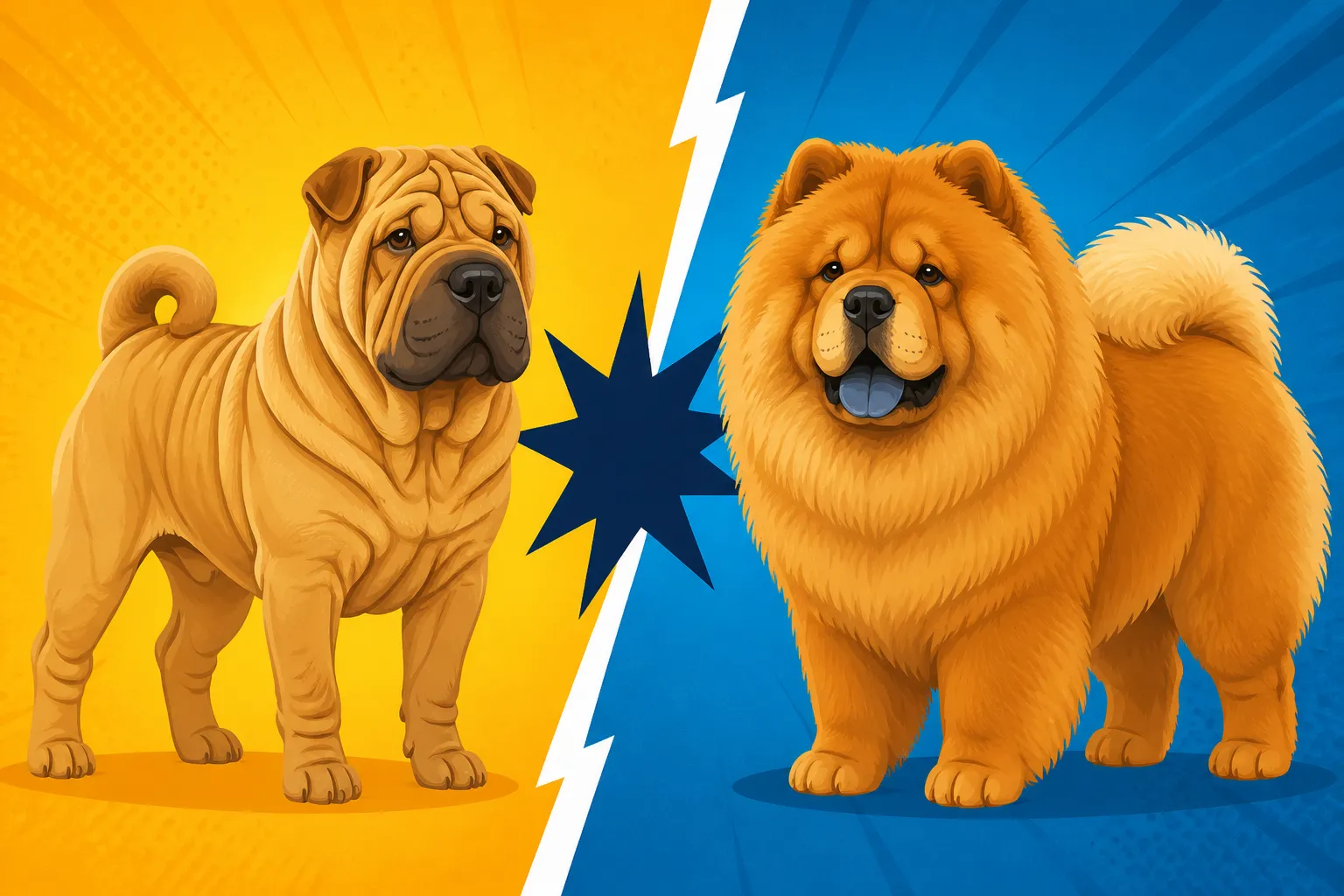
A Shar Pei and a Chow Chow can look surprisingly different in size, even when they stand close in height. The Chow’s dense coat often makes it seem larger, while the Shar Pei’s broad build and loose skin can be hard to judge by eye. This guide compares their typical height, weight, proportions, and everyday presence so you can tell what “bigger” really means.
Shar Pei vs Chow Chow size at a glance
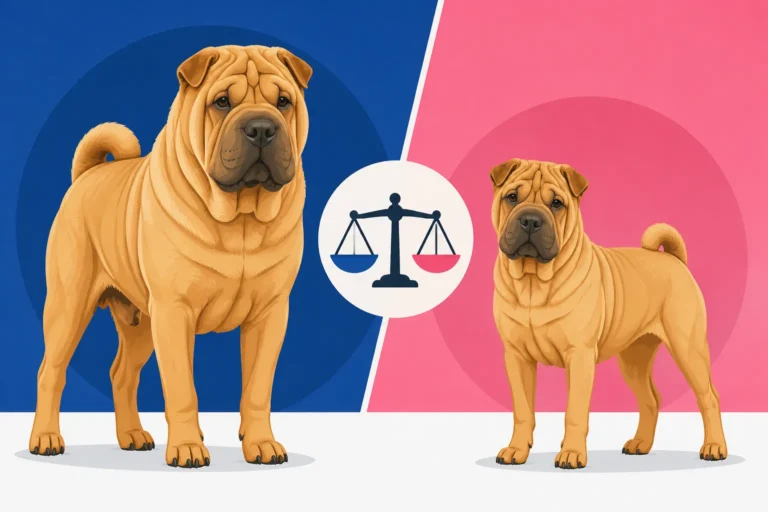
The short answer is that neither breed is consistently bigger in every measurement. Their height ranges overlap, and their usual weights overlap too. A Chow Chow may weigh more at the upper end of its typical range, but an individual Shar Pei can be heavier than an individual Chow.
Breed standards and individual dogs vary, so treat typical ranges as a useful guide rather than a promise. Sex, build, age, and body condition all affect what you see.
| Measure | Shar Pei | Chow Chow |
|---|---|---|
| Typical height at the shoulder | About 18 to 20 inches | About 17 to 20 inches |
| Typical adult weight | About 45 to 60 pounds | About 45 to 70 pounds |
| Usual impression | Compact, solid, and square | Broad, heavily coated, and substantial |
| What can make the dog look larger | Loose skin, a broad head, and a sturdy frame | Dense coat, broad chest, and a mane-like ruff |
Height is nearly a tie
A Shar Pei commonly stands around 18 to 20 inches at the shoulder. A Chow Chow is generally in a very similar height range, often around 17 to 20 inches. Since those figures overlap, height alone usually will not tell you which breed is bigger.
The shoulder is the point to compare—not the top of the head, ears, or coat. A Chow Chow’s upright coat can add visual height and volume, while a Shar Pei’s head and neck folds may make its outline look wider or less clearly defined. If you are comparing two dogs in person, look at their shoulders and backs rather than the highest point of their silhouette.
There is also ordinary variation within each breed. One adult Shar Pei may be at the taller end of its range, while another is shorter and more compact. The same is true of Chow Chows. For a broader look at the breed’s dimensions, see What a Shar Pei Weighs and How Tall It Stands and How Tall a Shar Pei Stands.
Weight ranges overlap, but Chow Chows can be heavier
A typical adult Shar Pei often weighs around 45 to 60 pounds. Chow Chows are commonly listed in a broader range, about 45 to 70 pounds. That upper end means a Chow Chow may have a higher adult weight than many Shar Peis, but it does not mean every Chow Chow outweighs every Shar Pei.
Think of two dogs standing next to each other: a 50-pound Chow and a 58-pound Shar Pei would not be unusual based on these general ranges. The Shar Pei could weigh more, even if the Chow appears bigger because of its coat. Conversely, a large, muscular Chow Chow may be noticeably heavier than a smaller Shar Pei.
Weight is most useful when considered alongside body condition. A dog should not be judged as healthy or unhealthy simply because it weighs more than a breed’s midpoint. For more context on an adult Shar Pei’s weight, How Much a Shar Pei Weighs looks at that question directly.
Why a Chow Chow often looks bigger
A photograph can make this comparison especially tricky. Coat, posture, camera angle, and body condition can all change how large a dog appears. Chow Chows tend to have a thick, abundant coat that gives their outline a wider and more rounded appearance. Shar Peis have a short coat, but their sturdy bodies and characteristic folds can still make them look quite substantial.
The Chow Chow’s coat adds visual volume
A Chow Chow’s dense coat is a major reason people may assume the breed is larger. Around the neck and shoulders, the hair can create a mane-like outline. The coat can also soften the dog’s shape, making its chest and body look broader than they might appear if you were judging skeletal size alone.
That extra visual volume does not automatically mean extra body weight. Coat can make a dog look wider without adding the same amount of mass as bone and muscle. A Chow Chow with a full coat may seem much bigger than a short-coated Shar Pei of similar height, even when their underlying frames are closer in size than the photograph suggests.
This is worth remembering when browsing pictures, adoption listings, or product-size guides. If a dog’s coat is fluffed out, the apparent outline may be a poor guide to its measurements. When choosing a harness or coat, measure the individual dog instead of relying on a breed label or a photo. Retail listings, including those on Chewy, may organize products by size category, but the dog’s actual chest and neck measurements are what matter.
The Shar Pei’s build is compact and solid
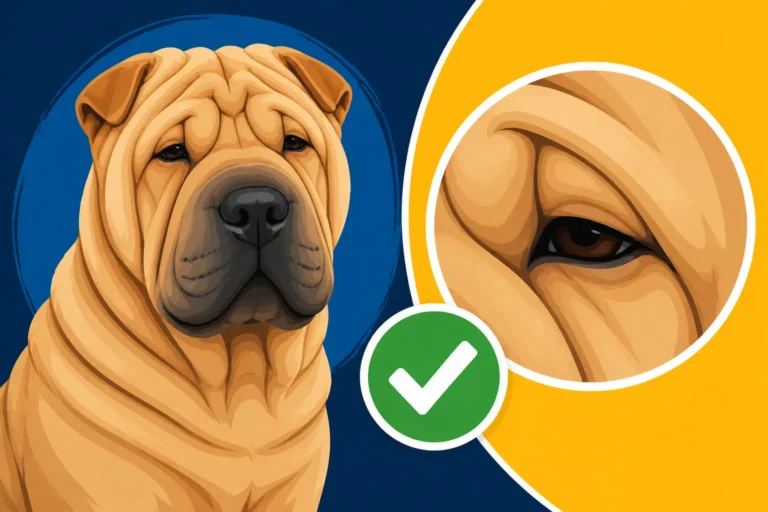
The Shar Pei’s loose skin can make its proportions look unusual, particularly around the head and neck. But loose skin does not mean the dog is oversized. Beneath the folds, the breed has a solid, muscular frame, and its body often gives a compact, square impression.
The head can add to that impression. A broad muzzle and a sturdy neck may make a Shar Pei look powerful beside a dog with a more leggy outline, even when both stand about the same height. Its short coat also reveals its shape more directly than a Chow Chow’s coat does, which can make the Shar Pei appear less fluffy but still very substantial.
A Shar Pei puppy is not a reliable guide to adult proportions either. Puppies can have more visible folds than adults, and their bodies change as they grow. For a related look at the breed’s physical features, Meat Mouth and Bone Mouth Are Two Different Shar Pei explores differences in the Shar Pei’s appearance.
How to compare two dogs fairly
If you are choosing between breeds—or simply trying to settle a debate about which dog is bigger—use measurements rather than impressions. Height, weight, and body condition answer different questions. Looking at only one of them can lead to a misleading conclusion.
Measure height and weight separately
For height, compare the dogs at the shoulder while they are standing naturally on a level surface. A dog that is sitting, leaning, or standing with its legs spread may look shorter or taller than it is. If you need an accurate measurement, ask a veterinary clinic or experienced groomer to help position the dog safely.
For weight, use a scale rather than estimating from appearance. Thick fur can disguise a Chow Chow’s shape, while folds may make it difficult to judge a Shar Pei’s outline at a glance. If a dog is too large to hold comfortably on a household scale, a veterinary clinic can weigh it during a visit.
If you are comparing dogs that are not the same age, remember that a young dog may still be growing. Adult height and weight ranges do not describe a puppy’s final size at every stage. A veterinarian can help assess whether a puppy’s growth and body condition are appropriate.
Use body condition, not the breed average, to judge health
Breed ranges describe what is common, not what is ideal for every dog. Two dogs of the same breed and weight can have different body conditions because of differences in height, muscle, age, and overall build. A veterinarian can assess whether a particular dog is carrying an appropriate amount of weight.
At home, avoid trying to judge by the dog’s silhouette alone. The Chow Chow’s thick coat can hide its waist, and a Shar Pei’s folds can make the body outline difficult to read. Ask your vet to show you how to assess your dog’s ribs and waist without pressing hard or pulling at the skin.
This can also make routine purchases less frustrating. For example, a harness that fits one 50-pound Shar Pei may not fit another of the same weight because their chest shapes differ. When shopping on Chewy or elsewhere, check the product’s measurement instructions and compare them with the dog’s body measurements—not just the breed or weight label. The same principle applies to beds and coats: the dog’s length and shape matter as much as its number on the scale.
Which breed will feel bigger in everyday life
“Bigger” can mean more than height or weight. A dog may feel large because it takes up more room on the sofa, has a broad chest, or carries a thick coat that brushes against your legs in a hallway. Temperament and movement also affect the impression a dog makes, though they do not change its physical measurements.
Space needs are about shape as well as size
A Chow Chow’s coat can make it take up more visual space, especially when it lies down or turns around in a narrow area. A Shar Pei may look more compact, but it is still a sturdy medium-sized dog and needs room to move comfortably. Neither breed should be chosen on the assumption that its appearance makes it a small-space or low-maintenance dog.
For everyday planning, consider the dog’s full body length, sleeping position, and ability to pass through doorways or fit safely in a vehicle. A bed that fits a dog curled up may be too small when the dog stretches out. A car’s cargo space should be checked with the dog’s actual measurements and the safety equipment you plan to use.
If you are comparing the breeds for your household, size is only one part of the decision. The Chow Chow’s coat requires its own care considerations, while a Shar Pei’s skin and folds need attention. The Shar Pei Against the Other Wrinkled Breeds provides more context for thinking about the Shar Pei’s distinctive build and care needs.
Choose based on the individual dog, not the look
In practical terms, a Chow Chow may be heavier and look larger because of its dense coat, particularly if it is a large adult. A Shar Pei can be just as tall and may weigh more than a smaller Chow Chow. There is no dependable rule that says one breed is always bigger.
If you are meeting a potential dog, focus on the individual: ask for a recent weight, check the dog’s age, and look at its general condition. For a puppy, ask about the parents’ size and remember that adult size is an estimate. For an adult rescue, the dog’s current measurements will tell you more than a breed description alone.
Appearance may be what first catches your eye, but daily fit matters more. Consider whether you can safely lift or transport the dog if needed, whether its bed and equipment will fit your home, and whether you are prepared for the breed’s grooming and health needs. For a wider comparison of breed traits, The Shar Pei Against a Chow Chow and Whether the Shar Pei and the Chow Chow Are Related offer useful next steps.
Disclaimer
This article is for general informational purposes only and does not constitute professional advice. Laws, prices and regulations vary by location and change over time. Consult a qualified professional for guidance on your specific situation.