Nails, Teeth and the Small Jobs on a Shar Pei
It's easy to get caught up in the big health concerns for a Shar Pei—the fevers, the skin issues, the eye tacking debates—and let some of the "smaller" but equally crucial care routines slide. But neglecting things like nail trims, dental hygiene, or even checking those unique ears can lead to serious, painful, and often expensive problems down the line for our beloved wrinkled companions. This guide is all about tackling those essential, everyday maintenance jobs that are vital for your Shar Pei's comfort, health, and overall happiness, ensuring you're equipped to handle them with confidence and consistency.
The Importance of Regular Grooming Beyond the Folds
When you think about grooming a Shar Pei, your mind probably jumps straight to those magnificent wrinkles and ensuring they don't get infected. And rightly so! Skin fold dermatitis is a common and persistent challenge. But there's a whole world of "small jobs" that often get overlooked, sometimes until they become significant issues. These aren't just about aesthetics; they are fundamental to your Shar Pei's physical well-being and quality of life. Ignoring them doesn't make them go away; it just allows minor annoyances to escalate into serious health problems that require costly veterinary intervention.
Why the "Small Jobs" Often Get Overlooked
Let's be honest, life with a Shar Pei can be demanding. Between managing potential Familial Shar Pei Fever Is Not an Infection episodes, diligently cleaning folds, and perhaps dealing with the initial eye tacking for a puppy, the idea of adding more tasks to the grooming list can feel overwhelming. Many owners focus on the most visible or talked-about Shar Pei health issues, and things like nail trimming or tooth brushing seem comparatively minor. They might think, "Oh, their nails will wear down on walks," or "Bad breath is just a dog thing." Unfortunately, this mindset can set your Shar Pei up for discomfort and pain. These jobs often require a bit of patience and consistent effort, and if not introduced early, a reluctant adult Shar Pei can make them feel like a battle.
The Cumulative Impact of Neglect
Imagine trying to walk on nails that are so long they push into your toes, or eating with a mouth full of aching teeth. That's the reality for many dogs whose "small jobs" are neglected. Long nails can change a dog's gait, leading to orthopedic problems, pain, and even splayed feet. Poor dental hygiene doesn't just cause bad breath; it can lead to painful gum disease, tooth loss, and systemic infections as bacteria enter the bloodstream, affecting organs like the heart and kidneys. Similarly, unchecked ear canals can become breeding grounds for chronic infections, and unexpressed anal glands can lead to impaction and rupture. Each neglected task, while seemingly small on its own, adds up to a cumulative burden on your dog's health and happiness. Investing a little time consistently prevents a lot of suffering and expense.
Nail Care: Keeping Those Paws Healthy
Shar Pei paws are generally strong and compact, but their nails grow continuously, just like ours. Unlike us, they can't just clip them themselves! Many owners find nail trims intimidating, fearing they'll hurt their dog or cut too far back. This fear is understandable, but with the right knowledge and tools, it's a manageable part of routine care that prevents a host of problems. Remember, consistency is far more important than perfection.
The Anatomy of a Shar Pei's Nail
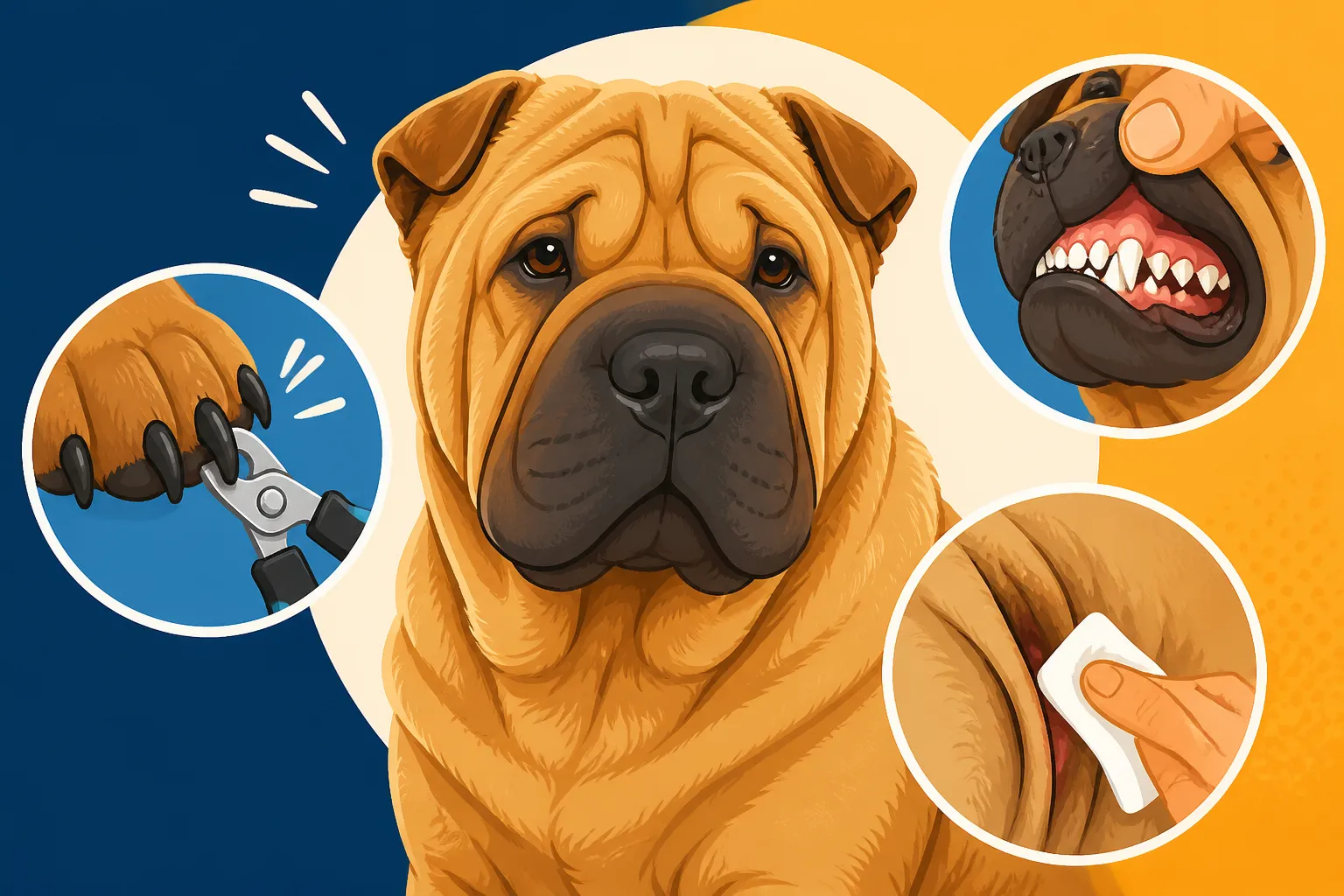
Understanding a dog's nail is key to confident trimming. Each nail consists of a hard outer shell and an inner core called the "quick." The quick contains blood vessels and nerves, and cutting into it is painful and will cause bleeding. On light-colored nails, the quick appears pink; on dark nails, it's much harder to see, appearing as a dark center when you look at the cut surface. The quick grows with the nail, so if nails are allowed to get long, the quick will also lengthen, making it harder to trim them back without causing discomfort. This is why regular, even small, trims are so important – they encourage the quick to recede over time.
Tools and Techniques for Trimming
There are a few types of nail trimmers available, and finding what works best for you and your Shar Pei is crucial. Guillotine-style trimmers are popular for their sharp, clean cut, while scissor-style clippers can offer more control for some. A Dremel or other rotary tool can also be an excellent option, as it grinds the nail down gradually, reducing the risk of hitting the quick and often being less alarming for dogs than the "snip" of clippers. Whether a Dremel Suits a Shar Pei's Nails is a common question, and for many, it's a great solution.
When trimming, the goal is to take off small amounts frequently. For clippers, hold the paw firmly and snip off just the very tip, before the quick. If you're unsure, it's always better to take too little than too much. For a Dremel, hold the nail and grind from the bottom up, rounding the tip. Always have styptic powder or cornstarch on hand in case you accidentally cut into the quick. Positive reinforcement, with lots of praise and treats, will make this a much more pleasant experience for your Shar Pei. Start slow, do just one or two nails if that's all your dog tolerates, and gradually build up to doing all of them.
Dealing with Overgrown Nails and the Quick
If your Shar Pei's nails are already quite long, the quick will have grown out too, making it difficult to get them to a healthy length in one go. You'll need to trim frequently – perhaps every few days – taking off just the very tip each time. This gradual trimming encourages the quick to recede over weeks and months. It takes patience, but it's vital. Overgrown nails can cause severe discomfort, splay the toes, and even lead to painful paw injuries. They can also affect your Shar Pei's balance and gait, putting strain on their joints. Don't hesitate to ask your vet or a professional groomer for a demonstration or to help get them started. They can show you exactly where to cut and offer tips for handling your dog. Products from places like Chewy or Amazon often include guillotine clippers or Dremel-style grinders, making it easy to find what you need.
Dental Health: More Than Just Bad Breath
"Dog breath" is a cliché, but for many Shar Pei owners, it's a very real and unpleasant reality. What many don't realize is that bad breath is often the first sign of dental disease, a condition that affects a vast majority of adult dogs. Just like in humans, proper oral hygiene is crucial for preventing plaque and tartar buildup, which can lead to painful infections and even systemic health problems. Your Shar Pei's mouth is a window into their overall health, and neglecting it can have far-reaching consequences.
Common Dental Issues in Shar Pei
Shar Pei are unfortunately prone to several dental problems, sometimes exacerbated by their unique skull structure and skin folds that can trap food debris around the lips. The most common issue is periodontal disease, which includes gingivitis (inflammation of the gums) and periodontitis (destruction of the tissues supporting the teeth). This starts with plaque, a sticky film of bacteria, which hardens into tartar. Tartar then irritates the gums, causing them to become red, swollen, and bleed easily. Left untreated, the infection can spread beneath the gum line, destroying the bone and ligaments that hold teeth in place, eventually leading to tooth loss. Beyond periodontal disease, Shar Pei can also suffer from fractured teeth, abscesses, and oral masses, some of which may be cancerous. Regular checks are vital.
Brushing and Preventative Home Care
The absolute best way to prevent dental disease at home is daily tooth brushing. Yes, daily! This sounds daunting, but with patience and positive reinforcement, most dogs can learn to tolerate it. Start slowly, introducing a dog-specific toothpaste (never use human toothpaste) and a finger brush or soft-bristled dog toothbrush. Let your Shar Pei lick the toothpaste, then gently rub it on their teeth. Gradually increase the duration and coverage. Focus on the outside surfaces of the teeth, especially the canines and molars, where tartar tends to build up most rapidly.
Beyond brushing, there are other preventative measures. Dental chews and treats designed to reduce plaque can be helpful, but they are never a substitute for brushing. Water additives, oral rinses, and specialized dental diets can also play a role, but their effectiveness varies. Always look for products with a Veterinary Oral Health Council (VOHC) seal of acceptance, which indicates they meet standards for plaque and tartar reduction. You can find many of these preventative tools and special dental chews on pet supply sites like Chewy or Amazon.
Professional Dental Cleanings and Costs
Despite your best efforts at home, most Shar Pei will eventually need professional dental cleanings. These cleanings are performed under anesthesia by your veterinarian. Anesthesia allows for a thorough examination of the entire mouth, including below the gum line, and allows for scaling away tartar, polishing the teeth, and taking dental X-rays to assess the health of the tooth roots and jawbone. If needed, extractions or other dental procedures can be performed at the same time. The cost of a professional dental cleaning can vary significantly based on your location, the clinic, and the extent of dental disease, especially if extractions are required. What a Shar Pei's Dental Costs can be substantial, reinforcing why preventative home care is so important for keeping those bills lower and your dog healthier. Your vet will recommend how often your individual Shar Pei needs these professional cleanings, typically annually or every few years, depending on their dental health status.
Eye and Ear Maintenance: Specific Shar Pei Challenges
The Shar Pei's distinctive features, while charming, unfortunately predispose them to specific eye and ear challenges. Their deep-set eyes and often heavy head wrinkles can lead to issues like entropion, while their notoriously narrow ear canals are practically an open invitation for infections. These areas require diligent, proactive care to prevent discomfort, pain, and potentially serious long-term damage.
Gentle Eye Wipes and Tear Stain Management
Many Shar Pei have deep-set eyes or prominent brow wrinkles that can cause tears to collect in the folds around their eyes. This moisture creates a breeding ground for bacteria and yeast, leading to tear staining and sometimes even mild skin irritation. While severe tearing might indicate an underlying issue like entropion (especially in puppies, where Entropion in a Shar Pei Puppy Is an Emergency, Not a Cosmetic Issue), regular wiping is essential for basic hygiene.
Use a soft, damp cloth or veterinary-approved eye wipes to gently clean around your Shar Pei's eyes daily. Be careful not to rub directly into the eye itself. For tear stains, there are various products designed to help, but consistency is key. Some owners find that a change in diet can help reduce tear staining, while others rely on specific wipes or gentle cleansers. Always ensure any product you use is safe for use around the eyes and free from harsh chemicals that could cause irritation.
The Unique Shar Pei Ear Canal: Cleaning and Inspection
If there's one anatomical feature that causes more headaches (and vet bills!) for Shar Pei owners, it's those incredibly narrow ear canals. A Shar Pei Has the Narrowest Ear Canals of Any Breed, which means air circulation is poor, and moisture and debris get trapped easily, creating a perfect environment for yeast and bacterial infections. This isn't just an occasional nuisance; chronic ear infections are a common and debilitating problem for the breed.
Regular ear inspection and cleaning are non-negotiable. Aim to check your Shar Pei's ears a few times a week, looking for redness, swelling, discharge, or any foul odor. If you notice any of these signs, it's time for a vet visit, as an infection is likely brewing. For routine cleaning, use a veterinary-approved ear cleaner. Apply the cleaner into the ear canal, gently massage the base of the ear for 30 seconds to help break up debris, and then let your Shar Pei shake their head. Finally, use a soft cotton ball or gauze to wipe away any excess cleaner and loosened debris from the outer ear flap and opening of the canal. Why Cotton Swabs Are Wrong for a Shar Pei's Ear is because they can push debris further into the narrow canal and even damage the delicate eardrum.
Addressing Early Warning Signs
Being vigilant about changes in your Shar Pei's eyes or ears can save them a lot of discomfort. For eyes, watch for excessive tearing, redness, squinting, or pawing at the face. These could indicate irritation, an ulcer, or the need for a re-tack. For ears, beyond the visual and olfactory cues, watch for head shaking, scratching at the ears, or holding one ear lower than the other. These are clear indicators of discomfort or pain. Don't wait to see if it gets better on its own; early intervention is almost always more effective and less invasive than treating a full-blown infection. Your vet might even recommend preventative ear drops or flushes if your Shar Pei is particularly prone to issues. Many specialized ear cleaners and gentle eye wipes are readily available from online retailers like Chewy or Amazon.
Other "Small Jobs" for a Shar Pei's Well-being
Beyond the more common grooming needs, there are a few other specific areas that require attention in a Shar Pei. These might not be daily tasks, but understanding them and knowing when to address them is part of being a responsible and proactive owner. They can often be uncomfortable or even painful for your dog if neglected.
Anal Gland Care: A Sometimes Unpleasant Necessity
This isn't the most glamorous topic, but it's an important one. Dogs have two small anal glands (sacs) located on either side of the anus. These glands naturally express a pungent, oily liquid during defecation, which serves as a scent marker. However, in some dogs, including Shar Pei, these glands may not express properly. This can lead to impaction, where the fluid becomes thick and painful, and if left untreated, can result in infection or even rupture, which is a serious emergency.
Signs that your Shar Pei might need their anal glands expressed include "scooting" their rear end across the floor, excessive licking or chewing at their rear, a strong fishy odor, or difficulty defecating. If you notice these signs, consult your veterinarian. They can manually express the glands and teach you how to do it if you're comfortable, or recommend a professional groomer who can perform the service. For some Shar Pei, dietary changes, such as adding more fiber (like pumpkin), can help promote natural expression. It’s definitely one of those jobs where you'll want to take a deep breath and often defer to a professional!
Wrinkle and Lip Fold Hygiene (Beyond Daily Wipes)
While we covered daily fold cleaning in the broader context of skin health, it's worth reiterating and expanding on for the "small jobs" list, particularly for the deep wrinkles around the muzzle and the lip folds. These areas are prone to trapping food particles, moisture, and saliva, creating a breeding ground for bacteria and yeast, leading to a condition known as skin fold dermatitis. This is especially true for the "meat mouth" variety of Shar Pei with more pronounced muzzle padding.
Beyond daily wiping with a gentle cleanser or medicated wipe, these areas sometimes need more attention. If you notice redness, a foul odor, or discharge, a more targeted approach might be needed. Your vet might prescribe specific antiseptic washes or ointments. After eating and drinking, it's a good idea to quickly wipe your Shar Pei's muzzle, especially if they are particularly wet around the mouth. Ensuring these areas are kept dry is paramount. Whether a Shar Pei's Muzzle Wrinkles Trap Food is a definite yes, so regular vigilance here is key to preventing irritation and infection.
Checking Paws and Pads
Your Shar Pei's paws are their primary mode of transportation, yet they often go unnoticed until a problem arises. Regular paw checks are quick, easy, and can prevent minor irritations from becoming painful injuries. After walks, especially on rough terrain or in extreme weather, take a moment to inspect your Shar Pei's paw pads. Look for cuts, scrapes, thorns, burrs, or any foreign objects lodged between the toes. Ice, hot pavement, and harsh chemicals (like de-icers) can all cause damage.
Also, pay attention to the hair growing between the paw pads. If it becomes too long, it can mat, collect debris, and make walking uncomfortable. You can carefully trim this hair with blunt-nosed scissors, being extremely cautious not to cut the pads themselves. Checking the nails (as discussed earlier) is part of this routine. Keep the pads moisturized with paw balm if they appear dry or cracked, especially in colder climates. These small, consistent checks ensure your Shar Pei can walk, run, and play comfortably.
Establishing a Routine: Consistency is Key
The secret to successfully managing all these "small jobs" for your Shar Pei isn't about tackling everything at once or being perfect. It's about consistency and making these tasks a normal, even pleasant, part of your dog's life. Think of it less as a chore and more as bonding time, a proactive measure to ensure their long-term health and happiness.
Creating a Grooming Schedule
A consistent schedule helps both you and your Shar Pei know what to expect. While some tasks, like eye wiping, might be daily, others like nail trims or ear cleaning can be weekly or bi-weekly. Dental brushing ideally happens daily, but even a few times a week is better than nothing. Sit down and map out a simple schedule that fits into your lifestyle. Maybe Monday is nail trim day, Wednesday is ear cleaning, and teeth are brushed every evening.
| Task | Frequency | Key Tools/Products | Primary Benefit |
|---|---|---|---|
| Eye Wiping | Daily | Soft damp cloth, pet-safe eye wipes | Prevents tear stains and irritation |
| Tooth Brushing | Daily (ideally) | Dog toothbrush/finger brush, dog toothpaste | Prevents plaque, tartar, and gum disease |
| Paw/Pad Check & Trim | Weekly-Bi-weekly | Blunt-nosed scissors, paw balm | Prevents injury, discomfort, and debris buildup |
| Nail Trimming/Grinding | Every 1-2 weeks | Nail clippers, Dremel, styptic powder | Prevents overgrown nails, pain, and gait issues |
| Ear Cleaning | Weekly-Bi-weekly | Vet-approved ear cleaner, cotton balls | Prevents ear infections, removes debris |
| Anal Gland Check | Monthly (or as needed) | Vet/Groomer assistance (if self-expression not preferred) | Prevents impaction and rupture |
Remember, this isn't set in stone. Your Shar Pei's individual needs might dictate more or less frequent attention for certain tasks. What's important is having a framework and sticking to it. How Often a Shar Pei's Nails Need Trimming will depend on their activity level and how quickly their nails grow, but frequent small trims are always best.
Positive Reinforcement and Desensitization
For many dogs, especially independent breeds like the Shar Pei, initial grooming experiences can be stressful. The key is to make it a positive experience through desensitization and positive reinforcement. Start early with puppies, handling their paws, ears, and mouth gently, even if you're not performing a full groom. Pair these interactions with high-value treats and praise.
When you do introduce a tool like nail clippers, let them sniff it, touch it to their paw without clipping, and reward them. Gradually build up to clipping one nail, then two, always ending on a positive note, even if you don't finish all nails in one session. Never force your Shar Pei; it can create a negative association that makes future grooming impossible. Patience, calm energy, and plenty of rewards (think Ollie's tasty treats!) will transform grooming from a dreaded chore into a regular, tolerable, and even enjoyable routine for your Shar Pei.
When to Seek Professional Help
While home grooming is essential, there are times when professional help is necessary or simply advisable. If you're struggling to trim your Shar Pei's nails safely, a groomer or vet tech can help. If your Shar Pei develops a persistent ear infection, chronic skin issue, or severe dental disease, your veterinarian is your best resource. They can diagnose underlying problems, prescribe appropriate medications, and perform necessary procedures. Don't feel guilty about needing professional assistance; it's a sign of a responsible owner who puts their dog's well-being first. Sometimes, a professional grooming session can reset a difficult situation, allowing you to maintain things more easily at home afterward.
Essential Grooming Supplies for Your Shar Pei
Having the right tools on hand makes these "small jobs" much easier and more effective. You don't need a huge arsenal of expensive equipment, but a few key items will be invaluable for maintaining your Shar Pei's health and comfort. Think of these as investments in your dog's well-being.
Must-Have Tools for Home Grooming
For nails, you'll want a sturdy pair of nail clippers (guillotine or scissor style, whichever you prefer) or a Dremel-style rotary tool. Don't forget styptic powder (or cornstarch) to stop any accidental bleeding. For dental care, a dog toothbrush (or finger brush) and a dog-specific toothpaste are non-negotiable. For ears, a good quality, vet-approved ear cleaner and cotton balls or gauze pads are essential. For eyes and folds, soft pet-safe wipes or a gentle, damp cloth will suffice. A fine-toothed flea comb can also be handy for checking around the eyes or in folds for any tiny irritants. Investing in quality products, often found on reputable pet supply sites like Chewy, will make the experience smoother for both you and your Shar Pei.
Selecting Safe and Effective Products
The pet market is flooded with grooming products, and it can be overwhelming to choose. Always prioritize products specifically designed for dogs. For shampoos, conditioners, and ear/eye cleaners, look for gentle, pH-balanced formulas that are free from harsh chemicals, dyes, and strong fragrances that could irritate your Shar Pei's sensitive skin. If your dog has known allergies or skin issues, your vet might recommend specific medicated products.
When choosing dental chews or water additives, look for the VOHC (Veterinary Oral Health Council) seal of acceptance, which indicates that the product has been proven to reduce plaque and/or tartar. Be wary of unverified claims. For any new product, test a small area first to ensure your Shar Pei doesn't have an adverse reaction. Reading reviews on platforms like Amazon can also provide insight, but always cross-reference with your vet's recommendations, especially for products related to specific health concerns. Remember, your Shar Pei's well-being is worth the extra effort to select the right, safe, and effective tools and products.
Disclaimer
This article is for general informational purposes only and does not constitute professional advice. Laws, prices and regulations vary by location and change over time. Consult a qualified professional for guidance on your specific situation.