How Many Minutes a Shar Pei Has in a Warm Car
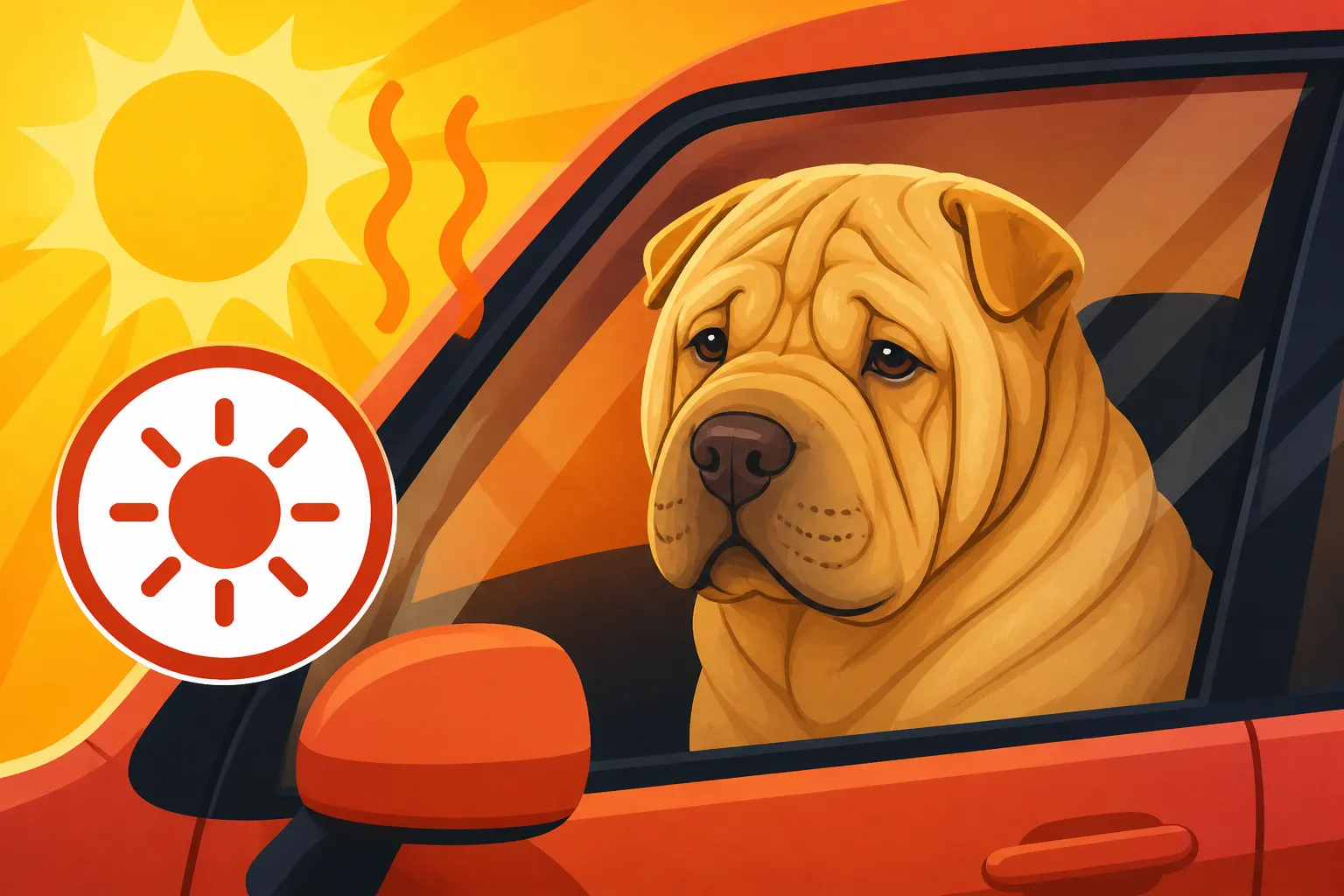
It’s a scenario no dog owner ever wants to face, yet it happens with heartbreaking regularity: leaving your beloved Shar Pei in a car that quickly becomes a death trap. The truth is, that seemingly harmless "five minutes" can escalate into a life-threatening situation faster than you can imagine, transforming your vehicle into an oven. This guide will delve deep into why Shar Pei are particularly susceptible to heatstroke in vehicles, what temperatures are truly dangerous, and crucially, how to prevent this entirely.
The Unique Vulnerabilities of a Shar Pei to Heat
Shar Pei are magnificent dogs, known for their distinctive wrinkles and loyal, sometimes aloof, personalities. However, their unique physical characteristics, which make them so endearing, also put them at a much higher risk for heat-related illnesses compared to many other breeds. Understanding these vulnerabilities is the first step in ensuring their safety.
Why a Shar Pei Overheats More Easily
Unlike dogs with longer snouts that allow for efficient panting and heat exchange, many Shar Pei possess what's often referred to as a "meat mouth" – a shorter, thicker muzzle. While not strictly a brachycephalic breed in the same category as a Bulldog or a Pug, their facial structure can still make their breathing less efficient, particularly when under stress or trying to cool down. When a dog pants, they circulate air over the moist surfaces of their tongue and respiratory tract, which helps evaporate moisture and release heat. A less efficient airway means less effective cooling, making it harder for them to dissipate heat from their bodies.
Beyond their muzzle, a Shar Pei's dense coat, even the shorter "horse coat" variety, acts as an insulating layer. While it offers some protection from the sun, it also traps body heat close to the skin. Their signature loose skin and numerous folds can also hold heat. These factors combine to create a dog that struggles significantly more than others to regulate its internal temperature when ambient temperatures rise. This means that a temperature that feels merely "warm" to you might be pushing your Shar Pei into a dangerous zone. How Easily a Shar Pei Overheats explains more about this inherent susceptibility.
The Speed at Which Car Interiors Heat Up
It's a phenomenon known as the greenhouse effect, and it's shockingly effective inside a car. When the sun's rays pass through your car windows, they heat the interior surfaces – the dashboard, seats, and floor. These warmed surfaces then radiate heat, but because the windows trap this heat inside, the temperature quickly skyrockets. Even on a mild 70-degree Fahrenheit day, the internal temperature of a car can reach 90 degrees in just 10 minutes and climb to well over 100 degrees within 30 minutes.
What’s even more insidious is that the rate of temperature increase is not linear; it rises most dramatically in the first 20-30 minutes. So, while you might think "I'll only be five minutes," the car's interior could already be 15-20 degrees warmer than the outside air by the time you return. This rapid, intense heat accumulation is what makes leaving a Shar Pei in a car so incredibly dangerous. They simply don't have the physiological mechanisms to cope with such a rapid and extreme thermal change.
Danger Zones: What Constitutes a "Warm Car" for a Shar Pei?
The perception of what constitutes a "warm car" for a human is vastly different from what it means for a Shar Pei. We sweat; dogs pant. We can open a door and step out; they are confined. This fundamental difference means we must always err on the side of extreme caution when it comes to our wrinkled friends.
Defining Dangerous Temperatures
For a Shar Pei, any outdoor temperature above 70 degrees Fahrenheit (approximately 21 degrees Celsius) should be considered a red flag for car confinement, even with a window cracked. But truthfully, even below this, on a sunny day, the internal temperature can climb. It's not just about the thermometer; factors like direct sunlight, humidity, and the car's color all play a role. A dark-colored car parked in direct sun on a 65-degree day can still reach dangerous internal temperatures quickly. What Temperature a Shar Pei Is Comfortable In delves into their general temperature preferences.
The critical point is that a car's interior can become deadly long before it feels uncomfortably hot to a person stepping into it briefly. Your Shar Pei, with its less efficient cooling system, will feel the effects much sooner and much more intensely. It's a cruel trick of physics that turns a benign environment into a life-threatening one in a matter of minutes, not hours. There's truly no safe outdoor temperature to leave a Shar Pei in a parked car, especially on a sunny day.
The Illusion of Safety: Cracking Windows and Shade
It's a common, yet fatal, misconception: "I cracked the windows, it'll be fine." Unfortunately, studies have repeatedly shown that cracking windows, even several inches, provides negligible ventilation and does almost nothing to reduce the internal temperature of a car. The small amount of air circulation simply isn't enough to counteract the powerful greenhouse effect. It might offer a tiny psychological comfort to the owner, but for the dog, it's still an oven.
Similarly, parking in the shade offers only a temporary reprieve. As the sun moves, so does the shade. What was a shaded spot can quickly become a sun-drenched inferno. Even if the shade holds, the ambient temperature of the air is still what matters, and if it's warm, the car will still absorb and retain heat. The only true safety measure is to never, ever leave your Shar Pei unattended in a vehicle, regardless of the weather conditions or how briefly you think you'll be gone. Heat Management Is Daily Work With a Shar Pei emphasizes the constant vigilance required.
| Outdoor Temperature (Fahrenheit) | Car Interior Temperature after 10 min | Car Interior Temperature after 20 min | Car Interior Temperature after 30 min | Car Interior Temperature after 60 min |
|---|---|---|---|---|
| 70 | 89 | 94 | 99 | 104 |
| 75 | 94 | 100 | 105 | 110 |
| 80 | 99 | 105 | 110 | 115 |
| 85 | 104 | 110 | 115 | 120 |
| 90 | 109 | 115 | 120 | 125 |
Note: These are approximations based on typical studies and can vary depending on car color, humidity, and sun intensity.
Recognizing and Responding to Heatstroke in a Shar Pei
Because a Shar Pei can overheat so quickly, it's absolutely vital for owners to recognize the signs of heatstroke and know how to respond immediately. Time is of the essence, and swift action can truly be the difference between life and death.
Early Warning Signs of Overheating
The first signs of overheating in a Shar Pei might seem subtle, but they escalate with terrifying speed. You'll likely notice excessive panting, often sounding more labored than usual, as if they're struggling for breath. Their tongue might appear unusually red or darker, and they may be drooling much more than normal. Their gums can also become bright red. As heatstroke progresses, these early signs give way to more severe symptoms.
Look for lethargy, weakness, and a general lack of coordination. Your Shar Pei might stumble, appear wobbly, or even collapse. Vomiting and diarrhea are also common as their internal organs begin to shut down. In severe cases, they may experience seizures, muscle tremors, or even lose consciousness. If you see any of these signs, especially after they've been in a warm environment, assume the worst and act immediately. How to Cool a Shar Pei Down offers initial steps, but nothing replaces veterinary care.
Emergency Measures to Cool Your Shar Pei
If you suspect your Shar Pei is suffering from heatstroke, immediate action is paramount. First and foremost, get them out of the hot environment. Move them to a cool, shaded area, ideally indoors with air conditioning. Don't panic, but act with urgency. Offer them small amounts of cool (not ice cold) water to drink, but don't force it, as they could choke.
Next, begin to cool their body. Wet towels with cool water (again, not icy, as extreme cold can constrict blood vessels and hinder cooling) and place them on their body, focusing on areas with large blood vessels like the neck, armpits, and groin. You can also gently spray their paw pads with cool water. You must seek veterinary attention immediately, even if your dog appears to be recovering. Internal damage from heatstroke can be subtle but severe, affecting organs like the kidneys and liver, and often only a vet can properly assess the full extent of the harm.
Best Practices for Traveling with a Shar Pei in Warm Weather
Given their heightened susceptibility, special considerations are crucial when traveling with your Shar Pei, especially during warmer months. Prevention is always the best medicine when it comes to heatstroke.
Avoiding Car Confinement Altogether
The simplest and most effective rule is this: If you cannot take your Shar Pei with you, do not bring them in the car. Errands like grocery shopping, visiting friends who aren't dog-friendly, or appointments where your dog isn't welcome are reasons to leave your Shar Pei comfortably at home. Even a quick stop for a coffee can turn disastrous. Your dog’s safety is far more important than a few minutes of convenience.
If you're planning a day trip or vacation, research pet-friendly destinations, hotels, and restaurants beforehand. If staying home isn't an option, consider hiring a trusted pet sitter or boarding your Shar Pei at a reputable, air-conditioned facility. Remember, the goal is to eliminate any scenario where your Shar Pei might be left alone in a parked car, even for a moment. This proactive approach saves lives and prevents untold heartache.
Essential In-Car Cooling Strategies
When traveling in a car with your Shar Pei, particularly in warmer weather, a few key strategies can help keep them safe and comfortable. The air conditioning in your car is your best friend. Always ensure it's running efficiently, keeping the cabin cool, even for short drives. Avoid turning the AC off, even for a moment, if your Shar Pei is in the car. Whether Air Conditioning Is a Shar Pei Expense highlights this crucial cost.
Beyond the AC, consider using cooling aids. A cooling mat can provide a refreshing spot for your Shar Pei to lie on during longer journeys. You can find excellent options on platforms like Amazon or Chewy. Make sure to always have fresh water readily available in a spill-proof bowl. Portable travel bowls are a lifesaver for hydration on the go. Some owners even use cooling vests, which can be effective in lowering body temperature. These vests work by evaporation and can be a fantastic preventative measure, especially if you anticipate any exposure to higher temperatures. Ensure your Shar Pei has access to water during walks, too; Why a Shar Pei Should Not Be Walked at Midday offers more tips for warm weather exercise.
Disclaimer
This article is for general informational purposes only and does not constitute professional advice. Laws, prices and regulations vary by location and change over time. Consult a qualified professional for guidance on your specific situation.