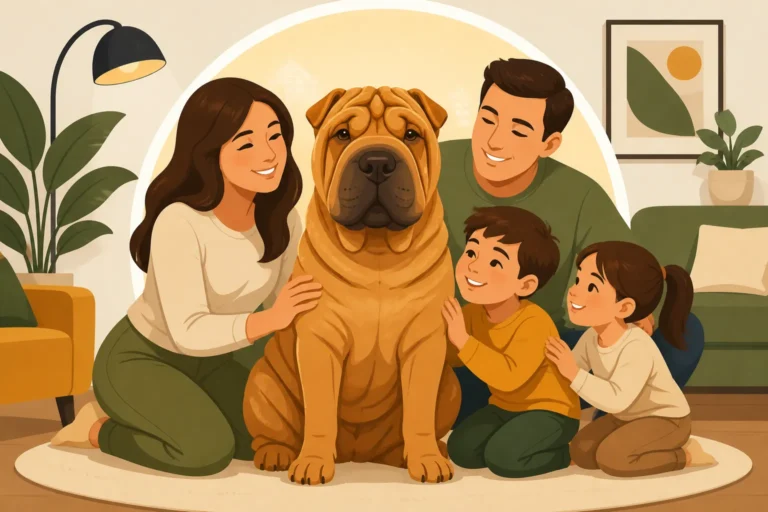
Shar Pei or Bulldog for a First Dog
Choosing between a Shar Pei and a Bulldog as a first dog is not just a choice between wrinkles and a broad, friendly face. Both can be loving companions, but each comes with health needs, training quirks, and daily-care demands that may surprise a new owner. This guide compares their temperaments and practical responsibilities so you can decide which better fits your home.
Shar Pei or Bulldog for a first-time owner
Temperament and everyday behavior
A Shar Pei often forms a close bond with its household but may be reserved around unfamiliar people. That independence can be appealing if you want a calm, devoted companion rather than a dog who greets every visitor enthusiastically. It can also make early socialization and patient, reward-based training especially important. A Shar Pei may need time and space to decide that a new person is safe.
English Bulldogs are commonly described as affectionate and people-oriented. Many enjoy being near their family and settle happily at home, but they are not automatically easy dogs simply because they can be less energetic. A Bulldog may be stubborn, and its eagerness to relax should not be mistaken for a lack of training needs. Both breeds benefit from clear routines, gentle handling, and expectations that remain consistent.
A first-time owner can do well with either breed, but should be comfortable reading dog body language and managing a dog who does not instantly cooperate. Shar Pei owners, in particular, should learn how the breed’s posture and facial features can make expressions harder to interpret. The guide Why a Shar Pei Is Hard to Read explores that challenge in more detail. For a broader look at the breed’s fit for inexperienced owners, see Whether a Shar Pei Suits a First Time Owner.
Social life, visitors, and other dogs
A Shar Pei may be watchful around visitors and selective about other dogs. A well-socialized dog is not necessarily going to enjoy being crowded by strangers or repeatedly approached by unfamiliar dogs. Calm introductions, a secure leash, and permission to step away are practical necessities, not signs of failure. The article Dog to Dog Is the Shar Pei Problem, Not Dog to Person explains why dog-to-dog interactions deserve particular attention.
Bulldogs are often more openly sociable with people, though individual personalities vary. That does not mean every Bulldog will be relaxed with every dog, child, or busy social setting. A dog’s background, health, past experiences, and training all matter. With either breed, look for a puppy or adult whose temperament suits your household rather than assuming that a breed label guarantees a particular personality.
If you frequently host guests, live in a busy building, or want a dog to join you at crowded events, consider how each individual dog handles noise, touch, and unfamiliar people. A reserved Shar Pei may prefer a quiet introduction and a place to retreat. A Bulldog may enjoy company but need careful supervision if excitement or physical exertion worsens breathing or discomfort.
Health and care needs to weigh carefully
Different health concerns, real responsibilities
Shar Pei care can involve recurring attention to skin, ears, and eyes. Deep folds can hold moisture and debris, while narrow ear canals can make ear problems difficult to spot or manage. Some Shar Pei also experience Familial Shar Pei Fever, an inherited inflammatory condition that needs veterinary attention and appropriate follow-up. These risks do not mean every Shar Pei will develop every problem, but they are important to discuss with a breeder, rescue, and veterinarian.
Bulldogs have their own substantial health considerations. Their short muzzles can contribute to breathing difficulties, and they can struggle in heat or with strenuous activity. Skin folds may also need routine care. Before choosing one, ask what health screening and veterinary records are available, and talk with a veterinarian about what signs should prompt an appointment. For a comparison of the Shar Pei’s body type and breathing, see Whether a Shar Pei Is a Brachycephalic Breed. For a closer look at common care responsibilities, see What Being Saved Did to the Shar Pei's Health and The Shar Pei Against a Bulldog.
Neither breed should be chosen on the assumption that a cute puppy will stay healthy without extra planning. Ask about the parents’ health and temperament, what conditions have appeared in the family, and what support the breeder or rescue provides if a problem emerges. A responsible source should be willing to have a detailed, unhurried conversation rather than brushing off questions as unnecessary worry.
| Consideration | Shar Pei | English Bulldog |
|---|---|---|
| Typical social style | Often reserved with strangers; may be selective with dogs | Often people-oriented; individual dog and socialization matter |
| Training approach | Patient, consistent, reward-based training; early socialization matters | Gentle, consistent training; short sessions can help maintain interest |
| Health planning | Pay close attention to skin, ears, eyes, and breed-related fever history | Discuss breathing, heat tolerance, skin folds, mobility, and overall health |
| Exercise and weather | Regular moderate activity, adjusted for heat and the individual dog | Gentle activity; avoid overexertion and manage heat carefully |
| Good fit to consider | A household prepared for a more independent, watchful dog | A household prepared for a people-focused companion with specific health needs |
Grooming, heat, and the everyday routine
Neither dog needs elaborate styling, but “low-maintenance coat” does not mean “no maintenance.” A Shar Pei’s folds should be checked for irritation, dampness, odor, or discharge. Its ears need attention without pushing cotton swabs or other objects into the canal. Routine grooming should be calm and gentle, especially if your dog is sensitive about being handled. What a Shar Pei's Skin Tells You Before Its Behavior Does offers more detail on noticing changes early.
Bulldog folds also need careful inspection and thorough drying, and heat management is a major part of responsible care. A shaded walk in comfortable weather is very different from a long outing on a hot afternoon. Shar Pei owners should also take heat seriously; Heat Management Is Daily Work With a Shar Pei explains why weather and activity plans matter for this breed.
Think about the routine you can actually maintain. Could you calmly check your dog’s skin and ears? Are you willing to shorten an outing when the weather is uncomfortable or your dog seems tired? Do you have time for grooming practice, routine veterinary appointments, and follow-up if a problem develops? If you order food or grooming basics through a retailer such as Chewy, keep your veterinarian’s instructions and your dog’s existing diet in mind when replacing supplies. The useful choice is the routine that supports your dog’s health, not the most convenient product list.
Training and home life with either breed
What a first-time owner should be ready to teach
Both breeds need more than a backyard and a comfortable bed. Teach basic cues, loose-leash walking, calm greetings, and cooperation with everyday handling. Keep lessons brief and positive. If your dog turns away, freezes, or seems uncomfortable, pause and make the task easier instead of trying to push through. That approach builds trust and can make future grooming and veterinary care less stressful.
For a Shar Pei, introduce people, dogs, sounds, and places gradually and thoughtfully. The aim is not to make the dog greet everyone; it is to help it stay composed and feel safe in ordinary situations. For a Bulldog, focus on the same foundations while paying attention to physical comfort. Training should not become a reason to push a dog to exercise when it is overheated, struggling to breathe, or showing signs of fatigue.
A good puppy class or qualified reward-based trainer can help you understand your dog’s signals and set realistic goals. Choose someone who is comfortable adapting lessons to the dog in front of them. If you are considering a rescue, ask what the dog has already experienced and whether staff or foster carers can describe its behavior around visitors, handling, and other animals.
Matching the dog to your household
A Shar Pei may suit someone who appreciates a loyal, independent dog and is willing to create thoughtful introductions. It may be a less comfortable match for a home where lots of people expect to touch or hug the dog, or where unfamiliar dogs regularly rush into its space. A Bulldog may suit someone seeking a more openly people-focused companion, provided they can meet its health, comfort, and veterinary needs.
In a family with children, adult supervision is essential with either breed. Teach children not to climb on, corner, hug, disturb, or approach a sleeping dog. Give the dog a quiet area where it will not be followed. For Shar Pei-specific family considerations, read Whether a Shar Pei Suits a Family With Toddlers. The breed’s traditional role and general character are also explored in The Household a Shar Pei Was Built For.
Your schedule matters, too. If you work long hours, plan for bathroom breaks, companionship, enrichment, and a gradual approach to alone time. If you live in a warm climate, have limited access to climate-controlled indoor space, or want a dog for long hikes and runs, consider whether either breed’s needs fit your plans. The right match is not just about which dog you like more; it is about which dog you can care for well on an ordinary Tuesday.
How to make the decision with confidence
Questions to ask before bringing a dog home
Meet the dog when possible and watch how it responds to ordinary handling, new people, and changes in the environment. Ask a breeder or rescue about health history, behavior, veterinary care, and the support available after adoption. For a puppy, ask what the breeder has done to support early socialization and whether the parents’ health and temperament are known. For an adult dog, ask about its established routine, triggers, and experience living with children or other pets.
Be candid about your own limits. If ongoing veterinary care would be difficult to manage financially or logistically, talk with a veterinarian about the kinds of care each breed may need before deciding. The article Whether a Shar Pei Is an Expensive Breed to Own can help you think through the broader ownership commitment. If you use an online retailer such as Chewy for regular food or supplies, remember that convenience does not replace veterinary guidance, especially when a dog has a medical condition or a prescribed diet.
A practical way to choose
Write down what you want from a first dog: easygoing greetings, quiet companionship, compatibility with other pets, manageable grooming, or a particular activity level. Then separate preferences from non-negotiables. For example, if you need a dog that can comfortably join strenuous outdoor activities in warm weather, neither breed may be the right fit. If you want a dog who welcomes frequent close contact from visitors, you will need to assess the individual dog carefully rather than relying on breed stereotypes.
Spend time with adult dogs of both breeds if you can. A puppy’s appearance can be captivating, but an adult dog’s behavior gives you a clearer view of its size, energy, and social style. Ask a veterinarian to help you understand the health questions that matter for the specific dog you are considering. Keep notes after meetings so that a memorable first impression does not outweigh practical observations.
There is no universally better first dog between a Shar Pei and a Bulldog. The better choice is the individual dog whose temperament, health needs, and daily routine fit your experience and home. A careful match, realistic expectations, and a plan for veterinary care matter more than choosing the breed that seems easiest on paper.
Disclaimer
This article is for general informational purposes only and does not constitute professional advice. Laws, prices and regulations vary by location and change over time. Consult a qualified professional for guidance on your specific situation.