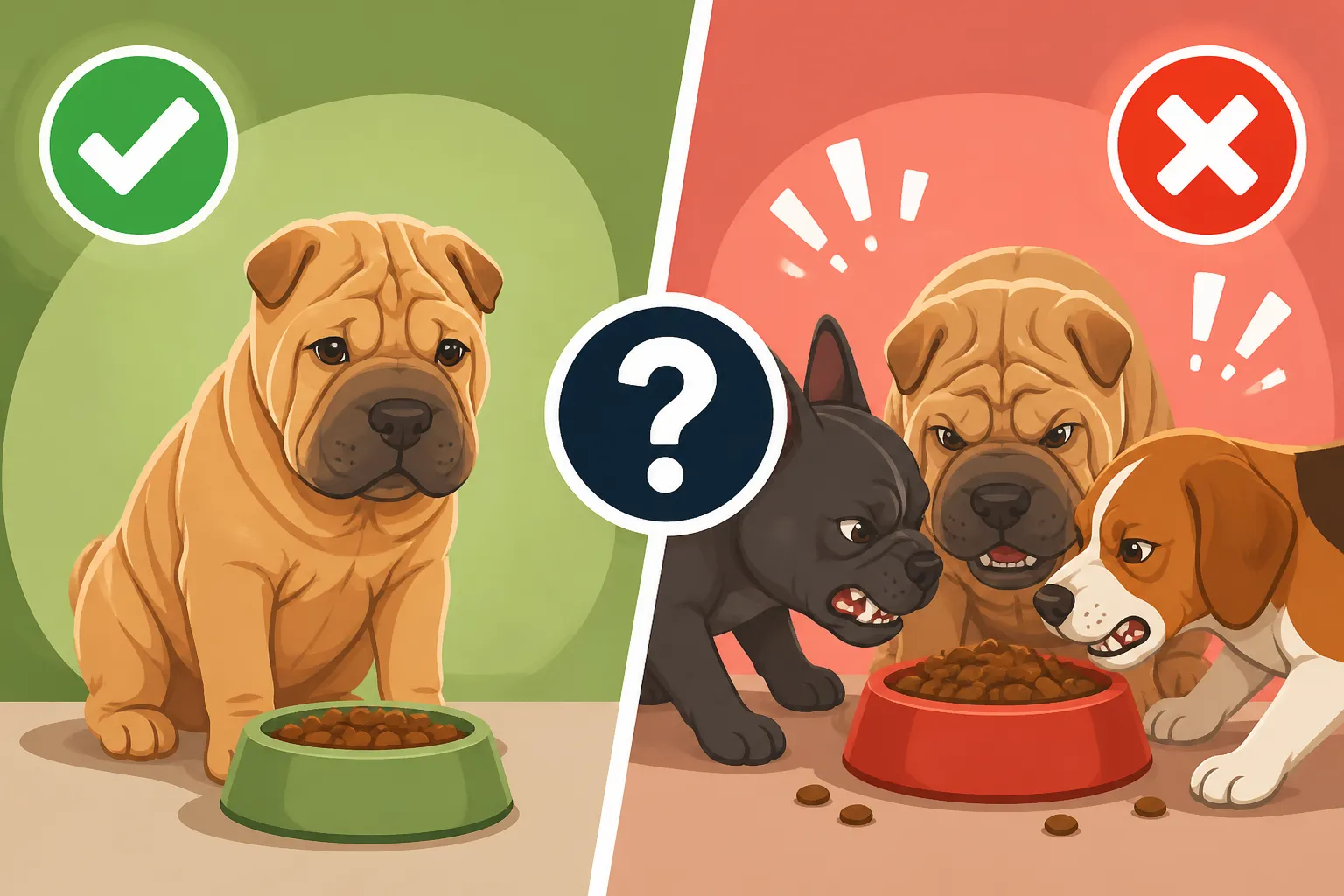
Whether a Shar Pei Should Be Fed Alone
Many Shar Pei owners find themselves walking on eggshells around mealtime, especially if they have a multi-pet household or even just curious children wandering through. It's truly frustrating when you simply want to provide nourishment for your beloved companion, but the air thickens with tension, leading to growls or even snapped jaws. This comprehensive guide will explore the nuances of why your Shar Pei might benefit significantly from eating alone, teach you how to recognize the subtle signs that they need their space, and offer practical, actionable ways to cultivate a calm, stress-free feeding routine for every member of your family, furry or otherwise.
The Instinctive Nature of a Shar Pei and Food Guarding
Let's be honest, our wrinkly friends carry a lot of ancient instincts within them. Shar Pei weren't originally bred to be docile, sit-on-the-sofa companions in the way some breeds were. They were guardians, hunters, and yes, sometimes even fighting dogs. This historical role means that resource guarding, which definitely includes their precious food, is often deeply rooted in their genetic makeup. It's not a flaw; it's a survival mechanism that, in the wrong context, can cause problems in a modern home.
Why Resource Guarding Isn't Always Aggression
It’s crucial to understand that resource guarding is a completely natural canine behavior. At its core, it's about protecting something valuable, whether that's a favorite toy, a prime sleeping spot, or, most commonly, food. For a Shar Pei, this natural inclination can be amplified, making them more prone to displaying guarding behaviors than some other breeds. But here's the kicker: a growl, a stiff body, or a hard stare isn't always outright aggression. Often, it's a warning, a way for your dog to communicate, "Hey, I'm uncomfortable, please give me space."
Think of it like this: if you were eating a delicious meal and someone kept reaching for your plate, you'd likely put up a boundary, right? A dog does the same thing. The difference lies in how they communicate that boundary and how we, as owners, interpret and respond to it. Distinguishing between a normal level of guarding – which might manifest as a subtle warning growl or a quick darting glance – and true aggression, such as lunging, snapping, or biting, is key. Many guarding behaviors are actually fear-driven or anxiety-driven, stemming from a deep-seated worry that their valuable resource will be taken away. It's rarely about malice; it's about self-preservation, and understanding this helps us approach the situation with empathy rather than frustration.
Early Signs of Food Anxiety
Catching food anxiety early can make all the difference in preventing it from escalating into more serious guarding issues. Because of their unique facial structure, reading a Shar Pei's body language can sometimes be a bit of a challenge. Their deep wrinkles can make subtle expressions harder to pick up on, which means you need to be extra vigilant. How a Shar Pei's Wrinkles Hide Its Expression
Before your Shar Pei ever lets out a growl, they'll likely be sending you a whole host of subtle signals that indicate their discomfort or anxiety around food. Look for cues like stiffening their body, freezing in position over their bowl, or giving a "hard stare" – where their eyes seem fixed and unblinking. You might notice quick lip licks, a yawn (when not tired), or even a subtle hunching over their food, almost like they're trying to cover it with their body. They might also eat noticeably faster when someone approaches, gulping down their meal as if in a race against time. Pay attention to "whale eye," where the whites of their eyes are visible at the corners, indicating stress. Observing these behaviors not just when they're actively eating, but also when food is being prepared or even just present in the room, can give you invaluable insight. Learning to read these early warnings is your superpower; it allows you to intervene and adjust the environment before your Shar Pei feels the need to escalate their communication to a growl or snap.
The Shar Pei's Historical Roots and Guarding Behavior
To truly understand why your Shar Pei might be so particular about their food, we need to take a quick trip back in time to their origins. The Shar Pei, translating roughly to "sand skin" due to their rough coat, hails from ancient China, where they were multipurpose farm dogs. Their jobs included hunting, herding, and, most notably, guarding. They were fiercely protective of their families, their homes, and their possessions. This history as guardians, not just of property but of resources, cemented a strong territorial instinct within the breed. What a Shar Pei Was Originally Bred to Do
In a historical context where food scarcity was a real concern, protecting a meal wasn't just a preference; it was essential for survival. This deep-seated instinct to guard valuable resources, including food, can still be incredibly strong in our modern Shar Pei, even if they've never missed a meal in their lives. They were quite literally A Shar Pei Was Bred to Guard, Not to Greet, and this deep-seated wariness of strangers and protection of their "pack" extends to anything they deem theirs. This inherent trait isn't something that can simply be trained out of them, but rather managed and redirected with understanding and careful environmental control. Recognizing this helps us move away from seeing their guarding as a personal affront and instead as a characteristic tied to their remarkable heritage.
Creating a Safe and Predictable Feeding Environment
Once you've wrapped your head around the why behind your Shar Pei's potential guarding, the next logical step is to create a feeding environment that minimizes their perceived need to guard. This is where the concept of feeding alone truly shines, transforming mealtime from a source of anxiety into a moment of peace for everyone involved. The goal is to remove any triggers that might cause your dog to feel threatened or competitive, allowing them to eat in complete comfort.
Choosing the Right Feeding Location
The location where your Shar Pei eats is paramount. Privacy is the absolute key to reducing their anxiety around food. Think about it: if you were eating a meal in a busy, chaotic environment, you might feel a little stressed, right? Your Shar Pei feels the same, but with higher stakes if they have guarding tendencies. Therefore, avoid high-traffic areas in your home, such as the kitchen, the living room where family congregates, or a hallway that people frequently walk through.
Instead, seek out a quiet, low-traffic spot. This might be a spare bedroom, a designated corner of a laundry room, or even their crate set up in a quieter part of the house. Crate Training a Shar Pei Puppy If you have multiple dogs, using different rooms or areas that are visually separated is even more critical. The idea is to create a "safe zone" where your Shar Pei can eat without any interruptions, perceived threats, or competition from other pets or family members. For those living in smaller apartments, this might require a bit more creativity, perhaps using a bathroom during meal times, or placing their crate in a bedroom and closing the door. The less your Shar Pei has to worry about someone or something approaching their food, the less likely they are to feel the need to guard it.
Establishing a Routine and Boundaries
Consistency is like a calming balm for a Shar Pei; it reduces uncertainty and anxiety, which are often at the root of guarding behaviors. Establishing a clear, predictable feeding routine is one of the most powerful tools you have. This means feeding your Shar Pei at roughly the same time each day, in the same designated safe place, and following the same procedure every single time. Predictability signals to your dog that everything is under control and their food isn't going anywhere.
Beyond the routine, establishing clear boundaries for humans is equally important. This is non-negotiable: no one should approach your Shar Pei's bowl while they are eating. This includes children, other adults, and other pets. Teach your family members this rule, and enforce it diligently. It builds trust, as your Shar Pei learns that when their bowl is down, it's truly theirs to enjoy in peace. You can also incorporate simple commands like "wait" or "stay" before you even place the bowl down. This reinforces that you are in control of the resource, but you are choosing to grant them access, which can subtly shift their mindset from needing to guard to trusting your provision. Discussion around feeding frequency, such as Whether a Shar Pei Should Be Fed Twice a Day, can also be part of establishing a consistent schedule that suits your dog's needs and your household's rhythm.
Managing Multiple Pets
If you share your home with more than one animal, managing mealtime carefully is absolutely essential, especially with a breed like the Shar Pei. For a Shar Pei, whose guarding instincts can be strong, feeding separately is almost always the safest and most stress-free strategy for everyone involved. It completely eliminates the potential for competition, standoffish behavior, or even outright fights over food.
The simplest way to achieve this is to feed your pets in different rooms. For example, your Shar Pei might eat in the kitchen while another dog is crated in the bedroom, and a cat might have its bowl on a counter or in a separate, quiet utility room. Using baby gates can also be incredibly effective for creating physical barriers that allow each animal to eat undisturbed. Ensure that each pet has ample space and time to finish their meal without feeling rushed or threatened by the presence of another animal. Even if your dogs seem to get along fine and have never shown signs of aggression, prevention is always better than cure. Imagine having two Shar Pei in the house; one might be perfectly fine with sharing space, while the other might be a silent guarder. Separating them proactively removes any latent tension. The Shar Pei in a Multi Dog Household This approach fosters a calmer environment for all your pets and reinforces the idea that each animal has secure access to their own resources, thereby reducing any underlying anxiety or the need to compete.
Practical Strategies for Feeding Your Shar Pei Alone
Simply setting up a separate feeding spot is a fantastic first step, but we can do even more to build profoundly positive associations with mealtime and prevent any issues from surfacing. These strategies are all about communication and creating an environment where your Shar Pei feels not just safe, but genuinely happy and relaxed about their food.
Desensitization and Counter-Conditioning
This might sound like a mouthful, but desensitization and counter-conditioning are powerful tools that, when used patiently and correctly, can fundamentally change your Shar Pei's emotional response to people being near their food bowl. The goal is to transform their negative, guarded reaction into a positive one. Instead of seeing an approaching human as a threat to their meal, they learn to associate that approach with even better things happening.
Here's how it generally works: You start by approaching your Shar Pei before they've started eating, or while they are eating a small portion of their meal. As you get close (but not so close that they react negatively), you drop a high-value treat – think tiny pieces of cooked chicken, cheese, or their absolute favorite morsel – directly into their bowl. Then, you immediately back away. The key is to teach them that your presence, especially when you're leaving, means more good stuff magically appears, not that their food is being taken away. Repeat this many, many times, over many sessions, gradually increasing your proximity and the duration of your presence near the bowl. Never push too far too fast; the moment your Shar Pei shows any sign of tension, you've gone too far, too quickly. The process requires immense patience and consistency, but it slowly, positively rewires their brain to welcome your approach. Remember, a Shar Pei might not be the fastest learner in every aspect, but they are smart. How Long a Shar Pei's Training Session Should Be This isn't about dominance; it's about building trust and showing them that you are a provider, not a taker.
Tools and Techniques for a Peaceful Mealtime
Beyond the behavioral strategies, there are some really helpful tools and techniques that can make a huge difference in creating a calm and secure mealtime for your Shar Pei. These are often easy to integrate into your daily routine and can provide immediate benefits.
One common issue with Shar Pei is that some can "bolt" their food, eating incredibly quickly. This can actually exacerbate guarding behavior because they rush to finish before anyone can possibly take it. Slow feeder bowls are fantastic for this. They have ridges or mazes inside that force your dog to eat more slowly, making mealtime last longer and reducing that frantic feeling. Popular brands like Outward Hound make excellent ones, readily available on online retailers like Amazon or Chewy.
Another great technique is to make mealtime an engaging, solitary activity using interactive toys. Filling a Kong or a treat puzzle with part of their meal (especially if it's wet food or kibble moistened with a little broth) can keep them happily occupied and focused on their food for a longer period, reducing the likelihood of them looking up and feeling threatened.
If your Shar Pei is particularly anxious around food, or perhaps just a little finicky, offering a high-value food can make mealtime a more positive experience. Some owners find that fresh, human-grade food options, which often smell and taste more appealing, can make a difference. Services like Ollie deliver fresh dog food right to your door, offering palatable choices that can transform a hesitant eater into an eager one. Always supervise your Shar Pei, especially in the initial stages of implementing these new tools and routines, to ensure they are comfortable and responding positively. Sometimes, simple management – consistently putting them in their own feeding space – is the most effective approach, preventing any issues from even starting.
When to Seek Professional Help
While these strategies can go a long way, it's crucial to know your limits and recognize when you need to bring in the pros. If your Shar Pei's food guarding is severe – meaning it involves snapping, biting, or rapid escalation of growling and aggressive body language – then it's absolutely essential to seek help from a certified professional dog trainer or a veterinary behaviorist. Do not try to "fix" severe aggression on your own, as this can be dangerous and may inadvertently make the problem worse.
A professional will be able to assess your Shar Pei's specific situation, identify the root causes of their guarding, and develop a tailored training plan that prioritizes safety for everyone in the household. They can guide you through advanced counter-conditioning techniques and provide hands-on coaching that you might not get from online resources alone. Ignoring severe guarding can lead to dangerous situations, potential injury to family members (especially children, if Resource Guarding Around Children in a Shar Pei is an issue), and ultimately erode the bond of trust you share with your dog. Remember, some behaviors are deeply ingrained, particularly in a breed with such strong protective instincts, and truly require expert intervention to manage effectively and safely. Getting help isn't a sign of failure; it's a responsible choice that ensures the well-being of your beloved Shar Pei and your family. When a Shar Pei Needs a Behaviorist
Feeding Scenarios and Recommended Actions
To summarize the best approaches for different household dynamics, here's a quick overview:
| Scenario | Recommended Action | Why it Helps | Potential Risks (if not addressed) |
|---|---|---|---|
| Single Shar Pei, no prior guarding issues | Designated quiet spot, consistent routine | Predictability reduces anxiety, builds trust | Can still develop guarding if startled or if routine is inconsistent |
| Single Shar Pei, mild guarding tendencies | Feed in separate, isolated room; no interruptions | Eliminates perceived threat, builds positive association with eating | Escalation of guarding if forced interaction continues |
| Multiple dogs, no guarding issues present | Separate bowls with ample space between, calm supervision | Prevents competition, promotes peaceful coexistence | Competition can unexpectedly arise, leading to stress or conflict |
| Multiple dogs, with one or more showing guarding | Each dog in separate room/crate with strict boundaries | Eliminates direct competition, ensures safety for all animals | Fights, injuries, severe stress for all dogs, household tension |
| Shar Pei in a home with young children | Strict "no approach" rule for children, feed alone in a secured area | Ensures child safety, prevents guarding towards the child, teaches respect | Child bitten, dog rehomed, severe trust breakdown, legal issues |
Disclaimer
This article is for general informational purposes only and does not constitute professional advice. Laws, prices and regulations vary by location and change over time. Consult a qualified professional for guidance on your specific situation.