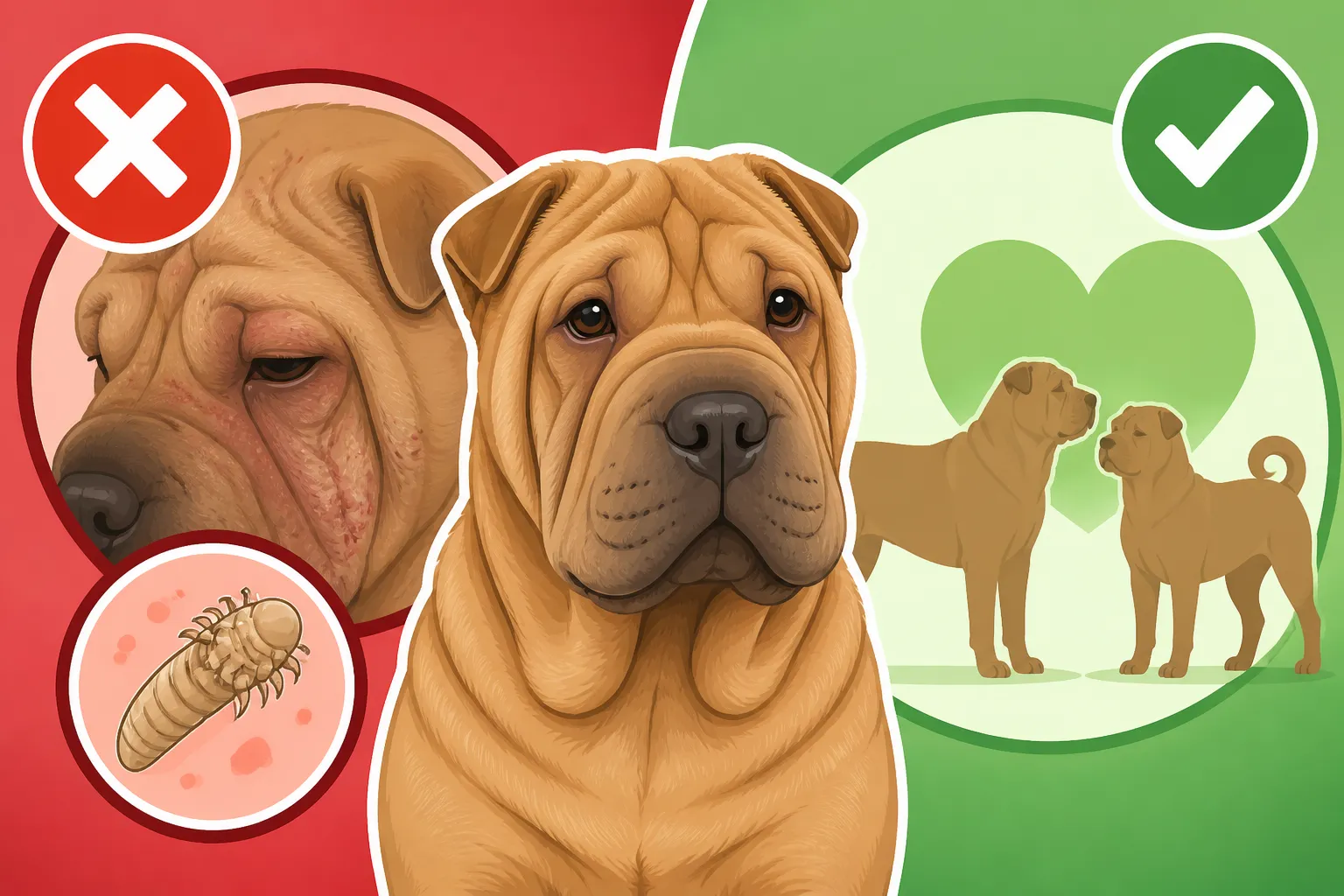
Whether a Shar Pei With Demodex Should Be Bred
It's absolutely heartbreaking to see your beloved Shar Pei suffering from skin issues, especially something as persistent and distressing as Demodectic mange. When you've poured your heart and soul into their well-being, the thought of them carrying a genetic predisposition can be incredibly frustrating, and it naturally brings up tough questions about breeding. This guide is here to shed light on the complexities of Demodex in Shar Pei and help you navigate the responsible decisions around breeding.
Understanding Demodectic Mange in Shar Pei
Demodectic mange, often just called "Demodex," is a condition that, for many owners, feels like a constant battle against an unseen enemy. It’s not just an irritation; it can cause significant discomfort, hair loss, and secondary infections, turning your dog's skin into a painful mess. Understanding what it is and why our wrinkled friends are so prone to it is the first step.
What is Demodex and Why Shar Pei Are Susceptible?
Let's clear up a common misconception right away: Demodex is not contagious like sarcoptic mange, and it's not caused by poor hygiene. Every single dog, including humans, carries tiny cigar-shaped mites called Demodex canis on their skin. These microscopic creatures live harmlessly within hair follicles. The problem only arises when a dog's immune system, for whatever reason, fails to keep the mite population in check, leading to an overgrowth.
For Shar Pei, this isn't just a random occurrence; there's a well-documented genetic predisposition at play. Our breed, with its unique immune system quirks and sometimes challenging skin environment, is unfortunately highly susceptible. This isn't about being weak; it's about a specific immune system defect that prevents the body from mounting an effective response against these mites, allowing them to proliferate unchecked. This genetic link is crucial when we start talking about breeding. It's not just an unlucky roll of the dice; it's often something passed down through generations.
The Different Forms of Demodectic Mange
Demodex isn't a one-size-fits-all condition; it manifests in different ways, each with varying implications for your dog's health and, importantly, for any potential breeding decisions. Understanding these distinctions is key to making informed choices.
The milder form is localized demodectic mange. This typically presents as a few small, patchy areas of hair loss, often around the face, especially the eyelids, lips, and front legs. These spots might be a little red or scaly, but usually aren't intensely itchy. In many cases, especially in puppies, localized Demodex can resolve on its own without extensive treatment, as the puppy's immune system matures and learns to control the mites. However, even these seemingly minor cases warrant attention because they can sometimes progress. For a Shar Pei, whose skin is already a canvas for potential issues, even mild localized Demodex can feel worrying.
The more serious and concerning form is generalized demodectic mange. This involves larger areas of the body, multiple lesions, or even an entire body surface covered in hair loss, redness, scales, crusts, and often, secondary bacterial infections. These secondary infections can be intensely itchy, painful, and emit a foul odor, making your Shar Pei truly miserable. Generalized Demodex can appear in puppies (juvenile onset) or in older dogs (adult onset). Juvenile onset generalized Demodex is particularly relevant to breeding discussions because it almost always points to an inherited immune defect. Adult onset can also have a genetic component but sometimes signals an underlying systemic disease (like Hypothyroidism and IgA Deficiency in a Shar Pei or cancer) that's suppressing the immune system, making the dog vulnerable.
Diagnosing and Treating Demodex
When you suspect your Shar Pei might have Demodex, a visit to the vet is absolutely essential. Don't try to self-diagnose or treat with over-the-counter remedies, as you could delay proper diagnosis and worsen the condition. Your veterinarian will typically perform a simple, quick, and non-invasive procedure called a "skin scrape." This involves gently scraping the surface of the skin with a blade (usually dulled) to collect skin cells and mites, which are then examined under a microscope. Multiple scrapes from different affected areas are often necessary to ensure an accurate diagnosis.
Once Demodex is confirmed, your vet will discuss treatment options. For localized cases, topical treatments, mild shampoos, or simply monitoring may be sufficient. For generalized cases, more aggressive treatment is required. Modern treatments often involve oral medications such as isoxazolines (e.g., Bravecto, NexGard, Simparica, Credelio), which are highly effective at killing the mites. Older treatments like Ivermectin or Milbemycin can also be used, though they require careful dosing and can have more side effects. Medicated baths with benzoyl peroxide shampoo might be prescribed to help deep clean the skin and address secondary infections. If bacterial skin infections are present, antibiotics will also be necessary. Treatment for generalized Demodex can be a long road, often lasting several months, with repeat skin scrapes needed to confirm the mites are gone before treatment is safely stopped. Relapses are possible, so vigilance and ongoing communication with your vet are crucial for your Shar Pei's comfort and long-term health.
The Genetic Component of Demodectic Mange
This is where the rubber meets the road for breeding. The emotional toll of caring for a Shar Pei with severe Demodex is immense, and no responsible breeder wants to knowingly contribute to that burden for future owners. The science is pretty clear on this point, especially for our unique breed.
Is Demodex Heritable in Shar Pei?
Yes, absolutely. The scientific consensus and extensive anecdotal evidence within the Shar Pei community strongly indicate that a predisposition to generalized demodectic mange is heritable. It's not the mites themselves that are passed down, but rather a genetic weakness in the immune system that makes a dog unable to control the mite population. Think of it like this: all houses have dust, but only some people have allergies to it. Similarly, all dogs have Demodex mites, but only those with a specific immune glitch develop full-blown mange.
This immune defect is believed to be polygenic, meaning multiple genes are involved, rather than a single gene like in some other inherited conditions. This makes breeding away from it more challenging than a simple dominant/recessive trait. When a Shar Pei puppy develops generalized Demodex, especially before 18 months of age, it's a huge red flag for a genetic predisposition. These puppies inherit a less-than-robust immune response that leaves them vulnerable. This is why discussions around One Mutation Gave the Shar Pei Its Wrinkles and Its Fever and How Copy Number Changes a Shar Pei's Risk are so important; understanding genetic links is paramount to improving breed health.
Why Breeding a Shar Pei with Demodex Is Problematic
Given the strong heritable component, breeding a Shar Pei that has experienced generalized demodectic mange is highly problematic and generally considered irresponsible. The primary reason is the significant risk of passing on this debilitating predisposition to offspring. Imagine bringing a litter of puppies into the world, knowing that many of them could face months, or even years, of uncomfortable skin conditions, vet visits, and medication. That's a burden no ethical breeder wants to place on new puppy owners, nor on the dogs themselves.
Beyond the direct suffering, there are ethical implications for the breed as a whole. Continued breeding of affected individuals can weaken the breed's genetic pool, perpetuating health problems rather than striving for improvement. Every Shar Pei owner understands that our dogs come with their unique set of health challenges; Skin Is the Shar Pei's Largest Problem by Surface Area is not just a catchy phrase, it's a reality. Responsible breeding aims to minimize these known risks where possible. Furthermore, puppies from a Demodex-affected parent might be more prone to other immune-mediated issues or general health fragility because the underlying immune system weakness could manifest in various ways, potentially contributing to conditions like What SPAID Means for a Shar Pei.
When to Consider Not Breeding a Demodex-Affected Shar Pei
The decision to breed should always prioritize the health and well-being of the potential puppies and the future of the breed. When it comes to Demodex, certain situations should lead to a definite "no" regarding breeding.
First and foremost, any Shar Pei that has suffered from generalized juvenile onset demodectic mange should absolutely be removed from a breeding program. Even if the dog has been successfully treated and appears clear of mites, the underlying genetic predisposition for immune suppression remains. The dog may look healthy, but it carries the genes that could cause misery for its offspring. This is a non-negotiable point for most reputable breed clubs and veterinary geneticists. It's a tough pill to swallow if you had high hopes for your dog, but it's the right choice for the breed.
Secondly, a Shar Pei that experiences recurrent localized Demodex, especially if it requires repeated treatment or progresses beyond a very mild, self-resolving patch, should also be viewed with extreme caution. While less severe than generalized mange, recurrence can indicate a lingering immune weakness that could be amplified in offspring. It’s better to err on the side of caution when genetic health is at stake. Even if the dog seems "cured," the genetic predisposition doesn't disappear. It merely means their current environment or life stage allows their immune system to cope, but their offspring might not be so lucky. For owners who are navigating unexpected veterinary bills for such conditions, a robust pet insurance plan like those offered by Healthy Paws can provide much-needed financial relief, ensuring their beloved Shar Pei gets the best care without financial strain.
Here's a quick overview of breeding implications:
| Type of Demodex | Severity | Breeding Recommendation | Rationale |
|---|---|---|---|
| Localized Juvenile Onset | Mild | Generally not recommended, proceed with extreme caution. | Indicates potential immune weakness; risk of progression or passing susceptibility. |
| Generalized Juvenile Onset | Severe | Strongly contraindicated. Do NOT breed. | Clear genetic immune defect; high probability of passing predisposition. |
| Localized Adult Onset | Mild | Proceed with caution; investigate underlying causes. | May indicate mild immune suppression; if recurrent, may still carry risk. |
| Generalized Adult Onset | Severe | Strongly contraindicated. Do NOT breed. | Indicates significant immune suppression, whether genetic or acquired. |
Responsible Breeding Practices and Health Screening
Choosing to breed dogs comes with an immense responsibility, particularly for a breed like the Shar Pei with its specific health concerns. It's not just about producing cute puppies; it's about ensuring those puppies have the best possible start in life, free from preventable genetic health problems.
What Responsible Shar Pei Breeders Do
Responsible Shar Pei breeders go far beyond simply mating two dogs and hoping for the best. Their commitment to the breed's health and future is unwavering. Firstly, they engage in extensive health testing for both the sire and dam. This means screening for hip and elbow dysplasia, thyroid function, eye conditions like entropion (a significant issue in the breed where Entropion in a Shar Pei Puppy Is an Emergency, Not a Cosmetic Issue), and cardiac health. They also pay close attention to the genetic markers associated with Familial Shar Pei Fever Is Not an Infection and the risks of amyloidosis, which is Amyloidosis Is What Actually Kills a Shar Pei.
Beyond physical health, responsible breeders prioritize temperament. A Shar Pei should have a stable, confident, and true-to-type temperament. They look for dogs that are excellent examples of the breed standard, not just in looks, but in health and disposition. Transparency is another hallmark: they openly discuss potential health issues in their lines, are honest about challenges, and provide comprehensive health guarantees. They understand that every breeding decision impacts the breed for generations, much like the careful consideration needed when asking Whether a Shar Pei Can Be Bred Away From Fever. Their goal is to improve the breed, not just to produce puppies for profit. This diligent approach helps new owners avoid heartaches and significant veterinary bills, though for unforeseen issues, coverage from a provider like Healthy Paws can be invaluable.
The Role of Pedigree and Health Guarantees
When considering breeding, a thorough understanding of a dog's pedigree is paramount. This means not just looking at the immediate parents, but delving several generations back to identify any recurring health issues. A responsible breeder will scrutinize their dogs' lines for instances of generalized Demodex, severe allergies, chronic kidney disease (since Why a Shar Pei's Kidneys Need Watching From Two Years Old is a known concern), or other serious inherited conditions. They should be able to provide detailed health records for the parents and, ideally, grandparents.
Health guarantees are another critical component of responsible breeding. These written agreements outline the breeder's commitment to the health of the puppies they produce. While no guarantee can promise a dog will never have a health issue, a good guarantee will typically cover serious genetic conditions and may offer a partial refund or replacement puppy if a severe, covered genetic disease manifests within a specified timeframe. It's important to read these carefully and understand what they do and don't cover. Unfortunately, specific genetic tests for Demodex susceptibility aren't yet widely available or definitive, making pedigree analysis and the health history of relatives even more crucial. When considering What a Shar Pei Puppy Costs and Which Breeders to Avoid, evaluating the breeder's transparency and health guarantees is a key part of the process. Remember, a health guarantee is a safety net, but good breeding practices are the primary defense against genetic problems.
If Your Shar Pei Has Demodex and You Were Considering Breeding
This is a deeply personal and often difficult conversation to have, but it’s one rooted in ethical responsibility to your dog and the breed. If your Shar Pei has been diagnosed with generalized demodectic mange, particularly of juvenile onset, the unequivocal recommendation from experts and responsible breed clubs is to not breed that dog. This applies even if your dog has made a full recovery and appears perfectly healthy now. The genetic predisposition that allowed the mites to proliferate is still present, and there's a very high likelihood it would be passed on to their offspring.
Instead of focusing on breeding, channel your energy into providing the best possible life for your beloved Shar Pei. This means focusing on their ongoing health, happiness, and comfort. Consult with a veterinary dermatologist who specializes in skin conditions; they can offer the most advanced management strategies and help you understand the long-term prognosis. If you haven't already, strongly consider having your Shar Pei spayed or neutered. This not only prevents accidental litters but can also eliminate some potential health risks associated with intact dogs. While it might be a hard decision to let go of breeding aspirations, you're making a profound positive impact by ensuring that you don't contribute to the cycle of genetic disease in the Shar Pei breed. Your Shar Pei deserves a life free from discomfort, and you deserve the peace of mind knowing you made the most compassionate choice.
Disclaimer
Please remember that this article is intended for informational purposes only and is not a substitute for professional veterinary advice. Always consult with a qualified veterinarian for any health concerns or before making any decisions about your Shar Pei's medical care or breeding plans.


