What a Dilute Shar Pei Is
Have you ever seen a Shar Pei with a coat color that just seemed a little… softer? Less intense than the usual rich black, vibrant red, or warm fawn? Maybe a subtle slate gray instead of pure black, or a dusty, faded tan? If so, you've likely encountered a dilute Shar Pei, and it's completely natural to wonder what makes their coloring different. This guide will take a deep dive into what exactly a dilute Shar Pei is, how to spot one, the genetics behind their unique hues, and whether this special coloring carries any extra considerations for their health or care.
The Spectrum of Shar Pei Colors: What's "Standard" and What's "Dilute"?
The world of Shar Pei colors is fascinating, ranging from deep, solid shades to lighter, more ethereal tones. Understanding what constitutes a "standard" color helps us appreciate the genetic twist that creates a "dilute" one.
Full-Color Shar Pei: The Rich Palette You Know
When you picture a Shar Pei, you might first think of those classic, deeply pigmented coats. These are what we call "full-color" Shar Pei. We're talking about the striking blacks that gleam under the sun, the vibrant reds that catch your eye, the warm, earthy fawns, and the creamy ivories that are just stunning. These dogs possess the full genetic capacity to express intense pigmentation, meaning their coat color genes are working at maximum strength, so to speak.
Every strand of hair, from root to tip, is packed with pigment, giving these dogs their rich, solid appearance. Their noses, paw pads, eye rims, and lips typically match this intensity, sporting deep black or dark brown pigmentation. This is the expression of a dominant 'D' allele in their genetic makeup, where they have either two dominant copies (DD) or one dominant and one recessive copy (Dd) of the gene responsible for color density. The vibrancy is undeniable, and it’s part of what makes each individual Shar Pei so visually captivating. You'll notice that even within these standard color categories, there's a lovely range of shades – a light fawn is still a fawn, just as a deep mahogany is still a red. While a Shar Pei puppy's coat color can sometimes deepen or lighten slightly as they mature, the underlying genetic base for their color remains consistent. Whether a Shar Pei Puppy's Color Changes is a good read on this.
Unpacking the "Dilute" Gene: The Science of Lightening
Now, let's talk about the magic of dilution. The term "dilute" might sound a bit like something's missing, but it's really about a specific genetic instruction that softens the intensity of those base colors we just discussed. Imagine you have a can of vibrant red paint. If you add a splash of white paint to it, the red doesn't disappear; it just becomes a lighter, softer shade of red – perhaps a pastel pink or a dusty rose. That's essentially what the dilute gene does for a Shar Pei's coat.
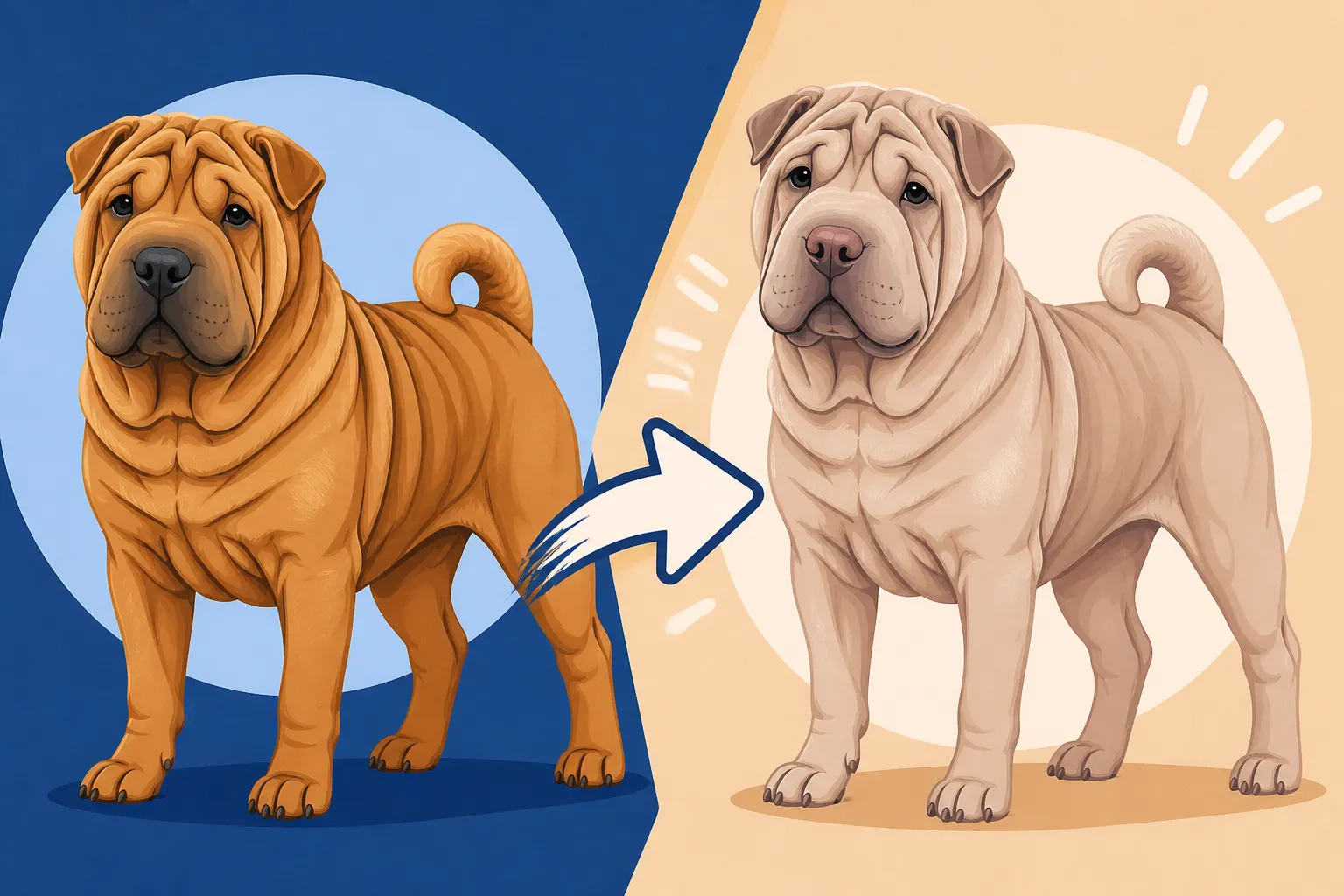
Genetically, dilution is caused by a recessive gene, often referred to as the 'd' allele at the D locus. For a Shar Pei to express a dilute coat color, they must inherit two copies of this recessive gene, one from each parent. This means their genetic code for color density would be 'dd'. If they only have one 'd' gene and one 'D' gene (Dd), they won't show the dilute color themselves, but they will be a "carrier" and can pass the 'd' gene on to their offspring. This gene doesn't create entirely new colors; instead, it acts as a modifier, lightening the dog's existing base color. So, a black Shar Pei with the 'dd' genotype becomes a blue Shar Pei, and a red Shar Pei with 'dd' becomes an apricot. It’s a fascinating example of how a single genetic tweak can profoundly alter an animal's appearance without changing its fundamental color DNA.
Spotting a Dilute: Beyond Just a Lighter Shade
Identifying a dilute Shar Pei isn't always as simple as noticing a lighter coat. There are specific visual cues that genetic dilution brings, and understanding these helps distinguish a truly dilute dog from one that simply has a lighter shade of a standard color.
The Distinctive Appearance of Dilute Coats
The most striking characteristic of a dilute Shar Pei is how their primary coat color is transformed into a softer, often pastel-like version. But it's not just the hair; the dilution gene impacts all pigmented areas of the dog's body. This is crucial for identification.
Let's break down how common base colors express when diluted:
- Black becomes Blue: A black Shar Pei with the dilute gene will have a coat that appears slate gray, often with a metallic or silvery sheen. This isn't a charcoal black; it's distinctly grey. And here's the kicker: their nose, paw pads, eye rims, and lips will also be a matching slate gray, not black.
- Red becomes Apricot or Isabella: A red Shar Pei's coat, when diluted, will soften to a dusty red, a golden tan, or even a pale apricot shade. The richness of the red is subdued. Again, check the non-coat pigmentation – their nose, paw pads, and other skin will typically be liver-colored or a self-colored brownish-pink, rather than solid black.
- Chocolate becomes Lilac: This is perhaps one of the rarer dilute expressions. A chocolate-based Shar Pei will have a coat that turns into a brownish-grey, sometimes with a subtle purplish tint. Their nose and paw pads will also be a liver or self-colored hue.
- Fawn becomes Pale Fawn: While fawn is already a lighter color, a dilute fawn will appear even more washed out, often a very pale, almost bleached-looking tan. Their points (nose, pads) will be faded brown or self-colored.
- Cream becomes Dilute Cream: A dilute cream Shar Pei is incredibly light, sometimes almost appearing off-white or a very pale ivory. Their nose and other pigmented areas will be a soft, faded brown or self-colored.
The key takeaway here is to always look at the nose, paw pads, and eye rims. If these areas are not the dark black you'd expect on a full-color dog, but rather a softer gray, liver, or self-colored pinkish-brown, you're almost certainly looking at a dilute Shar Pei.
Why Dilution Matters: Breed Standards and Recognition
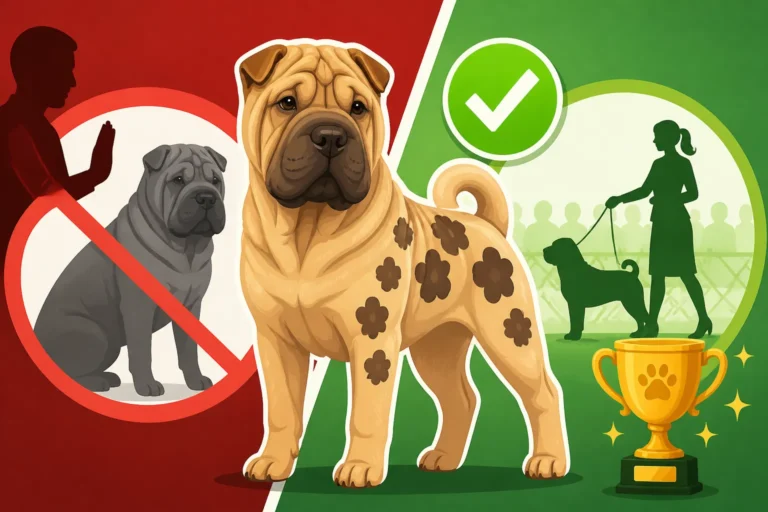
Understanding dilution isn't just for genetic enthusiasts; it also plays a role in how these dogs are viewed within the larger Shar Pei community, particularly in the realm of breed standards and dog shows. Different kennel clubs and breed organizations can have varying stances on what constitutes an "acceptable" or "standard" coat color.
For many registries, certain dilute colors, like blue, are indeed recognized as acceptable. They are simply another variant within the breed's approved color palette. However, other dilute shades, or perhaps those considered "excessively" diluted, might be classified as "unusual" or "non-standard." It's important to clarify that "non-standard" does not mean "unhealthy," "inferior," or "less worthy" as a pet. It simply means that a dog of that particular color might not be eligible to compete in conformation shows, where judges evaluate how closely a dog adheres to the breed's physical ideal. For pet owners, this distinction holds little practical meaning, as the dog's color has no bearing on its ability to be a loving companion. If you're curious about whether your specific dilute Shar Pei color is recognized, you might find Whether a Blue Shar Pei Is Recognized a helpful read, as blue is one of the more common dilute colors. Standards can vary, so it's always good to check the specific guidelines of the kennel club in your region, as detailed in articles like Whether the Shar Pei Standard Differs Between Countries.
The Genetic Blueprint: How Dilution is Inherited
The presence of a dilute coat in a Shar Pei isn't random; it's a fascinating display of Mendelian genetics at play. Understanding this blueprint can demystify how these unique colors appear in a litter.
The Recessive Nature of Dilution Genes
At the heart of dilute colors lies a recessive gene, which means it needs two copies to show itself. Think of it like this: every dog inherits two copies of each gene, one from its mother and one from its father. For the dilution gene (let's call it 'd'), the dominant version is 'D' (for full color), and the recessive version is 'd' (for dilute).
- DD dogs: These Shar Pei have two dominant genes and will have a full, intense coat color (black, red, fawn, etc.). They cannot pass on the dilute gene.
- Dd dogs: These Shar Pei have one dominant and one recessive gene. They will also have a full, intense coat color because the dominant 'D' gene overrules the recessive 'd'. However, they are "carriers" of the dilute gene and can pass it on to their puppies. You wouldn't know by looking at them that they carry the dilute gene!
- dd dogs: These are our dilute Shar Pei! They have inherited two copies of the recessive 'd' gene, one from each parent, and this is why their coat color (and skin pigmentation) is visibly softened or "diluted."
So, for a dilute puppy to be born, both parents must contribute at least one 'd' gene. This means either both parents are carriers (Dd), both are dilute (dd), or one is a carrier (Dd) and the other is dilute (dd). If you breed a dilute Shar Pei (dd) to a full-color Shar Pei who isn't a carrier (DD), all the puppies will be full-color but will carry the dilute gene (Dd). It's a neat trick of nature!
This knowledge is incredibly valuable for responsible breeders who want to understand the genetic makeup of their dogs and make informed decisions. Many breeders now utilize genetic testing to confirm whether their Shar Pei are carriers of the dilute gene, even if they don't visually express it. This helps them predict potential litter colors and ensures transparency with prospective puppy owners. Whether a Shar Pei Breeder Tests for Anything at All delves into the various health and genetic tests responsible breeders consider.
Responsible Breeding and Genetic Health
While the genetics of coat color are certainly interesting, a truly responsible breeding program always places genetic health above all else. The presence of the dilute gene itself (d/d) in a Shar Pei is generally considered a cosmetic trait and is not inherently linked to the specific health challenges that are prevalent in the breed.
What this means for potential owners is that a dilute Shar Pei from health-tested, reputable parents should, in most cases, have the same health prospects as a full-color Shar Pei from similar lineage. The focus should always be on the overall health of the parent dogs, their lineage, and the breeder's commitment to mitigating known breed-specific issues, not just on the color of the coat. A breeder who screens for common Shar Pei ailments, such as familial Shar Pei fever, entropion, and hip dysplasia, is investing in the long-term well-being of their puppies, regardless of their color. If you're looking for a puppy, you might be interested in What a Shar Pei Puppy Costs From a Health Testing Breeder, as it explains the value of choosing a breeder committed to health.
Dilute Coats and Health: Separating Fact from Fiction
When it comes to unique coat colors, it's common for questions about health to arise. With some breeds, specific colors are unfortunately linked to certain health issues. It's crucial, therefore, to understand whether the dilute gene in Shar Pei carries similar implications.
Is a Dilute Shar Pei More Prone to Illness?
This is a very common and understandable concern, especially since some dilute colors in other breeds are associated with increased health risks. However, when it comes to Shar Pei, we have good news: the dilute gene (d/d) itself is generally not inherently linked to the primary breed-specific health issues that Shar Pei are known for.
Let me be clear: a dilute Shar Pei is still a Shar Pei, and as such, it carries the same genetic predispositions to conditions common in the breed. These include things like Familial Shar Pei Fever Is Not an Infection, which is linked to the same genetic mutation that gives them their characteristic wrinkles, and conditions like Amyloidosis Is What Actually Kills a Shar Pei, often a consequence of chronic fevers. All Shar Pei, regardless of their coat color, face these potential challenges due to their unique genetic heritage, particularly the HAS2 mutation responsible for their wrinkled appearance. One Mutation Gave the Shar Pei Its Wrinkles and Its Fever explains this genetic link in depth.
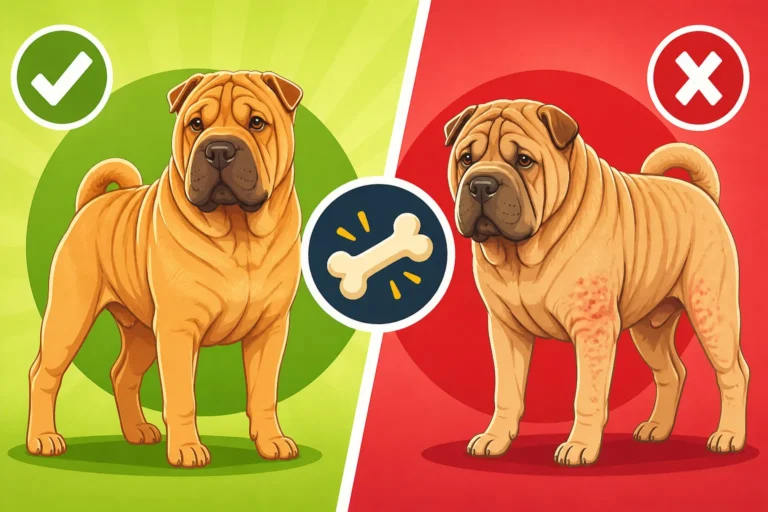
So, while a dilute Shar Pei might look a little different, their fundamental Shar Pei health profile remains the same. The notion that Whether a Dilute Shar Pei Has More Skin Problems simply because it's dilute isn't borne out by breed-specific veterinary consensus. Any skin issues a dilute Shar Pei might experience are far more likely to be the same common skin conditions that affect all Shar Pei.
Understanding Color Dilution Alopecia (CDA) and the Shar Pei
One specific condition that sometimes comes up in discussions about dilute dogs is Color Dilution Alopecia, or CDA. It's a hereditary dermatological condition found in certain breeds with dilute coat colors (most notably Doberman Pinschers, but also sometimes in Great Danes, Italian Greyhounds, and others). CDA typically manifests as patchy hair loss, often accompanied by dry, scaly skin, and recurrent bacterial infections in the dilute-colored areas.
Here's the critical distinction for Shar Pei owners: while CDA can occur in dilute-colored dogs, it is not commonly associated with the dilute gene in Shar Pei to the same degree as it is in those other breeds. This is a crucial point to understand. Shar Pei are, unfortunately, a breed already prone to a myriad of skin issues, which is why we talk so much about Skin Is the Shar Pei's Largest Problem by Surface Area. These issues include allergies, skin fold dermatitis, demodectic mange, and mucinosis.
If a dilute Shar Pei were to develop hair loss or skin problems, it would be far more probable that these issues stem from the breed's more common dermatological conditions rather than specifically from CDA. For instance, a Shar Pei with patchy hair loss might be suffering from Whether a Shar Pei Gets Demodectic Mange, an allergic reaction, or a bacterial or yeast infection, all of which are common in the breed. Therefore, while it's good to be aware of CDA, it's generally not a primary concern for dilute Shar Pei compared to the breed's other, more prevalent health challenges. Always consult your veterinarian for proper diagnosis and treatment of any skin or coat issues your Shar Pei might experience.
Caring for Your Dilute Shar Pei
When it comes to caring for a dilute Shar Pei, the good news is that the unique coat color doesn't typically require a completely different care regimen. The general principles of good Shar Pei ownership remain paramount, focusing on their breed-specific needs.
General Shar Pei Care: Color Doesn't Change the Basics
The intensive, diligent care routine that all Shar Pei require applies just as much to a dilute Shar Pei. Their distinctive wrinkles, narrow ear canals, and predisposition to certain health conditions mean that their care isn't a "set it and forget it" kind of deal. You'll still need to be on top of a few key areas:
- Skin Fold Care: Those adorable wrinkles are prime breeding grounds for moisture, bacteria, and yeast, leading to skin fold dermatitis. Regular cleaning with appropriate wipes or solutions is essential. Every single fold, crease, and pocket on a Shar Pei needs attention, as Every Fold on a Shar Pei Is a Place Something Grows. This is true for a dilute blue Shar Pei just as much as a red one.
- Ear Care: Shar Pei have incredibly narrow ear canals, making them prone to infections. Routine cleaning with a vet-approved solution is vital, and vigilance for signs of infection is a must.
- Eye Care: Entropion (inverted eyelids) is common in the breed. Watch for excessive tearing, redness, or squinting, and seek veterinary attention promptly.
- Bathing and Drying: Regular bathing with a gentle, appropriate shampoo is important for coat and skin health. However, the drying process is perhaps even more crucial. Leaving a Shar Pei damp, especially in their folds, can quickly lead to skin issues. As we often say, Drying Is More Important Than Washing on a Shar Pei. Make sure you have plenty of towels and perhaps a low-heat blow dryer to get them thoroughly dry, paying special attention to those hidden spots. Many owners find a good supply of these specialized cleaning and drying products at retailers like Chewy.
- Nutrition: A high-quality diet is fundamental for overall health, skin, and coat condition. If your Shar Pei has sensitivities, a limited ingredient diet might be beneficial, but this is a general Shar Pei consideration, not one specific to dilute colors.
Ultimately, your dilute Shar Pei will thrive on the same attentive, routine care that any Shar Pei demands. Their beautiful, unique color is simply another feature to admire while you maintain their overall well-being.
Sun Protection and Skin Vigilance
While the dilute gene in Shar Pei is not generally linked to Color Dilution Alopecia in the same way as in some other breeds, it's still worth being mindful of sun exposure for any dog with lighter pigmentation. Just like people with fair skin, dogs with lighter noses, paw pads, and eye rims can be slightly more susceptible to sunburn.
This isn't usually a major concern for Shar Pei, as their deep-set eyes and often prominent muzzles offer some natural shade. However, if your dilute Shar Pei loves to sunbathe for extended periods, or if you live in a particularly sunny climate, you might consider taking some precautions. Limiting direct sun exposure during peak hours (10 AM to 4 PM) can be helpful. For very sensitive noses or areas with sparse hair, some dog-specific sunscreens are available, but always check with your vet before applying any new product.
More broadly, consistent skin vigilance remains key for all Shar Pei. Regardless of color, you should regularly check their skin for any redness, irritation, bumps, hair loss, or unusual odors. What a Shar Pei's Skin Tells You Before Its Behavior Does is an excellent indicator of their overall health. Early detection of any skin issue can prevent it from escalating into a more serious problem. Your dilute Shar Pei's unique appearance is a gift, and a little extra awareness can help keep them healthy and happy.
Disclaimer
This article is for general informational purposes only and does not constitute professional advice. Laws, prices and regulations vary by location and change over time. Consult a qualified professional for guidance on your specific situation.