Whether a Shar Pei Mix Keeps the Wrinkles
A Shar Pei mix may keep some of the breed’s loose skin and folds, but there’s no dependable way to predict how many wrinkles a puppy will have as an adult. The result depends on the other breed, the individual parents, and how the dog grows. Here’s what to look for—and why appearance alone can’t tell you how healthy a mix will be.
How likely is a Shar Pei mix to have wrinkles
Inheritance does not work like a percentage chart
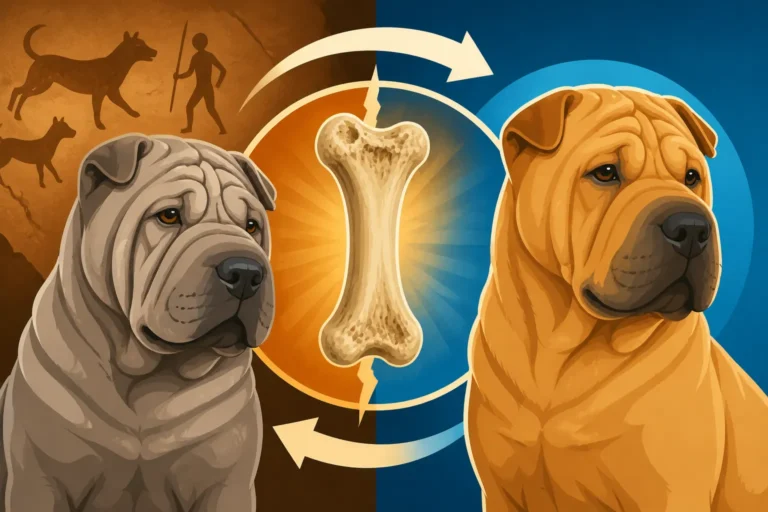
A mixed-breed dog inherits a combination of traits from both parents, but that does not mean it will show a neat half-and-half blend of their appearances. A dog with one Shar Pei parent may have a visibly wrinkled face, loose skin around the neck, a smooth coat, or only a few folds. Another puppy from the same litter can look quite different.
Shar Pei wrinkles are associated with inherited changes affecting hyaluronic acid in the skin. But a puppy’s visible folds depend on more than simply having some Shar Pei ancestry. The other parent’s genes matter, as do the specific traits passed down by each parent and how the puppy develops.
That’s why descriptions like “half Shar Pei” are not a reliable wrinkle forecast. Breed ancestry can help explain a dog’s possible traits, but it can’t tell you exactly how that dog will look. Even within a litter, siblings may inherit and express their parents’ features differently.
The other breed can influence the overall look
Some mixed-breed dogs have another wrinkled or loose-skinned parent, which may make folds more noticeable. Others have a parent with tighter skin and a different head shape, so the puppies may have fewer visible wrinkles. Still, neither combination guarantees a particular result. A puppy with two visibly wrinkled parents may not develop dramatic folds, while a dog with one less-wrinkled parent can still inherit prominent skin folds.
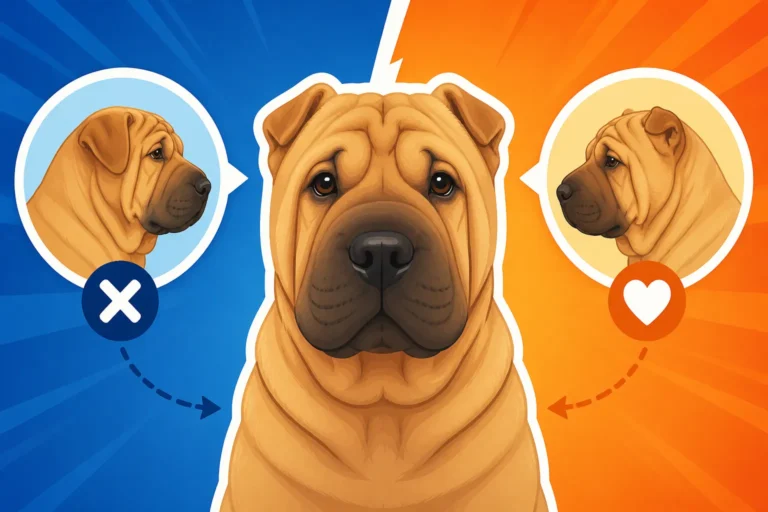
The face can be especially hard to predict. A mix may inherit a Shar Pei-like muzzle without the same degree of facial folding, or have folds around the neck and shoulders but relatively smooth legs and body. The dog’s ears, eyes, coat, size, and muzzle shape may also look more like one parent than the other.
When looking at a puppy, it helps to learn about both parents instead of focusing only on the Shar Pei side. Ask to see clear photos of them as adults, and if possible, meet them. Adult appearance offers more useful clues than a litter photo, but it still cannot promise what a puppy will look like after growing up.
More wrinkles do not mean more Shar Pei ancestry
It’s tempting to judge a dog’s ancestry by the depth or number of its folds, but looks are not a dependable DNA test. The amount of visible wrinkling can vary among dogs with similar ancestry, and loose skin can also come from traits inherited from the other breed.
A dog’s body condition can affect how its skin sits, too. Growth, age, and weight changes may make folds seem more or less noticeable. If you’re trying to identify your dog’s ancestry, a qualified DNA test may provide clues, but it still won’t predict the exact appearance or health of every adult dog.
Why a Shar Pei mix puppy may lose some folds as it grows
Puppy skin can look different from adult skin
Shar Pei puppies often have more folds than adults. As they grow, their bodies lengthen and their skin changes in proportion to their size. Some of the loose, wrinkly look may lessen, particularly across the body. Many adult Shar Pei retain folds around the head and neck, but the amount varies. You can read more in Whether an Adult Shar Pei Keeps All Its Puppy Folds.
A Shar Pei mix may go through a similar visual change, but the other parent’s traits can affect the result. A puppy that looks deeply wrinkled at eight weeks might have a smoother body later. Another may keep folds around the muzzle, shoulders, or tail. Growth patterns differ, so a puppy’s early appearance is not a promise of its adult look.
This can be disappointing if you expected a dog to keep a particular “wrinkly puppy” appearance. It’s worth remembering that a dog’s adult body is still developing well after the first few months. Instead of trying to predict every fold, focus on whether the puppy is comfortable, active, and receiving appropriate veterinary care.
Track the skin, not just the appearance
Take occasional photos of your dog’s face and body as it matures. That can help you notice changes in the skin, coat, or folds and give your veterinarian a clearer picture if a problem develops. Photos are also more useful than memory when you’re trying to tell whether a patch of redness or thinning fur is new.
If folds become moist, irritated, smelly, or sore, don’t assume that’s simply how a wrinkled dog is supposed to look. Skin irritation can happen in a dog with a few folds or many. The details in Skin Fold Dermatitis on a Shar Pei explain why folds deserve attention, while Every Fold on a Shar Pei Is a Place Something Grows explores why moisture and irritation can be worth taking seriously.
For routine care, follow your veterinarian’s advice rather than cleaning aggressively or putting powders and creams into folds without guidance. If you need basic supplies such as washable towels or plain grooming items, Chewy is one place owners may look. Choose products for your dog’s actual needs, and ask your veterinarian before using wipes or topical products on irritated skin. Chewy may also be convenient for restocking routine supplies, but a retailer’s product description is not a substitute for veterinary advice when a fold looks infected or painful.
What wrinkles can and cannot tell you about health
Appearance is not a health test
A heavily wrinkled mix is not automatically unhealthy, and a smooth-looking mix is not automatically free of Shar Pei-related health concerns. Visible folds are one part of a dog’s appearance; they do not reveal every inherited trait. A dog can have few wrinkles and still inherit a condition associated with Shar Pei ancestry. Conversely, prominent folds do not prove that the dog has a particular disease.
That distinction matters for inherited fever conditions. A mix with Shar Pei ancestry may inherit relevant risk, but its appearance alone cannot confirm or rule it out. For more context, see Whether a Shar Pei Mix Still Gets Fever. If a dog has recurring fever, swollen joints, unusual lethargy, or other concerning signs, contact a veterinarian rather than trying to judge risk by the number of wrinkles.
Eyes and ears also deserve attention if a mix inherits a Shar Pei-like head or facial structure. Squinting, persistent tearing, pawing at the eyes, head shaking, ear odor, or discharge are reasons to seek veterinary guidance. The concern is the symptom—not whether the dog looks wrinkly enough to “count” as a Shar Pei.
Ask about the individual dog’s history
If you’re adopting, ask the rescue or previous owner what is known about the dog’s medical history. Find out whether the dog has had recurring skin, eye, ear, or fever problems, and whether any treatment is ongoing. Records can be incomplete, especially for a dog who has been rehomed, so treat what you learn as useful context rather than a guarantee.
For a puppy from a breeder, ask about both parents’ health and the veterinary care provided to the litter. A responsible breeder should be willing to discuss health concerns honestly, not just point to a puppy’s appearance as proof that it will be healthy. You can also ask how the puppies’ eyes and skin have been monitored and what follow-up care they may need.
A useful way to think about a Shar Pei mix is that its looks and its health history are separate questions. Ask about both. For a broader look at how skin can reveal discomfort or irritation, see What a Shar Pei's Skin Tells You Before Its Behavior Does.
How to choose and care for a wrinkly Shar Pei mix
Look beyond the puppy photo
If you’re choosing a puppy, don’t make the decision based on which one has the most folds. Ask what each puppy is like, how it responds to handling, and whether you can meet the parents or learn about their health and temperament. If you’re adopting an adult, assess the dog in person when possible. Its skin, behavior, and medical records will tell you more about day-to-day needs than a photo can.
It can also help to ask how the dog behaves during ordinary care. Is it comfortable having its face, paws, and ears gently handled? Does it tolerate a quick look at its skin? A dog that needs regular checks will benefit from calm, positive handling, so it’s helpful to know what the dog is comfortable with and where it may need gradual training.
For a puppy, avoid assuming that its current folds will remain unchanged. Whether a Shar Pei Puppy's Skin Predicts the Adult offers more on why a young dog’s skin can be a poor guide to its adult appearance. If the dog has extensive body folds as an adult, that may differ from the usual adult Shar Pei outline; Whether Body Wrinkles Are a Fault in an Adult Shar Pei explains the breed-standard question, though a mixed-breed dog’s wellbeing matters more than show terminology.
Keep care gentle and watch for changes
Check the skin folds regularly, especially after the dog gets wet or has been outdoors in humid weather. The goal is to notice dampness, redness, tenderness, odor, or discharge—not to scrub the skin until it becomes irritated. If your dog’s skin is healthy, ask your veterinarian what level of routine care is appropriate instead of adding products automatically.
After a bath or a rainy walk, gently dry areas that tend to stay damp. Some owners keep a few washable towels on hand for this purpose; Chewy is one option for finding general pet-care supplies. If you’re unsure whether a product is suitable for sensitive skin, ask your veterinary clinic before using it. A new smell, persistent itching, or repeated irritation should prompt a conversation with your veterinarian rather than a quick switch to another cleanser.
A wrinkled Shar Pei mix may need more attention to skin checks than a smooth-coated dog, but the amount of care depends on the individual. Keep track of recurring problems, follow your veterinarian’s treatment plan, and don’t rely on a dog’s looks to predict every future need. For routine supplies, Chewy can be one place to browse, while diagnosis and treatment decisions are best made with a veterinary professional.
Disclaimer
This article is for general informational purposes only and does not constitute professional advice. Laws, prices and regulations vary by location and change over time. Consult a qualified professional for guidance on your specific situation.