Whether a Shar Pei Suits an Apartment Dweller
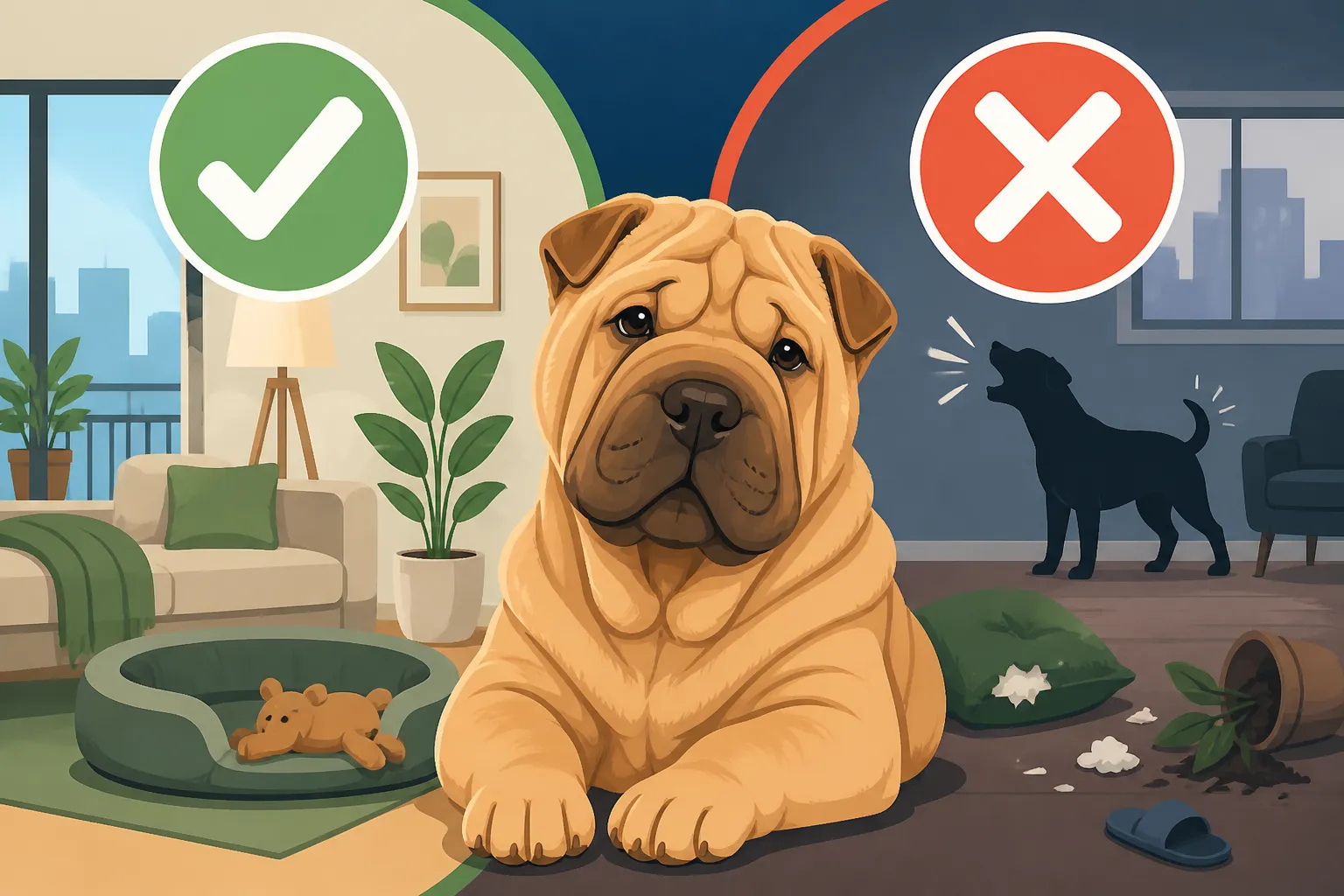
An apartment can suit a Shar Pei, but a short walk and a cozy sofa are not the whole picture. This independent, watchful breed needs daily exercise, thoughtful introductions to neighbors and dogs, and a home that stays comfortable in warm weather. This guide explains what apartment life asks of both you and your Shar Pei—and how to tell whether the match is realistic.
What makes a Shar Pei suitable for apartment living
Space matters less than routine
A Shar Pei does not need a huge house simply because it is a solid, substantial dog. A well-managed apartment can work if there is room for the dog to rest undisturbed, move around safely, and keep a little distance from busy household activity. A calm layout, predictable routine, and access to outdoor toileting often matter more than having a large yard.
The practical question is not just, “Will the dog fit?” It is, “Can I meet its needs here every day?” If your building has a long walk to the nearest suitable outdoor area, a shared elevator, narrow hallways, or frequent visitors, those details become part of the dog’s daily environment. A Shar Pei may be perfectly content to settle indoors after activity, but that does not mean it can skip walks, training, or mental stimulation.
Think through an ordinary weekday. If you leave early, work a full day, and return exhausted, who handles the midday break? If the elevator is crowded at rush hour, can you wait for a quieter trip? If your dog needs a little extra space from another dog in the corridor, can you manage that safely? These are more useful questions than comparing floor plans.
Apartment life also has limits that a yard can make less obvious. You will need to take your dog outside in rain, snow, or heat, and you may have to navigate stairs or common spaces several times a day. If the building has strict pet rules, confirm its breed, size, and noise policies before bringing a dog home. For a broader view of the breed’s temperament and needs, see The Household a Shar Pei Was Built For.
A settled indoor dog still needs daily activity
Many Shar Pei are not dogs that need to run for hours every day. They generally benefit from regular, moderate activity and opportunities to sniff, explore, and learn. Two purposeful walks may fit an apartment routine better than one strenuous outing, though the right amount depends on the individual dog’s age, health, fitness, and temperament.
A walk is not only exercise. For a dog living in a building, it can be a chance to practise calm behavior around people, doors, traffic, and other dogs. A short sniff-heavy route around a quiet block may be more useful than marching past a busy dog park. On a wet morning, a brief toilet trip followed by a food puzzle or a little indoor training can help keep the day manageable.
Mental enrichment can happen in a small space. You might scatter part of your dog’s meal across a snuffle mat, practise a few cues in the living room, or hide treats in safe, easy-to-find places. If you shop for enrichment supplies through Chewy, choose items that suit your dog’s chewing habits and supervise their first use; a toy that is too small, easily shredded, or difficult to clean may create more hassle than enjoyment. The goal is not to fill the apartment with gear, but to give your dog a few safe ways to use its nose and brain.
For more detail on matching activity to the breed, read How Much Exercise a Shar Pei Needs. And because an apartment often means walking near parked cars, sidewalks, and other buildings, account for heat before planning a route. Why Heat Limits a Shar Pei's Walk explains why a dog that seems eager to go out may still need a shorter, cooler outing.
The apartment challenges to plan for
Hallways, elevators, and neighboring dogs
Shared spaces can be the hardest part of apartment living with a Shar Pei. You may meet a neighbor’s dog at close range before either person has enough room to move aside. Some Shar Pei are selective around unfamiliar dogs, and individual dogs vary widely. A tight hallway is not an ideal place to test whether yours will enjoy a surprise greeting.
Plan for controlled, low-pressure movement. Keep your dog on a secure leash, watch the space ahead, and give other dogs room when possible. If the elevator doors open and another dog is inside, it is perfectly reasonable to wait for the next one. You can also practise walking to a quiet landing, turning away with you, and settling briefly while people pass at a comfortable distance.
Do not assume that frequent exposure automatically creates friendliness. Calm, gradual experiences are more valuable than being pushed into a busy dog meet-up. A dog park may be especially difficult because the activity is unpredictable and there is little control over greetings. For practical guidance, see Whether a Shar Pei Belongs at a Dog Park and How a Shar Pei Behaves Toward Other Dogs.
Visitors require similar planning. A delivery person or neighbor entering the apartment can feel very different from a familiar friend sitting quietly in the living room. Give your dog a resting area away from the doorway, and use a leash, gate, or closed room if you need to manage the first few minutes. For advice on introductions, How a Shar Pei Greets a Visitor is a useful next read.
Heat, ventilation, and time alone
A small apartment can warm up quickly, especially if it gets afternoon sun or has limited airflow. Shar Pei can be vulnerable to overheating, so consider the indoor temperature as well as the weather outside. Make sure your dog can reach fresh water and a cool resting place, and do not leave it shut in a hot room while you are away. If your apartment routinely becomes uncomfortable in summer, think carefully about how you will keep it cool before choosing this breed.
Walk timing matters too. During warm weather, plan outdoor exercise for cooler parts of the day, keep outings shorter when needed, and be ready to turn back if your dog seems distressed. Heavy panting, weakness, unusual slowing, vomiting, confusion, or collapse require urgent veterinary attention. A cooling mat or fan can support comfort, but neither makes a hot apartment or a warm car safe.
Alone time is another practical concern. A dog that spends much of the day alone may become bored, distressed, or noisy, which can strain neighbor relationships. Shar Pei are often independent, but independence should not be mistaken for being comfortable with unlimited isolation. Build alone time gradually and arrange a dog walker, trusted visitor, or other suitable break if your schedule leaves the dog alone for long stretches.
Before bringing a dog home, check whether your building permits a walker to enter, whether there is a secure place for a dog to wait during maintenance visits, and how you will manage urgent toilet trips. A washable bed or crate mat can make cleanup easier in a compact space; if you buy one through Chewy, measure the resting area first and choose something that can be laundered without turning your living room into a permanent drying station.
How to make apartment life work day to day
Set up a calm, dog-friendly home
Choose a resting spot away from the front door and the busiest foot traffic. A bed tucked into a quiet corner can give your dog a place to retreat when the hallway is noisy or guests are visiting. Do not use that space as a punishment. It should be a predictable, comfortable option where the dog can relax without being disturbed.
Keep essentials easy to reach: leash, waste bags, towels, and cleaning supplies near the exit. If your building has several doors between your apartment and the street, practise clipping on the leash and waiting calmly before opening each one. This small routine reduces the chance of a dog slipping into a corridor or rushing toward an open elevator.
Make a plan for folds and skin care as well. Apartment living does not remove the breed’s grooming needs, and a damp dog can be uncomfortable in any home. After a rainy walk or bath, dry the coat and skin thoroughly, especially where moisture tends to linger. Every Fold on a Shar Pei Is a Place Something Grows offers more detail on what to watch for. Chewy may be a convenient place to find basic grooming supplies, but ask your veterinarian what is appropriate if your dog has redness, odor, itching, or recurring skin trouble rather than trying to solve a persistent problem with more products.
Use a routine that fits your building
A workable routine might include a quiet morning walk, a midday toilet break, a short evening walk with sniffing time, and a few brief training or enrichment sessions at home. The exact schedule should reflect your dog’s age, health, and ability to cope with stairs, weather, and time alone. Puppies and older dogs may need more frequent toilet opportunities than a healthy adult.
Here is a simple comparison to help you assess whether your apartment setup is likely to work:
| Apartment factor | More workable setup | More challenging setup |
|---|---|---|
| Outdoor access | A reliable route for regular toilet breaks | Long waits, difficult stairs, or no nearby safe route |
| Shared spaces | You can pause, wait, or create distance from other dogs | Crowded corridors with no room to pass |
| Daily schedule | Walks and breaks fit your workday | The dog would be alone for long stretches without support |
| Indoor comfort | The home stays cool and has a quiet resting area | Rooms heat up and there is no dependable cooling plan |
| Noise and visitors | You can manage door activity and provide a retreat | Frequent unexpected traffic with little control over access |
| Exercise and enrichment | You can offer regular walks and simple indoor activities | Outdoor activity is inconsistent and there is little time for engagement |
The table is not a pass-or-fail test. A challenging factor may be manageable with a realistic plan, but several together deserve serious thought. For instance, a third-floor walk-up does not automatically rule out a Shar Pei, but it matters if you are adopting a puppy, an older dog, or one with health or mobility concerns.
Keep expectations flexible. A new rescue may need time to settle before you know how it handles elevators or hallway encounters. A puppy may need extra toilet breaks and patient training. An adult dog with a known temperament can make apartment planning easier, but ask about its behavior around unfamiliar dogs, visitors, and time alone rather than relying on a general description of the breed.
How to decide whether a Shar Pei is right for you
Look at your actual day, not the ideal version
It is easy to picture a peaceful dog curled on a rug while you work. It is more useful to picture a rainy Tuesday when the elevator is busy, your meeting runs late, and your dog needs to go out. If you can still see a reasonable plan for walks, breaks, training, and comfort, apartment living may be a good fit.
Consider your experience with dogs, too. A first-time owner can do well with a Shar Pei, but should be prepared to learn about the breed’s independent temperament and to seek qualified help early if handling, fear, or dog-to-dog tension becomes difficult. Choosing a trainer who uses reward-based methods and can work with you in real settings—such as a quiet building entrance or nearby sidewalk—may be more useful than expecting every challenge to disappear through basic obedience practice.
Talk with a veterinarian about the individual dog’s health and care needs, particularly if you are considering a puppy or a rescue with an incomplete history. If you are deciding whether this breed fits your home more generally, Whether a Shar Pei Suits a First Time Owner can help you weigh the commitment beyond the apartment itself.
Make the decision around the individual dog
Breed tendencies can help you prepare, but they cannot tell you exactly how one Shar Pei will behave. One may settle quietly after a walk; another may find hallway noise stressful. One may be comfortable passing dogs at a distance; another may need a carefully managed route and more time to adjust.
If possible, speak with the breeder, rescue, or foster caregiver about everyday behavior—not just whether the dog is “good in an apartment.” Ask how it handles being alone, passing dogs, visitors, grooming, and sudden noise. Ask what support is available if the placement becomes difficult. A thoughtful match considers your building, schedule, and experience alongside the dog’s personality.
Apartment life is a realistic option when you can provide daily activity, safe management in shared spaces, a cool and comfortable home, and a plan for time alone. If your building is extremely crowded, your schedule leaves no room for regular breaks, or you cannot reliably manage the dog around unfamiliar dogs, a different living arrangement or breed may be kinder to everyone. For a final comparison of lifestyle fit, see Whether a Shar Pei Suits an Apartment Dweller and Whether a Shar Pei Suits a Family With Toddlers.
Disclaimer
This article is for general informational purposes only and does not constitute professional advice. Laws, prices and regulations vary by location and change over time. Consult a qualified professional for guidance on your specific situation.