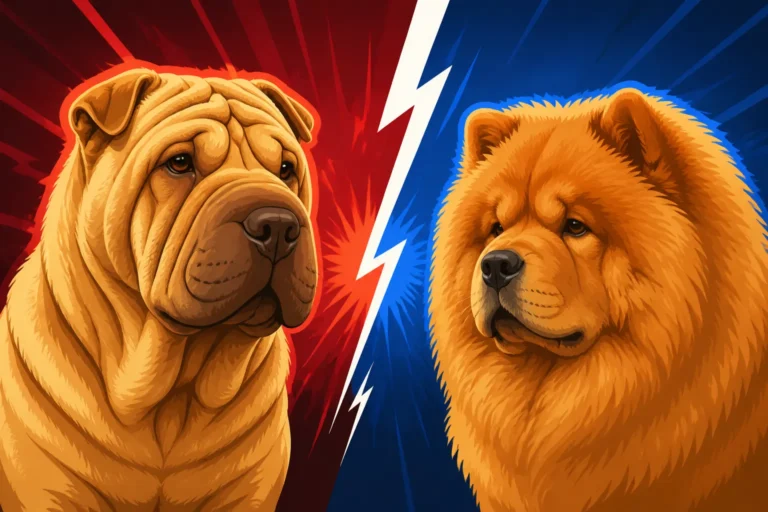
Guinness Once Called the Shar Pei the Rarest Dog on Earth
When you look at a Shar Pei today, with their distinctive wrinkles and often aloof demeanor, it's easy to assume they've always been a unique, albeit well-known, breed. But the truth is far more dramatic than most people realize. There was a time, not so long ago, when this incredible breed teetered on the brink of extinction, an almost forgotten relic. This guide will take you on a journey through the Shar Pei's astonishing survival story, from near oblivion to the cherished companion many of us know and love, shedding light on how their past profoundly shapes their present.
A Breed on the Brink: The Shar Pei's Near Extinction
It's hard to imagine a world without Shar Pei, isn't it? Yet, for a significant period in the 20th century, that was a very real possibility. The numbers were terrifyingly low, making them not just rare, but virtually non-existent outside of a tiny, dedicated circle. This wasn't a slow decline; it was a precipitous drop, driven by forces far beyond their control, leaving the breed hanging by the thinnest of threads.
The Political Climate That Nearly Wiped Them Out
The story of the Shar Pei's near demise is deeply intertwined with political upheaval in their native China. During the mid-20th century, specifically following the establishment of the People's Republic of China in 1949, dog ownership was heavily suppressed. Dogs were seen as a bourgeois extravagance, a drain on resources, and their keeping was actively discouraged, sometimes even outright forbidden. This wasn't just a gentle suggestion; it was a systematic campaign that led to the widespread culling of dog populations across the country. Imagine a time when owning a beloved pet could make you a target, when something as simple as a wagging tail was deemed a political statement.
Many dogs, including the Shar Pei, were not just neglected; they were actively eliminated. Rural areas might have held onto a few working dogs or those kept secretly, but in urban centers, the dog population dwindished dramatically. The sheer scale of this purge meant that entire breeds, some with centuries of history, simply vanished. For the Shar Pei, a breed deeply rooted in southern China, this period was catastrophic. Their numbers plummeted to critically low levels, making them one of the most endangered dog breeds on the planet. It was a dark chapter for canine history, and the Shar Pei almost didn't make it out alive. Why Dogs Were Killed in China in the 1940s details more about this grim period.
The Stark Reality of the 1970s Numbers
By the early 1970s, the situation was desperate. Reports from Hong Kong, which played a crucial role in the breed's survival, indicated that there were fewer than sixty Shar Pei left in existence. Let that sink in for a moment. Sixty dogs. That's not sixty in a country, that's sixty in the entire world. If you think about it, that's barely enough to sustain a viable breeding population, let alone safeguard against accidents, disease, or further political pressures. It's a stark reminder of how fragile a breed's existence can be when faced with overwhelming societal forces.
This extreme scarcity meant that only a handful of dedicated individuals knew about them, let alone owned them. These weren't commercial breeders churning out puppies; these were passionate custodians fighting to keep a legacy alive against incredible odds. Every single Shar Pei was a precious gem, a genetic lifeline to the future. How Many Shar Pei Were Left in the 1970s gives a chilling account of this near-extinction event. The genetic bottleneck created by such low numbers would, of course, have profound and lasting effects on the breed's health and genetic diversity, something we still grapple with today.
The Lifeline from Hong Kong: Matgo Law's Urgent Appeal
In what can only be described as a heroic act of desperation and unwavering dedication, a man named Matgo Law stepped forward to become the unlikely savior of the Shar Pei. From Hong Kong, where a small remnant population still existed, he understood the gravity of the situation and knew that if he didn't act, the Shar Pei would be lost forever. His actions ignited a global response that would pull the breed back from the very edge.
The Letter That Changed Everything
It was 1978 when Matgo Law penned his now-famous letter, an impassioned plea addressed to Dogs magazine. This wasn't some widely circulated publication; it was a niche American dog magazine, but Law understood the power of reaching a passionate audience. In his letter, he described the dire situation of the Shar Pei, highlighting their unique qualities and lamenting their impending extinction. He appealed to dog lovers and breeders in the West to help save this ancient and distinctive breed. It was a shot in the dark, a desperate cry across continents, but it landed right where it needed to.
Imagine opening your monthly dog magazine and reading such an urgent, heartfelt appeal for a breed you might never have even heard of. Law's letter was not just informative; it was emotionally compelling, painting a vivid picture of a cultural treasure on the verge of disappearing. He didn't just ask for help; he laid bare the vulnerability of a living piece of history. This single act of communication, born out of concern and love for the breed, set in motion a chain of events that would forever alter the Shar Pei's destiny. One Letter to a Dog Magazine Saved the Shar Pei tells this pivotal story in more detail.
The Global Response to a Plea for Help
To Matgo Law's immense relief and surprise, the response to his letter was overwhelming. Dog enthusiasts and concerned individuals from around the world, particularly in the United States, read his plea and answered the call. People were captivated by the Shar Pei's exotic looks and touching story, realizing they had a chance to be part of something truly historic: saving a breed from extinction. Breeders, often working with extremely limited information and even fewer actual dogs, began the painstaking process of importing these precious few Shar Pei from Hong Kong.
This global collaboration wasn't without its challenges. The dogs that arrived were few, often unrelated, and carried a narrow genetic blueprint. Nevertheless, the enthusiasm was palpable. People weren't just acquiring pets; they were acquiring living pieces of history, each one a critical contributor to the breed's survival. The passion of these early adopters, who dedicated themselves to establishing the Shar Pei in the Western world, cannot be overstated. They faced considerable hurdles, from establishing breed standards to navigating the health issues inherent in a constricted gene pool, but their collective effort ensured the Shar Pei's future.
From Rarest to Rapid Rise: The Shar Pei's Journey to Popularity
The incredible rescue effort transformed the Shar Pei from an endangered species into a breed of growing fascination. It wasn't long before their unique appearance and compelling backstory captured the attention of a much wider audience, propelling them into an unexpected spotlight. This transition from near-extinction to widespread recognition was remarkably swift and had its own set of unique consequences.
The Guinness World Record Recognition
Perhaps the most significant moment in the Shar Pei's ascent to global recognition was its mention in the Guinness Book of World Records. In the late 1970s, likely around 1978 or 1979, the Shar Pei was officially listed as the "rarest dog in the world." Can you imagine the impact of that? For a breed that was virtually unknown just a few years prior, this global recognition was monumental. It wasn't just a fun fact in a book; it was a stamp of incredible rarity and uniqueness that instantly piqued public curiosity worldwide. Suddenly, everyone wanted to know about this mysterious, wrinkle-faced dog from China.
This designation had a profound effect. It turned the Shar Pei into a sensation almost overnight. People who had never considered owning a purebred dog, let alone a rare one, were suddenly enchanted by the idea. It created a powerful narrative: owning a Shar Pei wasn't just owning a dog; it was owning a piece of history, a living legend that had been saved from the brink. This celebrity status, while fantastic for awareness, also brought its own challenges, as demand began to outstrip the careful, slow process of ethical breeding required for a recovering gene pool. The Year Guinness Named the Shar Pei the Rarest Breed marks this significant turning point.
The Influx of Shar Pei into Western Countries
Following the Guinness recognition and the initial rescue efforts, the Shar Pei began to appear in increasing numbers in Western countries, primarily the United States. Enthusiasts, captivated by their story and distinctive looks, clamored to acquire these "rare" dogs. Breeders, both responsible and less so, quickly moved to meet the burgeoning demand. The exotic allure of a breed once deemed nearly extinct was irresistible. This influx wasn't just about bringing a few dogs over; it was about establishing a new foundation for the breed in a completely different part of the world, far from its original homeland.
Dog shows and exhibitions became new platforms for the Shar Pei, further cementing their status as a breed of interest. Their unusual appearance — the small, folded ears, the characteristic hippopotamus muzzle, the loose skin, and the scowling expression — made them an instant standout. They were unique, and in the world of dog breeds, uniqueness often translates to popularity. This rapid rise in visibility meant that more and more people encountered the Shar Pei, moving them from an obscure, almost mythical rarity to a recognizable, if still uncommon, presence in the canine landscape.
The Double-Edged Sword of Popularity: Health Implications and Breeding
The incredible rescue story and subsequent surge in popularity for the Shar Pei, while ensuring their survival, also introduced a new set of complex challenges. The very factors that made them so appealing – their unique appearance and rarity – became intertwined with the health and genetic future of the breed. It's a classic tale of unintended consequences, where good intentions and rapid demand can sometimes create unforeseen difficulties.
The Narrowing Gene Pool and Its Consequences
One of the most significant and enduring impacts of the Shar Pei's near extinction and subsequent revival is the incredibly narrow gene pool from which all modern Shar Pei descend. With only a handful of individuals available to restart the breed, genetic diversity was severely limited. This is akin to rebuilding an entire library from only a few surviving books – much of the original knowledge and variety is simply lost forever. The dogs imported from Hong Kong, while precious, carried a limited set of genes, and breeding efforts naturally focused on those available animals. How Narrow the Shar Pei's Founding Gene Pool Was really hits home on this critical point.
This lack of genetic diversity has profound implications for a breed's health. It means that certain genetic predispositions, whether for specific diseases or unique anatomical traits, become much more prevalent. If a particular founding dog carried a gene for a certain condition, that gene is likely to be passed down through many generations, becoming widespread in the population. This isn't the fault of the dogs or their rescuers; it's an unavoidable consequence of a population bottleneck. Responsible breeders today face the monumental task of managing this limited genetic legacy, striving to make the best possible breeding choices to maintain health and vitality. Whether the Shar Pei's Bottleneck Explains Its Health delves into the scientific side of this challenge.
The Impact on Physical Traits and Health
The narrow gene pool, combined with the sudden surge in popularity, also influenced the physical traits that became desirable in the Shar Pei. The distinctive wrinkles, which are a hallmark of the breed, became exaggerated in some lines, driven by a public fascination with this unique feature. While originally the Shar Pei had some loose skin, particularly around the head, the "more wrinkles, the better" mindset of the boom years led to dogs with increasingly abundant folds across their bodies and faces.
Unfortunately, these exaggerated features often came with significant health trade-offs. More wrinkles mean more potential for skin fold dermatitis, where moisture and bacteria get trapped, leading to infections. The deep-set eyes, often surrounded by heavy facial folds, can lead to entropion, a condition where the eyelids roll inward, causing eyelashes to rub against the cornea. The tight, small ears, another characteristic feature, can exacerbate ear infections due to poor air circulation. What Being Saved Did to the Shar Pei's Health provides a sobering overview of these issues. Furthermore, the genetic predisposition to conditions like Familial Shar Pei Fever and Amyloidosis are deeply tied to specific genetic markers that became concentrated in the breed's small founding population. It's a constant balancing act for breeders to preserve the unique Shar Pei look while prioritizing robust health.
Understanding the Modern Shar Pei in the Context of Its Past
For any current or prospective Shar Pei owner, understanding the breed's dramatic history isn't just an interesting anecdote; it's absolutely essential. The trials and triumphs of their past have molded the Shar Pei into the dogs we see today, influencing their temperament, health needs, and even their unique quirks. By recognizing this heritage, we can become more empathetic and effective caregivers.
Why Knowledge of History Matters for Owners
Knowing the Shar Pei's history arms owners with crucial insights into their dog's potential health challenges and inherent behavioral traits. For instance, understanding the genetic bottleneck explains why certain health conditions like Familial Shar Pei Fever Is Not an Infection or Amyloidosis Is What Actually Kills a Shar Pei are so prevalent in the breed. It helps owners anticipate potential issues and partner proactively with their veterinarians for early detection and management. This isn't about fear; it's about informed care. Owners who understand this history are often more diligent about routine vet checks, specialized diets, and monitoring for subtle signs of illness.
Beyond health, the Shar Pei's history as a working dog – used for hunting, herding, and guarding in rural China – sheds light on their sometimes independent, reserved, and protective nature. They weren't bred as cuddly lap dogs; they were bred for a purpose, often requiring self-reliance and keen observational skills. This explains why A Shar Pei Was Bred to Guard, Not to Greet and why early, extensive socialization is so critical. An owner who understands this background is less likely to be surprised by their dog's aloofness with strangers or its strong guarding instincts. This knowledge fosters patience, appropriate training methods, and realistic expectations, leading to a much stronger, more harmonious bond. You can often find great resources on breeds, their history, and their specific needs on platforms like Chewy, helping you connect the dots between historical context and practical care.
The Ongoing Efforts to Preserve and Protect the Breed
Thankfully, the story of the Shar Pei's survival didn't end with their rise to popularity. Today, dedicated breed clubs, ethical breeders, and passionate owners are working tirelessly to address the challenges that arose from their near extinction and subsequent boom. The focus has shifted significantly from simply increasing numbers to improving the overall health and longevity of the breed. This involves rigorous health testing, careful selective breeding, and advocating for genetic diversity within the existing population.
Many breeders are now actively working to minimize exaggerated features, such as excessive wrinkles, that can lead to health problems. They prioritize breeding dogs with clear eyes, well-set ears, and moderate skin folds, aiming for a balance between the breed's iconic look and its welfare. There's also a strong emphasis on sharing health information and working collaboratively to track genetic lines. For example, some might consider if Whether a Wider Gene Pool Would Fix Shar Pei Fever or explore genetic testing options to identify carriers of specific health issues. It's a continuous, evolving effort, driven by a deep love for the Shar Pei and a commitment to ensuring they thrive for generations to come.
The Legacy of Rarity: What It Means for Today's Shar Pei
The Shar Pei's journey from a handful of survivors to a globally recognized breed leaves an indelible mark on every dog of this lineage. It's a legacy of resilience, a testament to dedicated individuals, and a constant reminder that with great beauty often comes great responsibility. This unique history continues to inform how we perceive, care for, and ultimately, appreciate these magnificent animals.
Appreciating the Unique Traits
The Shar Pei's historical rarity has imbued them with an almost mythical quality, and this sense of uniqueness continues to be one of their most appealing characteristics. From their distinctive "sandpaper" coat – which is Where the Name Shar Pei Comes From (meaning "sand skin" or "sandy coat") – to their deeply wrinkled faces and blue-black tongues, every aspect of a Shar Pei feels like a living connection to an ancient past. Appreciating these traits goes beyond mere aesthetics; it means understanding the historical purpose behind them. Their loose skin, for instance, was said to have made them difficult for wild boars to grip during hunts, and their small, hooded ears were believed to protect them in skirmishes.
Even their personality traits, such as their often guarded nature and fierce loyalty to their chosen family, can be traced back to their origins as versatile working dogs. They weren't bred to be everyone's friend, but to be a devoted protector of their home and people. Embracing these characteristics, rather than trying to change them, is key to truly understanding and enjoying a Shar Pei. They offer a depth of character and a quiet dignity that is unlike many other breeds, a direct echo of their tenacious survival.
Supporting Responsible Breeding Practices
The painful lessons learned from the Shar Pei's brush with extinction and subsequent popularity boom underscore the critical importance of supporting responsible breeding practices. As owners and advocates, we have a role to play in ensuring that the breed's future is healthier and more stable than its past. This means seeking out breeders who prioritize health, temperament, and genetic diversity over mere appearance or quick profits. A responsible breeder will be transparent about their dogs' health testing, pedigree, and any known breed-specific issues, like One Mutation Gave the Shar Pei Its Wrinkles and Its Fever or Entropion in a Shar Pei Puppy Is an Emergency, Not a Cosmetic Issue. They will understand the implications of the narrow gene pool and actively work to mitigate its effects.
When looking for a Shar Pei, ask questions, visit the breeder, and be prepared for a wait. Responsible breeders often have waiting lists precisely because they are not mass-producing puppies. They are carefully planning litters with the long-term health of the breed in mind. Choosing to support such breeders not only helps ensure you get a healthier, well-socialized puppy but also contributes to the ongoing efforts to safeguard the Shar Pei for future generations. It’s an investment not just in a pet, but in the legacy of a truly remarkable survivor. You can find ethical breeding advice and resources through reputable kennel clubs and breed-specific organizations. And remember, reputable sources, even online pet supply retailers like Chewy, can often guide you to valuable educational content on responsible pet ownership and breed-specific needs.
Shar Pei Survival Timeline
Here’s a simplified timeline illustrating the Shar Pei's dramatic journey from near extinction to global recognition.
| Period | Event | Impact on Breed |
|---|---|---|
| 1940s-1970s | Suppression of dog ownership in China | Numbers plummeted to critically low levels, near extinction. |
| Early 1970s | Fewer than 60 Shar Pei remaining globally | Genetic bottleneck created; breed considered critically endangered. |
| 1978 | Matgo Law's letter to Dogs magazine | Global awareness initiated; plea for rescue sent to Western enthusiasts. |
| Late 1970s | Guinness Book of World Records recognition | Declared "rarest dog in the world," sparking immense public interest. |
| 1980s | Rapid increase in Western popularity | Influx of Shar Pei into the US; breeding boom to meet demand. |
| 1980s-Present | Focus on health and responsible breeding | Efforts to address health issues from narrow gene pool; emphasis on welfare. |
Disclaimer
This article is for general informational purposes only and does not constitute professional advice. Laws, prices and regulations vary by location and change over time. Consult a qualified professional for guidance on your specific situation.