Whether a Shar Pei Is a Brachycephalic Breed
A Shar Pei is not usually considered one of the most extremely flat-faced breeds, but some Shar Pei have short, broad muzzles and airway features that can make breathing harder. That distinction matters: a breed label alone cannot tell you whether an individual dog is comfortable. This guide explains what brachycephalic means, what to watch for, and when to ask your veterinarian for help.
Is a Shar Pei a brachycephalic breed
What brachycephalic means
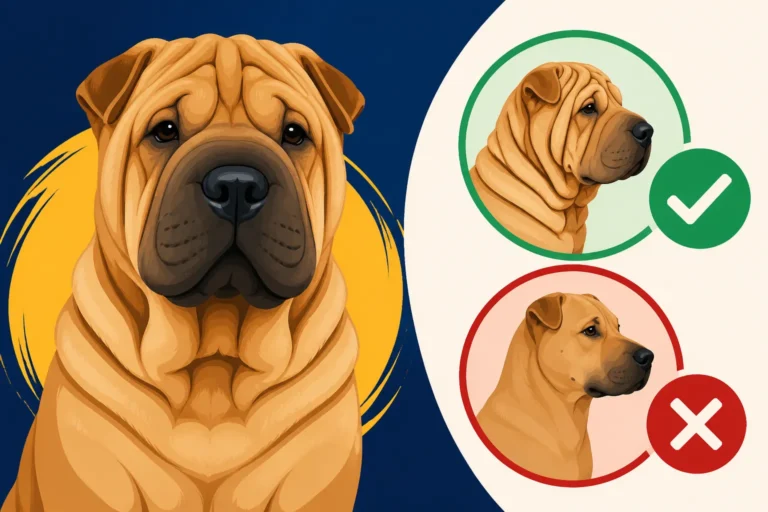
Brachycephalic describes a short-headed shape, especially a shortened muzzle relative to the skull. The word is often associated with breeds such as Pugs and Bulldogs, whose compact faces can narrow the air passages. But it is not a simple yes-or-no health test: dogs can have some short-faced features without having the same degree of airway obstruction.
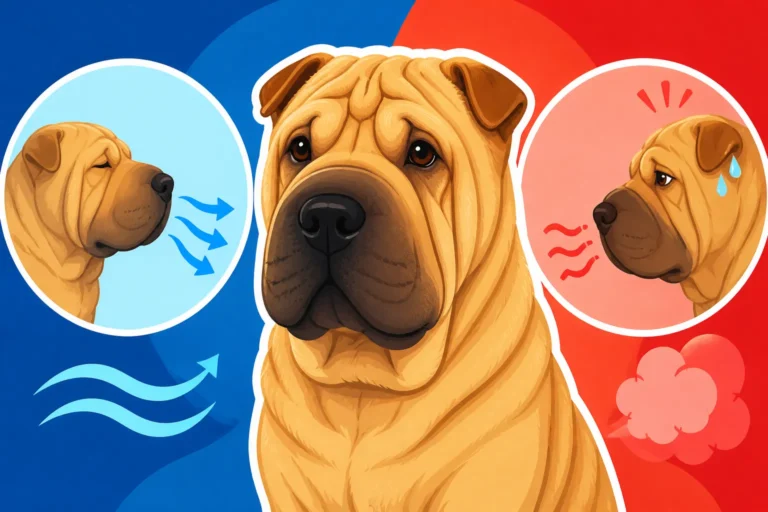
Shar Pei are generally not as extremely flat-faced as those familiar examples. Their broad heads and substantial muzzles can still give some individuals a short-muzzled appearance, however, and a dog’s breathing depends on more than how its face looks from the outside. The size and shape of the nostrils, soft tissues in the throat, and other parts of the upper airway all matter.
So, the most useful answer is: a Shar Pei may have brachycephalic features, but the breed is not usually treated as one of the most extreme brachycephalic types. The individual dog’s anatomy and symptoms are more important than the label. For more detail on the face and airflow, see Whether the Shar Pei's Muzzle Affects Its Breathing.
Why the label does not tell the whole story
Two Shar Pei can look broadly similar but breathe very differently. One may walk comfortably and sleep quietly, while another may snort, struggle during exercise, or take a long time to recover after play. A short muzzle does not automatically mean a dog has a serious airway disorder, and a less obviously flat face does not guarantee trouble-free breathing.
The term brachycephalic is also used in different ways. It may describe skull shape, refer to a group of breeds, or be used when discussing brachycephalic obstructive airway syndrome, often shortened to BOAS. Those meanings are related, but they are not interchangeable. A dog can have a short-faced appearance without a diagnosed obstructive disorder; conversely, a dog with less dramatic facial shortening can still have an airway problem that needs assessment.
That is why it helps to describe what you actually see rather than relying only on the breed name. Tell your veterinarian whether breathing sounds occur at rest or only during activity, whether they are new, and how quickly your dog recovers. A short video recorded during a typical episode can also help, provided filming does not delay urgent care.
| Question | Practical answer |
|---|---|
| Is every Shar Pei brachycephalic in the same way? | No. Facial shape and airway function vary between individuals. |
| Does a short muzzle prove the dog has BOAS? | No. A veterinarian assesses the dog’s signs and airway, not appearance alone. |
| Is loud or labored breathing just a breed quirk? | It should not be dismissed, especially if it is new, worsening, or happens at rest. |
| Can heat make breathing problems more obvious? | Yes. Heat and exertion can increase the effort needed to breathe. |
| Should I change exercise because my dog snores? | Ask your veterinarian about the snoring and exercise tolerance rather than guessing at the cause. |
Breathing signs to notice in a Shar Pei
Noisy breathing and changes during sleep
Some dogs make occasional snuffling sounds, especially when excited or settling down. Persistent loud snoring, harsh breathing, repeated gagging, or noisy inhalation deserves more attention, particularly if it disrupts sleep or is becoming more pronounced. Snoring can have several causes, so it is not enough on its own to diagnose an airway disorder. Still, it is worth raising during a veterinary visit. The guide Whether a Shar Pei Snores discusses how to think about that specific sign.
Pay attention to the pattern. Is the sound present only after a busy walk, or does it happen while your dog is resting in a cool room? Does your dog wake suddenly, stretch its neck to breathe, or seem unsettled at night? A small note in your phone—when it happened, what your dog was doing, and how long it lasted—can make it easier to explain the issue accurately.
A sudden change matters more than a familiar, mild sound that has been stable for years. New or rapidly worsening noisy breathing, especially when paired with weakness or distress, is a reason to contact a veterinarian promptly. If your dog seems to be struggling to get air, do not wait to see whether it settles on its own.
Exercise tolerance and recovery
A dog with restricted airflow may tire sooner than expected, slow down on an ordinary walk, or take longer to recover after play. Some dogs stop, sit, or lie down; others keep trying to follow their person even when they are uncomfortable. It is easy to mistake this for stubbornness or low fitness, so notice the whole picture: breathing effort, tongue and gum color, willingness to continue, and recovery once activity stops.
A walk that is comfortable on a cool morning may be too much on a humid afternoon. Keep outings calm and flexible, and choose a pace that lets your dog recover easily. If your Shar Pei repeatedly falls behind, pants heavily despite modest activity, or struggles to settle afterward, discuss the pattern with your vet before increasing exercise. How Easily a Shar Pei Overheats is also useful context because overheating and breathing difficulty can compound one another.
Do not try to “train through” breathing trouble. Conditioning can improve general fitness, but it cannot correct a narrowed airway. If there is a medical problem, pushing for longer walks may increase discomfort rather than help. Your veterinarian can advise whether an examination or further assessment is appropriate before you change the exercise routine.
Heat, exercise, and everyday care
Why warm weather can be harder
Dogs cool themselves largely by panting. When breathing already takes more effort, panting can become less efficient, and heat can quickly turn a manageable walk into a risky one. Shar Pei owners should take temperature, humidity, pace, and the dog’s individual breathing into account—not just the number of minutes spent outside. The broader guide Heat Management Is Daily Work With a Shar Pei covers the breed’s day-to-day heat considerations.
Plan walks for cooler parts of the day and choose shaded routes with a way to return home early. Carry water, take breaks, and avoid strenuous play in warm conditions. A dog that is panting harder than usual, lagging, or seeking a cool surface is telling you to stop and move to a cooler place. Do not leave a Shar Pei in a parked car, even briefly.
For home preparation, some owners look at cooling mats or other basic pet supplies through retailers such as Chewy. A cooling mat is not a substitute for shade, airflow, water, or supervision, and it will not treat respiratory distress. If your dog is struggling to breathe or seems overheated, contact a veterinarian rather than relying on equipment at home. See What Temperature a Shar Pei Is Comfortable In for more on assessing comfort.
Choosing activity and gear thoughtfully
A well-fitted harness may be more comfortable than a collar for a dog that pulls, coughs, or has breathing concerns, but equipment cannot open a restricted airway. Fit matters: the harness should not press on the throat, rub the skin, or limit shoulder movement. Introduce it gradually indoors and watch your dog move before relying on it for a longer outing.
If you are comparing harnesses or cooling gear, a retailer such as Chewy may be one place to browse general pet supplies. Check the fit and return details before buying, and ask your veterinarian whether a particular design makes sense for your dog. Avoid tight neckwear and anything that makes panting or movement harder.
Activity should be adjusted to the dog in front of you. Shorter, easy outings with rest breaks may suit a dog that tires quickly better than one long walk. That does not mean every Shar Pei needs to be kept inactive; regular gentle movement is still valuable. The goal is exercise that does not trigger distress, excessive panting, or a prolonged recovery.
Veterinary checks and urgent warning signs
What a veterinarian may assess
A veterinarian can listen to your dog’s breathing, review its history, examine its nostrils and mouth as appropriate, and assess how it handles gentle activity. Depending on the signs, the vet may recommend further evaluation or referral. The right next step depends on the dog’s age, symptoms, examination findings, and overall health; a visual impression of the muzzle cannot answer all of those questions.
Before an appointment, write down when the breathing sounds occur and what seems to trigger them. Note whether your dog snores, coughs, gags, struggles after exercise, or has trouble in warm weather. If you have a safe recording of an episode, bring it along. Mention any previous anesthesia or sedation and any recovery problems, since breathing and airway management are important parts of planning procedures. For related background, read Whether a Shar Pei Tolerates Anesthesia Well.
Do not assume that anesthesia is automatically unsafe for a Shar Pei, and do not withhold a needed procedure because of fear. Instead, make sure the veterinary team knows about the breed and every breathing symptom you have noticed. They can evaluate the risks for that individual dog and plan appropriate monitoring.
When breathing trouble is an emergency
Seek urgent veterinary help if your dog is visibly struggling to breathe, cannot settle, collapses, becomes unusually weak, or has blue, gray, or very pale gums or tongue. Severe distress can worsen quickly. Keep your dog as calm as possible, move it away from heat, and call the clinic while arranging transport. Avoid forcing food, water, or exercise during an episode.
Heat-related distress also needs prompt action. Move your dog to a cooler, shaded area and contact a veterinarian for instructions. Do not use ice or immerse a distressed dog in very cold water unless a veterinary professional specifically directs you; abrupt cooling can create additional problems. If you are unsure whether the signs are serious, calling a veterinary clinic is safer than waiting for a clear crisis.
Keep a simple record of episodes and routine changes. A basic pet thermometer or other home-care supplies may be available through shops such as Chewy, but a home reading cannot rule out an airway emergency. Follow your vet’s guidance on what to monitor and how to use any equipment. For practical warm-weather steps, see How to Cool a Shar Pei Down and Whether a Shar Pei Needs Air Conditioning.
Disclaimer
This article is for general informational purposes only and does not constitute professional advice. Laws, prices and regulations vary by location and change over time. Consult a qualified professional for guidance on your specific situation.