How a Bone Mouth Shar Pei Looks Different
Bone-mouth Shar Pei facial features, muzzle shape differences, and facial padding variations compared with meat-mouth dogs.

Bone-mouth Shar Pei facial features, muzzle shape differences, and facial padding variations compared with meat-mouth dogs.

Shar Pei watch-list status explains health concerns, conservation tracking, and kennel club show standards for physical traits.

British breed standards for the Shar Pei define expected appearance but cannot guarantee health or replace veterinary care.

Shar Pei health policies, breed standards, and kennel club rules affect wrinkles and familial fever risks for buyers.

Shar Pei breed standards influence breeding choices, raising questions about whether written ideals should prioritize health and comfort.
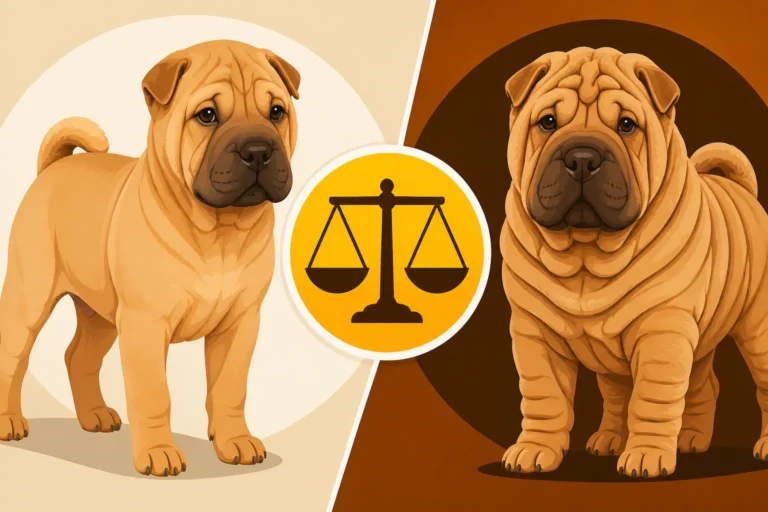
Early Shar Pei photographs suggest older dogs had fewer body wrinkles, but lighting, pose, and limited evidence prevent absolute conclusions.

Historical evidence reveals whether early Shar Pei dogs from southern China had fewer wrinkles than modern show dogs today.

Western breeders did not invent Shar Pei wrinkles, but selective breeding and rising demand made heavy folds more common.
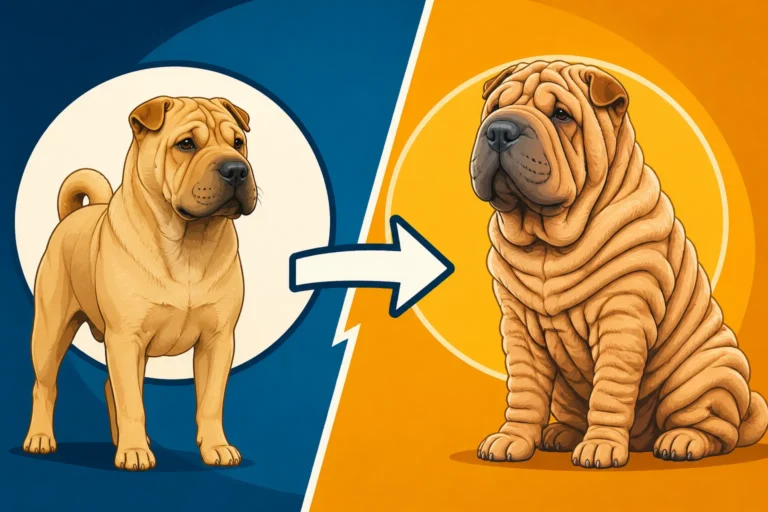
Shar Pei wrinkles existed before 1980, while revival breeding choices and population bottlenecks changed the modern look.

Shar Pei popularity growth led to high-volume commercial breeding operations, though not every breeder became a puppy mill.