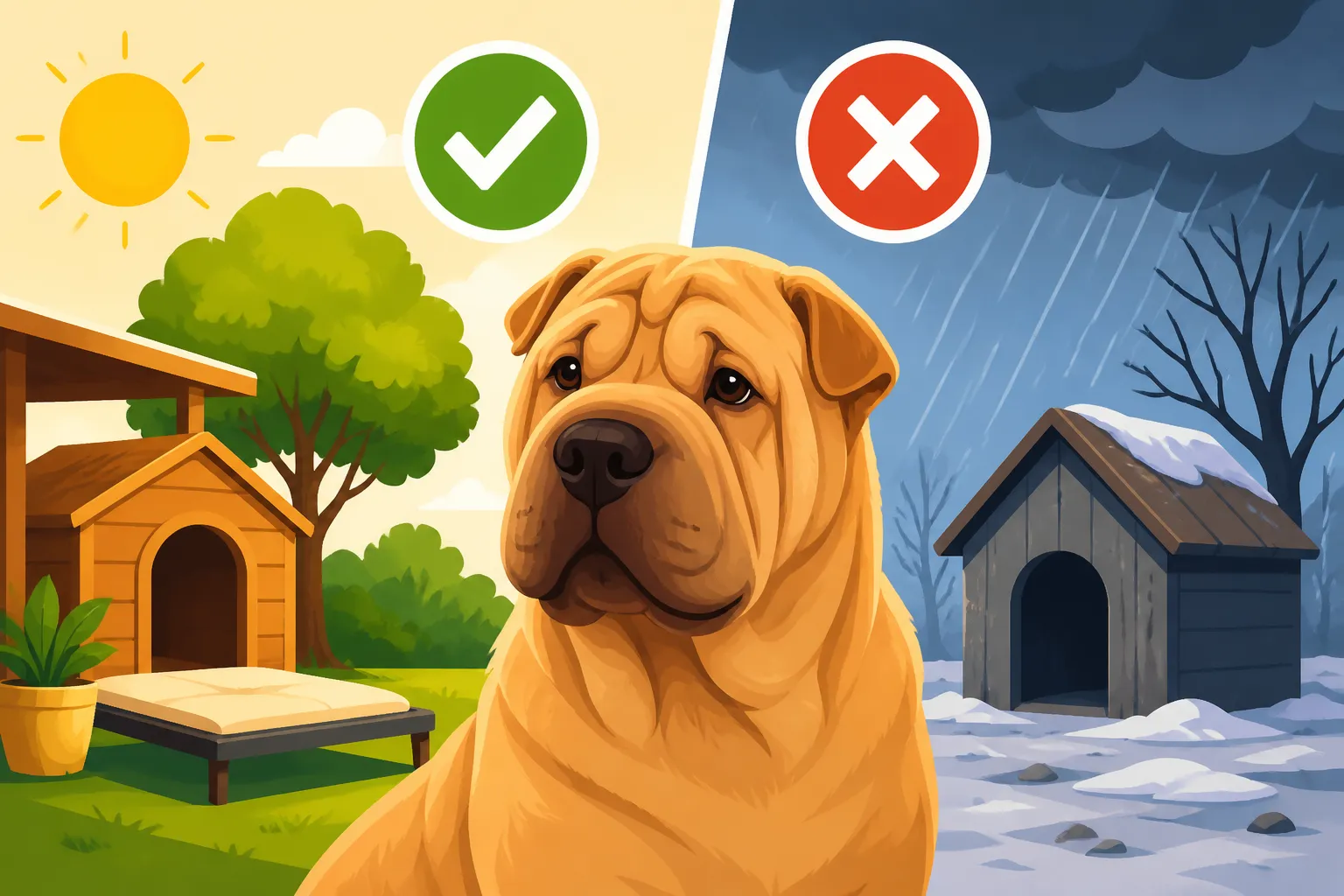
Whether a Shar Pei Can Live Outdoors
Many aspiring dog owners dream of a canine companion who can spend their days frolicking in a spacious backyard, perhaps even living primarily outdoors. It's a romantic notion, evoking images of a hardy, independent dog. However, when it comes to the distinctive Shar Pei, this vision often clashes sharply with reality, leading to serious health and behavioral complications. This guide will walk you through why a Shar Pei is fundamentally unsuited to outdoor living and what you need to understand to give your beloved wrinkly friend the best possible indoor life.
The Shar Pei's Unique Physiology and Its Vulnerability Outdoors
The Shar Pei is a breed unlike many others, with physical characteristics that make it uniquely vulnerable to the elements and outdoor living. These traits, while charming, demand a very specific environment and level of care that an outdoor setting simply cannot provide. It’s not about being delicate; it's about being built differently, and those differences come with responsibilities.
The Sensitivity of That Famous Wrinkly Skin
Let's talk about those wrinkles! They're what make a Shar Pei so iconic, but they're also a massive source of potential problems, especially outdoors. Each fold is a warm, moist crevice, a perfect breeding ground for bacteria and yeast if not kept meticulously clean and dry. Imagine trying to keep those folds pristine when your dog is constantly exposed to damp grass, mud, dust, and pollen. It's a losing battle.
These skin folds can trap moisture from dew, rain, or even just high humidity, leading rapidly to uncomfortable and often painful skin fold dermatitis. This isn't just a minor rash; it can become a deep, festering infection that requires veterinary attention, antibiotics, and sometimes even surgical intervention to remove the offending skin fold. An outdoor Shar Pei is almost guaranteed to suffer from chronic skin infections, turning its signature wrinkles into a source of constant discomfort and illness. Skin Fold Dermatitis on a Shar Pei describes this in more detail.
Beyond infections, the Shar Pei's skin itself is quite delicate. Many Shar Pei have a "horse coat," which feels coarse and bristly, almost like sandpaper, and can be prone to irritation from allergens or environmental factors. Prolonged exposure to sun, wind, or harsh outdoor conditions can exacerbate existing skin sensitivities or trigger new ones, making an already complex skin care routine an impossible task for an outdoor dog. You're fighting against nature, and nature usually wins in these circumstances.
The Narrow Ear Canals and Eye Issues
Another anatomical feature that severely limits a Shar Pei's suitability for outdoor life is their incredibly narrow ear canals. If you've ever owned a Shar Pei, you know that ear infections are often a "when," not "if," scenario. A Shar Pei Has the Narrowest Ear Canals of Any Breed for a reason, making them highly susceptible. When a Shar Pei lives outside, its ears are constantly exposed to moisture, dirt, debris, and parasites, all of which can easily get trapped in those tight canals.
This constant exposure means an exponentially higher risk of chronic, severe ear infections. These aren't just itchy; they can be excruciatingly painful, leading to head shaking, scratching, and even ruptured eardrums or hematomas. Treating these infections often requires specialized cleaning solutions, antibiotics, antifungals, and sometimes even sedated cleanings or surgical procedures to alleviate chronic issues. For an outdoor Shar Pei, ear infections become a perpetual struggle, significantly diminishing their quality of life.
Then there are their eyes. Many Shar Pei puppies, and some adults, suffer from entropion, a condition where the eyelids roll inward, causing the eyelashes to rub against the cornea. Entropion in a Shar Pei Puppy Is an Emergency, Not a Cosmetic Issue and needs immediate attention. While tacking can temporarily alleviate this in puppies, constant exposure to wind, dust, pollen, and debris outdoors can severely irritate already compromised eyes, leading to painful corneal ulcers and even blindness if left untreated. An outdoor environment makes managing and preventing these eye issues incredibly difficult, placing undue strain on their vision and comfort.
The Shar Pei and Temperature Extremes
Unlike many traditional outdoor working breeds, the Shar Pei is not built to withstand significant temperature fluctuations. Their unique physiology, including their coat type and facial structure, makes them particularly susceptible to both overheating in the heat and suffering in the cold. It’s a delicate balance that an unpredictable outdoor environment rarely provides.
Why Heat is a Shar Pei's Enemy
A Shar Pei's short, dense coat, while seemingly minimal, doesn't offer much insulation against high temperatures. More critically, their brachycephalic-like features (some Shar Pei have more prominent muzzles, but many retain flatter faces) can make them inefficient at cooling themselves down through panting. This means they can overheat much faster than other breeds. Humidity only makes this worse, as it reduces the effectiveness of evaporative cooling from panting.
Leaving a Shar Pei outdoors in hot weather, even with shade and water, is a recipe for heatstroke. Their internal temperature can spike dangerously, leading to organ damage, neurological issues, and even death. Think about how quickly a car heats up on a sunny day; your Shar Pei's body, especially with its dense skin and short snout, can experience a similar rapid increase. They simply don't have the same cooling mechanisms as breeds with longer muzzles or thinner coats. What Temperature a Shar Pei Is Comfortable In is much lower than you might think, making shaded outdoor living during summer months completely unsuitable.
Even seemingly mild warm days can be dangerous. A Shar Pei isn't a dog you can leave out in the sun for hours while you're at work. They need consistent access to cool, air-conditioned spaces to regulate their body temperature. Cooling mats, cooling vests, and even just simple tiled floors become essential tools for their comfort, none of which are reliably available in an outdoor setup. The risk of irreversible damage from overheating is simply too high.
The Dangers of Cold Weather for a Shar Pei
While heat is often the primary concern, cold weather also poses significant risks for a Shar Pei. Their short coats offer minimal protection against icy winds, rain, or snow. Unlike breeds with thick double coats, a Shar Pei can quickly become hypothermic if left exposed to cold, damp conditions. This isn't just about shivering; hypothermia can lead to a dangerously low body temperature, affecting organ function and overall health.
An outdoor shelter, even a well-insulated dog house, often isn't enough to keep a Shar Pei truly warm during freezing temperatures. They need to be indoors, wrapped in blankets, or snuggled up with their family to maintain their core body temperature. Imagine the challenge of keeping their delicate skin folds dry and free from frostbite or irritation in a wet, cold environment. It's a constant battle against moisture and chilling temperatures.
Furthermore, being cold and wet can exacerbate existing skin conditions, making them more prone to infection. The stress of constant cold exposure can also compromise their immune system, leaving them more vulnerable to illness. A Shar Pei's health requires a stable, temperate indoor environment, free from the harsh swings of outdoor weather.
Social and Behavioral Needs: More Than Just a Shelter
Beyond their physical vulnerabilities, Shar Pei are complex, sensitive dogs with profound social and emotional needs that are simply not met by an outdoor existence. They are not solitary creatures meant to patrol a yard; they are deeply bonded companions who thrive on interaction and security within their chosen family.
The Shar Pei's Bond with Its Family
Shar Pei are known for being incredibly devoted to their families. They often develop a strong, almost singular bond with one or two primary caregivers, becoming incredibly loyal and protective. This intense bond means they thrive on close companionship, daily interaction, and being an integral part of family life. Leaving a Shar Pei outdoors isolates them from this crucial social structure, which is as fundamental to their well-being as food and water. How a Shar Pei Bonds to Its Family speaks volumes about their need for connection.
When denied this close interaction, a Shar Pei can become anxious, stressed, and even depressed. They are not breeds that do well with limited human contact. They need to be inside, sharing space with their people, observing daily routines, and receiving affection and attention. An outdoor dog can feel neglected, no matter how much space or shelter it has, simply because it's cut off from its pack.
This isn't about coddling; it's about understanding the breed's intrinsic nature. Their aloofness with strangers is often balanced by intense loyalty to their inner circle. To deny them that closeness is to deny a fundamental part of what makes a Shar Pei, well, a Shar Pei. It can lead to behavioral issues stemming from insecurity, loneliness, and a lack of proper guidance.
Addressing Guarding Instincts and Boredom
It's true that Shar Pei were historically bred for guarding, and they retain a strong protective instinct. A Shar Pei Was Bred to Guard, Not to Greet is an important distinction. However, an unsupervised outdoor existence can channel this instinct in problematic ways. A bored, undersocialized outdoor Shar Pei might become overly territorial, aggressive towards strangers, or reactive to anything passing by the yard, leading to incessant barking or dangerous confrontations. Without proper indoor training and socialization, their guarding tendencies can spiral out of control.
An outdoor environment, no matter how large, rarely provides enough mental stimulation for an intelligent dog like a Shar Pei. Boredom can lead to destructive behaviors such as digging, chewing, and fence fighting. Without interactive toys, training sessions, and the varied stimulation of an indoor home, an outdoor Shar Pei can quickly become frustrated and develop undesirable habits. Even the most robust chew toys won't replace human interaction and mental challenges. Toys purchased from retailers like Chewy or Amazon can provide some enrichment, but they're not a substitute for active engagement with their human family.
Furthermore, a Shar Pei's limited peripheral vision, due to their deep-set eyes and facial structure, means they can be easily startled by unexpected approaches. Why a Shar Pei Startles: It Cannot See You Coming. Being outdoors, where they might be approached by people or other animals without warning, can lead to defensive reactions that are misunderstood, potentially escalating into dangerous situations. They need a controlled environment where their guardians can manage introductions and prevent surprises.
Health Implications of Outdoor Living: Exacerbating Breed-Specific Issues
Beyond the immediate concerns of skin, ears, eyes, and temperature, a Shar Pei living outdoors faces a significantly elevated risk for a host of other breed-specific health problems. Many of these conditions are already challenging to manage in a controlled indoor environment, making outdoor living a hazardous proposition.
Increased Risk of Infections and Parasites
When a Shar Pei lives outdoors, they are constantly exposed to environmental pathogens, increasing their risk of bacterial, fungal, and parasitic infections. Their unique skin folds, as discussed, are perfect incubators for these issues. Something as simple as a scratch from a bush or a bug bite can quickly turn into a serious infection in the damp, dirty environment of an outdoor dog. Regular bathing with medicated shampoos, often necessary for Shar Pei, becomes much harder to maintain effectively when they're living outside.
Parasites, both internal and external, are a much greater threat for an outdoor dog. Fleas, ticks, and mosquitos are not just irritating; they can transmit serious diseases like Lyme disease, heartworm, and anaplasmosis. While preventative medications are crucial for all dogs, an outdoor Shar Pei's constant exposure elevates the risk of transmission and infection, despite best efforts. Constant vigilance for Whether a Shar Pei Gets Demodectic Mange or other skin parasites becomes an almost impossible task.
Beyond the visible, constant exposure to dust, pollen, and other environmental allergens can trigger or worsen allergic reactions in many Shar Pei. Their sensitive immune systems, sometimes prone to conditions like What IgA Deficiency Means for a Shar Pei, can be overwhelmed by this constant barrage, leading to chronic skin issues, respiratory problems, and general malaise.
The Strain on Overall Health and Lifespan
The cumulative stress of dealing with temperature extremes, environmental allergens, parasites, and chronic infections takes a tremendous toll on a Shar Pei's overall health. This constant battle can weaken their immune system, making them more susceptible to other illnesses and potentially exacerbating breed-specific conditions like Familial Shar Pei Fever (FSF) or amyloidosis. Familial Shar Pei Fever Is Not an Infection is important to remember, but the stress of an outdoor life could theoretically trigger episodes or worsen recovery.
A Shar Pei's kidneys are already a point of concern, with Why a Shar Pei's Kidneys Need Watching From Two Years Old being a common reality for the breed. The constant strain of fighting off infections and inflammation in an outdoor environment could put additional, unnecessary pressure on these vital organs, potentially accelerating the progression of kidney disease. Regular veterinary check-ups and early detection of issues, which are vital for a Shar Pei, are much harder to manage for a dog living outside.
Ultimately, providing a Shar Pei with an outdoor existence is a disservice to their complex health needs. It's an almost certain path to a life filled with chronic discomfort, pain, and significantly reduced lifespan. Owners who want to provide a long, healthy life for their Shar Pei need to commit to providing a sheltered, comfortable indoor environment where their unique needs can be met.
Providing a Suitable Indoor Environment for Your Shar Pei
Since outdoor living is largely unsuitable, the focus shifts to creating an optimal indoor environment for your Shar Pei. This means understanding their need for comfort, cleanliness, and mental stimulation within the confines of your home. It’s about more than just letting them inside; it’s about crafting a haven.
Comfort and Climate Control Indoors
The most critical aspect of an indoor environment for a Shar Pei is consistent climate control. They need to be in a home that is comfortably air-conditioned in warm weather and adequately heated in cold weather. This isn't a luxury; it's a necessity for their well-being and health. Investing in reliable heating and cooling systems is part of the commitment to owning this breed.
Beyond ambient temperature, consider specific comfort items. A soft, supportive bed or several beds placed throughout the house gives them dedicated spaces to rest and feel secure. Elevated beds can offer better air circulation in warmer months, while plush blankets provide warmth in colder ones. Even cooling mats, easily found on Amazon, can be a lifesaver on particularly warm days, offering a localized cool spot.
For those moments when they do go outside for bathroom breaks or short, supervised play, ensure immediate return to their climate-controlled sanctuary. They should never be left to 'hang out' in the yard. Quick walks, especially during cooler parts of the day in summer or with appropriate protection in winter, are fine, but their primary living space must be indoors.
Essential Grooming and Health Management
Living indoors makes it infinitely easier to manage a Shar Pei's critical grooming and health needs. Regular cleaning of their skin folds, for instance, becomes a manageable routine rather than an impossible task. Every Fold on a Shar Pei Is a Place Something Grows, so keeping them dry and clean with wipes or cotton pads is paramount. This simple daily attention can prevent painful infections that would undoubtedly arise from constant outdoor exposure.
Similarly, maintaining ear hygiene and monitoring their eyes for signs of irritation or entropion is much more straightforward when your dog lives inside. You can perform routine checks, administer medications if needed, and easily schedule and attend regular veterinary appointments. Early detection of issues like Signs a Shar Pei's Kidneys Are Failing is crucial, and a dog living indoors is far more accessible for routine health screenings and preventative care.
Think of items like medicated shampoos and specialized ear cleaners, often recommended by vets and available through retailers like Chewy. These are vital tools in a Shar Pei owner's arsenal, and their effective use depends entirely on the dog living in a clean, controlled environment where these treatments can be consistently applied and maintained.
Enriching the Indoor Life
An indoor life doesn't mean a boring life for a Shar Pei. In fact, it allows for a much richer, more controlled, and safer form of enrichment. Puzzle toys, KONGs stuffed with treats, and interactive feeders can provide mental stimulation, reducing boredom and preventing destructive behaviors. Brands like Ollie also offer fresh food options that can be a great way to engage your dog at meal times and contribute to their overall health.
Regular, structured play sessions indoors or in a secure, supervised outdoor area are essential. Tug-of-war, fetch in the hallway, or even learning new tricks can provide physical and mental exercise. Unlike a dog left to its own devices outdoors, an indoor Shar Pei benefits from guided play and training that strengthens their bond with you and channels their intelligence constructively.
Socialization, while ideally started in puppyhood, continues throughout a Shar Pei's life. Indoor living allows for controlled introductions to visitors, gradual exposure to new sights and sounds, and opportunities to learn appropriate household behavior. This fosters a well-adjusted, confident companion rather than a reactive, isolated outdoor sentinel. Socialize a Shar Pei Before Twelve Weeks or Pay for It Later isn't just about other dogs; it's about the entire world they'll inhabit.
Understanding the Trade-Offs: Why the Best Life is Inside
Choosing to bring a Shar Pei into your home is choosing to embrace a life defined by their unique needs and challenges. It’s a commitment to a breed that, while incredibly rewarding, demands a different kind of care than many other dogs. The notion of an outdoor dog, while appealing, simply doesn't align with the Shar Pei's fundamental welfare.
The Misconception of "Hardy"
It's easy to look at a Shar Pei's stoic demeanor and somewhat intimidating appearance and assume they are a "hardy" breed capable of withstanding anything. But as we've explored, their hardiness is largely a facade when it comes to environmental exposure. Their skin, ears, eyes, and temperature regulation systems are inherently delicate and demand a protected environment. They are not like a rugged farm dog or a cold-weather sled dog; they are a unique companion breed whose well-being hinges on careful management of their environment.
The frustrations that arise from constant skin issues, ear infections, or managing heatstroke are very real for Shar Pei owners. These aren't minor inconveniences; they can be chronic, painful, and expensive problems. Four Bills Every Shar Pei Owner Should Expect often highlights these breed-specific health costs, and outdoor living only amplifies them. The easiest and most impactful way to mitigate many of these issues is by providing a clean, temperate, and secure indoor home.
Ultimately, a truly hardy dog is one that can thrive in its given environment. For a Shar Pei, that environment is overwhelmingly an indoor one. To ignore this reality is to set both yourself and your dog up for a lifetime of preventable suffering.
Investing in an Indoor Life is an Investment in Health and Happiness
When you commit to providing a Shar Pei with an indoor life, you are making a profound investment in their health, happiness, and longevity. You are giving them the best chance to avoid chronic infections, heatstroke, frostbite, and the myriad of other issues that an outdoor existence inevitably brings. You are embracing their need for companionship and mental stimulation, fostering a strong, loving bond.
Think about the long-term benefits: a happier, healthier dog often means fewer emergency vet visits, less medication, and a more comfortable life as they age. Caring for a Shar Pei Past Seven becomes a much more manageable and joyful experience when their foundational needs have been met throughout their younger years. A well-cared-for indoor Shar Pei can be a wonderful, affectionate, and quirky companion, bringing immense joy to their family.
While the dream of an outdoor dog might persist, the reality for a Shar Pei dictates a different path. It's a path that requires understanding, dedication, and a commitment to providing an indoor sanctuary where their unique breed characteristics can be managed and celebrated, allowing them to truly flourish as cherished family members.
| Aspect of Outdoor Living | Shar Pei Suitability | Reason for Low Suitability |
|---|---|---|
| Temperature Tolerance | Very Low | Prone to heatstroke (short snout, dense skin) and hypothermia (single coat, poor insulation). |
| Skin Health | Very Low | Wrinkles trap moisture, dirt; high risk of skin fold dermatitis, infections, allergies. |
| Ear Health | Very Low | Narrow canals easily trap debris/moisture; high risk of chronic ear infections. |
| Eye Health | Low | Entropion risk; easily irritated by wind, dust, pollen leading to ulcers. |
| Social Needs | Very Low | Deeply bonded to family; isolation causes stress, anxiety, behavioral issues. |
| Mental Stimulation | Low | Prone to boredom, destructive habits, excessive barking without interaction. |
| Parasite Exposure | High Risk | Increased exposure to fleas, ticks, mosquitos, leading to disease transmission. |
| Allergen Exposure | High Risk | Constant exposure to environmental allergens exacerbates skin sensitivities. |
| Overall Stress | High | Constant environmental challenges stress immune system, impact lifespan. |
Disclaimer
This article is for general informational purposes only and does not constitute professional advice. Laws, prices and regulations vary by location and change over time. Consult a qualified professional for guidance on your specific situation.


