Whether a Wider Gene Pool Would Fix Shar Pei Fever
It's absolutely heartbreaking to watch your beloved Shar Pei suffer from a fever episode, feeling utterly helpless as their temperature spikes, their hocks swell, and they just look utterly miserable. As owners, we desperately want to understand why this happens and if there's any way to stop it, to prevent that distress. This guide delves into one of the most persistent questions in the Shar Pei community: could a wider gene pool actually "fix" Familial Shar Pei Fever (FSF) and other health issues plaguing our wrinkly companions?
The Genetic Blueprint of Familial Shar Pei Fever
Understanding FSF means diving deep into the very DNA that makes a Shar Pei unique. It's not just a random illness; it's intricately woven into the breed's genetic fabric, a consequence of the very traits we often find so endearing.
The HYAL2 Gene and Mucinosis
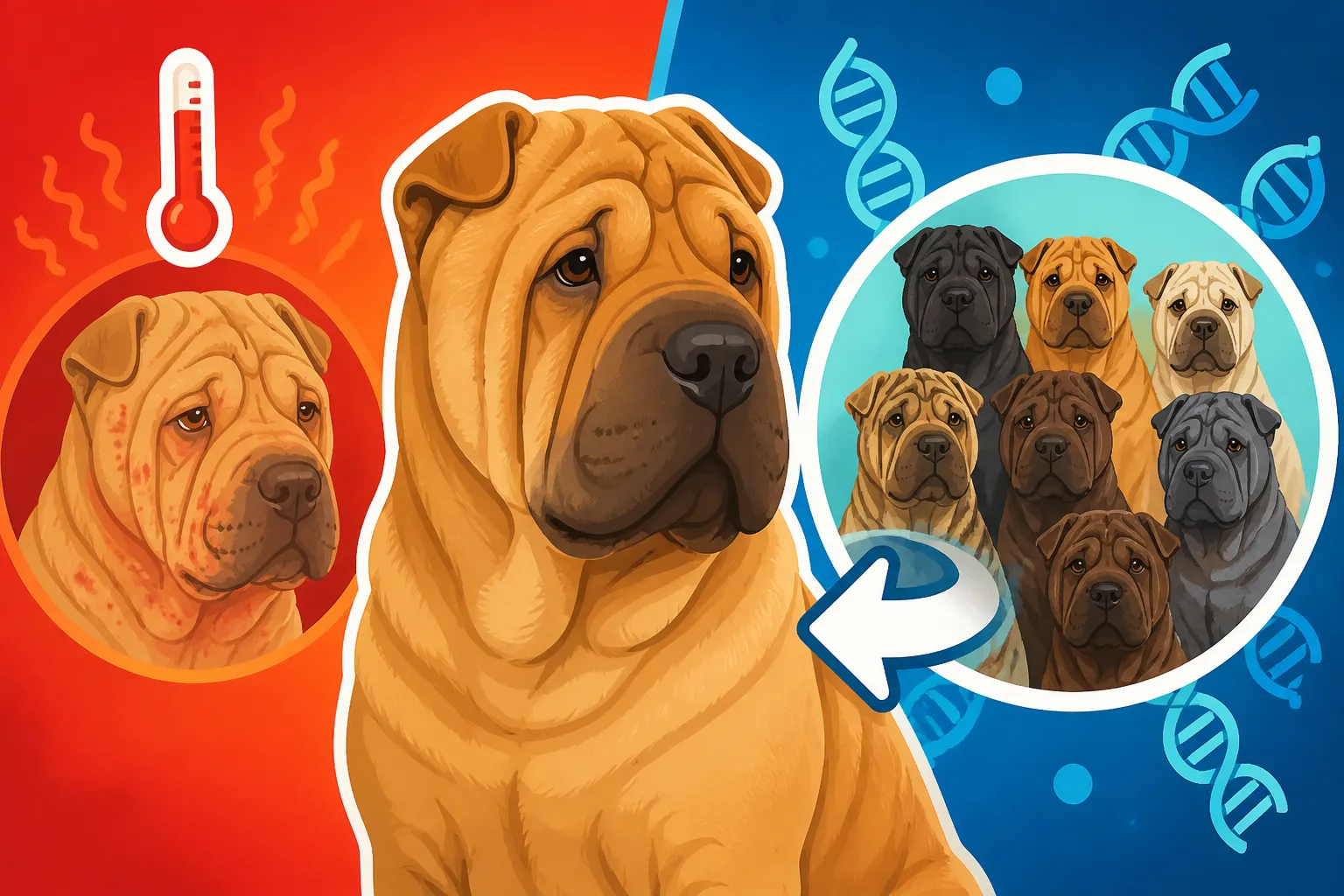
The cornerstone of the Shar Pei's distinctive appearance — those incredible wrinkles, the plush muzzle, the often-puffy look of a young puppy — is due to an overabundance of hyaluronic acid (HA) in their skin. This condition is called mucinosis. While it gives them their signature look, it's also directly linked to the curse of Familial Shar Pei Fever. Research has pinpointed a specific gene, HYAL2, and more precisely, a duplication in a regulatory region upstream of this gene, as the culprit. This mutation essentially ramps up the production of hyaluronic acid, causing it to accumulate not just in the skin, but also in other tissues.
When a Shar Pei experiences a fever episode, it's often an inflammatory response to this excess HA. Imagine your body suddenly having too much of a particular compound, and your immune system reacting to it as if it were a foreign invader. That's essentially what happens. The inflammation can manifest in different ways, leading to the characteristic swelling of the hocks (the joints above their back paws) and general discomfort. It’s a cruel irony that One Mutation Gave the Shar Pei Its Wrinkles and Its Fever, turning their most defining feature into their greatest vulnerability. It's a complex interaction, where Why Hyaluronic Acid Makes a Shar Pei Wrinkle is intrinsically linked to their fever predisposition.
The Breed Bottleneck and Limited Diversity
The story of the Shar Pei is one of remarkable survival, but also of a severe genetic bottleneck. In the 1970s, the breed was on the brink of extinction. Sixty Shar Pei Were Left in 1978, a tiny handful of individuals that formed the foundation for nearly all modern Shar Peis outside of China. While it's a testament to dedicated individuals like Matgo Law that the breed was saved, this dramatically small founding population had a profound, and largely negative, impact on the breed's genetic diversity.
When you start with such a small gene pool, you inevitably "lock in" certain genetic traits, both good and bad. There simply isn't enough genetic variation to naturally dilute or eliminate undesirable genes. This means that a relatively high frequency of genes predisposing Shar Peis to conditions like FSF, certain skin issues, and even specific eye problems, became widespread throughout the breed. It's a classic example of What Being Saved Did to the Shar Pei's Health, where the very act of rescue inadvertently concentrated these genetic vulnerabilities. Every Shar Pei today carries a piece of that limited genetic history, making them both unique and uniquely challenged.
The Theory: How a Wider Gene Pool Could Help
The idea of a wider gene pool isn't just a fantasy; it's a core principle of genetic health in many species, including dogs. For the Shar Pei, it's a theoretical path to potentially mitigating some of their most pervasive health struggles.
Diluting Problematic Genes
The primary theoretical benefit of introducing genetic material from outside the Shar Pei breed – a process known as outcrossing – is the dilution of those problematic genes responsible for FSF and excessive mucinosis. If you breed a Shar Pei carrying multiple copies of the problematic HYAL2 gene variant with a dog from a different breed that does not carry that variant, the offspring will inherit only one copy from the Shar Pei parent, and none from the outcross parent. Over successive generations, through careful backcrossing to Shar Peis, the goal would be to reduce the overall prevalence of the problematic HYAL2 gene while retaining desirable Shar Pei characteristics.
This isn't about eradicating the gene entirely, which might be impossible without losing the breed's defining wrinkles. Instead, it's about reducing the copy number of the HYAL2 gene, which research suggests directly correlates with the severity and frequency of FSF episodes. By lowering the genetic predisposition, fewer Shar Peis would suffer from severe mucinosis and, by extension, fewer would experience FSF. It's a long-term genetic strategy, focusing on gradual improvement rather than an overnight cure.
Increasing Overall Vigor and Health
Beyond just FSF, a wider gene pool offers the promise of improving the Shar Pei's general health and resilience across the board. The phenomenon known as "hybrid vigor" or heterosis, which often sees offspring of two unrelated purebred parents being healthier and more robust than either parent, could play a significant role. With a limited gene pool, recessive genetic diseases that might otherwise be rare can become common, simply because there's a higher chance of two carriers breeding.
By introducing genes from breeds with different genetic predispositions, you could theoretically bring in "healthier" alleles for a multitude of traits. This might lead to improvements in common Shar Pei issues such as their propensity for various skin problems, including yeast and bacterial infections often exacerbated by their folds. Skin Is the Shar Pei's Largest Problem by Surface Area, and bringing in genes that contribute to healthier skin architecture could be transformative. Similarly, the breed's notoriously narrow ear canals, which make A Shar Pei Has the Narrowest Ear Canals of Any Breed and lead to chronic ear infections, could benefit from outcrossing with breeds having more open ear structures. A broader genetic foundation could genuinely lead to more robust dogs, less prone to the myriad of health complaints that currently burden the breed.
To illustrate the potential impact, let's consider a hypothetical comparison:
| Characteristic | Narrow Gene Pool (Current Shar Pei) | Wider Gene Pool (Hypothetical Outcrossed Shar Pei) |
|---|---|---|
| FSF Incidence | High due to concentrated HYAL2 mutation and high copy numbers. | Potentially lower due to dilution of HYAL2 mutation; fewer severe cases. |
| Mucinosis Severity | Often pronounced, leading to excessive wrinkles and inflammation. | Moderate, aiming for breed type without exaggerated, health-compromising mucin. |
| Skin Health | Predisposition to fold dermatitis, allergies, demodex. | Improved resilience against skin infections; potentially fewer allergies. |
| Ear Health | Very narrow canals, high incidence of chronic infections. | Wider ear canals, reduced susceptibility to infections. |
| Eye Health | High incidence of entropion, especially in puppies. | Reduced risk of entropion due to less exaggerated facial structure. |
| Overall Vigor | May be reduced due to inbreeding depression. | Increased vitality and resilience (hybrid vigor). |
| Genetic Diseases | Higher risk of certain recessive conditions due to limited diversity. | Lower risk of various genetic diseases due to new genetic input. |
| Breed Type | Distinct, exaggerated features (wrinkles, muzzle). | Modified features, aiming for a healthier interpretation of the breed standard. |
This table highlights the theoretical benefits, but it also subtly points to the challenges associated with such a change, particularly regarding breed type.
The Practical Realities and Challenges of Widening the Gene Pool
While the genetic theory is compelling, implementing a widespread outcrossing program for the Shar Pei is fraught with significant practical and philosophical hurdles. It's far from a simple solution.
Loss of Breed Type and Identity
This is perhaps the biggest and most emotionally charged obstacle. For dedicated Shar Pei enthusiasts and breeders, the breed's distinctive appearance and temperament are paramount. Outcrossing, by its very nature, means introducing characteristics from other breeds. The initial generations of an outcross program would likely produce dogs that don't look, move, or even act entirely like the Shar Pei we know. Imagine a Shar Pei with fewer wrinkles, a less distinct "hippo" muzzle, or even a different tail set. This could be perceived as a "loss" of the very identity of the breed.
Breed standards, established by kennel clubs like the AKC, define what an ideal Shar Pei should look like, often including specific details about their wrinkles, their small ears, and their unique "meat mouth" or "bone mouth" muzzle shape. Deliberately breeding away from these characteristics, even for health, would challenge the core tenets of breed preservation. There's a constant tension between health and aesthetics. Some argue that The Blue Black Tongue a Shar Pei Shares With One Other Breed is a non-negotiable trait, or that a Shar Pei isn't truly a Shar Pei without its deep head wrinkles. This debate can become highly polarized, making it difficult to gain widespread acceptance for outcrossing initiatives, especially if it means questioning Whether the Wrinkles Could Be Bred Out Entirely in pursuit of health.
The Long Road of Outcrossing Programs
Even if the will exists, outcrossing is not a quick fix; it's a multi-generational commitment requiring immense patience, scientific rigor, and dedicated resources. A typical outcross program involves:
- Selecting an Outcross Breed: This is critical. The chosen breed needs to be genetically distinct enough to bring in new healthy genes, but also possess a temperament and physical structure that could blend harmoniously with the Shar Pei over time. They would ideally be free of the specific genetic predispositions that plague the Shar Pei.
- First Generation (F1): Breeding a Shar Pei to the chosen outcross breed. The resulting puppies will be 50% Shar Pei, 50% other breed, and will likely look quite different. They may exhibit hybrid vigor and improved health, but won't be recognizable as purebred Shar Peis.
- Backcrossing: These F1 dogs are then typically bred back to purebred Shar Peis. This process is repeated over several generations (F2, F3, F4, etc.), gradually increasing the percentage of Shar Pei genes while carefully selecting for improved health traits and desirable Shar Pei characteristics.
- Genetic Testing and Selection: At every step, breeders would need to utilize advanced genetic testing to monitor the presence of the problematic HYAL2 gene, as well as screen for other health issues. This is where services that provide accessible vet-prescribed medications for managing current health issues, like Chewy's online pharmacy, become invaluable for supporting the health of these breeding animals. Knowing Whether a Shar Pei's Copy Number Can Be Tested is essential for making informed breeding decisions.
This entire process can take decades, requiring meticulous record-keeping, scientific analysis, and an unwavering commitment from a dedicated group of breeders. It's a significant undertaking that goes far beyond typical breeding practices.
The Political and Social Hurdles
Beyond the practicalities, there are immense political and social hurdles within the purebred dog community. Kennel clubs historically have been resistant to deliberate outcrossing, viewing it as a threat to breed purity and established lines. Gaining official recognition for an outcross program and the resulting offspring can be incredibly challenging, often requiring years of advocacy and data submission.
There's also the "public perception" challenge. Would prospective puppy buyers embrace a "Shar Pei" that doesn't fit the familiar mold? Would judges in the show ring accept these dogs? Overcoming ingrained perceptions and traditions takes immense effort and a willingness to prioritize long-term health over immediate aesthetic conformity. It demands a shift in philosophy, moving from strict adherence to a visual standard to a broader focus on genetic health and longevity. It's not just about what a dog looks like, but its quality of life – a perspective that is slowly gaining traction but still faces uphill battles.
Current Approaches and Future Outlook
Given the complexities of widespread outcrossing, what are breeders and owners doing now, and what does the future hold for Shar Pei health?
Responsible Breeding Within the Existing Pool
Even without formal outcross programs, responsible breeders are making significant strides by working diligently within the existing Shar Pei gene pool. This involves a much more rigorous approach to health testing and selective breeding. Breeders dedicated to improving the breed prioritize:
- Health Screening: Beyond basic vet checks, responsible breeders perform extensive health screenings, including hip and elbow evaluations, thyroid panels, and specialized eye exams. Critically, they also pay close attention to the history of Familial Shar Pei Fever in their lines. Keeping track of Whether a Shar Pei Breeder Should Show Fever History transparently is a hallmark of an ethical breeder.
- Genetic Testing: As genetic tests for the HYAL2 gene become more refined, breeders can test their breeding stock to understand the copy number of the problematic gene. This allows them to make informed decisions, aiming to breed dogs with lower copy numbers to reduce the risk of FSF in offspring. While it's a slow process, consistently breeding for fewer copies can, over time, decrease the overall prevalence and severity of FSF in the breed, moving towards Whether a Shar Pei Can Be Bred Away From Fever.
- Temperament and Conformation: Responsible breeders also focus on sound temperament and correct conformation (structure) to ensure the dogs are physically capable and mentally stable companions. They understand that a healthy dog is not just free from disease, but also well-adjusted and physically functional.
- Transparency and Support: Ethical breeders are open about the health history of their dogs, provide health guarantees, and offer lifelong support to puppy owners. They understand that owning a Shar Pei comes with unique challenges and are there to guide new owners through them.
Supporting Research and Genetic Screening
The most promising avenue for immediate and future impact lies in continued scientific research and the widespread adoption of genetic screening tools. Scientists are constantly learning more about the intricacies of the Shar Pei genome and the specific mechanisms behind FSF and other breed-specific conditions.
- Understanding Copy Numbers: Research into How Copy Number Changes a Shar Pei's Risk is crucial. The more we understand how many copies of the HYAL2 mutation a Shar Pei carries, the better breeders can select for healthier dogs, and owners can understand their dog's individual risk.
- Diagnostic Tools: Advances in veterinary diagnostics allow for earlier detection of potential issues. For instance, a regular urine protein creatinine (UPC) ratio can help monitor kidney health, a critical concern for Shar Peis, especially those prone to FSF, as FSF can lead to amyloidosis, a fatal kidney disease.
- Accessible Resources: Owners can play a vital role by advocating for health testing with their vets and utilizing available resources. Keeping detailed records, such as with Whether a Shar Pei Owner Should Keep a Fever Log, can provide valuable information to veterinarians and researchers. Many pet supply companies, like Chewy, are now offering pharmacy services and various health products that support chronic condition management, making it easier for owners to access vet-prescribed medications and supplies. This growing accessibility of healthcare resources, often available at competitive prices, means that proactive health management is more feasible than ever before.
While the dream of a completely "fixed" Shar Pei through a radically wider gene pool remains a complex, distant, and potentially controversial prospect, the ongoing efforts of responsible breeders and scientific researchers, combined with informed owner choices, are steadily working towards a healthier future for these incredible dogs.
Disclaimer
This article is for general informational purposes only and does not constitute professional advice. Laws, prices and regulations vary by location and change over time. Consult a qualified professional for guidance on your specific situation.