How Many Bone Mouth Shar Pei Are Left
It’s a question many dedicated Shar Pei enthusiasts wrestle with: just how many true "Bone Mouth" Shar Pei are left in the world? If you're passionate about the breed, you likely know that the distinction between a "Bone Mouth" and a "Meat Mouth" isn't just cosmetic, and for those hoping to find a dog closer to the breed's original form, the search can be incredibly frustrating. This guide delves into the history, characteristics, and current status of the Bone Mouth Shar Pei, exploring why pinning down an exact number is so difficult and what it means for the future of this unique lineage.
What Exactly is a "Bone Mouth" Shar Pei?
The terms "Bone Mouth" and "Meat Mouth" are crucial for understanding the history and physical variations within the Shar Pei breed. These aren't official classifications recognized by all kennel clubs, but rather terms used by breeders and enthusiasts to describe distinct physical appearances, primarily concerning the muzzle and overall wrinkle structure. For many, the Bone Mouth represents a connection to the breed's ancestral roots, before the intensive breeding that led to the exaggerated features seen in some modern Shar Pei.
Distinguishing Features of the Bone Mouth
When you hear someone talk about a "Bone Mouth" Shar Pei, they're generally referring to a dog with a much less exaggerated, more athletic appearance compared to the heavily wrinkled, puffy-muzzled "Meat Mouth" type. Imagine a dog that looks ready for work, lean and alert, rather than one bred primarily for its striking, plush aesthetic.
A Bone Mouth Shar Pei typically has a more streamlined head with a less padded, often triangular muzzle. The wrinkles, if present, are usually confined to the forehead and perhaps a slight dewlap, rather than covering the entire face and body. Their eyes are often wider set and less sunken, allowing for better peripheral vision – a practical trait for a working dog. The bone structure beneath the skin is much more apparent, hence the "bone mouth" descriptor. Their ears tend to be very small and lay flat, almost hugging the head. Many enthusiasts will also tell you that the coat on a true Bone Mouth is almost exclusively the very short, harsh "horse coat" that gave the breed its "sand skin" name. This type of coat, while sometimes prickly to the touch, is thought to be more practical for repelling debris and providing protection without trapping moisture. For more on this, you might find How a Horse Coat Shar Pei Differs From a Brush Coat interesting.
Comparing Bone Mouth to Meat Mouth
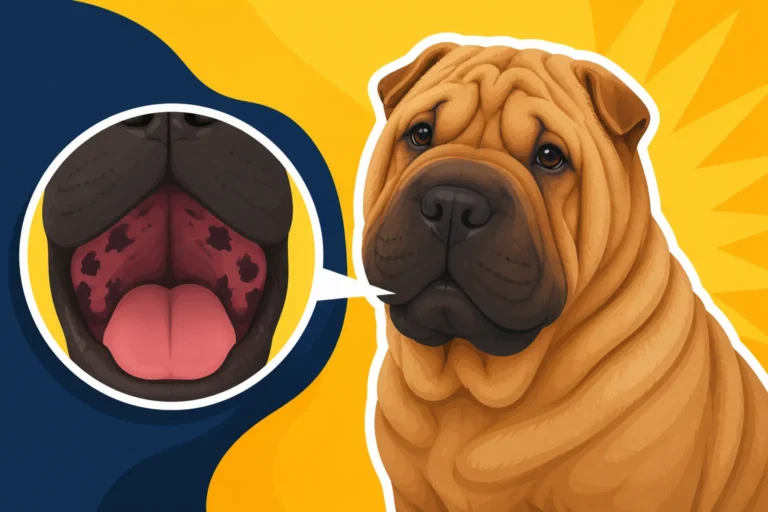
The "Meat Mouth" Shar Pei is what most people picture when they think of the breed today: a dog with a broad, fleshy muzzle and abundant, loose skin, often covering the face, neck, and sometimes the entire body. These are the dogs that truly live up to the image of a "walking wrinkle," and their skin can hang so heavily that it necessitates procedures like eye tacking in puppyhood to prevent the eyelids from rolling inward.
The differences are quite striking side-by-side. Where the Bone Mouth has a lean, defined jawline, the Meat Mouth has a thick, padded muzzle that can sometimes resemble a hippopotamus. The eyes of a Meat Mouth are often deeply set and partially obscured by rolls of skin, leading to vision issues and contributing to the breed's tendency to startle easily. The overall body wrinkle is also far more pronounced in the Meat Mouth, creating skin folds that require diligent care to prevent infections. You can read more about how this characteristic developed in Whether a Meat Mouth Shar Pei Has a Padded Muzzle. While both types share the signature blue-black tongue and curled tail, their fundamental structures and the health challenges associated with them often differ significantly.
Why the Distinction Matters to Enthusiasts
For many, the distinction between Bone Mouth and Meat Mouth isn't just about appearance; it's about preserving the original working qualities and health of the breed. Proponents of the Bone Mouth often argue that this type is healthier, with fewer issues related to skin folds, entropion (inverted eyelids), and even some of the systemic issues like Familial Shar Pei Fever, though this connection is still debated. They seek a dog that embodies the breed's original function as a farm guardian, hunter, and fighting dog in ancient China.
Finding a true Bone Mouth is often seen as a quest to reconnect with the historical Shar Pei, a dog that was rugged and functional. These enthusiasts are typically very dedicated to responsible breeding practices, focusing on temperament and health clearances above exaggerated aesthetics. They understand that while the "Meat Mouth" became popular, it brought with it a host of challenges. This dedication often means a longer search and a deeper dive into a breeder's history and practices.
The Historical Context: Why the Shar Pei Almost Disappeared
To understand the current rarity of the Bone Mouth Shar Pei, we have to look back at a tumultuous period in the breed's history, a time when the very existence of the Shar Pei hung by a thread. This near-extinction event played a pivotal role in shaping the breed we know today and indirectly contributed to the challenges of finding the more traditional types.
The Near Extinction of the Breed
The Shar Pei, once a common working dog in rural China, faced a devastating decline during the mid-20th century. Political and economic changes in China, particularly during the Communist Revolution and subsequent periods, led to widespread dog culling. Dogs were seen as symbols of bourgeois excess, and owning them became heavily taxed or even outright banned. This resulted in the systematic extermination of dog populations across mainland China. The Shar Pei, like many other native breeds, was pushed to the brink of annihilation.
It's hard to imagine a breed going from being relatively common to almost completely vanishing, but that's exactly what happened. Historical accounts suggest that by the 1970s, only a handful of Shar Pei remained, mostly in Hong Kong and Macau, where they were largely overlooked by the political turmoil of the mainland. This period of severe population reduction created an extreme genetic bottleneck, meaning that the few surviving dogs formed the foundation of the entire modern breed. This bottleneck is a critical factor in understanding the breed's health issues, as detailed in What Being Saved Did to the Shar Pei's Health.
The Role of Matgo Law and the Breed's Rescue
The Shar Pei owes its survival, in large part, to the efforts of one man: Matgo Law. Living in Hong Kong, Law was deeply concerned about the impending extinction of these unique dogs. In 1978, he penned a passionate appeal in an American dog magazine, Dogs magazine, begging for help to save the remaining Shar Pei. This dramatic plea, often titled "Help Save the Chinese Shar-Pei," highlighted the breed's plight and its unique characteristics.
The response was overwhelming. Americans, fascinated by the exotic appearance and endangered status of the Shar Pei, began importing dogs from Hong Kong. This influx of interest and new homes saved the breed from vanishing forever. The Year Matgo Law Wrote His Letter marks a crucial turning point. While this rescue was undoubtedly a triumph for the breed, it also set the stage for later developments that would significantly alter its appearance and genetic makeup. The initial dogs imported formed an extremely narrow gene pool, impacting subsequent generations.
The Genetic Bottleneck
The handful of dogs rescued from Hong Kong and Macau, though critically important for the breed's survival, represented a severely limited genetic pool. This "genetic bottleneck" meant that future generations of Shar Pei would descend from a very small number of ancestors, concentrating any existing genetic predispositions. For instance, the mutation responsible for the breed's characteristic wrinkles and its fever syndrome was present in this small founding population, and as the breed recovered, this trait became amplified.
The rapid recovery and subsequent popularity of the Shar Pei in the West, particularly during the 1980s, led to intensive breeding. Without a broad genetic base, certain traits became fixed, and others were unintentionally lost. This limited genetic diversity has contributed to the prevalence of specific health issues within the breed, including skin conditions, eye problems, and the infamous Familial Shar Pei Fever. The sheer volume of breeding that followed the breed's "rescue" meant that even subtle genetic quirks became widespread, making it difficult to breed away from certain predispositions, a topic explored further in Whether the Shar Pei's Bottleneck Explains Its Health.
The Impact of the Breed Boom on Shar Pei Types
The dramatic rescue of the Shar Pei led to an explosion in popularity, particularly in the Western world. While this saved the breed from extinction, it also ushered in a period of intense breeding that significantly altered the breed's appearance, moving it further away from its traditional "Bone Mouth" form.
The Rise of the "Meat Mouth" Aesthetic
Once the Shar Pei gained international attention, its unique, wrinkled appearance became its defining characteristic. This led to a conscious decision by many breeders, particularly in the West, to selectively breed for more wrinkles and a more padded, "meatier" muzzle. The "Meat Mouth" look, with its abundant folds of skin and cushiony face, became the preferred aesthetic in show rings and among the general public. It was seen as more exotic, more striking, and thus, more desirable.
This shift was driven by demand. People wanted "the wrinkly dog," and breeders delivered. Unfortunately, this emphasis on an exaggerated physical trait often came at the expense of functionality and health. The genetic mutation that causes the wrinkles, a duplication of the HAS2 gene, also contributes to Familial Shar Pei Fever. As breeders intensified the wrinkles, they unknowingly also intensified the propensity for this illness and other skin and eye issues. This period saw the breed's appearance transform quite rapidly, as detailed in Whether Western Breeders Made the Shar Pei Wrinklier.
How Western Preferences Shaped the Breed
The Western interpretation of the Shar Pei standard heavily favored the "Meat Mouth" type. Kennel club standards, while aiming to preserve breed integrity, often inadvertently guide breeding towards specific physical traits. In the case of the Shar Pei, the language describing the desired "hippopotamus" muzzle and profuse wrinkles solidified the Meat Mouth as the ideal. Breeders striving for success in conformation shows naturally focused on producing dogs that met these criteria, further marginalizing the more traditional Bone Mouth type.
The cultural context played a huge role as well. In ancient China, a Shar Pei was a utilitarian dog, valued for its protective instincts and hunting ability. Practicality trumped extreme aesthetics. In the West, however, the Shar Pei became a novelty, a status symbol, and a beloved companion animal whose appearance was a significant part of its appeal. This shift in purpose undeniably influenced breeding decisions, prioritizing visual impact over the practical, less-wrinkled form of the Bone Mouth.
Consequences for Genetic Diversity
The focus on a narrow aesthetic, primarily the Meat Mouth, had significant consequences for the overall genetic diversity of the Shar Pei breed. Because the initial rescue population was already genetically limited, further selective breeding for a specific look narrowed the gene pool even more. This means that desirable traits, potentially present in the Bone Mouth lineage but not valued in the Meat Mouth standard, became even rarer or were lost entirely.
This genetic squeeze also makes it harder to breed out health issues. If a particular genetic predisposition exists within the now-dominant Meat Mouth lines, there's less genetic variety to draw upon to mitigate those problems. While the breed's survival was a success story, Whether the Shar Pei Boom Damaged the Breed by creating a new set of challenges related to health and genetic homogeneity. The unintended consequence of saving the Shar Pei was a dramatic shift in its genetic makeup and a concentration of certain health vulnerabilities.
The Challenges of Tracking Specific Shar Pei Types Today
Given the breed's history and the way it developed, trying to get an exact count of "Bone Mouth" Shar Pei is incredibly challenging, if not impossible. There isn't a central registry that categorizes dogs by these specific types, and the terms themselves can be subjective among breeders.
Lack of Formal Registry for Types
Here's the frustrating truth for anyone trying to quantify Bone Mouth Shar Pei: there is no official, universally recognized registry that distinguishes between "Bone Mouth" and "Meat Mouth" types. Kennel clubs like the American Kennel Club (AKC) recognize the Chinese Shar Pei as a single breed. Their breed standard describes the ideal Shar Pei, which, for better or worse, tends to align more with the "Meat Mouth" characteristics of a broad, padded muzzle and ample wrinkling, particularly on the head.
This means that whether a dog is considered a "Bone Mouth" or "Meat Mouth" is often a matter of breeder terminology, personal interpretation, and community consensus rather than an official designation. Without a formal tracking mechanism, any numbers would be pure speculation. You won't find official statistics or breed surveys breaking down the population by these informal types, making it nearly impossible to answer the "how many" question with any precision.
Breeder Practices and Terminology
The terms "Bone Mouth" and "Meat Mouth" are largely part of the informal lexicon within the dedicated Shar Pei breeding community. Different breeders might use the terms with slightly different interpretations, or they might even mix lines, producing dogs that fall somewhere in between the two extremes. Some breeders are actively trying to preserve the Bone Mouth type, adhering strictly to the more ancient, less-wrinkled ideal. They often refer to their dogs as "traditional" or "original" Shar Pei.
However, many breeders producing show-quality dogs will adhere to the official standards, which, as mentioned, lean towards the Meat Mouth. This doesn't mean Bone Mouth characteristics are entirely absent, but they are certainly not the dominant or sought-after traits in mainstream breeding programs. The variability in terminology and breeding goals further muddies the waters when trying to get a clear picture of population numbers. It requires a deep dive into individual breeder philosophies, and even then, it's not always clear-cut.
The Blurring Lines Between "Types"
Compounding the difficulty is the fact that the lines between Bone Mouth and Meat Mouth aren't always sharply defined. It's not always a black-and-white distinction; there can be a spectrum of appearances. You might encounter dogs that have a less extreme muzzle than a typical Meat Mouth but still more wrinkles than a classic Bone Mouth. This can happen when breeders combine different lines, either intentionally to introduce new genetics or unintentionally as a consequence of their breeding programs.
Over generations, the genetic traits for wrinkle production can vary, meaning a litter might have puppies that lean more towards one type than the other, even from the same parents. This phenotypic variation makes it hard to draw a firm line and say "this is a Bone Mouth, that is a Meat Mouth" every single time. It also makes it incredibly difficult to track how many dogs truly represent the pure "Bone Mouth" lineage, as genetic heritage might be mixed. For those wanting to understand the genetic underpinnings, Whether a Bone Mouth Shar Pei Has Fewer Copies explores the relationship between wrinkle gene copies and appearance.
Seeking Out the Bone Mouth Shar Pei
If you're one of the many who are drawn to the traditional appearance and robust qualities of the Bone Mouth Shar Pei, finding one will require dedication and careful research. It’s not as simple as visiting your local pet store or even browsing typical online listings.
Identifying Reputable Breeders
Finding a reputable breeder is always paramount, but it becomes even more critical when you're seeking a specific, rarer type like the Bone Mouth Shar Pei. These aren't mainstream breeders, and they often operate with a deep commitment to preserving the breed's historical integrity. Start by looking for breeders who specifically advertise "traditional" or "Bone Mouth" Shar Pei, but don't stop there.
A truly responsible breeder will prioritize health, temperament, and ethical practices. They will be transparent about their dogs' lineage, provide health clearances for genetic conditions common in the breed (like hip and elbow dysplasia, thyroid issues, and eye conditions), and be willing to answer all your questions. They will also likely have a waiting list, as preserving these rarer lines means less frequent litters and a focus on quality over quantity. Be wary of anyone promising a "rare" color or specific type without demonstrating a deep understanding of breed history and health testing. These breeders won't be found just anywhere; often, they are part of smaller, dedicated networks or breed clubs focused on the preservation of the original type. And remember, once you find your furry friend, you'll need all the essentials from food to toys, and platforms like Chewy can be a great resource for stocking up on quality pet supplies.
What to Ask Potential Breeders
When you connect with a potential breeder, be prepared with a list of in-depth questions. Don't be shy! A good breeder will appreciate your thoroughness. Ask about their breeding philosophy and why they choose to focus on the Bone Mouth type. Inquire about the health history of the sire and dam, asking to see certifications for health screenings. Specifically, ask about instances of Familial Shar Pei Fever Is Not an Infection in their lines, or any history of entropion or skin issues.
You'll want to know about the socialization process for their puppies, how they manage their dogs' daily lives, and what kind of support they offer after you take a puppy home. Ask about their contract and any health guarantees they provide. A breeder dedicated to the Bone Mouth type should be passionate about the history of the breed and able to articulate why their dogs fit that description, rather than just using the term as a marketing ploy. You should also ask to see the parents if possible, to truly understand the physical characteristics they are breeding for.
The Importance of Health Testing
Regardless of whether you're seeking a Bone Mouth or Meat Mouth Shar Pei, health testing is non-negotiable. Both types of Shar Pei can be prone to certain genetic health issues. While some argue that Bone Mouth Shar Pei are generally healthier due to fewer exaggerated features, they are not immune to the breed's inherent predispositions. Responsible breeders of any Shar Pei type will conduct health screenings for conditions such as hip and elbow dysplasia, patellar luxation, thyroid disease, certain eye conditions, and cardiac issues.
Additionally, many breeders now participate in genetic testing for conditions like primary lens luxation and even the copy number variation of the HAS2 gene associated with One Mutation Gave the Shar Pei Its Wrinkles and Its Fever. While this doesn't guarantee a completely healthy dog, it significantly reduces the risk of inheriting known problems. Never compromise on health testing, even if it means a longer wait or a higher initial cost. It's an investment in your dog's long-term well-being and can save you heartache and significant veterinary bills down the line. You can find many of the necessary care products for special health needs, like hypoallergenic food or joint supplements, on sites like Chewy.
The Future of the Bone Mouth Shar Pei
The future of the Bone Mouth Shar Pei lies in the hands of dedicated individuals and responsible breeding practices. While they may never be as numerous as their Meat Mouth counterparts, there's a strong movement to ensure these more traditional Shar Pei continue to thrive.
Dedicated Efforts to Preserve the Type
Across the globe, small but passionate groups of breeders and enthusiasts are working tirelessly to preserve the Bone Mouth Shar Pei. These individuals believe in the importance of maintaining the breed's original form, not just for historical accuracy, but also for its potential health benefits and working temperament. They often focus on smaller breeding programs, carefully selecting breeding pairs based on health, conformation to the traditional type, and temperament, rather than aiming for high volume.
These preservation efforts often involve meticulous record-keeping, sharing genetic information, and networking with other like-minded breeders to ensure a healthy genetic pool. They might actively seek out Bone Mouth lines that have been less influenced by the trends of the breed boom years. These groups often form their own informal clubs or online communities where they can share knowledge and support each other's efforts. They are critical to ensuring that the Bone Mouth isn't lost to history.
The Health Implications of Narrow Breeding
Even within the dedicated Bone Mouth community, careful attention to breeding practices is essential. While the argument is often made that Bone Mouth Shar Pei are inherently healthier due to fewer exaggerated features, any closed breeding population faces the risk of concentrating other genetic issues if not managed responsibly. The overall Shar Pei breed, regardless of type, descends from a very limited founding population, as discussed in How Narrow the Shar Pei's Founding Gene Pool Was. This genetic legacy means that even with the best intentions, specific health predispositions can still exist.
Therefore, continuous health screening, genetic testing, and thoughtful outcrossing (when possible and appropriate within the defined type) are vital. Breeders must look beyond just the "Bone Mouth" appearance and focus on a holistic approach to canine health, including robust immune systems, sound structures, and good temperaments. The goal is not just to preserve a look but to preserve a healthy, functional dog.
The Role of Responsible Ownership
For those lucky enough to welcome a Bone Mouth Shar Pei into their lives, responsible ownership plays a crucial role in the future of the type. This means committing to their health and well-being through proper nutrition, regular veterinary care, and appropriate socialization and training. Being an advocate for the breed, educating others about the differences between the types, and supporting ethical breeders also contributes to preservation efforts.
It means understanding the unique needs of a Shar Pei, whether it's managing their sometimes sensitive skin with quality products found on Chewy or ensuring they receive adequate, but not excessive, exercise, especially in warmer climates. By demonstrating that Bone Mouth Shar Pei can be healthy, well-adjusted, and wonderful companions, owners help to validate the efforts of breeders who are working to save this precious lineage. In essence, every responsible owner becomes an ambassador for the Bone Mouth, helping to secure its place for generations to come.
While we may never get a definitive number for how many Bone Mouth Shar Pei are left, their existence is a testament to dedicated breeders and the enduring appeal of the Shar Pei's original form.
| Feature | Bone Mouth Shar Pei | Meat Mouth Shar Pei |
|---|---|---|
| Muzzle | More streamlined, lean, triangular, bone structure visible | Broad, padded, fleshy, "hippopotamus" look |
| Wrinkles | Primarily on forehead, slight dewlap, less profuse body | Abundant on face, neck, and often over entire body |
| Eyes | Wider set, less deeply set, better peripheral vision | Deeply set, often partially obscured by folds, poorer vision |
| Coat | Predominantly "Horse Coat" (very short, harsh) | Can be Horse Coat or "Brush Coat" (slightly longer, softer) |
| Overall Build | More athletic, lighter-boned, functional appearance | Stockier, heavier-boned, plush appearance |
| Historical View | Closer to the original working Shar Pei | Result of selective breeding for exaggerated traits |
| Rarity | Considerably rarer in Western breeding circles | More common, often seen in show rings and general pet population |
Disclaimer
This article is for general informational purposes only and does not constitute professional advice. Laws, prices and regulations vary by location and change over time. Consult a qualified professional for guidance on your specific situation.