Why Dogs Were Killed in China in the 1940s
It's incredibly heartbreaking to delve into the past of our beloved Shar Pei, especially when we consider just how close they came to vanishing from the face of the earth. Many owners today are completely unaware of the devastating period in China during the mid-20th century that saw widespread culling of dogs, including the Shar Pei, driven by a complex mix of political, economic, and social upheaval. This guide aims to shed light on those dark times, helping you understand the historical forces that shaped the breed we cherish today.
The Tumultuous Political Landscape and Its Fallout for Dog Ownership
To understand why dogs faced such a dire fate in China during the 1940s and beyond, we first need to grasp the sheer chaos and dramatic shifts happening in the country's political landscape. This wasn't just a simple change of government; it was a societal overhaul that redefined everything, including the very concept of pet ownership. The 1940s were steeped in the Chinese Civil War, a brutal conflict that set the stage for the Communist Party's eventual victory and the establishment of the People's Republic of China in 1949. This era was marked by immense suffering, widespread displacement, and a radical re-evaluation of societal values.
In the midst of such profound change, the idea of keeping animals purely for companionship began to be questioned. The focus shifted entirely towards collective good, agricultural productivity, and national rebuilding. Anything perceived as a luxury or a drain on resources quickly became a target for reform or elimination. It was a time when individual liberties, including the choice to own a pet, often took a backseat to larger ideological and practical concerns.
Shifting Perceptions of Dogs Before and During the Revolution
Before the 1940s and the Communist Revolution, dogs in China, including the Shar Pei, held various roles. Many were working animals, integral to rural life as guardians of homes, livestock, and fields. They were valued for their utility, their keen senses providing an extra layer of security against predators and intruders. Some also served as cherished companions, particularly among the wealthier classes or in specific regional cultures where dog ownership was more common. The Shar Pei, with its distinctive appearance and fiercely loyal nature, certainly fit into the guardian role, especially in the southern provinces where it originated.
However, as the political climate intensified, this perception began to warp. The revolutionary ideology sought to dismantle old social structures and redistribute wealth, and anything associated with the former elite or "bourgeoisie" became suspect. Owning a pet purely for pleasure, especially a breed that might have been historically associated with more affluent households, started to be viewed not just as an indulgence, but as a political statement. It was a visible sign of an old order that the new regime was determined to eradicate. This dramatic shift meant that a loving companion could suddenly become a liability.
Dogs as Symbols of Decadence and Capitalist Ideals
As the Communist Party gained power, their ideology promoted an egalitarian society where collective effort superseded individual luxury. In this new paradigm, owning a pet, particularly a non-working one, became a potent symbol of "bourgeois decadence." Imagine a society where every scrap of food, every ounce of effort, and every resource was directed towards the state and its people's immediate survival and development. In such a context, a dog that consumed resources without directly contributing to production was seen as a wasteful extravagance, a relic of a capitalist past.
This sentiment wasn't just passive; it was actively propagated through various channels. Dogs, once seen as loyal friends or helpful workers, were re-cast as symbols of an undesirable past. They represented the perceived excesses of the wealthy, and their presence was deemed counter-revolutionary. This ideological re-framing laid the groundwork for policies that would have devastating consequences for canine populations across China, including making it incredibly difficult to justify keeping a beloved family pet.
Resource Scarcity and the Harsh Realities of Survival
Beyond ideology, the sheer brutal reality of life in China during the mid-20th century played a massive role in the fate of dogs. This was a nation ravaged by decades of war, civil strife, and eventually, severe famines. When people are struggling to feed themselves and their families, the idea of feeding a pet, even a cherished one, becomes an impossible luxury. Survival instincts kick in, and difficult choices have to be made.
The 1940s and subsequent decades were periods of immense hardship. Agricultural production was disrupted by war, infrastructure was shattered, and distribution networks were non-existent or inefficient. Millions suffered from starvation and malnutrition. In such an environment, every calorie counted, and sharing precious food with an animal, no matter how loved, was a sacrifice few could afford or were permitted to make.
Famine and the Competition for Sustenance
During periods of widespread famine, the competition for food became literally a matter of life and death. Government policies often prioritized feeding the human population above all else, and any resources diverted to animals were seen as a direct detraction from human survival. This wasn't just about personal choice; it became a state-mandated imperative. Farmers, workers, and urban dwellers alike were under immense pressure to contribute to the collective good and to eliminate anything that consumed without producing.
Imagine being a Shar Pei owner in a remote village, your family struggling to find enough rice or grain to eat. Your loyal dog, perhaps one of the original Whether the Bone Mouth Is the Original Shar Pei type, a guardian for generations, now represents another mouth to feed in a household that cannot sustain itself. The emotional toll of this situation would have been unimaginable, forcing individuals to make heartbreaking decisions they otherwise never would have considered. This widespread scarcity meant that even if someone wanted to keep their dog, the practical impossibility often led to their demise.
Public Health and Disease Control Measures
In times of national crisis and instability, public health concerns often rise to the forefront, sometimes leading to drastic measures. Large populations of unmanaged or starving animals, whether stray or even owned but neglected due to hardship, can contribute to the spread of diseases. With limited medical infrastructure and widespread vulnerability due to malnutrition, controlling potential epidemics was a serious concern for authorities.
While the primary motivation for culling dogs was often ideological or economic, public health campaigns sometimes provided an additional justification. Mass culls, whether officially sanctioned or carried out by desperate individuals, were sometimes framed as necessary to prevent the spread of rabies or other zoonotic diseases. In the chaotic environment of the 1940s and 1950s, distinguishing between a well-cared-for pet and a stray, or implementing humane individual measures, would have been nearly impossible. This broad-brush approach swept away countless animals, further contributing to the decimation of breeds like the Shar Pei.
The "Luxury Animal" Purge and Government Mandates
The ideological underpinnings of the revolution, combined with dire practical circumstances, coalesced into official policies and public campaigns that actively encouraged or mandated the elimination of dogs. This wasn't a grassroots movement by the people; it was often driven from the top down, with severe consequences for those who resisted. The government saw dog ownership as antithetical to the new socialist society they were trying to build.
These mandates transformed dog culling from a tragic necessity born of famine into an act of political compliance. Citizens were encouraged, and often forced, to give up or kill their dogs. It was a stark period that highlighted the immense power of a state to reshape societal norms and personal lives, even down to the decision of whether one could keep a pet. This direct intervention by the government was the final, devastating blow to the Shar Pei population.
Government Decrees and the Canine Purge
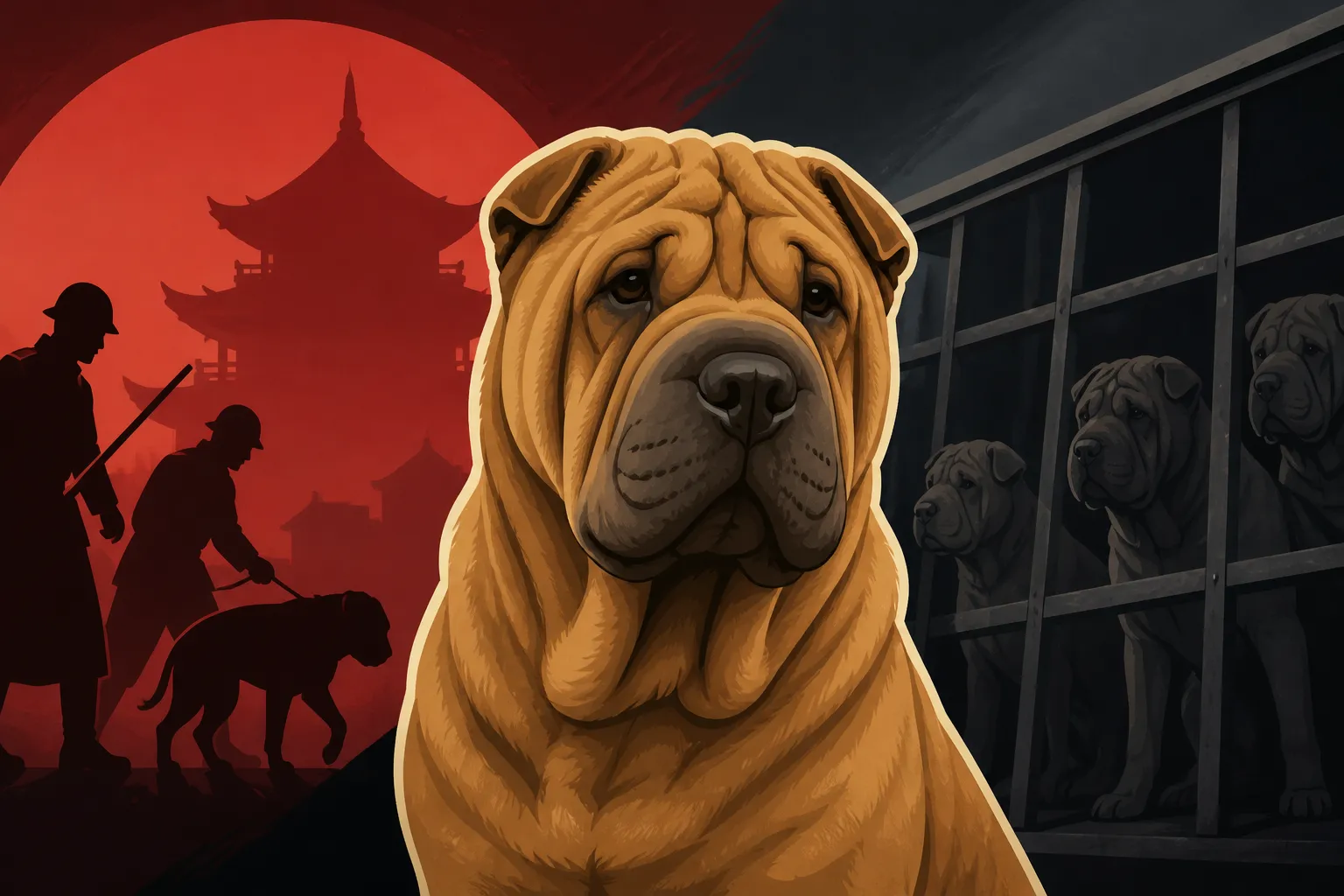
During the 1940s and especially into the 1950s and beyond, the newly established government issued decrees and implemented campaigns aimed at eradicating perceived "luxuries," which prominently included pet dogs. These actions were not subtle. They involved public announcements, propaganda, and sometimes, direct enforcement. The message was clear: pet ownership was a bourgeois indulgence that had no place in the new socialist China. This was a far cry from modern pet ownership, where people can easily buy high-quality food from retailers like Chewy and discuss How Much a Shar Pei Eats in a Month without fear.
The campaigns were particularly brutal in urban areas, where dogs were seen as more indicative of wealth and less likely to have a practical working role. However, the ideology permeated into rural areas too, affecting breeds like the Shar Pei, which traditionally had served as working guardians. The idea was to create a society where everyone was equal, and no one wasted resources on non-productive animals. These purges left an indelible scar on the history of many Chinese breeds.
The Eradication Campaign's Impact on the Shar Pei
For the Shar Pei, a breed that had been a fixture in certain regions of China for centuries, these campaigns were catastrophic. Their numbers plummeted dramatically. While they were known for their guarding abilities and were often found in rural settings, they were not immune to the widespread culling. In some areas, entire dog populations were wiped out. It's difficult to truly convey the scale of this loss, both in terms of individual lives and the genetic diversity of the breed.
The few Shar Pei that survived often did so in extremely remote areas, hidden away by incredibly brave and loyal owners who risked their own safety. Others might have been mistaken for wild dogs or managed to evade the systematic purges by sheer luck. This period created an extreme genetic bottleneck for the breed, reducing their numbers to critically low levels. It's why we talk about Sixty Shar Pei Were Left in 1978 and how One Letter to a Dog Magazine Saved the Shar Pei – these events were a direct consequence of the decimation that began in the 1940s.
The Shar Pei's Specific Vulnerability and Near Extinction
Considering the widespread devastation, it’s a miracle that the Shar Pei survived at all. Their unique characteristics and historical roles both offered some minimal protection in certain contexts, but ultimately made them highly vulnerable to the broader forces at play. The specific factors influencing their survival, or lack thereof, are deeply tied to their existence as a breed indigenous to southern China.
The memory of this era continues to influence the breed even today, shaping our understanding of their resilience and the responsibility modern owners and breeders bear. The struggle to rebuild the breed from such a tiny gene pool is a testament to dedicated individuals and the enduring appeal of these magnificent dogs.
Where Shar Pei Were More Likely to Survive (or Not)
The survival rates for dogs, including Shar Pei, varied significantly depending on geographical location and the intensity of the purges. Remote, inaccessible rural areas often provided a safer haven than densely populated cities, where enforcement of the anti-dog decrees was more rigorous and visible. Shar Pei, being primarily a rural working breed in their homeland, might have initially had a slight edge compared to purely companion breeds found in urban centers. They had a job to do – guarding homes and properties – which might have offered a flimsy justification for their existence in some locales, at least until the ideology became all-encompassing.
However, even in rural areas, the pressure was immense. As food scarcity worsened and ideological purity became paramount, even working dogs were eventually targeted. The sheer isolation of some villages, or the quiet defiance of individual families, became the last line of defense for the few remaining Shar Pei. Those that did survive were often hidden, their existence a closely guarded secret, illustrating the depth of the bond between humans and these animals even in the face of extreme danger.
The Aftermath: A Breed on the Brink
By the 1960s and 1970s, the Shar Pei was teetering on the very edge of extinction. Their numbers were so low that many believed the breed had vanished entirely from mainland China. The cumulative effect of war, famine, and systematic culling had reduced a once-thriving population to a mere handful. This dramatic reduction in numbers meant that the breed's genetic diversity was severely compromised, a factor that continues to impact their health and predispositions today. This bottleneck created challenges that modern breeders still contend with, as explored in discussions around What Being Saved Did to the Shar Pei's Health.
The desperation to save the breed led to international appeals, notably by Matgo Law in Hong Kong. Without his efforts and the subsequent response from dedicated enthusiasts around the world, the Shar Pei we know today would simply not exist. Understanding this near-extinction event helps us appreciate the breed's preciousness and the ongoing commitment required for their care. Every Shar Pei today carries the genetic legacy of those few brave survivors, and their history serves as a poignant reminder of the fragility of breed preservation in the face of historical turmoil. When you look at your Shar Pei, perhaps enjoying a treat from Chewy, remember the journey they've taken.
Here's a table summarizing the key factors contributing to the culling of dogs in China during the mid-20th century:
| Factor | Description | Impact on Dogs |
|---|---|---|
| Political Shift | Rise of the Communist Party, emphasis on collective good and egalitarianism. | Dogs, especially non-working pets, became symbols of bourgeois luxury and capitalist ideals, making them targets of ideological purges. |
| Resource Scarcity | Widespread famine, war-torn economy, and disruption of food supply chains. | Feeding dogs was deemed an unforgivable extravagance when human populations were starving; competition for limited resources was extreme. |
| Public Health | Limited medical infrastructure and vulnerability to disease outbreaks in a weakened population. | Mass culls were sometimes justified as necessary public health measures to prevent the spread of diseases like rabies, without humane individual assessment. |
| Government Mandates | Official decrees and public campaigns actively encouraging or mandating the elimination of dogs as part of societal restructuring. | Systematic extermination campaigns, particularly in urban areas but also affecting rural working dogs, drastically reduced canine populations to near extinction. |
| Ideological Pressure | Dogs were viewed as "non-productive" and a drain on societal resources, conflicting with the new labor-centric ethos. | Owners were pressured or forced to give up their pets, and keeping dogs became a dangerous act of defiance, leading to widespread abandonment or killing. |
The story of the Shar Pei is one of incredible resilience and the profound impact of human history on animal populations. From a time when How Many Shar Pei Were Left in the 1970s could be counted on a few hands, they have thankfully recovered, though their health journey still reflects that narrow escape.
Disclaimer
This article is for general informational purposes only and does not constitute professional advice. Laws, prices and regulations vary by location and change over time. Consult a qualified professional for guidance on your specific situation.