Whether the Shar Pei Should Still Be Bred
A Shar Pei’s wrinkles can make the breed instantly recognizable, but appearance is only part of the question when deciding whether it should continue to be bred. Prospective owners may worry about fever, kidney disease, eyes, ears, and skin—and breeders face the harder task of balancing health with a limited gene pool. This guide explains when breeding can be responsible and when it shouldn’t happen.
Should Shar Pei dogs still be bred
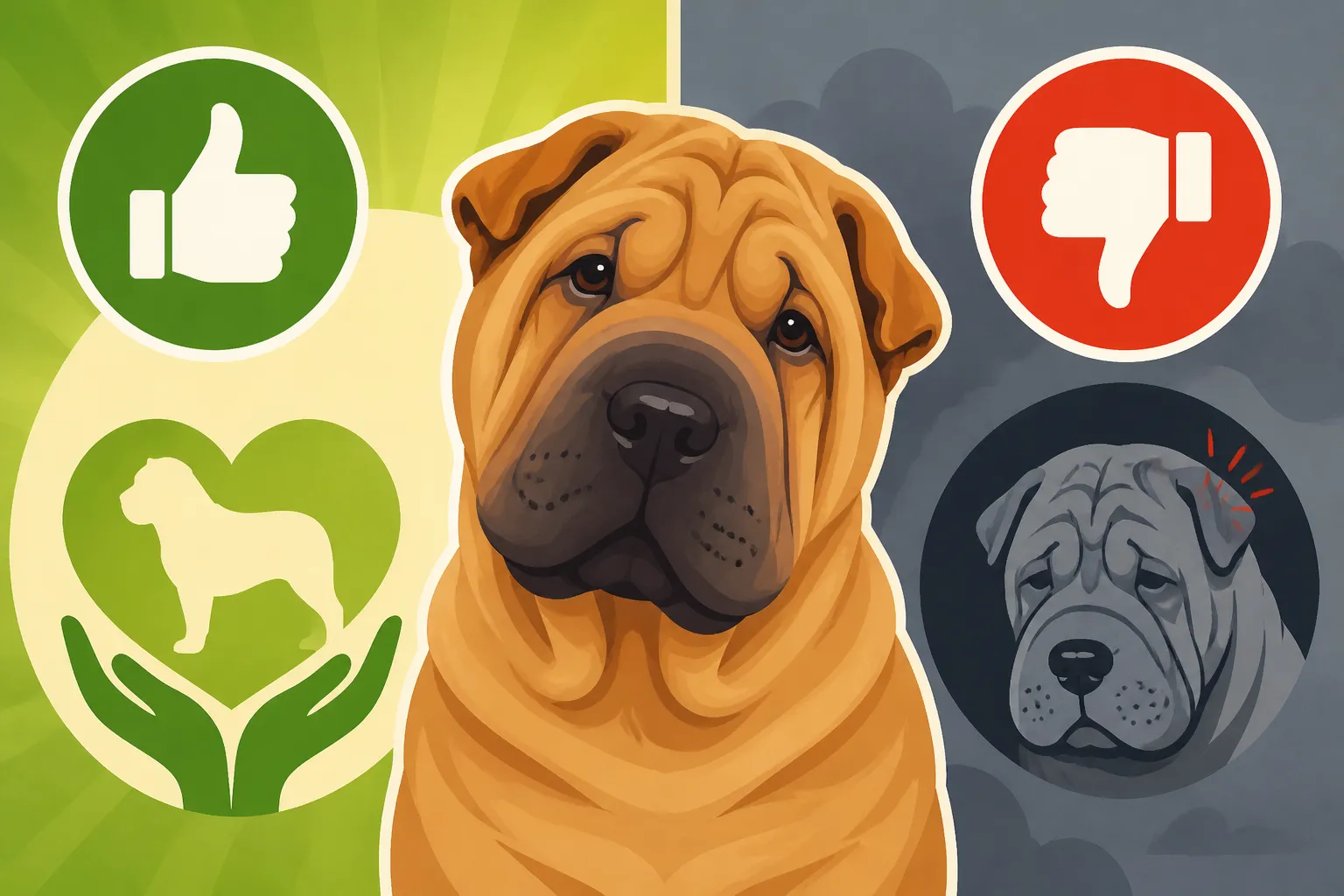
There isn’t a simple yes or no that applies to every Shar Pei. Continuing to breed the dogs is not automatically responsible just because the breed is loved, nor is ending all breeding the only way to address inherited health risks. The more useful question is whether individual breeding choices can improve health and welfare without creating other problems.
That distinction matters to people who already love the breed. Shar Pei owners know the pleasure of living with a devoted, distinctive dog, but may also know the anxiety of monitoring a fever or arranging care for chronic skin or ear trouble. Those experiences deserve to be part of the conversation—not waved away as the price of owning a special-looking breed.
The case for continuing carefully
A breed can have a future if breeders make the health and day-to-day comfort of the dogs more important than an exaggerated look, a fashionable color, or a quick sale. That means choosing breeding dogs for soundness, functional anatomy, stable temperament, and relevant family health history—not simply for deep wrinkles or a particularly padded muzzle.
It also means being honest about risk. A parent that appears healthy may still carry inherited risk, and a litter’s health cannot be guaranteed by good intentions. Responsible breeding is a continuing process: learning about relatives, keeping records on puppies as they grow, and using that information to make better decisions in later generations. Buyers can learn more about that ongoing effort in Whether the Shar Pei Is Bred for Health Now.
For the breed to benefit, good practices need to be more than an individual breeder’s private promise. Buyers should be able to ask straightforward questions and receive clear answers about known health concerns, veterinary care, and what the breeder will do if a puppy develops a serious problem. A willingness to discuss uncertainty is a better sign than a claim that a particular line is completely free of inherited disease.
The case for saying no to a particular litter
The fact that Shar Pei dogs may still be bred responsibly does not mean every planned litter is responsible. A breeder should be willing to postpone or cancel a mating if one or both dogs have significant health or welfare concerns, if there is too little information about their family history, or if the pairing is chosen mainly to produce a certain appearance.
For example, picture a dog with repeated episodes of fever and painful swelling. Even if the dog looks well between episodes, ignoring that history because the dog has an appealing coat or pedigree would put the breed’s priorities in the wrong order. A veterinarian who understands the dog’s history can help assess its health, but breeding decisions should also consider relatives and previous offspring where that information is available.
Some concerns are visible in the dog’s daily comfort; others are hidden until a dog becomes ill or has puppies of its own. That makes disclosure important. A buyer should not have to discover after bringing a puppy home that a parent or close relative has a serious inherited condition. The broader history of the breed’s population also matters, as explored in What Being Saved Did to the Shar Pei's Health.
What responsible Shar Pei breeding needs to prioritize
Responsible breeding is not a single test, certificate, or slogan. It is a combination of careful selection, health follow-up, and a willingness to change course when evidence points to a problem. Since not every risk can be predicted before a puppy is born, the breeder’s process matters as much as the result of any one litter.
Health matters more than a particular look
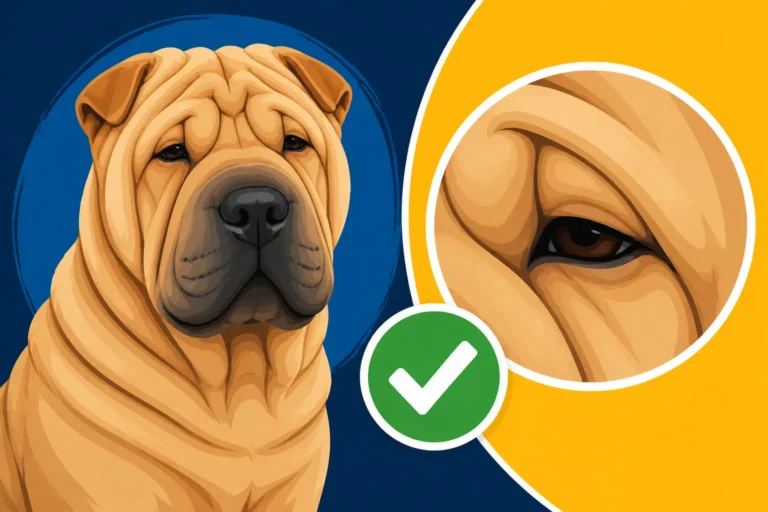
A Shar Pei should be able to see, breathe, move, eat, and rest comfortably. Breeding choices should avoid features that interfere with ordinary function, including eyes that are persistently irritated by the eyelids or excessive skin, and skin folds that repeatedly become inflamed. A dog’s appearance may be part of what people love about the breed, but no visual trait should be prized above the animal’s comfort.
Wrinkles themselves do not tell the whole story. A less wrinkled dog is not automatically healthy, and a wrinkled dog is not automatically unhealthy. Still, breeding for more extreme skin, particularly when it worsens irritation or creates hard-to-maintain folds, is difficult to justify. The relevant question is not whether a dog has folds, but whether its anatomy allows comfortable everyday life and manageable care. See Whether Breeding for Fewer Wrinkles Would Help for more on that distinction.
The same principle applies to fever and related inherited risk. A dog that has never had a recognized episode is not necessarily free of risk, while a family history should not be reduced to a vague label. Breeders should talk candidly about what is known, what is uncertain, and how they follow the health of dogs they have bred. A genetic result, where one is used, should be interpreted as one part of the picture rather than a guarantee that a dog will or will not become ill. More background is available in Whether a Shar Pei Can Be Bred Away From Fever.
Genetic diversity needs careful management
A small or restricted breeding population can make it harder to reduce disease without unintentionally concentrating other inherited problems. If breeders repeatedly use a small number of popular dogs, those dogs’ genes become widespread. That may narrow the pool further and leave future breeders with fewer healthy, unrelated choices.
The answer is not simply to exclude every dog associated with any health concern. If selection is too narrow, it can reduce genetic diversity and create new risks. Instead, breeders need to consider the whole pedigree and available health information, avoid overusing individual dogs, and pay attention to the outcomes of previous litters. These decisions are complicated, and they are one reason blanket claims such as “this line is safe” or “that type is always healthier” should be treated cautiously. Whether a Wider Gene Pool Would Fix Shar Pei Fever discusses why diversity may matter without promising a simple fix.
Outcrossing—breeding to a dog outside the breed—may be discussed as one possible way to broaden a gene pool, but it is not a shortcut that guarantees healthy puppies. It requires careful planning, transparent goals, attention to temperament and structure, and a long-term plan for the resulting dogs and future generations. It can also raise questions about breed identity and registration. The practical and ethical issues are considered in Whether the Shar Pei Could Be Outcrossed.
A visible type is not proof of better health
Names such as “bone mouth” and “meat mouth” are often used to describe different head and muzzle types. Those labels may help describe appearance, but a label alone does not establish whether a dog will have fewer health problems. Any breeder or seller who presents a type as a health guarantee should be asked to explain the evidence for that claim.
The useful evaluation is individual. Does the dog have comfortable eyes? Can it breathe and eat normally? Does its skin stay healthy with ordinary care? What is known about its close relatives? Does the breeder track health in earlier litters? Those questions are more informative than assuming one body type is automatically safer. For a closer look, see Whether a Bone Mouth Shar Pei Is Healthier.
Breed standards and judging preferences can influence what breeders select for. If the written standard or show culture rewards features that compromise comfort, breeders may feel pressure to keep producing them. Improving welfare therefore involves more than telling individual owners to clean folds or watch for symptoms; the expectations placed on the breed also matter. Whether the Shar Pei Standard Should Change explores that larger issue.
How to judge a breeder’s answer
A prospective buyer cannot control the breed’s future alone, but can ask questions that reward responsible choices. It is reasonable to feel awkward asking a breeder about illness, especially when you are excited about a puppy. Still, a clear conversation before placing a deposit is kinder to both the buyer and the dog than discovering serious concerns after the puppy comes home.
Ask for specifics, not reassurance
Ask what health problems have occurred in the parents, siblings, and earlier puppies from the same lines. Ask how the breeder follows up with puppy buyers and whether they will share relevant veterinary records or explain what health screening has been done. A responsible breeder may not have a perfect answer to every question, but should be able to explain what they know and what they do not know.
Listen for specifics. “We have never had a problem” is less useful than a thoughtful explanation of how the breeder tracks health, what has appeared in the family, and how those findings affect breeding plans. Ask what support is offered if a puppy develops a serious condition, and make sure any health guarantee is written in language you understand. For additional questions about breeder accountability, see What a Shar Pei Breeder's Contract Should Cover.
A breeder who responds to reasonable questions with anger, pressure, or a rush to secure payment is giving you information about the relationship you may have after purchase, too. Be cautious of claims that a puppy is guaranteed to be free of fever, kidney disease, or all future health problems. No breeder can promise that an individual dog will never become ill.
Look at the dog’s comfort and the breeder’s priorities
When you visit, notice how the adult dogs move and behave, and whether their eyes and skin appear comfortable. Ask how their daily care works. A tidy home is not proof of good breeding, but everyday details can prompt useful questions: do the dogs tolerate routine handling, can the breeder describe their individual personalities, and do the animals seem like valued family members rather than products?
Consider the puppy’s future needs as well as the purchase decision. Shar Pei owners may need to plan for routine veterinary care, skin and ear management, and monitoring for health changes. A retailer such as Chewy may be convenient for replenishing ordinary supplies, but food, supplements, cleaning products, or medications should be chosen with veterinary guidance when a dog has a medical condition. Buying supplies cannot substitute for careful breeding or appropriate diagnosis.
A second practical question is whether you are prepared for uncertainty. Even when a breeder has made thoughtful choices, a puppy can still develop a condition that needs veterinary care. Planning for records, regular checkups, and a relationship with a veterinarian who takes the breed’s health history seriously is part of welcoming a Shar Pei—not evidence that you should expect the worst. Some owners use Chewy to keep routine food and basic care items on hand; for a dog with allergies or a prescribed diet, confirm that any product is suitable with the veterinarian before changing it.
A practical standard for deciding whether a litter should exist
A responsible litter should have a clear welfare-based reason behind it. The breeder should be able to explain why these two dogs are a thoughtful pairing, what is known about their health and relatives, how the puppies will be raised, and how the breeder will remain accountable after they go home. If the main explanation is that the parents look striking or that the puppies are likely to sell quickly, the priorities are not reassuring.
Use the questions below as a starting point rather than a pass-or-fail checklist. One good answer cannot erase a serious health concern, and one missing document does not tell the entire story. What matters is the overall pattern: openness, informed veterinary care, responsible selection, and genuine concern for the dogs’ comfort throughout their lives.
| Question to ask | A more reassuring answer | A reason to pause |
|---|---|---|
| What health problems are known in the parents and close relatives? | The breeder describes known issues and explains how they affect decisions. | The breeder dismisses the question or claims the family has no possible risk. |
| How are breeding dogs assessed? | The breeder explains relevant veterinary evaluations and how results are considered. | A single test or certificate is presented as proof that every concern is eliminated. |
| Why were these two dogs paired? | The explanation includes health, temperament, structure, and family information. | The main goal is a rare appearance, extreme wrinkles, or fast sales. |
| What happens if a puppy develops a serious health problem? | The breeder explains communication, records, and written responsibilities. | The breeder avoids the question or offers only vague verbal reassurance. |
| How are puppies followed after they leave? | The breeder stays in contact and uses health updates to inform future decisions. | There is no interest in the puppy once the sale is complete. |
If a breeder cannot provide the information you need, you can walk away without condemning every Shar Pei or every breeder. A pause is often the sensible choice. You may also consider adoption, while asking the rescue what medical history and records are available; a rescue dog’s background may be incomplete, but a careful adoption conversation can still help you prepare.
So, should the Shar Pei still be bred? It can be defensible when breeding is selective, transparent, and centered on health and functional comfort—not on preserving every feature at any cost. But a particular dog should not be bred simply because it belongs to the breed, and a particular litter should not proceed when its risks are being ignored. That is a demanding standard, but the dogs’ welfare deserves no less. If you are preparing for the practical side of ownership, Chewy can be one place to source routine supplies, while health decisions and treatment plans belong with your veterinary team.
Disclaimer
This article is for general informational purposes only and does not constitute professional advice. Laws, prices and regulations vary by location and change over time. Consult a qualified professional for guidance on your specific situation.